Honeycomb Rubber Profiles
CN → US| HS Code | Tariff Rate | Origin | Destination | Doc |
|---|---|---|---|---|
| 4016910000 | 37.7% | CN | US | Official Doc |
| 4016100000 | 35.0% | CN | US | Official Doc |
| 4016100000 | 35.0% | CN | US | Official Doc |
Product Images
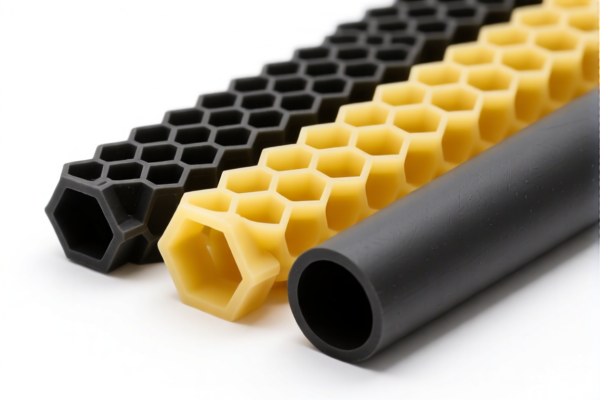
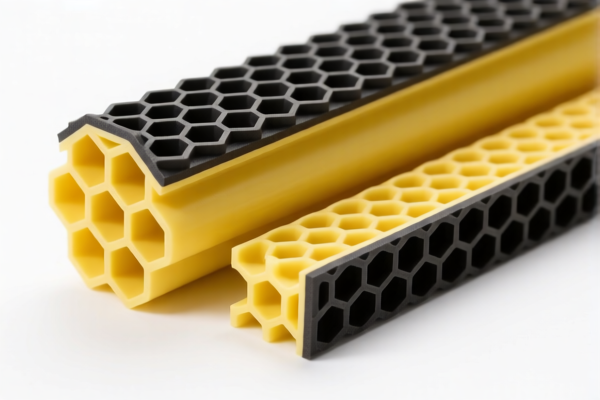
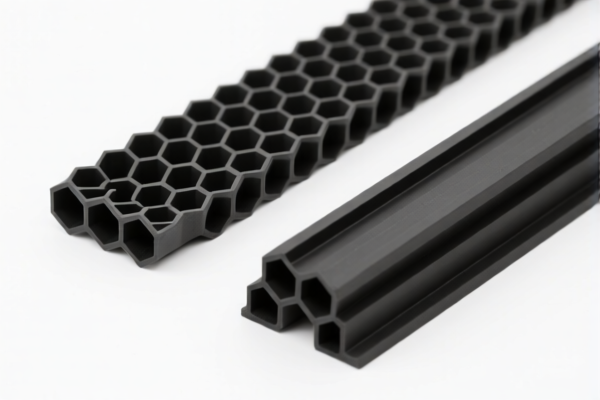
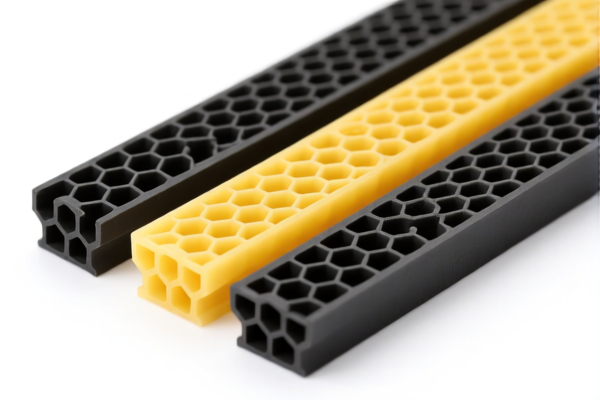
AI Analysis
🐝 Honeycomb Rubber Profiles (Rubber Extrusions with Honeycomb Cross-Section)
🌐 HS Code Reference & Customs Clearance Guide | 2026 Latest Tariff Analysis | Professional Grade Strategy
📌 I. Product Definition & Classification: Do You Really Understand "Honeycomb Rubber Profiles"?
Honeycomb rubber profiles are specialized rubber extrusions characterized by a hexagonal (honeycomb) internal structure. They are primarily used for sealing, vibration damping, energy absorption, and thermal insulation in construction, automotive, industrial machinery, and aerospace applications.
In international trade, they are classified based on their material composition (rubber type) and form (extruded profiles vs. solid sheets/tubes). The key distinction lies in whether they are considered "basic rubber" or "finished industrial parts."
⚠️ Key Distinction Point:
- If the product is a raw rubber material (not yet shaped into complex functional parts for a specific machine) → Often classified under Chapter 40 (Rubber and Articles Thereof), specifically 4008 (Plates, sheets, strip, rods and profiles, vulcanized rubber other than hard rubber).
- If the product is a specific finished part designed for a specific machine (e.g., a custom gasket for a pump) → It might be classified under the specific machine's chapter (e.g., Chapter 84 or 85), but Honeycomb Profiles are generally treated as semi-finished or generic sealing/extrusion materials unless explicitly part of a complete assembly. For most general imports, 4008 is the standard.
- Hard Rubber (Ebonite): If the rubber is "hard rubber" (vulcanized with high sulfur content), it falls under 4001/4002 or 4003, not 4008. Most honeycomb profiles are soft/flexible elastomers.
📦 II. HS Code Classification Details (2026 Latest Tariff Authority Comparison)
| HS Code | Product Description | Application Scenario | Vulcanized? | Hard Rubber? |
|---|---|---|---|---|
4008.11.00.00 |
Vulcanized rubber plates, sheets, strip, rods and profiles: Solid cross-section; of soft rubber | Solid rubber seals, gaskets, strips | ✅ Yes | ❌ No |
4008.19.00.00 |
Vulcanized rubber plates, sheets, strip, rods and profiles: Other (includes honeycomb/hollow profiles); of soft rubber | Honeycomb rubber profiles, hollow seals, damping blocks | ✅ Yes | ❌ No |
4008.91.00.00 |
Vulcanized rubber...: Of hard rubber | Ebonite seals, electrical insulators | ✅ Yes | ✅ Yes |
4008.99.00.00 |
Vulcanized rubber...: Other; of hard rubber | Hard rubber sheets, plates | ✅ Yes | ✅ Yes |
4016.93.00.00 |
Other articles of cellular rubber: of open-cell rubber | Sponge rubber seals, foam gaskets | ✅ Yes | ❌ No |
4016.99.00.00 |
Other articles of cellular rubber: Other | Closed-cell foam, non-honeycomb rubber products | ✅ Yes | ❌ No |
🔍 Critical Reminder:
- Honeycomb profiles are vulcanized soft rubber with a hollow/hexagonal cross-section. This fits perfectly into4008.19.00.00(Other vulcanized soft rubber profiles) or potentially4016.93.00.00if considered "cellular rubber" (open-cell).
- However, most customs authorities classify extruded honeycomb profiles (closed-cell hexagonal structure) under4008.19.00.00as they are "profiles" rather than "articles of cellular rubber" like foam sponges.
-4016.93.00.00is typically for open-cell foam (like sponge). Honeycomb is closed-cell and structured, so4008.19.00.00is the most accurate and common classification for extruded honeycomb rubber profiles.
- Do NOT classify as4008.11(Solid) — this will trigger a misdeclaration risk.
💰 III. 2026 Latest Tariff Rate Details (Including Surtaxes & Policy Add-ons)
✅ Applicable Country: United States (US)
✅ Country of Origin: China (CN)
✅ Effective Date: From November 10, 2025 (including subsequent imports)
🎯 1. 4008.19.00.00 —— Vulcanized Rubber Profiles (Other, Soft Rubber, Including Honeycomb)
| Item | Content |
|---|---|
| Base Rate | 0% (ad valorem) |
| USITC Surtax | +25% (from USITC Footnote 9903.88.01 for certain rubber products) |
| IEEPA Surtax | +10% (Targeted China/HK products, effective Nov 10, 2025) |
| Total Tariff | 35% |
| Tax Calculation | CIF Value × 35% |
| De Minimis Eligibility | ❌ Not Eligible (deny_de_minimis) |
| Legal Basis Path | IEEPA:9903.01.25 → IEEPA:9903.01.24 → USITC:4008.19.00.00 → FOOTNOTE:9903.88.01 |
📌 Explanation:
- The 25% USITC surtax is part of the Section 301 tariff list for many rubber articles, including extruded profiles.
- The 10% IEEPA surtax is the additional对华关税 (China-specific tariff) under the International Emergency Economic Powers Act.
- Total 35% is a high tariff rate. This must be factored into your cost analysis.
- Note: Some rubber products may qualify for exclusions if they are not available in the US, but honeycomb profiles are commonly manufactured globally, so exclusions are rare. Check the latest USITC exclusion lists.
🎯 2. 4008.11.00.00 —— Vulcanized Rubber Profiles (Solid, Soft Rubber) [Misclassification Risk]
| Item | Content |
|---|---|
| Base Rate | 0% |
| USITC Surtax | +25% |
| IEEPA Surtax | +10% |
| Total Tariff | 35% |
| Note | If you misdeclare honeycomb as "solid," you face penalties for misclassification, not just the same tariff. |
🛠️ IV. Customs Clearance Practical Advice (Battle-Tested Pitfall Avoidance)
✅ 1. Required Documentation List (Missing Any = Delay)
| Document | Required | Description |
|---|---|---|
| ✅ Product Specification Sheet | ✔️ | Must clearly state: Material (e.g., NBR, EPDM, Silicone), Hardness (Shore A), Cross-section (Honeycomb Hexagonal), Dimensions |
| ✅ Cross-Section Diagram | ✔️ | Crucial: Show the honeycomb structure to distinguish from solid profiles (4008.11) or foam (4016) |
| ✅ Product Photos | ✔️ | Clear images of the profile, end-cuts, and packaging |
| ✅ Certificate of Origin (CO) | ✔️ | If origin is not China, to check for FTA benefits (e.g., USMCA, if applicable to rubber articles) |
| ✅ Commercial Invoice | ✔️ | Must describe as "Honeycomb Rubber Profiles, Vulcanized Soft Rubber, HS 4008.19.00.00" |
| ✅ Packing List | ✔️ | Detailed weight and dimensions |
| ✅ Third-Party Test Report | ✔️ | Tensile strength, compression set, flame retardancy (if applicable) |
✅ 2. Declaration Tips (Key Mantra)
🔥 “Honeycomb is Not Solid, It’s Not Foam, It’s 4008.19!”
| Scenario | Correct Declaration | Wrong Practice |
|---|---|---|
| Honeycomb Rubber Profile | 4008.19.00.00 |
Misdeclare as 4008.11.00.00 (Solid) → Penalties |
| Silicone Honeycomb Seal | 4008.19.00.00 |
Misdeclare as 4016.93.00.00 (Foam) → Delay/Inspection |
| Hard Rubber Honeycomb | 4008.91.00.00 |
Misdeclare as soft rubber → Major Violation |
| Assembled Gasket Kit | Chapter 84/85 (if specific machine) | Misdeclare as raw material → Valuation Issues |
✅ 3. Special Situations
| Situation | Handling Advice |
|---|---|
| Silicone Honeycomb Profiles | Still 4008.19.00.00 if vulcanized. Silicone is a type of rubber in HS Code context. |
| Ethylene-Propylene (EPDM) Honeycomb | 4008.19.00.00. EPDM is common for outdoor sealing. |
| Nitrile (NBR) Honeycomb | 4008.19.00.00. NBR is oil-resistant, common in automotive. |
| Custom Shapes (Cut from Roll) | If cut to specific shapes for a machine, it might be considered a "part." However, standard honeycomb profiles sold as rolls or cut lengths are 4008.19.00.00. |
| Origin: Vietnam/Thailand/Malaysia | Check USMCA or ASEAN-US trade agreements. Some rubber products may have 0% tariff if originating from these countries. IEEPA surtax may not apply to non-China origins. |
🌍 V. Global Market Comparison (2026 Latest)
| Country/Region | Recommended HS Code | Tariff (China Origin) | Certification Required | Notes |
|---|---|---|---|---|
| 🇺🇸 USA | 4008.19.00.00 |
35% (25% + 10%) | No specific certification | High tariff due to Section 301 + IEEPA |
| 🇪🇺 EU | 4008.19.00.00 |
0% (if EORI registered) | REACH, RoHS (if plastic/rubber additives) | No additional surtaxes |
| 🇨🇳 China | 4008.19.00.00 |
3.5% - 6% | CCC (if applicable) | Low import tariff |
| 🇬🇧 UK | 4008.19.00.00 |
0% (if UKCA compliant) | UKCA, REACH | Post-Brexit alignment with EU |
| 🇯🇵 Japan | 4008.19.00.00 |
0% | PSE (if electrical) | No additional surtaxes |
📌 Conclusion:
- USA is the only market with significant surtaxes for Chinese-made honeycomb rubber profiles.
- EU, Japan, and UK have 0% base tariffs, making them more cost-effective for Chinese exports.
- Diversify supply chain: Consider sourcing or assembling in Vietnam, Thailand, or Mexico to avoid IEEPA surtaxes when exporting to the US.
📌 VI. Common Errors & Pitfall Avoidance (Blood Lessons)
❌ Error 1: Declaring Honeycomb Profiles as 4008.11.00.00 (Solid)
👉 Consequence: Customs will reject the declaration because the cross-section is not solid. Result: 100% inspection, delay, fines.
❌ Error 2: Declaring as 4016.93.00.00 (Open-cell Foam)
👉 Consequence: Honeycomb is closed-cell and structured, not open-cell foam. Result: Misclassification, potential duty underpayment investigation.
❌ Error 3: Ignoring Material Composition (e.g., Silicone vs. NBR)
👉 Consequence: While both are 4008.19.00.00, some end-users (e.g., aerospace, food & beverage) require FDA, USP Class VI, or RoHS compliance. Failure to provide test reports leads to rejection at destination.
❌ Error 4: Not disclosing "Honeycomb" Structure in Description
👉 Consequence: Customs may classify as generic rubber strips, leading to audits. Always include "Honeycomb Cross-Section" in the product description.
✅ Correct Practice:
"Vulcanized Soft Rubber Profiles, Honeycomb Hexagonal Cross-Section, EPDM Material, 10mm x 10mm, for Construction Sealing, HS 4008.19.00.00"
🎯 VII. Conclusion: Precise Declaration, Save Costs, Ensure Compliance!
🎯 Remember the Mantra:
🔹 “Honeycomb is Not Solid, Not Foam, It’s 4008.19!”
🔹 “35% in USA, 0% in EU, Check Origin, Avoid Surcharge!”
📌 Pro Tip:
If your honeycomb rubber profiles are original from Vietnam, Thailand, Malaysia, or Mexico, check if they qualify for preferential tariffs under USMCA or ASEAN FTAs. The IEEPA surtax (10%) generally does not apply to non-China origins. This can save you 10% in duties!
📣 Immediate Action:
📞 Contact a licensed customs broker + Provide cross-section diagrams + Request HS Code Advance Ruling from US CBP
🚀 Clear Customs Smoothly, Maximize Profit, Export Globally!
✨ Professional Customs Clearance Starts with Accurate Classification!
💼 Every Cent of Your Cost Deserves Precise Calculation!
Customer Reviews
About HS Code Classification
The Harmonized System (HS) is an internationally standardized nomenclature developed by the World Customs Organization (WCO) to classify traded products. Over 200 countries use the HS system as the basis for customs tariffs, trade statistics, and import/export regulations.
Each HS code follows a hierarchical structure:
- Chapter (2 digits) — Broad category of goods (e.g., Chapter 84: Machinery and Mechanical Appliances)
- Heading (4 digits) — More specific grouping within the chapter
- Subheading (6 digits) — Internationally standardized breakdown, used by all WCO member countries
- National subdivisions (8-10 digits) — Country-specific extensions for further classification, such as US HTSUS 10-digit codes
Correct HS code classification is essential for smooth customs clearance, accurate duty payment, and compliance with trade regulations. Misclassification can lead to customs delays, overpayment of duties, or penalties.
When importing from CN to US, the applicable tariff rates may include:
- Most-Favored-Nation (MFN) rate — The standard duty rate applied to WTO members
- General rate — Applied to countries without trade agreements
- Trade remedy duties — Additional tariffs such as Section 301 (anti-dumping), Section 232 (national security), or countervailing duties
The information provided on this page is for reference purposes only. For official classification, please consult with your local customs authority or a licensed customs broker.