Hooks
CN → US| HS Code | Tariff Rate | Origin | Destination | Doc |
|---|---|---|---|---|
| 8302500000 | 85.0% | CN | US | Official Doc |
| 8302419080 | 38.5% | CN | US | Official Doc |
| 7326908630 | 87.9% | CN | US | Official Doc |
| 7326200020 | 88.9% | CN | US | Official Doc |
| 3926908500 | 24.0% | CN | US | Official Doc |
Product Images

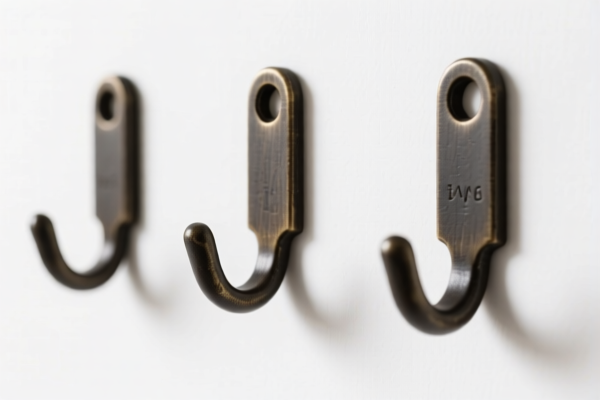
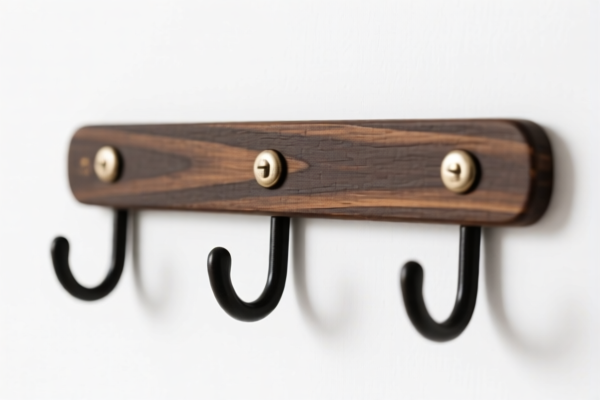

AI Analysis
🪝 Hooks: The Underrated Heavyweight of Global Trade
🌐 HS Code Reference & Customs Clearance Guide | 2026 Latest Tariff Analysis | Strategic Clearance Strategy
📌 I. Product Definition: It’s Just a Hook, Right?
Think of "Hooks" as simple metal or plastic loops? Think again. In international trade, a "hook" is a generic term that triggers a classification nightmare. Depending on its material, function, and structure, a hook can fall into completely different chapters with vastly different tax implications.
⚠️ Key Distinction:
- Is it part of clothing? → 8302.50.00.00 (Hat hooks)
- Is it for construction/building? → 8302.41.90.80 (Building hardware)
- Is it just a generic metal item? → 7326 series (Steel goods)
- Is it plastic? → 3926.90.85.00 (Plastic articles)
📦 II. HS Code Classification Details (2026 Latest Tariff Authority)
| HS Code | Product Description | Classification Logic | Material/Structure |
|---|---|---|---|
8302.50.00.00 |
Hat Hooks (Hooks belonging to the category of hat hooks) | Classified based on specific use in headwear | Inferenced as Base Metal |
8302.41.90.80 |
Other Base Metal Mountings, Fittings & Similar Articles | Classified as metal accessories for buildings/structures | Base Metal Hardware |
7326.90.86.30 |
Other Articles of Iron or Steel | Classified as pipes/supports or similar supports | Steel/Metal Pipe Support |
7326.20.00.20 |
Other Articles of Iron or Steel | Functionally equivalent to hangers/other metal articles | Steel/Metal Hanger |
3926.90.85.00 |
Other Plastic Articles | Classified as clip-type/fixed products, inferred as plastic | Plastic (Clip/Fixed) |
🔍 Critical Insight:
- "Hooks" are not a single HS code. You must define the primary use and material. - Misclassifying a steel hook as a plastic hook (or vice versa) leads to severe penalties. - The difference in tax rates ranges from 24% to 88.9%. Choosing the wrong code can double your customs costs!
💰 III. 2026 Latest Tariff Rate Breakdown (Including Surcharge & Policy Add-ons)
✅ Applicable Country: United States (US)
✅ Origin: China (CN)
✅ Effective Date: 2025/2026 (Subject to ongoing Section 301 & IEEPA updates)
🎯 1. 8302.50.00.00 —— Hat Hooks (Base Metal)
| Item | Details |
|---|---|
| Base Duty | 0.0% |
| Surcharge (Section 301) | +25.0% |
| 122 Clause Surcharge | +10.0% |
| Steel/Aluminum/Copper Surcharge | +50.0% |
| Total Effective Tax Rate | 85.0% |
| Calculation | CIF Value × 85.0% |
| De Minimis Exemption | ❌ Not Eligible |
📌 Explanation:
- Although the base duty is 0%, the cumulative surcharges are brutal. - The 50% steel/aluminum surcharge applies here, pushing the total to 85%. - This is one of the highest risk codes for steel-based hooks.
🎯 2. 8302.41.90.80 —— Base Metal Building Hardware
| Item | Details |
|---|---|
| Base Duty | 3.5% |
| Surcharge (Section 301) | +25.0% |
| 122 Clause Surcharge | +10.0% |
| Total Effective Tax Rate | 38.5% |
| Calculation | CIF Value × 38.5% |
| De Minimis Exemption | ❌ Not Eligible |
📌 Explanation:
- This code is significantly cheaper than the steel pipe or hat hook codes. - It does NOT trigger the 50% steel/aluminum surcharge. - Strategy: If your hook is used for building/construction hardware, this is the optimal code to avoid the 50% penalty.
🎯 3. 7326.90.86.30 —— Other Steel Articles (Pipes/Supports)
| Item | Details |
|---|---|
| Base Duty | 2.9% |
| Surcharge (Section 301) | +25.0% |
| 122 Clause Surcharge | +10.0% |
| Steel/Aluminum/Copper Surcharge | +50.0% |
| Total Effective Tax Rate | 87.9% |
| Calculation | CIF Value × 87.9% |
| De Minimis Exemption | ❌ Not Eligible |
📌 Explanation:
- This code attracts the 50% steel surcharge. - Even with a lower base duty (2.9%), the total tax is nearly 90%. - Avoid unless the product is explicitly a "pipe support" and no better classification exists.
🎯 4. 7326.20.00.20 —— Other Steel Articles (Hangers/Other)
| Item | Details |
|---|---|
| Base Duty | 3.9% |
| Surcharge (Section 301) | +25.0% |
| 122 Clause Surcharge | +10.0% |
| Steel/Aluminum/Copper Surcharge | +50.0% |
| Total Effective Tax Rate | 88.9% |
| Calculation | CIF Value × 88.9% |
| De Minimis Exemption | ❌ Not Eligible |
📌 Explanation:
- Similar to7326.90.86.30, this code includes the 50% steel surcharge. - Total tax is the highest among steel categories. - Warning: Do not use this for generic hooks if you can classify them as8302.41.90.80.
🎯 5. 3926.90.85.00 —— Plastic Articles (Clip/Fixed)
| Item | Details |
|---|---|
| Base Duty | 6.5% |
| Surcharge (Section 301) | +7.5% |
| 122 Clause Surcharge | +10.0% |
| Total Effective Tax Rate | 24.0% |
| Calculation | CIF Value × 24.0% |
| De Minimis Exemption | ❌ Not Eligible |
📌 Explanation:
- Lowest Tax Rate! Only 24%. - No 50% steel surcharge applies because it’s plastic. - Strategy: If your hooks are made of plastic (or coated heavily such that plastic is the primary material), always choose this code. It saves ~60% in taxes compared to steel codes.
🛠️ IV. Customs Clearance Practical Advice (Battle-Tested Pitfall Guide)
✅ 1. Required Documentation Checklist (Non-Negotiable)
| Document | Must Provide | Description |
|---|---|---|
| ✅ Product Specification Sheet | ✔️ | Must explicitly state Material (e.g., "Stainless Steel 304" or "ABS Plastic") |
| ✅ Product Photos | ✔️ | Clear images showing hooks alone and in use (e.g., on a hat, in a garage, as a hanger) |
| ✅ Commercial Invoice | ✔️ | Use precise description: "Plastic Coat Hooks" or "Metal Building Hardware Hooks" |
| ✅ Material Declaration | ✔️ | Crucial for distinguishing between 3926 (Plastic) and 7326/8302 (Metal) |
| ✅ Usage Description | ✔️ | Explain the primary function. Is it for clothing? Construction? General storage? |
✅ 2. Declaration Tips (Key Mnemonics)
🔥 “Material First, Function Second, Avoid Steel Surcharge!”
| Situation | Correct Declaration | Wrong Practice |
|---|---|---|
| Plastic Hooks | 3926.90.85.00 (Plastic Articles) |
Misdeclare as "Metal Hook" → 85%+ tax |
| Steel Hooks for Buildings | 8302.41.90.80 (Hardware) |
Misdeclare as "Steel Pipe Support" → 87.9% tax |
| Steel Hooks for Hats | 8302.50.00.00 (Hat Hooks) |
Rare use case; usually overkill for general hooks |
| Generic Steel Hooks | Try 8302.41.90.80 if possible |
Use 7326 series only if no other fit → High Tax |
💡 Pro Tip:
- If your hooks are stainless steel, check if they qualify as8302.41.90.80. This avoids the 50% steel surcharge. - If they are plastic, never hesitate to use3926.90.85.00. It’s the cheapest option.
✅ 3. Special Cases Handling
| Scenario | Handling Advice |
|---|---|
| Mixed Material Hooks | If >50% by weight is steel, likely metal code. If >50% is plastic, likely 3926. Weight matters! |
| Hooks with Plastic Coating | Still often classified as Metal (8302 or 7326) because the core structure is metal. |
| OEM Custom Hooks | Provide client design drawings to prove intended use (e.g., "specifically designed for X-building project") |
| Sample Shipments | Even for samples, declare accurately. Customs audits are strict on low-value items to prevent tariff evasion. |
🌍 V. Global Market Comparison (2026 Latest)
| Country/Region | Recommended HS Code | Est. Tax Rate (China Origin) | Notes |
|---|---|---|---|
| 🇺🇸 USA | 3926.90.85.00 (Plastic) |
24.0% | Lowest rate. Avoid steel codes if possible. |
| 🇺🇸 USA | 8302.41.90.80 (Metal) |
38.5% | Best steel code. Avoid 7326 series. |
| 🇺🇸 USA | 7326 Series (Steel) |
87-89% | Avoid. High steel surcharge. |
| 🇨🇳 China | Various | 0-6% | Low base duty. No Section 301. |
| 🇪🇺 EU | Various | 0-4% | Low duty. No 50% steel surcharge. |
📌 Conclusion:
- USA Market is the toughest for hooks due to Section 301 and 122 Clause surcharges. - Plastic hooks (3926) are the strategic winner with only 24% total tax. - Steel hooks should always aim for8302.41.90.80(38.5%) to avoid the 50% steel penalty.
📌 VI. Common Errors & Pitfalls (Lessons from the Field)
❌ Error 1: Declaring Plastic Hooks as Steel Hooks
👉 Consequence: Tax jumps from 24% to 85%+. Overpayment of 60%+.
❌ Error 2: Declaring Steel Building Hooks as Steel Pipe Supports (7326)
👉 Consequence: Tax jumps from 38.5% to 87.9%. Overpayment of ~49%.
❌ Error 3: Not specifying Material on Invoice
👉 Consequence: Customs will guess. They may choose the highest code for safety. Risk of audit.
✅ Correct Practice:
"Plastic Coat Hooks, ABS Material, 100pcs, For Household Storage" →
3926.90.85.00
"Steel Cabinet Latch Hooks, Stainless Steel, For Building Hardware" →8302.41.90.80
🎯 VII. Conclusion: Precision Classification Saves Money!
🎯 Remember the Mnemonic:
🔹 “Plastic 24, Metal Hardware 38, Steel Support 88. Choose wisely!”
🔹 “Material is King, Function is Queen, Tax is the Judge!”
📌 Tips:
- If you have flexibility in product design, consider switching to plastic hooks for the US market to save ~60% in taxes.
- If you must use steel, ensure your documentation clearly supports 8302.41.90.80 (Building Hardware) to avoid the 50% steel surcharge.
- Always apply for an Advance Ruling if the classification is ambiguous.
📣 Immediate Action:
📞 Contact a professional customs broker + Provide product photos + Request HS Code Pre-ruling
🚀 Let your hooks clear customs smoothly, maximize profit, and avoid surprises!
✨ Professional Clearance Starts with Precise Classification!
💼 Every penny saved in tax is pure profit!
Customer Reviews
About HS Code Classification
The Harmonized System (HS) is an internationally standardized nomenclature developed by the World Customs Organization (WCO) to classify traded products. Over 200 countries use the HS system as the basis for customs tariffs, trade statistics, and import/export regulations.
Each HS code follows a hierarchical structure:
- Chapter (2 digits) — Broad category of goods (e.g., Chapter 84: Machinery and Mechanical Appliances)
- Heading (4 digits) — More specific grouping within the chapter
- Subheading (6 digits) — Internationally standardized breakdown, used by all WCO member countries
- National subdivisions (8-10 digits) — Country-specific extensions for further classification, such as US HTSUS 10-digit codes
Correct HS code classification is essential for smooth customs clearance, accurate duty payment, and compliance with trade regulations. Misclassification can lead to customs delays, overpayment of duties, or penalties.
When importing from CN to US, the applicable tariff rates may include:
- Most-Favored-Nation (MFN) rate — The standard duty rate applied to WTO members
- General rate — Applied to countries without trade agreements
- Trade remedy duties — Additional tariffs such as Section 301 (anti-dumping), Section 232 (national security), or countervailing duties
The information provided on this page is for reference purposes only. For official classification, please consult with your local customs authority or a licensed customs broker.