Horn shaped Button Clasp
CN → USProduct Images
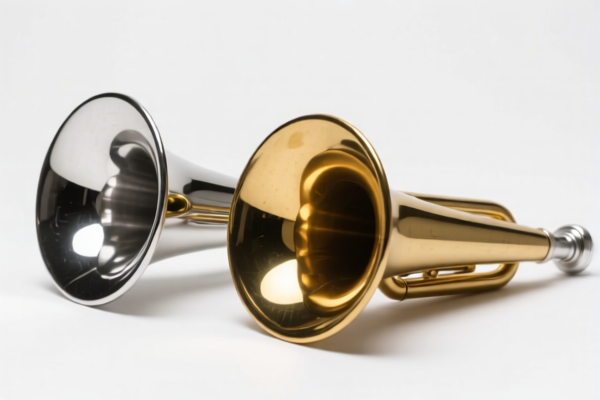
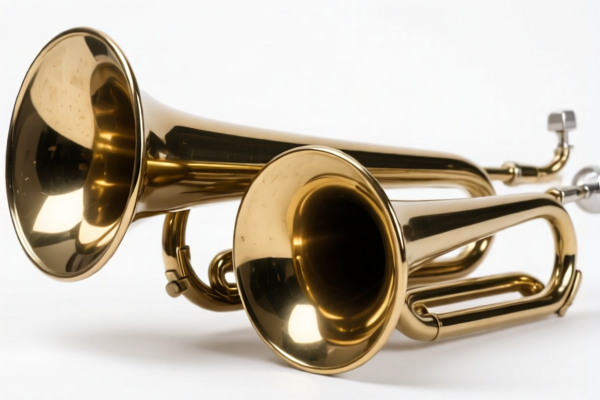
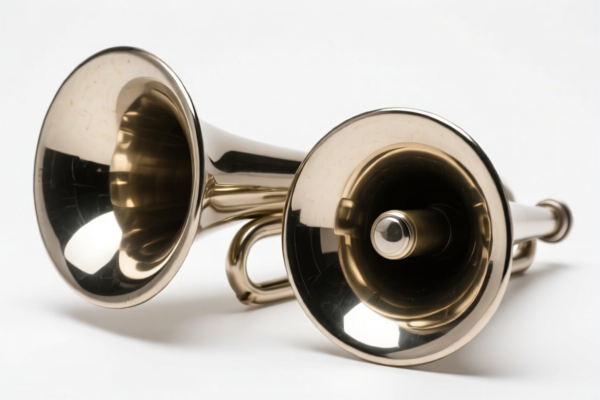
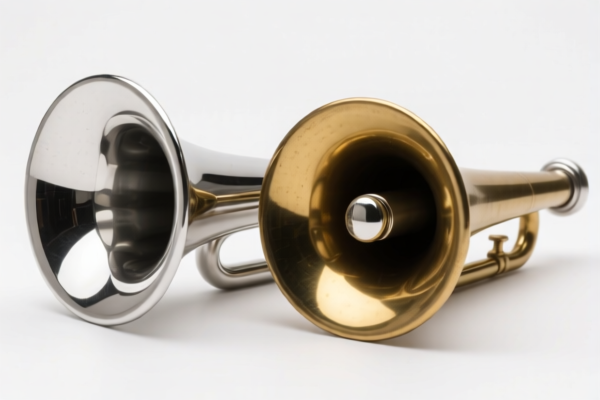
AI Analysis
🔘 Horn Shaped Button Clasp (Horn Button Fastener)
🌐 HS Code Reference & Customs Clearance Guide | 2026 Latest Tariff Analysis | Professional Clearance Strategy
📌 I. Product Definition & Classification: Do You Really Know a "Horn Shaped Button Clasp"?
A Horn Shaped Button Clasp is a specific type of fastener traditionally made from natural horn, bone, or synthetic imitations (like plastic or acrylic) shaped to resemble animal horns. It is commonly used in: 1. Traditional Clothing: Especially in European folk costumes, military uniforms, or high-end vintage-style coats. 2. Accessories: Bag closures, belt buckles, or decorative toggles. 3. Industrial/Functional Use: Heavy-duty garment closures where durability is key.
In international trade, classification depends heavily on material composition and intended use. It is generally not classified as jewelry unless it is purely decorative and not functional.
⚠️ Key Distinction:
- If made of natural horn/bone for clothing → HS 9606 (Buttons, Press-fasteners, etc.)
- If made of plastic for clothing → HS 9606 (Buttons, Press-fasteners, etc.)
- If made of base metal (e.g., brass) shaped like a horn → HS 7318 or 7326 (Articles of iron/steel or other base metal)
- If it is a pure decorative brooch with no functional clasp mechanism → HS 7117 (Imitation Jewelry)
📦 II. HS Code Classification Details (2026 Latest Tariff Authority Comparison)
| HS Code | Product Description | Application Scenario | Material |
|---|---|---|---|
9606.21.00.00 |
Buttons of base metal, whether or not plated with precious metal | Metal horn-shaped buttons for coats | ✅ Base Metal |
9606.29.00.00 |
Other buttons, other than base metal buttons | Plastic, horn, bone, or wooden buttons | ✅ Non-Metal (Plastic/Horn) |
9606.30.00.00 |
Press-fasteners and press-fastener parts | Snap buttons with horn-shaped caps | ✅ Press-Fastener |
7117.19.00.00 |
Imitation jewelry: of base metal, whether or not plated with precious metal | Decorative horn-shaped pieces used solely as jewelry, not as clothing fasteners | ✅ Imitation Jewelry |
7318.16.00.00 |
Screws, bolts, nuts, collets, etc., of iron or steel | Structural metal parts if the "clasp" is purely mechanical hardware | ✅ Hardware |
🔍 Key Reminder:
- Most "Horn Shaped Button Clasps" used in garments fall under 9606.29.00.00 (if plastic/horn) or 9606.21.00.00 (if metal).
- Do not classify purely functional garment fasteners as jewelry (7117) unless they lack functional utility. Customs may reject this if evidence of clothing use is provided.
- If the item is a snap button with a horn-shaped cap, it may fall under 9606.30.00.00.
💰 III. 2026 Latest Tariff Rate Details (Including Additional Taxes & Policy Add-ons)
✅ Applicable Country: United States (US)
✅ Origin: China (CN)
✅ Effective Date: From November 10, 2025 (including subsequent imports)
🎯 1. 9606.29.00.00 —— Buttons, Other Than Base Metal Buttons (Plastic/Horn/Bone)
| Item | Content |
|---|---|
| Base Tariff | 0% (ad valorem) |
| USITC Additional Tariff | +25% (from USITC Footnote 9903.88.01) |
| IEEPA Additional Tariff | +10% (on Chinese/HK products, effective Nov 10, 2025) |
| Total Tariff Rate | 35% |
| Tax Calculation | CIF Value × 35% |
| De Minimis Exemption Available | ❌ No (deny_de_minimis) |
| Legal Basis Path | IEEPA:9903.01.25 → IEEPA:9903.01.24 → USITC:9606.29.00.00 → FOOTNOTE:9903.88.01 |
📌 Explanation:
- "USITC Additional Tariff 25%" comes from the "Section 301 Tariffs" under the US Trade Act.
- "IEEPA 10%" is the additional tariff under the International Emergency Economic Powers Act.
- Total 35% is a high tariff. Must be anticipated in cost calculations.
🎯 2. 9606.21.00.00 —— Buttons of Base Metal
| Item | Content |
|---|---|
| Base Tariff | 0% (ad valorem) |
| USITC Additional Tariff | +25% |
| IEEPA Additional Tariff | +10% |
| Total Tariff Rate | 35% |
| Tax Calculation | CIF Value × 35% |
| De Minimis Exemption Available | ❌ No |
| Legal Basis Path | IEEPA:9903.01.25 → IEEPA:9903.01.24 → USITC:9606.21.00.00 → FOOTNOTE:9903.88.01 |
📌 Note:
- Same tariff structure as non-metal buttons.
- Even if the button is small, if it is made of base metal, it is subject to this rate.
🎯 3. 7117.19.00.00 —— Imitation Jewelry (Base Metal)
| Item | Content |
|---|---|
| Base Tariff | 0% (ad valorem) |
| USITC Additional Tariff | +25% |
| IEEPA Additional Tariff | +10% |
| Total Tariff Rate | 35% |
| Tax Calculation | CIF Value × 35% |
| De Minimis Exemption Available | ❌ No |
| Legal Basis Path | IEEPA:9903.01.25 → IEEPA:9903.01.24 → USITC:7117.19.00.00 → FOOTNOTE:9903.88.01 |
📌 Note:
- If misclassified as jewelry instead of buttons, the rate is still 35%, but the risk of misclassification penalty is high.
- Only use this code if the item is clearly decorative and not used as a functional fastener.
🛠️ IV. Customs Clearance Practical Advice (Battle-Tested Pitfall Avoidance Guide)
✅ 1. Preparation Checklist (Missing Items Will Cause Delays)
| Document | Required | Description |
|---|---|---|
| ✅ Product Specifications | ✔️ | Material, size, weight, function (button vs. jewelry) |
| ✅ Photos of Product | ✔️ | Clear view of front/back, showing fastening mechanism |
| ✅ Material Certificate | ✔️ | Proof of material (e.g., plastic type, horn origin, metal alloy) |
| ✅ Commercial Invoice | ✔️ | Clearly state "Buttons for Garments" or "Horn-Shaped Clasps" |
| ✅ Packing List | ✔️ | Item count, gross/net weight |
| ✅ Proof of Use | ✔️ | Samples or photos showing use in clothing/accessories |
✅ 2. Declaration Tips (Key Mantra)
🔥 “Function Defines Classification, Material Defines HS Code!”
| Scenario | Correct Declaration | Wrong Approach |
|---|---|---|
| Plastic Horn Button | 9606.29.00.00 |
Misclassify as jewelry (7117) → Higher scrutiny |
| Metal Horn Button | 9606.21.00.00 |
Misclassify as hardware (7318) → Wrong rate |
| Decorative Horn Piece (No Function) | 7117.19.00.00 |
Must provide proof it’s NOT a button |
| Snap Button with Horn Cap | 9606.30.00.00 |
Misclassify as standard button → Potential error |
✅ 3. Special Cases Handling
| Scenario | Handling Advice |
|---|---|
| Mixed Materials (e.g., metal base + horn cap) | Classify based on essential character. If metal is dominant, use 9606.21.00.00. If horn is decorative and metal is minor, argue for 9606.29.00.00 (requires strong evidence). |
| Custom/Made-to-Order | Provide design drawings to prove function as a button. |
| High-Value Decorative Items | If marketed as luxury fashion accessories, consider 7117, but be prepared for customs to challenge. |
| Horn from Endangered Species | ❌ Prohibited without CITES permit. Ensure horn is from legal sources (e.g., water buffalo, synthetic). |
🌍 V. Global Market Comparison (2026 Latest)
| Country/Region | Recommended HS Code | Tariff | Certification | Notes |
|---|---|---|---|---|
| 🇺🇸 USA | 9606.29.00.00 |
35% | No specific | High due to Section 301 + IEEPA |
| 🇨🇳 China | 9606.29.00.00 |
5% | No specific | Low tariff |
| 🇪🇺 EU | 9606.29.00.00 |
0% | CE (if electrical) | No additional tariffs |
| 🇬🇧 UK | 9606.29.00.00 |
0% | UKCA | Post-Brexit independent tariffs |
| 🇦🇺 Australia | 9606.29.00.00 |
5% | RCM | No additional tariffs |
📌 Conclusion:
- USA is the only major market with high additional tariffs (35% total).
- EU/UK/Australia/China have low or zero tariffs.
- Consider supply chain diversification if exporting to the US.
📌 VI. Common Mistakes & Pitfall Avoidance (Blood-Tears Lessons)
❌ Mistake 1: Classifying functional buttons as "Jewelry"
👉 Consequence: Customs rejects declaration, delays shipment, or imposes penalties.
❌ Mistake 2: Ignoring material composition
👉 Consequence: Wrong HS Code → Wrong tariff → Underpayment or overpayment issues.
❌ Mistake 3: Failing to provide material certificates for horn/bone
👉 Consequence: CITES violation risk → Confiscation or fines.
❌ Mistake 4: Not declaring "Buttons" clearly on invoice
👉 Consequence: Customs suspects smuggling or misclassification → Inspection delay.
✅ Correct Approach:
"Horn-Shaped Plastic Buttons, for Garments, Material: Acrylic, HS Code: 9606.29.00.00, Function: Fastening"
🎯 VII. Conclusion: Precise Classification Saves Money!
🎯 Remember the Mantra:
🔹 “Buttons are Buttons, Jewelry is Jewelry!”
🔹 “HS Code 9606 is your friend, 7117 is risky!”
🔹 “USA Tariff 35%, Plan Ahead!”
📌 Pro Tip:
If your horn-shaped clasps are originating from Vietnam, Mexico, Thailand, or Malaysia, you may apply for IEEPA Exemption or preferential rates under USMCA.
Recommend Advance Ruling to avoid clearance risks.
📣 Take Action Now:
📞 Contact professional customs brokers + Provide product photos + Apply for HS Code Advance Ruling
🚀 Ensure your horn-shaped buttons clear customs smoothly, save costs, and boost profits!
✨ Professional Clearance Starts with Accurate Classification!
💼 Every cent saved is a cent earned!
Customer Reviews
About HS Code Classification
The Harmonized System (HS) is an internationally standardized nomenclature developed by the World Customs Organization (WCO) to classify traded products. Over 200 countries use the HS system as the basis for customs tariffs, trade statistics, and import/export regulations.
Each HS code follows a hierarchical structure:
- Chapter (2 digits) — Broad category of goods (e.g., Chapter 84: Machinery and Mechanical Appliances)
- Heading (4 digits) — More specific grouping within the chapter
- Subheading (6 digits) — Internationally standardized breakdown, used by all WCO member countries
- National subdivisions (8-10 digits) — Country-specific extensions for further classification, such as US HTSUS 10-digit codes
Correct HS code classification is essential for smooth customs clearance, accurate duty payment, and compliance with trade regulations. Misclassification can lead to customs delays, overpayment of duties, or penalties.
When importing from CN to US, the applicable tariff rates may include:
- Most-Favored-Nation (MFN) rate — The standard duty rate applied to WTO members
- General rate — Applied to countries without trade agreements
- Trade remedy duties — Additional tariffs such as Section 301 (anti-dumping), Section 232 (national security), or countervailing duties
The information provided on this page is for reference purposes only. For official classification, please consult with your local customs authority or a licensed customs broker.