Horse Leather Parts
CN → US| HS Code | Tariff Rate | Origin | Destination | Doc |
|---|---|---|---|---|
| 4205004000 | 36.8% | CN | US | Official Doc |
| 4205008000 | 35.0% | CN | US | Official Doc |
| 4201006000 | 37.8% | CN | US | Official Doc |
| 4201003000 | 37.4% | CN | US | Official Doc |
| 4205001000 | 35.0% | CN | US | Official Doc |
Product Images
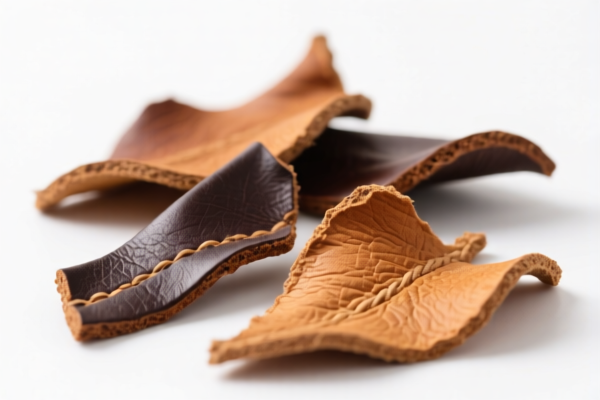
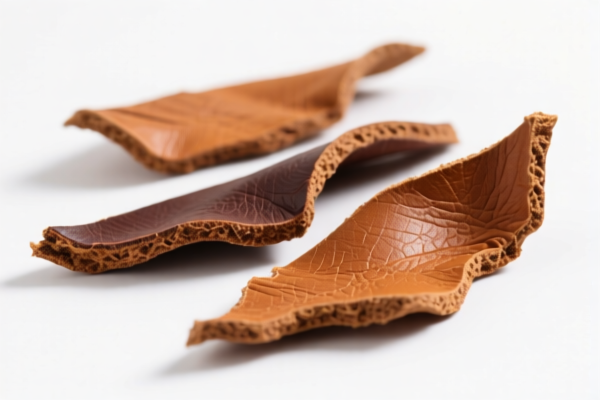
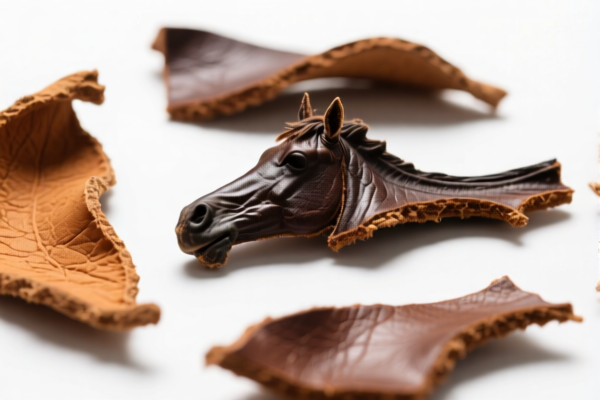
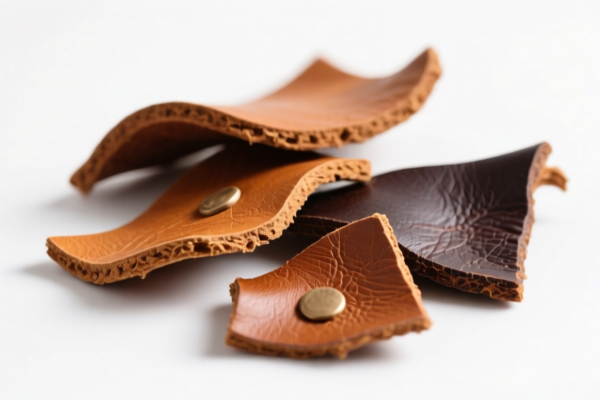
AI Analysis
🐎 Horse Leather Parts (Equestrian Tack Components)
🌐 HS Code Reference & Customs Clearance Guide | 2026 Latest Tariff Analysis | Professional Clearance Strategy
📌 I. Product Definition & Classification: Do You Truly Understand "Horse Leather Parts"?
Horse leather parts refer to components made from leather used in equestrian equipment, such as saddles, bridles, reins, and other harnesses. In international trade, they are classified based on material (leather), use (equestrian/horse gear), and form (parts/accessories).
Key Classification Logic:
- If the part is specifically for animal harnesses/saddlery, it falls under Chapter 42.01.
- If the part is general leather goods/accessories not specifically for equestrian use, it falls under Chapter 42.05.
- The term "Horse Leather Parts" implies both material (leather) and application (horse-related), leading to potential classification conflicts between general leather goods and specific equestrian gear.
⚠️ Critical Distinction:
- If the parts are specifically designed for horse tack (e.g., stirrup leathers, bridle straps, saddle padding components) →归入 4201.00 series.
- If the parts are general leather accessories (e.g., generic leather straps, patches, or unassigned leather components) →归入 4205.00 series.
- Material Conflict Check: All candidates must be made of leather to fit Chapter 42. Synthetic or mixed-material parts may require different HS codes.
📦 II. HS Code Classification Details (2026 Latest Tariff Authority Comparison)
| HS Code | Product Description | Application Scenario | Tax Rate (US/CN) | Notes |
|---|---|---|---|---|
4205.00.40.00 |
Leather articles (parts) | General leather parts, not specified for horse gear | 36.8% | Matches "leather material" + "parts" logic; no specific equestrian function claimed |
4205.00.80.00 |
Other leather articles | Leather parts falling under "other" category | 35.0% | Fallback category for leather parts not specifically classified elsewhere |
4201.00.60.00 |
Articles of leather, etc., for animal harnesses (parts) | Specific horse tack components (e.g., saddle parts, bridle parts) | 37.8% | Matches "equestrian use" + "leather material"; highest priority if equestrian function is clear |
4201.00.30.00 |
Articles of leather, etc., for animal harnesses (parts) | Other equestrian leather parts | 37.4% | Similar to above; slight variation in tariff rate due to subheading specificity |
4205.00.10.00 |
Other leather articles | Fallback for leather goods with no specific use defined | 35.0% | Generic "other" category; used if equestrian intent is ambiguous |
🔍 Key Reminder:
- If the product is explicitly for horses (e.g., "horse saddle strap," "bridle bit cover"), prioritize 4201.00 codes.
- If the product is generic leather parts (e.g., "leather patch," "generic strap"), use 4205.00 codes.
- Misclassification Risk: Declaring equestrian parts as general leather goods (4205) may trigger customs scrutiny for under-reporting duties if equestrian use is evident.
💰 III. 2026 Latest Tariff Rate Breakdown (Including Surtaxes & Policy Add-ons)
✅ Applicable Country: United States (US)
✅ Origin: China (CN)
✅ Effective Date: November 10, 2025 (and subsequent imports)
🎯 1. 4205.00.40.00 —— Leather Articles (Parts)
| Item | Content |
|---|---|
| Base Tariff | 1.8% (ad valorem) |
| USITC Surtax | +25% (from USITC Footnote 9903.88.01) |
| IEEPA Surtax | +10% (against China/HK products, effective Nov 10, 2025) |
| Total Tariff | 36.8% |
| Tax Calculation | CIF Value × 36.8% |
| De Minimis Eligibility | ❌ No (deny_de_minimis) |
| Legal Pathway | IEEPA:9903.01.25 → IEEPA:9903.01.24 → USITC:4205.00.40.00 → FOOTNOTE:9903.88.01 |
📌 Explanation:
- The 25% USITC surtax is part of the Section 301 tariffs against China;
- The 10% IEEPA surtax is an additional anti-China levy;
- Total 36.8% is a high duty rate; proper classification is critical to avoid overpayment or penalties.
🎯 2. 4205.00.80.00 —— Other Leather Articles
| Item | Content |
|---|---|
| Base Tariff | 0% |
| USITC Surtax | +25% |
| IEEPA Surtax | +10% |
| Total Tariff | 35.0% |
| Tax Calculation | CIF × 35.0% |
| De Minimis Eligibility | ❌ No |
| Legal Pathway | IEEPA:9903.01.25 → IEEPA:9903.01.24 → USITC:4205.00.80.00 → FOOTNOTE:9903.88.01 |
📌 Note:
- Base tariff is 0%, but surtaxes bring total to 35%;
- Applies to leather parts not specifically classified under other subheadings.
🎯 3. 4201.00.60.00 —— Animal Harness Parts (Equestrian)
| Item | Content |
|---|---|
| Base Tariff | 2.8% |
| USITC Surtax | +25% |
| IEEPA Surtax | +10% |
| Total Tariff | 37.8% |
| Tax Calculation | CIF × 37.8% |
| De Minimis Eligibility | ❌ No |
| Legal Pathway | IEEPA:9903.01.25 → IEEPA:9903.01.24 → USITC:4201.00.60.00 → FOOTNOTE:9903.88.01 |
📌 Note:
- Highest base tariff (2.8%) among all options;
- Must be used if the product is clearly for horse gear.
🎯 4. 4201.00.30.00 —— Animal Harness Parts (Other)
| Item | Content |
|---|---|
| Base Tariff | 2.4% |
| USITC Surtax | +25% |
| IEEPA Surtax | +10% |
| Total Tariff | 37.4% |
| Tax Calculation | CIF × 37.4% |
| De Minimis Eligibility | ❌ No |
| Legal Pathway | IEEPA:9903.01.25 → IEEPA:9903.01.24 → USITC:4201.00.30.00 → FOOTNOTE:9903.88.01 |
📌 Note:
- Slightly lower base tariff than4201.00.60.00;
- Still requires equestrian use justification.
🎯 5. 4205.00.10.00 —— Other Leather Articles (Fallback)
| Item | Content |
|---|---|
| Base Tariff | 0% |
| USITC Surtax | +25% |
| IEEPA Surtax | +10% |
| Total Tariff | 35.0% |
| Tax Calculation | CIF × 35.0% |
| De Minimis Eligibility | ❌ No |
| Legal Pathway | IEEPA:9903.01.25 → IEEPA:9903.01.24 → USITC:4205.00.10.00 → FOOTNOTE:9903.88.01 |
📌 Note:
- Lowest total tariff (35%) among all options;
- Only applicable if no equestrian function can be demonstrated.
🛠️ IV. Customs Clearance Practical Advice (Real-World Pitfall Avoidance)
✅ 1. Required Documentation Checklist (All Mandatory)
| Document | Required | Description |
|---|---|---|
| ✅ Product Specification Sheet | ✔️ | Material composition, dimensions, intended use |
| ✅ Product Photos (with labels) | ✔️ | Clear view of product, branding, and any equestrian features |
| ✅ Commercial Invoice | ✔️ | Must clearly state "Horse Leather Parts" or "Leather Parts for Equestrian Use" |
| ✅ Packing List | ✔️ | Detail contents to avoid misclassification as mixed shipments |
| ✅ Certificate of Origin (CO) | ✔️ | Required for origin verification; preferential rates may apply if non-CN |
| ✅ Third-Party Test Report (if applicable) | ✔️ | E.g., leather durability, chemical compliance (REACH, Prop 65) |
✅ 2. Declaration Strategy (Key Principles)
🔥 "Clear Use, Accurate HS, Avoid Splitting!"
| Scenario | Correct Declaration | Incorrect Action |
|---|---|---|
| Parts specifically for saddles/bridles | 4201.00.60.00 or 4201.00.30.00 |
Declare as general leather parts → Risk of penalty for misclassification |
| Generic leather straps/patches | 4205.00.80.00 or 4205.00.10.00 |
Declare as equestrian parts → Unjustified higher duty |
| Mixed shipment (equestrian + non-equestrian) | Split declaration | Combine into one HS code → Customs may reject or audit |
| OEM custom equestrian parts | Provide design specs + customer order | Vague description like "leather parts" → Delays or classification errors |
✅ 3. Special Cases Handling
| Situation | Recommendation |
|---|---|
| OEM Custom Horse Tack Parts | Submit client order + technical drawings to prove equestrian use; supports 4201 classification |
| Parts with Mixed Materials | If leather <50% by weight/value, may not qualify for Chapter 42; check alternative HS codes |
| Parts for Training Equipment (Non-Horse) | Use 4205 codes; avoid 4201 to prevent disputes |
| Sample Shipments | Even samples are subject to duties; do not use "gift" or "sample" to evade tariffs |
🌍 V. Global Market Comparison (2026 Latest)
| Country/Region | Recommended HS Code | Tariff (China Origin) | Certification | Notes |
|---|---|---|---|---|
| 🇺🇸 USA | 4201.00.60.00 or 4205.00.40.00 |
35%–37.8% | None specific | High surtaxes; precise classification critical |
| 🇨🇳 China | 4201.00.60.00 |
~5–10% | CCC (if applicable) | Lower base duties; no Section 301 surtaxes |
| 🇪🇺 EU | 4201.00.60.00 |
0–4% (if GSP) | CE (if applicable) | No surtaxes; preferential rates possible |
| 🇬🇧 UK | 4201.00.60.00 |
0–4% | None specific | Post-Brexit rules apply; check UK tariff schedule |
| 🇦🇺 Australia | 4201.00.60.00 |
5% | RCM (if applicable) | No surtaxes; moderate base duty |
📌 Conclusion:
- USA imposes the highest effective tariffs due to Section 301 and IEEPA surtaxes;
- EU/UK/Australia offer lower barriers; consider alternative markets for cost optimization;
- China domestic consumption faces minimal tariffs; ideal for local sales.
📌 VI. Common Mistakes & Pitfall Avoidance (Lessons Learned)
❌ Mistake 1: Declaring equestrian parts as general leather goods to save duties
👉 Consequence: Customs audit, back taxes, fines; risk of shipment detention
❌ Mistake 2: Combining equestrian and non-equestrian leather parts in one shipment under one HS code
👉 Consequence: Misclassification, delayed clearance, additional fees
❌ Mistake 3: Vague description like "leather parts" without specifying use
👉 Consequence: Customs may assign highest possible duty or request additional info, causing delays
❌ Mistake 4: Assuming de minimis exemption applies
👉 Consequence: All shipments subject to duties; no exemption for China-origin goods under Section 301/IEEPA
✅ Correct Approach:
"Horse Saddle Leather Straps, 100% Leather, Size 50cm, OEM for [Client Name], Equestrian Use Only"
🎯 VII. Conclusion: Precise Classification Saves Time & Money!
🎯 Remember These Rules:
🔹 "Equestrian Use = 4201 (Higher Duty); General Use = 4205 (Lower Duty)"
🔹 "Base + 25% + 10% = Total Rate; Never Ignore Surtaxes!"
🔹 "Clear Description, Accurate HS, Avoid Penalties!"
📌 Pro Tip:
If your horse leather parts are originating from Vietnam, Mexico, or Thailand, you may qualify for IEEPA exemptions, reducing tariffs to 0–5%.
Consider Advance Ruling Application to secure classification certainty before shipment.
📣 Immediate Action:
📞 Contact a licensed customs broker + Provide product images + Apply for HS Code Pre-Ruling
🚀 Ensure smooth clearance, minimized costs, and efficient global trade for your horse leather parts!
✨ Professional Customs Clearance Starts with Accurate Classification!
💼 Every cent saved is profit earned!
Customer Reviews
About HS Code Classification
The Harmonized System (HS) is an internationally standardized nomenclature developed by the World Customs Organization (WCO) to classify traded products. Over 200 countries use the HS system as the basis for customs tariffs, trade statistics, and import/export regulations.
Each HS code follows a hierarchical structure:
- Chapter (2 digits) — Broad category of goods (e.g., Chapter 84: Machinery and Mechanical Appliances)
- Heading (4 digits) — More specific grouping within the chapter
- Subheading (6 digits) — Internationally standardized breakdown, used by all WCO member countries
- National subdivisions (8-10 digits) — Country-specific extensions for further classification, such as US HTSUS 10-digit codes
Correct HS code classification is essential for smooth customs clearance, accurate duty payment, and compliance with trade regulations. Misclassification can lead to customs delays, overpayment of duties, or penalties.
When importing from CN to US, the applicable tariff rates may include:
- Most-Favored-Nation (MFN) rate — The standard duty rate applied to WTO members
- General rate — Applied to countries without trade agreements
- Trade remedy duties — Additional tariffs such as Section 301 (anti-dumping), Section 232 (national security), or countervailing duties
The information provided on this page is for reference purposes only. For official classification, please consult with your local customs authority or a licensed customs broker.