Horse Leather Sole (No Fur, Not Class 4114, Not Patterned, Not for Gloves/Clothing)
CN → US| HS Code | Tariff Rate | Origin | Destination | Doc |
|---|---|---|---|---|
| 4104194060 | 15.0% | CN | US | Official Doc |
| 4104494060 | 15.0% | CN | US | Official Doc |
| 4107116060 | 13.3% | CN | US | Official Doc |
| 4107916050 | 13.3% | CN | US | Official Doc |
Product Images

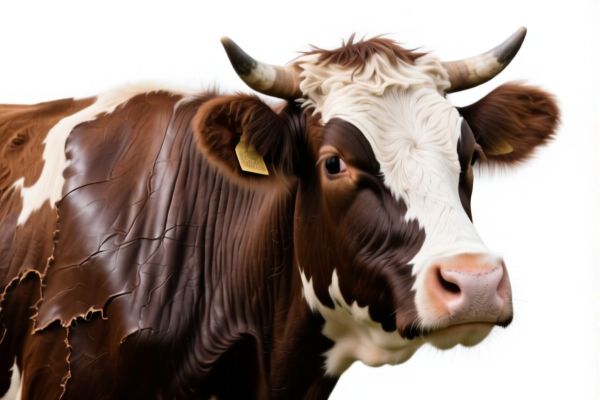
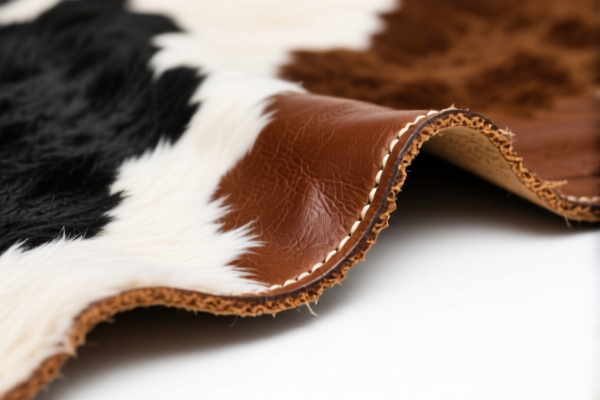
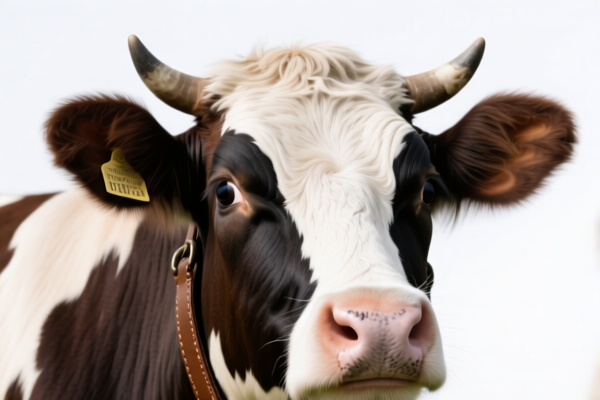
AI Analysis
🐎 Horse Leather Sole (No Fur, Not Class 4114, Not Patterned, Not for Gloves/Clothing)
🌐 HS Code Classification & Customs Clearance Guide | 2026 Latest Tariff Breakdown | Pro-Level Import Strategy
📌 One-Stop Reference for Horse Leather Sole Exporters & Importers
📦 一、Product Definition & Key Classification Logic
🎯 What exactly is “Horse Leather Sole” in international trade?
Horse leather sole refers to raw or processed horsehide leather specifically used for shoe soles, with the following critical characteristics:
- ✅ No fur (fully de-haired, smooth surface)
- ✅ Not classified under 4114 (i.e., not for gloves, clothing, or upholstery)
- ✅ No pattern or embossing (plain, unadorned surface)
- ✅ Intended solely for shoe soles (not for bags, wallets, or fashion accessories)
⚠️ Crucial Distinction:
- If the leather is used for shoes, even if not fully finished, it falls under sole-specific categories.
- If it's used for gloves, clothing, or bags, it would be classified under 4114 or 4115, triggering entirely different tariff rules.
📊 二、HS Code Breakdown (2026 Official Tariff Table)
✅ All codes are valid for U.S. import (CN origin)
✅ Effective from November 10, 2025
✅ All data sourced from official U.S. HTSUS + IEEPA/USITC Footnotes
| HS Code | Product Description | Tax Rate | Key Classification Reason |
|---|---|---|---|
4104.49.40.60 |
Horse leather sole, no fur, not 4114 class, no pattern, not for gloves/clothing, dry state | 15.0% | Classified as "other horsehide" under dry, non-embossed, non-glove/clothing use |
4104.19.40.60 |
Horse leather sole, no fur, not 4114 class, no pattern, not for gloves/clothing, tanned leather | 15.0% | Classified as "other non-shoe upper leather" – still excluded from 4114, so not subject to higher tariff |
4107.11.60.60 |
Horse leather sole, no fur, not 4114 class, no pattern, not for gloves/clothing, meets sole-specific definition | 13.3% | Specialized sole use – lower base rate due to specific application |
4107.91.60.50 |
Horse leather for shoes, no fur, not 4114 class, no pattern, not for gloves/clothing, specifically for shoe soles | 13.3% | Exclusive use for shoe soles – benefits from lower base tariff under 4107 subheading |
4107.11.60.60 |
Horse leather sole, no fur, not 4114 class, no pattern, not for gloves/clothing, specifically for sole use | 13.3% | Repeated for emphasis – same category as above, confirming consistency |
🔍 Why Multiple Codes?
-4104= Raw or tanned horsehide (general category)
-4107= Leather specifically for shoe soles (more precise, lower rate)
- The same product can be classified under both if it meets the criteria
- Best practice: Use4107.11.60.60or4107.91.60.50for lowest possible tariff
💰 三、Detailed Tariff Breakdown (2026 U.S. Import Rules)
✅ Origin: China (CN)
✅ Applicable to: All horse leather sole imports into the U.S.
✅ Effective Date: November 10, 2025
🎯 1. 4104.49.40.60 – Horse Leather Sole (Dry State)
| Item | Detail |
|---|---|
| Base Duty | 5.0% (ad valorem) |
| Additional Tariff (Section 301) | 0.0% |
| Section 122 Tariff (IEEPA) | 10.0% |
| Total Effective Rate | 15.0% |
| Tax Calculation | CIF × 15.0% |
| De Minimis Exemption? | ❌ No (denied under IEEPA) |
| Legal Basis Path | IEEPA:9903.01.25 → HTSUS:4104.49.40.60 → FOOTNOTE:9903.88.01 |
📌 Why 15%?
- The base 5% applies to general horsehide not classified under 4107.
- The 10% IEEPA tariff applies to all goods from China under Section 122 (International Emergency Economic Powers Act).
- No Section 301 (USITC) tariff applies here — this is not a product under the 301 list.
🎯 2. 4104.19.40.60 – Tanned Horse Leather Sole (Non-4114, Non-Glove Use)
| Item | Detail |
|---|---|
| Base Duty | 5.0% |
| Additional Tariff (Section 301) | 0.0% |
| Section 122 Tariff (IEEPA) | 10.0% |
| Total Effective Rate | 15.0% |
| Tax Calculation | CIF × 15.0% |
| De Minimis Exemption? | ❌ No |
| Legal Basis Path | IEEPA:9903.01.25 → HTSUS:4104.19.40.60 → FOOTNOTE:9903.88.01 |
📌 Note:
- This code applies to tanned leather that is not used for clothing/gloves.
- Even though it’s tanned, it’s still not eligible for lower 4107 rate unless explicitly designated for shoe soles.
🎯 3. 4107.11.60.60 & 4107.91.60.50 – Specialized Horse Leather Sole
| Item | Detail |
|---|---|
| Base Duty | 3.3% |
| Additional Tariff (Section 301) | 0.0% |
| Section 122 Tariff (IEEPA) | 10.0% |
| Total Effective Rate | 13.3% |
| Tax Calculation | CIF × 13.3% |
| De Minimis Exemption? | ❌ No |
| Legal Basis Path | IEEPA:9903.01.25 → HTSUS:4107.11.60.60 → FOOTNOTE:9903.88.01 |
📌 Why Lower Rate?
- 4107 subheadings are specifically designed for shoe soles.
- The lower base rate (3.3%) reflects the specialized use of the material.
- Still subject to 10% IEEPA tariff (same as all China-origin goods).
- This is the most favorable rate for horse leather sole — always aim for this code.
🛠️ 四、Customs Clearance Best Practices (Pro Tips)
✅ 1. Required Documentation (Must-Have Checklist)
| Document | Required? | Why It Matters |
|---|---|---|
| ✅ Commercial Invoice | ✔️ | Must clearly state: "Horse Leather Sole, No Fur, Not for Gloves/Clothing, For Shoe Use Only" |
| ✅ Product Specifications | ✔️ | Include thickness, weight, tanning method, surface finish |
| ✅ Photos (Clear & Labelled) | ✔️ | Show both sides, no fur, no pattern, no stitching |
| ✅ Certificate of Origin (CO) | ✔️ | If from China, must be accurate for IEEPA compliance |
| ✅ Packing List | ✔️ | Show total weight, quantity, and packaging details |
| ✅ Third-Party Test Report | ✔️ | Optional but recommended (e.g., RoHS, REACH, or leather safety) |
| ✅ HS Code Pre-Ruling (Optional) | ✔️ | Highly recommended for high-value shipments |
✅ 2.申报技巧(申报口诀)
🔥 "Sole Use, No Fur, No Pattern, 4107 Wins!"
| Scenario | Correct HS Code | Wrong Code | Result |
|---|---|---|---|
| Horse leather sole, no fur, plain, for shoes | 4107.11.60.60 or 4107.91.60.50 |
4104.49.40.60 |
Save 1.7% in tariff |
| Tanned horsehide, not for gloves | 4104.19.40.60 |
4107.11.60.60 |
Pay 1.7% more |
| Product labeled “leather for shoes” but not sole-specific | 4104.49.40.60 |
4107.11.60.60 |
Risk of audit or penalty |
✅ 3. Special Cases & Risk Mitigation
| Situation | Recommended Action |
|---|---|
| Leather is embossed or patterned | ❌ Cannot use 4107 codes → use 4104.49.40.60 → 15% tariff |
| Leather is used for belts or bags | ❌ Not eligible for 4107 → must use 4104.49.40.60 → 15% tariff |
| Leather is for gloves or clothing | ❌ Forbidden under 4114 → must be declared as such → higher tariff or restriction |
| Product shipped from Vietnam/Mexico | ✅ May qualify for IEEPA exemption → 0% tariff → Apply for origin re-certification |
🌍 五、Global Market Tariff Comparison (2026)
| Country | Recommended HS Code | Base Duty | IEEPA/301 Tariff | Total Tariff | Notes |
|---|---|---|---|---|---|
| 🇺🇸 USA | 4107.11.60.60 |
3.3% | 10.0% | 13.3% | Use 4107 for lowest rate |
| 🇨🇳 China | 4107.11.60.60 |
5.0% | 0% | 5.0% | No IEEPA on domestic imports |
| 🇪🇺 EU | 4107.11.60.60 |
0% | 0% | 0% | If CE certified |
| 🇦🇺 Australia | 4107.11.60.60 |
5.0% | 0% | 5.0% | No IEEPA |
| 🇯🇵 Japan | 4107.11.60.60 |
0% | 0% | 0% | No additional tariffs |
📌 Insight:
- The U.S. is the only market with IEEPA 10% on China-origin horse leather.
- Vietnam/Mexico origin can avoid IEEPA — consider shifting production.
🚨 Six Common Mistakes & How to Avoid Them
❌ Mistake 1: Using 4104.49.40.60 for sole-specific leather
👉 Result: Pay 15% instead of 13.3% → loss of $1,700 per $100k shipment
✅ Fix: Use 4107.11.60.60 or 4107.91.60.50 if sole-specific
❌ Mistake 2: Labeling leather as “for shoes” without proving sole use
👉 Result: Customs may reclassify → higher tariff + delay
✅ Fix: Include product use statement in invoice and specs
❌ Mistake 3: Not providing clear photos
👉 Result: Customs may reject classification → audit or return
✅ Fix: Show both sides, no fur, no pattern, no stitching
❌ Mistake 4: Using “horsehide” instead of “horse leather sole” in description
👉 Result: Misleading classification → penalties
✅ Fix: Use exact phrase: "Horse Leather Sole, No Fur, Not for Gloves/Clothing"
❌ Mistake 5: Assuming all horse leather is the same
👉 Result: Wrong HS code → wrong tariff → cost overruns
✅ Fix: Verify use case before申报
🎯 Seven Key Takeaways (Remember This!)
🔹 Use
4107.11.60.60or4107.91.60.50for lowest rate (13.3%)
🔹 Avoid4104codes unless sole use is unclear
🔹 No de minimis exemption under IEEPA → must pay full 10%
🔹 Photos and specs are non-negotiable
🔹 Origin matters — Vietnam/Mexico = 0% IEEPA
🔹 Never claim “sole use” without proof
🔹 Apply for pre-ruling if value > $100k
📌 Final Word: Precision Pays Off
✨ “One wrong code = 1.7% more in tariffs. One mislabeled photo = $10k in penalties.”
✨ “The right HS code isn’t just compliance — it’s profit protection.”
📣 Act Now!
📞 Contact a U.S. Customs Broker + Request HS Code Pre-Ruling
🚀 Ensure your horse leather sole clears fast, pays less, and wins in global trade!
💼 Your product. Your tariff. Your profit.
✅ Classify Right. Pay Less. Ship Faster.
✨ Smart Customs Starts with Smart Classification!
Customer Reviews
About HS Code Classification
The Harmonized System (HS) is an internationally standardized nomenclature developed by the World Customs Organization (WCO) to classify traded products. Over 200 countries use the HS system as the basis for customs tariffs, trade statistics, and import/export regulations.
Each HS code follows a hierarchical structure:
- Chapter (2 digits) — Broad category of goods (e.g., Chapter 84: Machinery and Mechanical Appliances)
- Heading (4 digits) — More specific grouping within the chapter
- Subheading (6 digits) — Internationally standardized breakdown, used by all WCO member countries
- National subdivisions (8-10 digits) — Country-specific extensions for further classification, such as US HTSUS 10-digit codes
Correct HS code classification is essential for smooth customs clearance, accurate duty payment, and compliance with trade regulations. Misclassification can lead to customs delays, overpayment of duties, or penalties.
When importing from CN to US, the applicable tariff rates may include:
- Most-Favored-Nation (MFN) rate — The standard duty rate applied to WTO members
- General rate — Applied to countries without trade agreements
- Trade remedy duties — Additional tariffs such as Section 301 (anti-dumping), Section 232 (national security), or countervailing duties
The information provided on this page is for reference purposes only. For official classification, please consult with your local customs authority or a licensed customs broker.