Horse Leather for Aircraft Interior
CN → US| HS Code | Tariff Rate | Origin | Destination | Doc |
|---|---|---|---|---|
| 4205001000 | 35.0% | CN | US | Official Doc |
| 4113103000 | 12.4% | CN | US | Official Doc |
| 4114203000 | 37.3% | CN | US | Official Doc |
| 4114100000 | 38.2% | CN | US | Official Doc |
| 4205008000 | 35.0% | CN | US | Official Doc |
Product Images


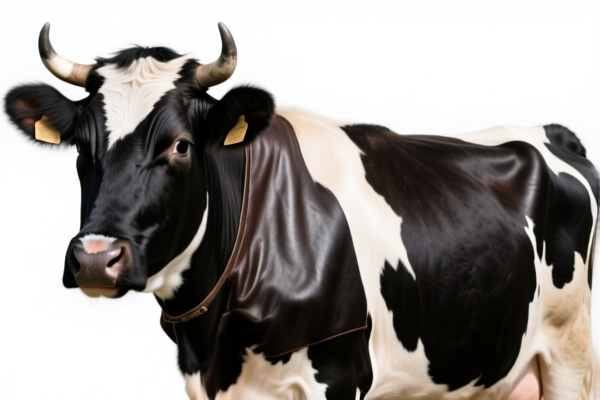
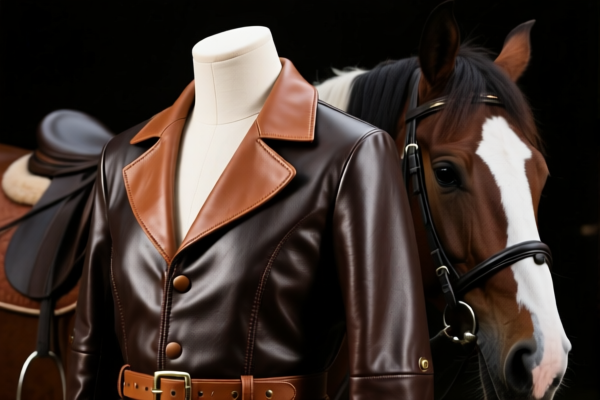
AI Analysis
🛩️ Horse Leather for Aircraft Interior (Aviation Grade Animal Leather)
🌐 HS Code Reference & Customs Clearance Guide | 2026 Latest Tariff Breakdown | Professional Aviation Compliance Strategy
📌 I. Product Definition & Classification: What is "Horse Leather for Aircraft Interior"?
Horse leather destined for aircraft interiors is a specialized, high-performance material used in premium aviation seating, headrests, sidewalls, and overhead panel coverings. Due to its unique tensile strength, flame retardancy requirements, and specific texture, it undergoes rigorous classification based on processing state, surface finish, and end-use.
In international trade, this product falls under Chapter 41 (Raw Hides/Skins) & Chapter 42 (Articles of Leather). The classification depends heavily on whether the leather is: * Tanned but not further dressed (Raw/Crust leather). * Patent/Surface-treated (Lacquered/Shiny). * Suede/Nubuck (Fleshed/Abraided). * Finished as a specific article (e.g., pre-cut panels, molded parts).
⚠️ Critical Distinction for Clearance:
- If it is flat, unworked leather for aircraft interiors → Likely 4113 or 4114 series.
- If it is worked into a specific aviation article (e.g., a pre-formed seat cover) → Likely 4205 series.
- Surface Finish (Lacquer vs. Suede) drastically changes the HS Code and Tax Rate!
📦 II. Detailed HS Code Breakdown & Tax Logic (2026 Aviation Sector)
| HS Code | Product Description & Logic | Tax Rate (Total) | Tax Composition Breakdown |
|---|---|---|---|
| 4205.00.10.00 | Animal Leather for Aircraft Interior • Material: Animal Leather (General) • Purpose: Aircraft Interior (Technical/Other) • Logic: Classified under "Other articles of leather" specifically for technical/aviation use where no specific subheading applies. |
35.0% | Base (0%) + Add-on (25%) + Sec. 122 (10%) |
| 4113.10.30.00 | Animal Leather (Goat/Kid Type) • Material: Animal Leather (Attributes consistent with Goat/Kid) • Purpose: Processed leather application • Logic: If the horse leather shares physical properties with processed goat/kid leather, it falls here. Lowest tax among leather types. |
12.4% | Base (2.4%) + Add-on (0%) + Sec. 122 (10%) |
| 4114.20.30.00 | Lacquered Leather (Patent Leather) • Material: Lacquered Leather (including leather) • Purpose: Aircraft Interior • Logic: If the leather has a plastic/rubber coating or glossy finish (Patent), it falls under Chapter 41.14 (Lacquered/Plastic-coated). |
37.3% | Base (2.3%) + Add-on (25%) + Sec. 122 (10%) |
| 4114.10.00.00 | Suede/Nubuck Leather • Material: Suede (Leather subclass) • Purpose: Aircraft Interior • Logic: If the leather is finished on the flesh side (napped) or has a suede texture, it is taxed at the highest rate in this group. |
38.2% | Base (3.2%) + Add-on (25%) + Sec. 122 (10%) |
| 4205.00.80.00 | Other Animal Leather Articles • Material: Animal Leather • Inference: Leather goods/products (General "Other" category) • Logic: If the product is a finished leather article (not just raw hide) for aircraft use but doesn't fit 4113/4114 specific descriptions. |
35.0% | Base (0%) + Add-on (25%) + Sec. 122 (10%) |
🔍 Key Classification Insight:
- 4113.10.30.00 (12.4%) is the "Golden Gate" if your horse leather mimics Goat/Kid leather properties. It saves ~22.6% in taxes compared to standard horse leather codes.
- 4114 Series (Lacquered/Suede) incurs the highest total tax (37-38%) due to the 25% "Add-on Tariff."
- 4205 Series treats the leather as a finished product (e.g., pre-cut panels), resulting in a flat 35% total rate.
💰 III. 2026 Tariff Rate Deep Dive (USA Import Rules)
✅ Applicable Country: United States (US)
✅ Origin: China (CN)
✅ Effective Date: As of latest 2025-2026 Trade War Adjustments
🎯 1. The "Add-on Tariff" Factor (25%)
For 4114.20.30.00 (Lacquered), 4114.10.00.00 (Suede), and 4205 categories: * Base Tariff: Low (0% - 3.2%). * Section 301 / "Add-on" Tariff: +25.0% (Mandatory for these categories). * Section 122 Tariff: +10.0% (Additional duty on specific leather goods). * Result: Total effective duty = 35% - 38.2%.
📌 Critical Note: The 25% add-on is non-negotiable for standard horse leather articles unless a specific exclusion code exists. This is the primary cost driver for aircraft interior leather.
🎯 2. The "Low-Risk" Exception (4113.10.30.00)
- Total Tax: 12.4%.
- Why? This code has 0% Add-on Tariff.
- Strategy: If your horse leather is tanned and finished to resemble Goat or Kid leather (a common high-end aviation standard), force classification here to save ~23% in costs.
- Requirement: Must prove material attributes match "Goat/Kid" definitions via lab tests.
🛠️ IV. Customs Clearance Strategy & Pitfall Avoidance
✅ 1. Documentation Checklist (Must-Haves for FAA/Customs)
| Document | Requirement | Why? |
|---|---|---|
| 📄 Material Safety Data Sheet (MSDS) | ✔️ Required | Proves flame retardancy & chemical content for aviation approval. |
| 📸 High-Res Product Photos | ✔️ Required | Must show texture (Suede vs. Smooth vs. Patent) to justify HS Code. |
| 🔬 Lab Test Report | ✔️ Critical | Crucial for 4113.10.30.00: Must confirm hide type matches "Goat/Kid" profile to avoid 25% penalty. |
| 📝 Commercial Invoice | ✔️ Required | Description must be specific: "Horse Leather, Tanned, Aircraft Grade, [Finish Type]". Avoid generic "Leather." |
| 🛡️ FAA/ISO Certs | ✔️ Recommended | Proof of compliance with aircraft interior safety standards. |
✅ 2. Declaration Logic (The "Tax Saver" Formula)
🔥 "Finish Matters, Type Saves: Goats Win, Suede Loses!"
| Scenario | Correct HS Code | Tax Rate | Risk if Misdeclared |
|---|---|---|---|
| Lacquered/Glossy Leather | 4114.20.30.00 |
37.3% | If declared as 4205 → Still 35% (No savings, but safer). |
| Suede/Nubuck Finish | 4114.10.00.00 |
38.2% | If declared as 4113 → Audit Risk (Texture mismatch). |
| Goat/Kid-like Texture | 4113.10.30.00 |
12.4% | BIG WIN! If declared as "Horse" (4205) → Overpay ~23%. |
| Pre-formed Seat Panels | 4205.00.10.00 |
35.0% | If declared as raw hide → Rejection (Not raw). |
📌 Pro Tip: If the leather is smooth and treated, aggressively argue for 4113.10.30.00 (Goat/Kid equivalent) if the texture allows, as the 25% surcharge is avoided.
✅ 3. Special Aviation Scenarios
| Situation | Handling Strategy |
|---|---|
| "Technical Use" Claim | Clearly state "For Aircraft Interior" on the invoice to support 4205.00.10.00 or 4113 classification, avoiding general "fashion leather" codes. |
| Mixed Material | If leather is backed with foam or plastic for aircraft seats, it may still be classified under 4205 (articles of leather) if the leather is the principal material. |
| Suede vs. Rough | Suede (4114) is taxed higher. If the leather is merely "buffed" but not "napped," try to classify under 4113 to avoid the 25% add-on. |
🌍 V. Global Market Context (2026 Comparison)
| Destination | Recommended HS Code | Effective Tax | Key Constraint |
|---|---|---|---|
| 🇺🇸 USA | 4113.10.30.00 |
12.4% | Must prove "Goat/Kid" attributes to avoid 25% surcharge. |
| 🇪🇺 EU | Varies | ~5-12% | Lower base tariffs; no 25% Section 301 equivalent. |
| 🇨🇳 China | 4113.10.30.00 |
~2.4% | Base rate only; no Section 122 or 301. |
📌 Conclusion: The US market is the most punitive due to the 25% Add-on Tariff on standard horse leather. Classification Strategy (Goat vs. Horse vs. Suede) is the single most important factor for cost control.
📌 VI. Common Pitfalls & Blood-Tea Lessons
❌ Mistake 1: Declaring all horse leather as 4205 (35%) when it looks like Goat/Kid (12.4%).
👉 Result: Overpaying ~23% unnecessarily.
👉 Fix: Submit lab tests proving the leather grain matches Goat/Kid standards.
❌ Mistake 2: Declaring Suede as Smooth Leather (4113).
👉 Result: Customs Audit & Penalty. Suede must be declared under 4114 (38.2%).
👉 Fix: Be honest about the texture; the tax is fixed, but fines are worse.
❌ Mistake 3: Ignoring Section 122 Tariff (10%).
👉 Result: Unexpected 10% on top of everything.
👉 Fix: This is mandatory for all leather goods in the current tariff list. Factor it into your pricing model.
✅ Best Practice:
"Horse Leather, Aircraft Interior, [Finish Type: Smooth/Lacquered/Suede], Tanned, Certified to FAA/ISO Standards, Model: [Ref]"
🎯 VII. Final Verdict & Action Plan
🎯 Strategic Summary:
Goal: Minimize the 25% Add-on Tariff.
Path: If your horse leather can be technically classified as Goat/Kid equivalent (4113.10.30.00), DO IT. You save ~23% in taxes.
Risk: If it is truly Suede or Patent, accept the 37-38%* rate but ensure your documentation proves the texture to avoid re-classification by Customs.
🔹 "Classification is King, Texture is Queen."
🔹 "Goat-like = 12.4% (Gold). Suede/Patent = 38% (Expensive)."
🔹 "Section 122 (10%) is inevitable – Budget for it."
📌 Immediate Action Items:
1. Lab Test: Verify if your "Horse Leather" meets the physical definition of "Goat/Kid" leather.
2. Invoice Rewrite: Update commercial invoices to include specific finish details (Lacquered, Suede, Smooth).
3. Consult Expert: Request a Binding Tariff Information (BTI) ruling from US Customs if uncertain about the "Goat/Kid" classification.
✨ Smart Clearance Starts with Precise Classification!
💼 Save 23% Today by Choosing the Right HS Code!
Customer Reviews
About HS Code Classification
The Harmonized System (HS) is an internationally standardized nomenclature developed by the World Customs Organization (WCO) to classify traded products. Over 200 countries use the HS system as the basis for customs tariffs, trade statistics, and import/export regulations.
Each HS code follows a hierarchical structure:
- Chapter (2 digits) — Broad category of goods (e.g., Chapter 84: Machinery and Mechanical Appliances)
- Heading (4 digits) — More specific grouping within the chapter
- Subheading (6 digits) — Internationally standardized breakdown, used by all WCO member countries
- National subdivisions (8-10 digits) — Country-specific extensions for further classification, such as US HTSUS 10-digit codes
Correct HS code classification is essential for smooth customs clearance, accurate duty payment, and compliance with trade regulations. Misclassification can lead to customs delays, overpayment of duties, or penalties.
When importing from CN to US, the applicable tariff rates may include:
- Most-Favored-Nation (MFN) rate — The standard duty rate applied to WTO members
- General rate — Applied to countries without trade agreements
- Trade remedy duties — Additional tariffs such as Section 301 (anti-dumping), Section 232 (national security), or countervailing duties
The information provided on this page is for reference purposes only. For official classification, please consult with your local customs authority or a licensed customs broker.