Horticultural Grit
CN → US| HS Code | Tariff Rate | Origin | Destination | Doc |
|---|---|---|---|---|
| 3824993990 | 35.0% | CN | US | Official Doc |
| 3105900050 | 35.0% | CN | US | Official Doc |
| 2530908050 | 10.0% | CN | US | Official Doc |
| 3105100000 | 35.0% | CN | US | Official Doc |
| 3824999397 | 40.0% | CN | US | Official Doc |
Product Images
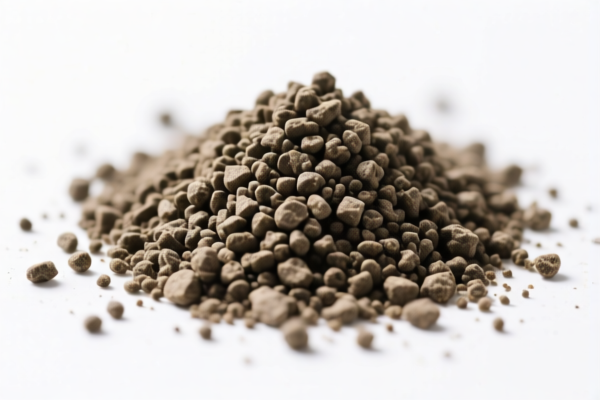
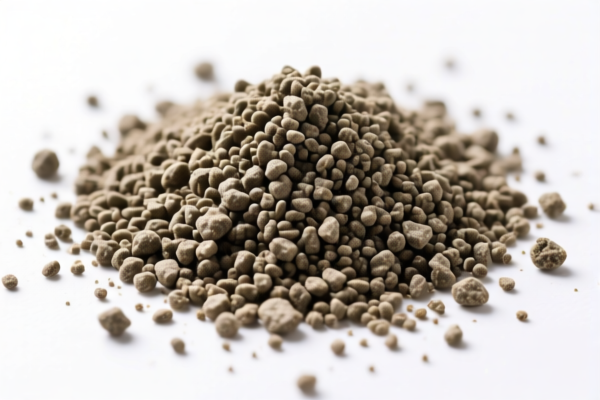
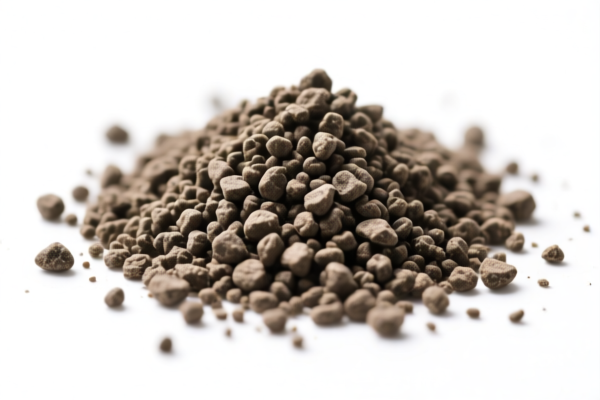
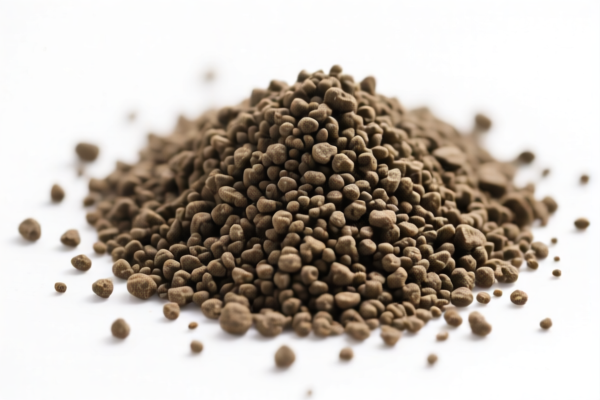
AI Analysis
🌿 Horticultural Grit: The Unsung Hero of Modern Landscaping
🌐 HS Code Reference & Customs Clearance Guide | 2026 Latest Tariff Analysis | Professional Import Strategy
📌 I. Product Definition & Classification: What is "Horticultural Grit"?
Horticultural Grit (also known as decorative gravel, aquarium gravel, or landscaping grit) is a versatile material used primarily in gardening, landscaping, and aquariums. It is characterized by its granular form and is typically composed of crushed stone, volcanic rock, or ceramic materials.
In international trade, its classification hinges on two critical factors: 1. Material Composition: Is it a natural mineral product or a processed chemical/mixed product? 2. Intended Use: Is it explicitly for fertilizer (plant nutrition) or for structural/decorative purposes (drainage/aesthetics)?
⚠️ Key Distinction:
- If the product is chemically processed to provide nutrients (N-P-K) → Fertilizer Class (Chapter 31)
- If the product is crushed stone/mineral for drainage, mulch, or decoration → Mineral Class (Chapter 25)
- If the product is a complex chemical mixture not fitting specific categories → Chemical Products Class (Chapter 38)
📦 II. HS Code Classification Details (2026 Latest Tariff Authority Comparison)
Based on the provided data, here are the four potential HS Codes for "Horticultural Grit" depending on its specific formulation and composition:
| HS Code | Product Description | Application Scenario | Key Classification Logic |
|---|---|---|---|
3105.90.00.50 |
Other Fertilizers (Granular Form) | Plant nutrients, N-P-K blended grit | ✅ Nutrient-rich: Contains Nitrogen, Phosphorus, Potassium. Granular shape matches fertilizer standards. |
3105.10.00.00 |
Mineral/Chemical Fertilizers (Granular) | High-grade horticultural nutrient grit | ✅ Nutrient-rich: Explicitly inferred as N-P-K based fertilizer. Granular morphology confirms this. |
2530.90.80.50 |
Other Mineral Products (Granular) | Drainage grit, decorative stones, aquarium gravel | ✅ Mineral-based: Made from mineral materials. Granular form matches undifferentiated mineral "catch-all" category. |
3824.99.39.90 / 3824.99.93.97 |
Chemical Products/Mixtures | Complex blended soil amendments, bonded grit | ✅ Chemical/Mixed: Inferred as a mixture of chemical/natural products. Fits "other chemical products" catch-all categories. |
🔍 Critical Note:
-3105.90.00.50vs3105.10.00.00: Both are fertilizers.3105.10is often for specific mineral salts, while3105.90is a broader "other fertilizers" category. Both incur the highest tax burden.
-2530.90.80.50: This is the most cost-effective option if the grit is purely mineral (e.g., crushed granite, lava rock) and contains no significant nutrient content.
-3824Series: Used only if the grit is a treated chemical mixture (e.g., coated with polymers or specific chemical agents) and doesn't fit Chapter 31.
💰 III. 2026 Latest Tariff Rate Breakdown (Including Surtaxes & Policy Add-ons)
✅ Applicable Country: United States (US)
✅ Origin: China (CN)
✅ Effective Date: November 10, 2025 onwards
🎯 1. 3105.90.00.50 & 3105.10.00.00 —— Fertilizer Categories (High Tax)
| Item | Content |
|---|---|
| Base Tariff | 0.0% (ad valorem) |
| USITC Surtax | +25.0% (Section 301 Duties) |
| IEEPA Surtax | +10.0% (China-specific Add-on Tariff) |
| Total Rate | 35.0% |
| Tax Calculation | CIF Value × 35% |
| De Minimis Eligibility | ❌ Not Eligible (High value/threshold applies) |
| Legal Basis Path | IEEPA:9903.01.25 → IEEPA:9903.01.24 → USITC:3105.* → FOOTNOTE:301 |
📌 Explanation:
- Fertilizers are classified under Chapter 31. Due to Section 301 and IEEPA measures, these items face 35% total duty.
- Even if the base tariff is 0%, the 35% surtax makes this category expensive for importers.
- Risk: If customs inspectors determine the product is not a fertilizer but a simple mineral, declaring it as such (3105) may lead to underpayment penalties if later audited. Conversely, if it is a fertilizer, declaring it as mineral (2530) leads to severe penalties.
🎯 2. 2530.90.80.50 —— Mineral Products (Lowest Tax)
| Item | Content |
|---|---|
| Base Tariff | 0.0% (ad valorem) |
| USITC Surtax | 0.0% (Exempt from Section 301 for this subheading) |
| IEEPA Surtax | +10.0% (China-specific Add-on Tariff) |
| Total Rate | 10.0% |
| Tax Calculation | CIF Value × 10% |
| De Minimis Eligibility | ❌ Not Eligible (Standard de minimis thresholds apply, but high risk of audit) |
| Legal Basis Path | IEEPA:9903.01.25 → USITC:2530.90.80.50 → FOOTNOTE:301 (Exempt) |
📌 Explanation:
- This is the cheapest option at 10% total duty.
- Crucial Condition: The product MUST be a natural mineral product (e.g., crushed rock, sand, gravel) without significant added nutrients or complex chemical treatments.
- If "Horticultural Grit" contains fertilizer elements, this classification is incorrect and poses a high compliance risk.
🎯 3. 3824.99.39.90 & 3824.99.93.97 —— Chemical Products (Highest Tax)
| Item | Content |
|---|---|
| Base Tariff | 0.0% (39) or 5.0% (3824.99.93.97) |
| USITC Surtax | 0.0% (39) or 25.0% (3824.99.93.97) |
| IEEPA Surtax | +10.0% |
| Total Rate | 40.0% (for 3824.99.93.97) / 10.0% (for 3824.99.39.90 if base is 0%) |
| Tax Calculation | CIF Value × Rate |
| De Minimis Eligibility | ❌ Not Eligible |
| Legal Basis Path | IEEPA:9903.01.25 → USITC:3824.* → FOOTNOTE:301 |
📌 Explanation:
-3824.99.93.97: Total 40% (5% base + 25% Section 301 + 10% IEEPA). This applies if the grit is a complex chemical mixture.
-3824.99.39.90: Total 35% (0% base + 25% Section 301 + 10% IEEPA).
- Use this only if the product is a specialized chemical soil amendment that doesn't fit Fertilizer (Ch 31) or Mineral (Ch 25).
🛠️ IV. Customs Clearance Practical Advice (Battle-Tested Pitfall Guide)
✅ 1. Required Documentation Checklist (All Mandatory)
| Document | Must Provide | Purpose |
|---|---|---|
| ✅ Product Specifications | ✔️ | Detailed breakdown of composition (e.g., % Silica, % N-P-K, particle size). |
| ✅ Material Safety Data Sheet (MSDS) | ✔️ | Proves chemical composition; critical for distinguishing between Mineral vs. Chemical. |
| ✅ Product Photos (Macro & Micro) | ✔️ | Shows granular shape and color; helps customs officers visually classify. |
| ✅ Certificate of Analysis (COA) | ✔️ | Critical for Fertilizer Classification: Must show N-P-K levels to justify HS 3105. |
| ✅ Commercial Invoice | ✔️ | Clearly state: "Horticultural Grit, [Mineral/Fertilizer] Grade, Model ABC". |
| ✅ Packing List | ✔️ | Net/Gross weight, volume. |
| ✅ Origin Certificate | ✔️ | If non-Chinese origin, may avoid IEEPA surtax. |
✅ 2. Declaration Strategy (Key Mantras)
🔥 "Composition is King, Intention is Queen!"
| Scenario | Correct Declaration | Wrong Declaration | Consequence |
|---|---|---|---|
| Pure Crushed Rock (No Nutrients) | 2530.90.80.50 (Mineral) |
3105.90.00.50 (Fertilizer) |
Overpayment: 35% vs 10% → Lost Profit! |
| Nutrient-Enriched Grit (High N-P-K) | 3105.90.00.50 (Fertilizer) |
2530.90.80.50 (Mineral) |
Underpayment: 35% vs 10% → Audit + Penalties! |
| Chemical-Coated Gravel | 3824.99.93.97 (Chemical) |
2530.90.80.50 (Mineral) |
Misclassification → Delays + Confiscation |
✅ 3. Special Case Handling
| Situation | Handling Advice |
|---|---|
| "Organic Grit" | If it contains organic matter (compost, etc.), it cannot be 2530 (Mineral). It may fall under 3105 (Fertilizer) or 3824 (Chemical Mixture). |
| "Lava Rock" | Pure volcanic rock → 2530.90.80.50 (10%). Ensure no added fertilizers. |
| "Osmocote-Style" | Controlled-release fertilizer granules → 3105.90.00.50 (35%). |
| Mixed Loads | If containers have both mineral grit and fertilizer, declare separately. Do not bundle under one HS Code. |
🌍 V. Global Market Clearance Comparison (2026 Latest)
| Country/Region | Recommended HS Code | Duty Rate (China Origin) | Certification | Notes |
|---|---|---|---|---|
| 🇺🇸 USA | 2530.90.80.50 (Mineral) |
10% | None | Cheapest if purely mineral. |
| 🇺🇸 USA | 3105.90.00.50 (Fertilizer) |
35% | EPA/State Registration | High tax, strict regulation. |
| 🇪🇺 EU | 2530.90 (Mineral) |
~3-4% | REACH | No Section 301 equivalent, but check REACH for chemicals. |
| 🇨🇳 China | 2530.90 (Mineral) |
~5-6% | None | Lower export/import duty. |
| 🇬🇧 UK | 2530.90 (Minister) |
~3-5% | UKCA | Post-Brexit rules similar to EU. |
📌 Conclusion:
- USA is the most complex market due to Section 301 and IEEPA surtaxes.
- Mineral Grit (2530) is significantly cheaper (10%) than Fertilizer Grit (3105) (35%).
- Precision in composition is the key to cost savings.
📌 VI. Common Mistakes & Pitfall Guide (Blood-Teaching Lessons)
❌ Mistake 1: Declaring Fertilizer-Infused Grit as Mineral Grit (2530) to save tax.
👉 Consequence: Customs will test the sample, find N-P-K, and impose back taxes + 10-20% penalty.
❌ Mistake 2: Declaring Pure Crushed Rock as Fertilizer (3105) due to lack of product knowledge.
👉 Consequence: You pay 35% instead of 10% → 25% profit erosion for no reason.
❌ Mistake 3: Vague Description: "Grit" or "Stone".
👉 Consequence: Customs cannot classify → Hold for Inspection → Delays (2-4 weeks) → Demurrage Fees.
✅ Correct Practice:
"Horticultural Grit, Crushed Granite, Particle Size 2-5mm, No Added Nutrients, For Landscaping Drainage, HS 2530.90.80.50"
OR
"Controlled-Release Fertilizer Grit, N-P-K 10-10-10, Granular, Plant Nutrient, HS 3105.90.00.50"
🎯 VII. Conclusion: Professional Declaration, Save Costs, Avoid Risks!
🎯 Remember the Mantra:
🔹 "Mineral is 10%, Fertilizer is 35%. Know your content!"
🔹 "No N-P-K? Don't say Fertilizer. Has N-P-K? Don't say Mineral."
📌 Pro Tip:
If your product is a custom blend (e.g., mineral base + small amount of coating), consult a customs broker for a Pre-Ruling or Classification Opinion. This document can protect you from retroactive duties.
📣 Immediate Action:
📞 Provide Product Specs + MSDS to your Customs Broker.
📊 Analyze N-P-K Content. If < 2% N, P, K, and no chemical treatment, aim for2530.90.80.50(10%).
🚀 Optimize your supply chain cost with accurate HS Codes!
✨ Professional Clearance Starts with Accurate Classification!
💼 Every Percentage Point Matters in International Trade!
Customer Reviews
About HS Code Classification
The Harmonized System (HS) is an internationally standardized nomenclature developed by the World Customs Organization (WCO) to classify traded products. Over 200 countries use the HS system as the basis for customs tariffs, trade statistics, and import/export regulations.
Each HS code follows a hierarchical structure:
- Chapter (2 digits) — Broad category of goods (e.g., Chapter 84: Machinery and Mechanical Appliances)
- Heading (4 digits) — More specific grouping within the chapter
- Subheading (6 digits) — Internationally standardized breakdown, used by all WCO member countries
- National subdivisions (8-10 digits) — Country-specific extensions for further classification, such as US HTSUS 10-digit codes
Correct HS code classification is essential for smooth customs clearance, accurate duty payment, and compliance with trade regulations. Misclassification can lead to customs delays, overpayment of duties, or penalties.
When importing from CN to US, the applicable tariff rates may include:
- Most-Favored-Nation (MFN) rate — The standard duty rate applied to WTO members
- General rate — Applied to countries without trade agreements
- Trade remedy duties — Additional tariffs such as Section 301 (anti-dumping), Section 232 (national security), or countervailing duties
The information provided on this page is for reference purposes only. For official classification, please consult with your local customs authority or a licensed customs broker.