Hosiery and socks
CN → US| HS Code | Tariff Rate | Origin | Destination | Doc |
|---|---|---|---|---|
| 6115959000 | 31.0% | CN | US | Official Doc |
| 6115969020 | 24.6% | CN | US | Official Doc |
| 6115966010 | 36.3% | CN | US | Official Doc |
| 6115940000 | 28.8% | CN | US | Official Doc |
Product Images
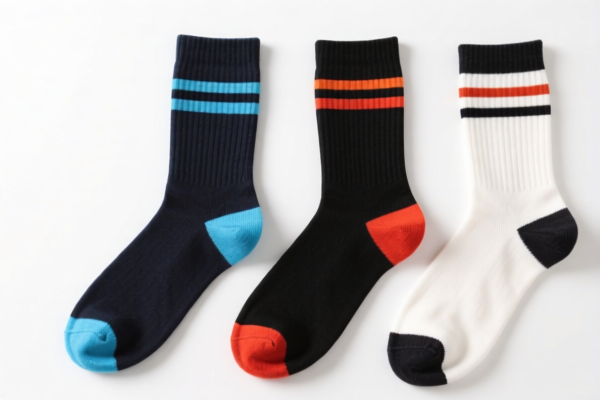
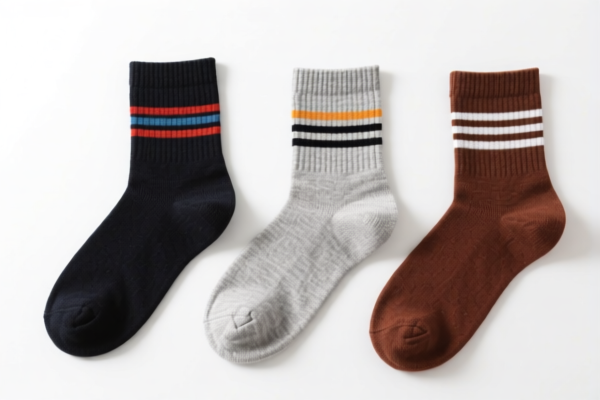
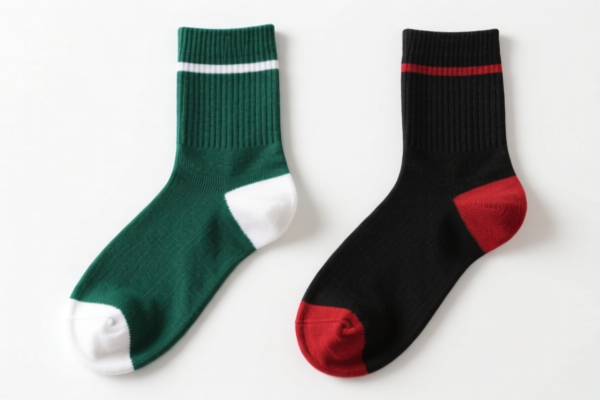
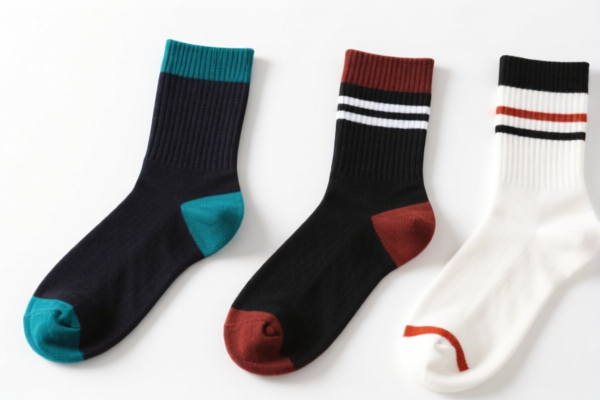
AI Analysis
🧦 Hosiery & Socks (Knitted or Crocheted)
🌐 HS Code Reference & Clearance Guide | 2026 Latest Tariff Analysis | Professional Clearance Strategy
📌 I. Product Definition & Classification: Do You Truly Understand "Socks"?
Hosiery and socks are essential textile garments, classified primarily under Chapter 61 (Articles of Apparel and Clothing Accessories, Knitted or Crocheted). In international trade, precise classification depends on the material composition and specific type (e.g., pantyhose, knee-highs, ankle socks).
Key Distinction Points: * Synthetic Fibers (e.g., Nylon, Polyester, Spandex): Most common for hosiery and performance socks. * Other Textile Materials: If the material is not explicitly synthetic or cotton (which has different codes), it falls under "Other." * Knitted vs. Crocheted: All entries in the provided data assume these methods of manufacture.
⚠️ Critical Note:
- The provided data indicates four specific HS codes for "Hosiery/Socks."
- The primary differentiator among these codes is the Total Tax Rate, driven by varying Base Tariffs and Section 301 (122 Clause) / Additional Tariffs.
- Do not assume material without confirmation, as this drastically changes the tax burden.
📦 II. HS Code Classification Details (2026 Latest Tariff Authority)
Based on the provided data, here are the four potential HS Codes for Hosiery/Socks, ranked by tax efficiency:
| HS Code | Product Description (Summary) | Key Characteristics | Total Tax Rate |
|---|---|---|---|
| 6115.96.90.20 | Hosiery, knitted/crocheted; Pantyhose, tights, etc.; Likely Synthetic Fiber | High likelihood match for standard synthetic hosiery. | 24.6% |
| 6115.94.00.00 | Socks, consistent form with "Hosiery"; No material conflict | Generic "Other" socks, possibly lower tax bracket. | 28.8% |
| 6115.95.90.00 | Hosiery, knitted/crocheted; Material Undetermined | Initial judgment fits, but material ambiguity exists. | 31.0% |
| 6115.96.60.10 | Socks, consistent form; No material conflict | Specific sub-category of hosiery, likely higher tax due to base rate. | 36.3% |
🔍 Focus Reminder:
- 6115.96.90.20 offers the lowest total tax (24.6%) among the options, suggesting it may be the most favorable for standard synthetic hosiery.
- 6115.96.60.10 carries the highest tax (36.3%) due to a high base tariff (18.8%).
- Material Verification is Crucial: Misclassifying a synthetic sock as "Other" or vice versa can lead to significant tax discrepancies.
💰 III. 2026 Latest Tariff Rate Breakdown (Detailed Policy Analysis)
✅ Applicable Country: United States (US)
✅ Origin: China (CN)
✅ Effective Time: Current (Includes Section 301/122 Clause tariffs)
🎯 1. 6115.96.90.20 —— Hosiery (Likely Synthetic Fiber) [RECOMMENDED IF SYNTHETIC]
| Item | Details |
|---|---|
| Base Tariff | 14.6% (Ad Valorem) |
| Additional Tariff (Section 301/122) | 0.0% |
| 122 Clause Tariff | +10.0% |
| Total Tax Rate | 24.6% |
| Tax Calculation | CIF Value × 24.6% |
| De Minimis Exemption? | ❌ Not Applicable (High tax rate generally disqualifies from low-value exemptions under current enforcement trends for textiles). |
| Legal Basis Path | HTSUS:6115.96.90.20 → Section 301 Footnote → 122 Clause Directive |
📌 Explanation:
- This code benefits from $0 Additional Tariff, making it the most cost-effective option if the product is indeed synthetic fiber pantyhose/tights.
- The 10% "122 Clause" is a specific trade remedy tariff.
- Total burden is moderate at 24.6%.
🎯 2. 6115.94.00.00 —— Other Socks
| Item | Details |
|---|---|
| Base Tariff | 11.3% |
| Additional Tariff (Section 301/122) | +7.5% |
| 122 Clause Tariff | +10.0% |
| Total Tax Rate | 28.8% |
| Tax Calculation | CIF Value × 28.8% |
| De Minimis Exemption? | ❌ Not Applicable |
| Legal Basis Path | HTSUS:6115.94.00.00 → Section 301 Footnote → 122 Clause Directive |
📌 Explanation:
- Lower base tariff (11.3%) but subject to 7.5% Additional Tariff.
- Total burden is 28.8%, slightly higher than the synthetic hosiery code.
🎯 3. 6115.95.90.00 —— Hosiery (Material Undetermined)
| Item | Details |
|---|---|
| Base Tariff | 13.5% |
| Additional Tariff (Section 301/122) | +7.5% |
| 122 Clause Tariff | +10.0% |
| Total Tax Rate | 31.0% |
| Tax Calculation | CIF Value × 31.0% |
| De Minimis Exemption? | ❌ Not Applicable |
| Legal Basis Path | HTSUS:6115.95.90.00 → Section 301 Footnote → 122 Clause Directive |
📌 Explanation:
- "Material Undetermined" creates uncertainty. If audited, customs may reclassify to a higher tax code.
- Total burden is 31.0%.
🎯 4. 6115.96.60.10 —— Socks (Specific Sub-category)
| Item | Details |
|---|---|
| Base Tariff | 18.8% |
| Additional Tariff (Section 301/122) | +7.5% |
| 122 Clause Tariff | +10.0% |
| Total Tax Rate | 36.3% |
| Tax Calculation | CIF Value × 36.3% |
| De Minimis Exemption? | ❌ Not Applicable |
| Legal Basis Path | HTSUS:6115.96.60.10 → Section 301 Footnote → 122 Clause Directive |
📌 Explanation:
- This code has the highest base tariff (18.8%), likely due to its specific classification within the "Other Hosiery" category.
- Total burden is 36.3%, the most expensive option. Avoid if possible.
🛠️ IV. Practical Clearance Advice (Avoiding Pitfalls)
✅ 1. Document Checklist (Mandatory)
| Document | Required? | Description |
|---|---|---|
| ✅ Product Specification Sheet | ✔️ | Must detail Material Composition (e.g., 80% Nylon, 20% Spandex). This is the #1 factor for HS code selection. |
| ✅ Product Photos | ✔️ | Clear images of the sock/hosiery, including labels/packaging. |
| ✅ Commercial Invoice | ✔️ | Must clearly state "Hosiery" or "Socks" and Country of Origin. |
| ✅ Packing List | ✔️ | Weight, dimensions, and quantity. |
| ✅ Material Test Report | ✔️ | Lab test confirming fiber content (e.g., ASTM D276). Essential for verifying 6115.96 vs 6115.94. |
✅ 2. Classification Strategy (Key Tips)
🔥 "Confirm Material First, Then Choose Code!"
| Scenario | Recommended HS Code | Reason |
|---|---|---|
| Pantyhose/Tights (Synthetic) | 6115.96.90.20 |
Lowest tax (24.6%). Best for standard nylon/spandex hosiery. |
| General Socks (Other) | 6115.94.00.00 |
Mid-range tax (28.8%). Use if not specifically pantyhose. |
| Uncertain Material | 6115.95.90.00 |
High risk. Only use if material is truly unknown and you cannot test it. |
| Specific Sub-category | 6115.96.60.10 |
Highest tax (36.3%). Avoid unless product specifically fits this narrow definition. |
⚠️ Warning:
- Do NOT use6115.96.90.20for cotton socks. Cotton socks have different HS codes (e.g., 6115.10).
- Misclassification leads to back taxes + penalties.
✅ 3. Special Cases
| Situation | Advice |
|---|---|
| Sample Shipment | Ensure documentation matches the final commercial shipment. |
| Mixed Orders | If shipping socks and pantyhose together, declare them separately with correct HS codes. |
| De Minimis (Section 321) | NOT APPLICABLE. Due to the high tariff rates (24-36%), these goods generally do not qualify for the $800 de minimis exemption under current US CBP enforcement for Chinese-origin textiles. |
🌍 V. Market Comparison (2026 Update)
| Region | Recommended HS Code | Est. Duty Rate | Notes |
|---|---|---|---|
| 🇺🇸 USA | 6115.96.90.20 |
24.6% | Includes 10% 122 Clause Tariff. |
| 🇨🇳 China | 6115.96.90.20 |
~5-10% | No Section 301 tariffs. |
| 🇪🇺 EU | 6115.96 |
~12-16% | No US-style additional tariffs. |
📌 Conclusion:
- USA is the most challenging market due to Section 301/122 tariffs.
- Selecting6115.96.90.20is the optimal strategy for synthetic hosiery to minimize costs.
📌 VI. Common Mistakes & Pitfalls
❌ Mistake 1: Assuming all "socks" are the same.
👉 Result: Paying 36.3% instead of 24.6% due to misclassification.
Fix: Use material composition to determine the exact sub-code.
❌ Mistake 2: Ignoring the "122 Clause Tariff."
👉 Result: Underestimating landed cost. The 10% tariff is mandatory for most Chinese-origin textiles.
Fix: Always include the 10% in your cost calculations.
❌ Mistake 3: Declaring "Garments" generally.
👉 Result: Customs rejection or audit.
Fix: Use specific terms like "Knitted Hosiery" or "Synthetic Socks."
✅ Correct Declaration Example:
"Knitted Hosiery, Pantyhose, Synthetic Fiber (Nylon/Spandex), HS Code 6115.96.90.20, Country of Origin: China"
🎯 VII. Conclusion: Precision Saves Money!
🎯 Key Takeaway:
🔹 Synthetic Hosiery/Pantyhose →
6115.96.90.20(24.6%)
🔹 Other Socks →6115.94.00.00(28.8%)
🔹 Avoid6115.96.60.10(36.3%) unless absolutely necessary.
📌 Action Plan:
1. Confirm Material Composition of your product.
2. Select HS Code based on the table above.
3. Calculate Landed Cost including 24.6% (or applicable) tariff.
4. Prepare Documentation emphasizing material and origin.
✨ Professional Clearance Starts with Accurate Classification!
💼 Every percentage point counts in textile trade!
Customer Reviews
About HS Code Classification
The Harmonized System (HS) is an internationally standardized nomenclature developed by the World Customs Organization (WCO) to classify traded products. Over 200 countries use the HS system as the basis for customs tariffs, trade statistics, and import/export regulations.
Each HS code follows a hierarchical structure:
- Chapter (2 digits) — Broad category of goods (e.g., Chapter 84: Machinery and Mechanical Appliances)
- Heading (4 digits) — More specific grouping within the chapter
- Subheading (6 digits) — Internationally standardized breakdown, used by all WCO member countries
- National subdivisions (8-10 digits) — Country-specific extensions for further classification, such as US HTSUS 10-digit codes
Correct HS code classification is essential for smooth customs clearance, accurate duty payment, and compliance with trade regulations. Misclassification can lead to customs delays, overpayment of duties, or penalties.
When importing from CN to US, the applicable tariff rates may include:
- Most-Favored-Nation (MFN) rate — The standard duty rate applied to WTO members
- General rate — Applied to countries without trade agreements
- Trade remedy duties — Additional tariffs such as Section 301 (anti-dumping), Section 232 (national security), or countervailing duties
The information provided on this page is for reference purposes only. For official classification, please consult with your local customs authority or a licensed customs broker.