Hot Melt Adhesive Resin
CN → US| HS Code | Tariff Rate | Origin | Destination | Doc |
|---|---|---|---|---|
| 3901909000 | 41.5% | CN | US | Official Doc |
| 3906902000 | 41.3% | CN | US | Official Doc |
| 3906905000 | 39.2% | CN | US | Official Doc |
| 3901905501 | 41.5% | CN | US | Official Doc |
Product Images

AI Analysis
🧪 Hot Melt Adhesive Resin (Thermoplastic Adhesives)
🌐 HS Code Reference & Customs Clearance Guide | 2026 Latest Tariff Analysis | Professional-Level Strategy
📌 1. Product Definition & Classification: Do You Really Understand "Hot Melt Resin"?
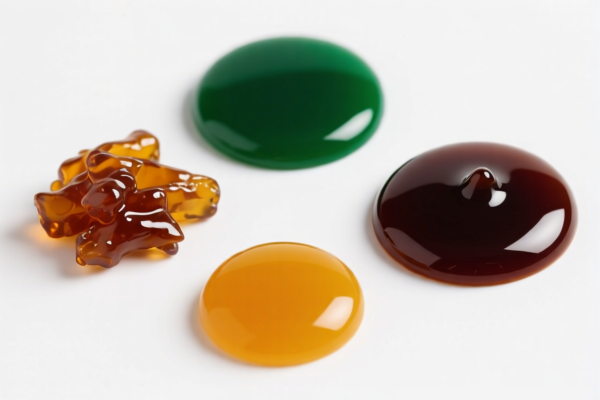
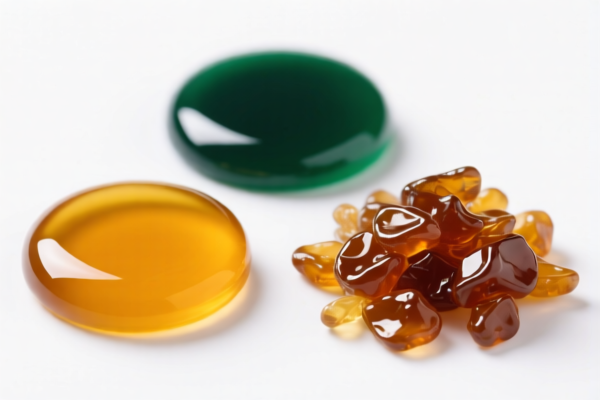
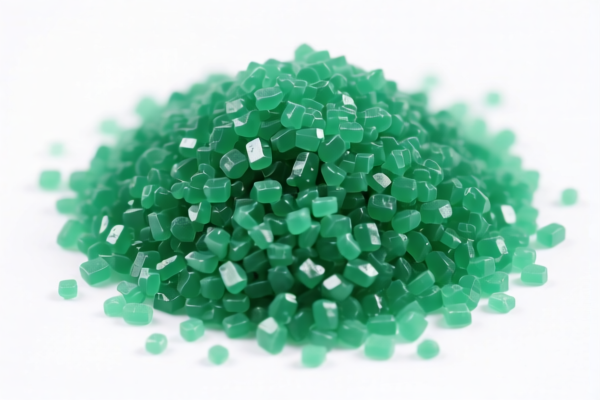
Hot Melt Adhesive Resins are thermoplastic polymers that adhere to substrates when cooled from a molten state. In international trade, they are primarily classified under Chapter 39 (Plastics and Articles Thereof). The specific HS Code depends heavily on the chemical composition (e.g., Ethylene-based vs. Acrylic-based) and the form (Primary Form).
⚠️ Key Distinction Point: - If it is an Ethylene Polymer (including copolymers) in primary form → HS 3901.xx.xx - If it is an Acrylic Polymer (including copolymers) in primary form → HS 3906.xx.xx
📦 2. HS Code Classification Details (2026 Latest Tariff Reference)
Based on the provided data, here are the four specific classifications for Hot Melt Adhesive Resins:
| HS Code | Product Description | Material Match | Form | Total Tax Rate (US) |
|---|---|---|---|---|
3901.90.90.00 |
Thermoplastic Resin Adhesive | Ethylene Polymers | Primary Form | 41.5% |
3906.90.20.00 |
Thermoplastic Resin Adhesive | Acrylic Resins | Primary Form | 41.3% |
3906.90.50.00 |
Thermoplastic Resin Adhesive | Acrylic Polymers | Primary Form | 39.2% |
3901.90.55.01 |
Thermoplastic Resin Adhesive | Ethylene Copolymers | Primary Form | 41.5% |
🔍 Important Note: - All listed codes are for "Primary Form" (granules, powders, liquids, etc.), which is the standard import state for adhesive resins before processing. - The tax rate varies significantly based on whether the base polymer is Ethylene (higher burden) or Acrylic (slightly lower burden for specific polymer types).
💰 3. 2026 Latest Tariff Rate Breakdown (Including Surcharges & Policy Add-ons)
✅ Applicable Country: United States (US)
✅ Country of Origin: China (CN)
✅ Effective Time: Current rates include Section 301 and Section 232/IEEPA add-ons.
🎯 1. 3901.90.90.00 & 3901.90.55.01 — Ethylene-Based Resins
| Item | Content |
|---|---|
| Base Tariff | 6.5% |
| Section 301 Surcharge | +25.0% |
| Section 122 Tariff | +10.0% |
| Total Tax Rate | 41.5% |
| Calculation Method | CIF Value × 41.5% |
| De Minimis Eligibility | ❌ Not Eligible (High tariffs generally exclude de minimis exemptions for Chinese origin goods in this category) |
| Legal Basis Path | HTSUS:3901.90.90.00 → Section 301: Footnote 9903.88.01 → Section 122: 19 USC 1677j |
📌 Explanation: - Base Tariff (6.5%): The standard Most Favored Nation (MFN) rate for other ethylene polymers. - Section 301 Surcharge (25%): Imposed on Chinese goods under the U.S. Trade Representative’s list (List 4A/4B). - Section 122 Tariff (10%): A historical trade remedy tariff (often still applied in specific contexts or renewed via executive action). - Total: 41.5%. This is a very high cost driver.
🎯 2. 3906.90.20.00 — Acrylic Resins
| Item | Content |
|---|---|
| Base Tariff | 6.3% |
| Section 301 Surcharge | +25.0% |
| Section 122 Tariff | +10.0% |
| Total Tax Rate | 41.3% |
| Calculation Method | CIF Value × 41.3% |
| De Minimis Eligibility | ❌ Not Eligible |
| Legal Basis Path | HTSUS:3906.90.20.00 → Section 301: Footnote 9903.88.01 → Section 122: 19 USC 1677j |
📌 Note: - Slightly lower than Ethylene-based due to a marginally lower base rate (6.3% vs 6.5%).
🎯 3. 3906.90.50.00 — Acrylic Polymers (Other)
| Item | Content |
|---|---|
| Base Tariff | 4.2% |
| Section 301 Surcharge | +25.0% |
| Section 122 Tariff | +10.0% |
| Total Tax Rate | 39.2% |
| Calculation Method | CIF Value × 39.2% |
| De Minimis Eligibility | ❌ Not Eligible |
| Legal Basis Path | HTSUS:3906.90.50.00 → Section 301: Footnote 9903.88.01 → Section 122: 19 USC 1677j |
📌 Optimization Insight: - This is the lowest tax bracket among the options at 39.2%. - If your product is an Acrylic Polymer (not just "resin" but classified specifically as "other acrylic polymers"), this is the most cost-effective classification.
🛠️ 4. Customs Clearance Practical Advice (Battle-Tested Pitfall Guide)
✅ 1. Documentation Checklist (Essential)
| Document | Required | Notes |
|---|---|---|
| ✅ Material Safety Data Sheet (MSDS) | ✔️ | Must specify chemical composition (Ethylene vs. Acrylic). |
| ✅ Certificate of Origin (CO) | ✔️ | Critical for verifying Chinese origin (triggers surcharges). |
| ✅ Commercial Invoice | ✔️ | Must clearly state "Hot Melt Adhesive Resin, Thermoplastic". |
| ✅ Product Specification Sheet | ✔️ | Detail molecular weight, melting point, and polymer type. |
| ✅ Packaging List | ✔️ | Confirm "Primary Form" (granules/powder). |
✅ 2. Declaration Tips (Critical Keywords)
🔥 "Accuracy Saves Money!"
| Scenario | Correct Declaration | Wrong Practice |
|---|---|---|
| Ethylene-Based | "Thermoplastic Adhesive Resin, Ethylene Polymer, Primary Form" | Vague: "Adhesive" → Risk of misclassification. |
| Acrylic-Based (Resin) | "Thermoplastic Adhesive Resin, Acrylic Resin, Primary Form" | Vague: "Plastic Resin" → May trigger higher base rates. |
| Acrylic-Based (Polymer) | "Thermoplastic Adhesive Resin, Acrylic Polymer, Primary Form" | Vague: "Acrylic Plastic" → May be miscoded as 3906.90.90 (higher tax). |
| Mixed/Binder | Disclose exact chemical breakdown | Hiding components → Seizure & Fines. |
✅ 3. Special Considerations
| Issue | Solution |
|---|---|
| Misclassification Risk | Ethylene (3901) and Acrylic (3906) have different base rates. Provide MSDS to prove composition. |
| Section 301 Exemptions | Check if your specific HS Code was exempted at any point. As of 2026, most adhesive resins from China do not enjoy exemption. |
| De Minimis (Section 321) | ❌ Not Applicable. Items with >15% total duty (including surcharges) are generally ineligible for de minimis entry. |
🌍 5. Global Market Comparison (2026 Snapshot)
| Market | Recommended HS Code | Base Tariff | Add-Ons (China) | Total Effective Rate |
|---|---|---|---|---|
| 🇺🇸 USA | 3901.90.90.00 / 3906.90.50.00 |
4.2% - 6.5% | +35% (301+122) | 39.2% - 41.5% |
| 🇨🇳 China | 3901.90.90 / 3906.90.90 |
6.5% / 6.3% | None (Domestic) | ~6.5% |
| 🇪🇺 EU | 3901.90 / 3906.90 |
6.5% / 6.3% | None | ~6.5% |
| 🇬🇧 UK | 3901.90 / 3906.90 |
6.5% / 6.3% | None | ~6.5% |
📌 Conclusion: - The USA is the most expensive market due to aggressive trade tariffs (Section 301 & 122). - EU, UK, and China have similar low base rates (~6.5%) with no political surcharges. - Strategy: If targeting the US, ensure maximum accuracy in chemical declaration. Choosing
3906.90.50.00(Acrylic Polymer) over3901.90.90.00(Ethylene) saves 2.3% on the CIF value.
📌 6. Common Mistakes & Pitfalls (Lessons Learned)
❌ Mistake 1: Declaring as "Glue" or "Adhesive" without specifying polymer type.
👉 Consequence: Customs may assign a default higher rate or request additional testing, causing delays.
❌ Mistake 2: Ignoring Section 122 Tariff.
👉 Consequence: Underpayment of 10% on the declared value. Expect a demand for payment + penalties.
❌ Mistake 3: Assuming "Resin" is the same as "Plastic Articles".
👉 Consequence: Primary form resins go to Chapter 39, not Chapter 35 (Protein-based adhesives). Wrong chapter = Rejection.
✅ Correct Approach:
"Hot Melt Adhesive Resin, Thermoplastic, Ethylene Copolymer, Primary Form, Granules, Model XYZ, MSDS Attached"
🎯 7. Conclusion: Precision Classification for Cost Control
🎯 Remember:
🔹 "Ethylene vs. Acrylic: The 2.3% Difference"
🔹 "301 + 122 = 35% Surcharge: It's Real!"
🔹 "De Minimis is Off the Table: Full Duties Apply!"
📌 Pro Tip:
If your adhesive resin is sourced from Vietnam, Mexico, or Malaysia, you may be eligible for preferential tariffs (e.g., USMCA for Mexico/Vietnam under certain rules).
Recommendation: Apply for an Advance Ruling from US Customs and Border Protection (CBP) if you are importing large volumes to lock in the lowest possible tax rate.
📣 Immediate Action:
📞 Contact your customs broker with MSDS and Chemical Structure Details.
🚀 Optimize your HS Code to3906.90.50.00if compatible, saving 2.3% per shipment!
✨ Professional Clearance Starts with Accurate Classification!
💼 Every Percent Saved is Profit Gained!
Customer Reviews
About HS Code Classification
The Harmonized System (HS) is an internationally standardized nomenclature developed by the World Customs Organization (WCO) to classify traded products. Over 200 countries use the HS system as the basis for customs tariffs, trade statistics, and import/export regulations.
Each HS code follows a hierarchical structure:
- Chapter (2 digits) — Broad category of goods (e.g., Chapter 84: Machinery and Mechanical Appliances)
- Heading (4 digits) — More specific grouping within the chapter
- Subheading (6 digits) — Internationally standardized breakdown, used by all WCO member countries
- National subdivisions (8-10 digits) — Country-specific extensions for further classification, such as US HTSUS 10-digit codes
Correct HS code classification is essential for smooth customs clearance, accurate duty payment, and compliance with trade regulations. Misclassification can lead to customs delays, overpayment of duties, or penalties.
When importing from CN to US, the applicable tariff rates may include:
- Most-Favored-Nation (MFN) rate — The standard duty rate applied to WTO members
- General rate — Applied to countries without trade agreements
- Trade remedy duties — Additional tariffs such as Section 301 (anti-dumping), Section 232 (national security), or countervailing duties
The information provided on this page is for reference purposes only. For official classification, please consult with your local customs authority or a licensed customs broker.