Hot Stamping Pen
CN → US| HS Code | Tariff Rate | Origin | Destination | Doc |
|---|---|---|---|---|
| 9608100000 | 0.0% | CN | US | Official Doc |
| 9608996000 | 17.5% | CN | US | Official Doc |
| 8205517500 | 38.7% | CN | US | Official Doc |
| 8205593080 | 35.0% | CN | US | Official Doc |
Product Images
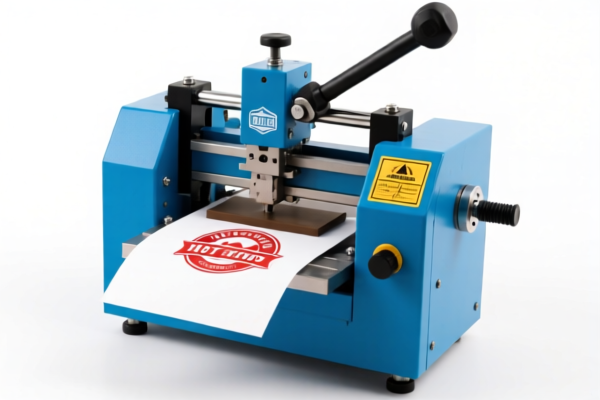
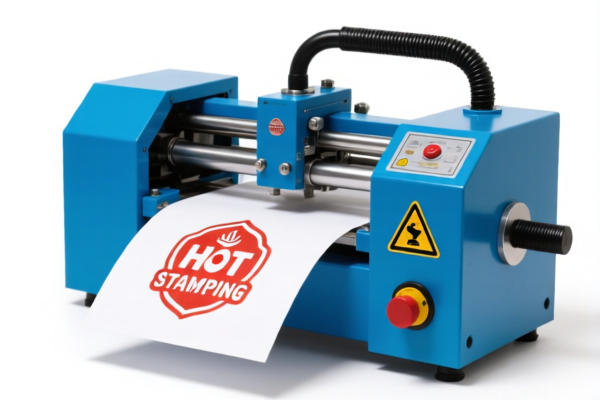
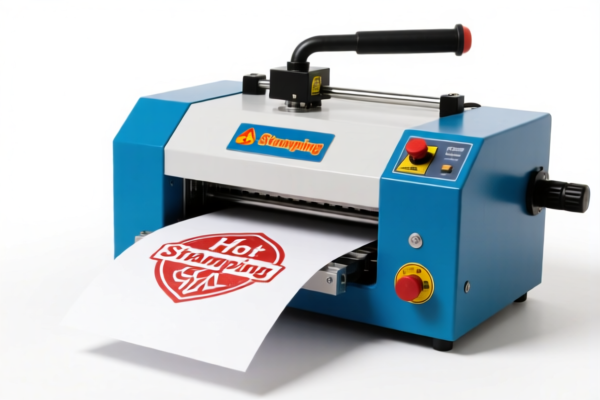
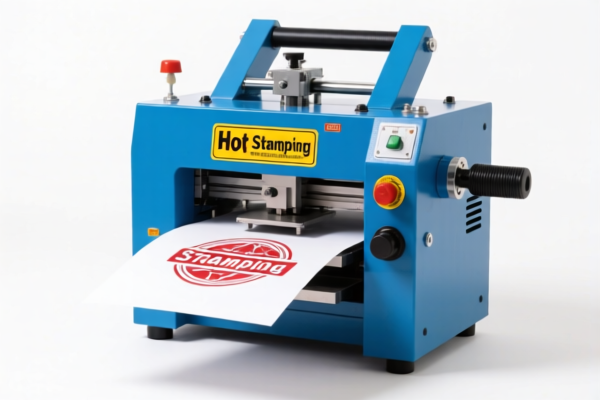
AI Analysis
✒️ Hot Stamping Pen (烫金笔)
🌐 HS Code Reference & Customs Clearance Guide | 2026 Latest Tariff Analysis | Professional Clearance Strategy
📌 I. Product Definition & Classification: Do You Really Know the "Hot Stamping Pen"?
A Hot Stamping Pen is a specialized tool used in crafts, scrapbooking, and personalization. It applies heat to melt foil or ink, transferring a metallic or colored design onto paper, fabric, or other materials.
In international trade, classification depends heavily on how the tool is perceived: * Writing/Marking Instrument: If viewed as a pen-like device for marking or decorating (similar to ballpoint pens but with a heating element). * Hand Tool: If viewed primarily as a handheld device for craft work, lacking standard writing ink mechanisms.
⚠️ Critical Distinction:
- If classified as a writing instrument → Falls under Chapter 96.
- If classified as a hand tool/craft instrument → Falls under Chapter 82.
- Risk: Misclassification can lead to drastic duty differences (from ~6% to ~39%) due to Section 301 and IEEPA tariffs.
📦 II. HS Code Classification Details (2026 Latest Tariff Reference)
| HS Code | Product Description | Application Scenario | Classification Logic |
|---|---|---|---|
9608.10.00.00 |
Ball-point pens | Writing/decorating tools, pen-shaped | Function matches writing tools; form factor is pen-like. No material conflict. |
9608.99.60.00 |
Other pens; marking pens | Drawing/marking pens, "Other" category | Belongs to "other pens" due to lack of specific sub-heading; material/logic consistent with pen accessories. |
8205.51.75.00 |
Other hand tools | Home/craft tools, metal/heat-resistant material | Inferred as metal/heat-resistant material; form matches hand tools; usage is craft/home tool. |
8205.59.30.80 |
Other hand tools | General hand tools, no specific conflict | Usage matches hand tool category; no conflicting material or form features for other sub-headings. |
🔍 Key Reminder:
- Chapter 96 (Pens) generally attracts lower base tariffs but still faces significant additional taxes.
- Chapter 82 (Hand Tools) attracts higher base tariffs (0%–3.7%) plus the same additional taxes, resulting in a much higher total cost.
- Customs Authority: US CBP may scrutinize whether the device "writes" or "stamps." If it has no ink cartridge but uses heat, Chapter 82 is a stronger contender, but Chapter 96 is often argued due to form factor.
💰 III. 2026 Latest Tariff Rate Detailed Breakdown (Including Surcharges & Policy Add-ons)
✅ Applicable Country: United States (US)
✅ Origin: China (CN)
✅ Effective Date: November 10, 2025 (and subsequent imports)
🎯 1. 9608.10.00.00 —— Ball-point Pens
| Item | Content |
|---|---|
| Base Tariff | 0.8¢ each + 5.4% (Ad Valorem) |
| Section 301 Surcharge | +7.5% |
| IEEPA Surcharge | +10% (China-specific) |
| Total Effective Rate | ~23.4% (Calculated on CIF value) |
| Tax Calculation | Base Duty: 0.8¢/pen + 5.4% of Value. Additional: 17.5% of Value. |
| De Minimis Eligible? | ❌ No (deny_de_minimis) |
| Legal Path | USITC:9608.10.00.00 → FOOTNOTE:9903.88.01 (7.5%) + IEEPA:9903.01.25 (10%) |
📌 Explanation:
- Base Duty: A specific duty of 0.8 cents per pen plus 5.4% ad valorem.
- Additional Taxes: The 7.5% (Section 301 Footnote) and 10% (IEEPA) apply to the ad valorem portion.
- Total Cost: The combination of specific and ad valorem duties makes this more complex than pure ad valorem rates.
🎯 2. 9608.99.60.00 —— Other Pens; Marking Pens
| Item | Content |
|---|---|
| Base Tariff | 0.0% (Ad Valorem) |
| Section 301 Surcharge | +7.5% |
| IEEPA Surcharge | +10% |
| Total Effective Rate | 17.5% |
| Tax Calculation | CIF Value × 17.5% |
| De Minimis Eligible? | ❌ No (deny_de_minimis) |
| Legal Path | USITC:9608.99.60.00 → FOOTNOTE:9903.88.01 (7.5%) + IEEPA:9903.01.25 (10%) |
📌 Note:
- Lower Base Rate: Unlike ball-point pens, this sub-heading has 0% base duty.
- Same Surcharges: The 17.5% additional tax applies fully.
- Advantage: If you can justify the product as "Other Pens" (not strictly ball-point), you save the 5.4% base ad valorem duty.
🎯 3. 8205.51.75.00 —— Other Hand Tools
| Item | Content |
|---|---|
| Base Tariff | 3.7% (Ad Valorem) |
| Section 301 Surcharge | +25.0% |
| IEEPA Surcharge | +10% |
| Total Effective Rate | 38.7% |
| Tax Calculation | CIF Value × 38.7% |
| De Minimis Eligible? | ❌ No (deny_de_minimis) |
| Legal Path | USITC:8205.51.75.00 → FOOTNOTE:9903.88.01 (25%*) + IEEPA:9903.01.25 (10%) |
📌 Warning:
- High Duty: This classification incurs a 25% Section 301 surcharge (note: different footnote applies for hand tools vs. pens).
- Base Duty: 3.7% base duty adds to the burden.
- Result: This is the most expensive classification option.
🎯 4. 8205.59.30.80 —— Other Hand Tools
| Item | Content |
|---|---|
| Base Tariff | 0.0% (Ad Valorem) |
| Section 301 Surcharge | +25.0% |
| IEEPA Surcharge | +10% |
| Total Effective Rate | 35.0% |
| Tax Calculation | CIF Value × 35.0% |
| De Minimis Eligible? | ❌ No (deny_de_minimis) |
| Legal Path | USITC:8205.59.30.80 → FOOTNOTE:9903.88.01 (25%*) + IEEPA:9903.01.25 (10%) |
📌 Note:
- 0% Base: Like9608.99.60.00, this has 0% base duty.
- High Surcharge: The 25% Section 301 surcharge is standard for many hand tools.
- Total: 35% is still significantly higher than the pen classifications (17.5%–23.4%).
🛠️ IV. Customs Clearance Practical Advice (Pitfall Avoidance Guide)
✅ 1. Required Documentation Checklist
| Document | Required | Notes |
|---|---|---|
| ✅ Product Specification Sheet | ✔️ | Must detail: Heating element, foil type, pen vs. tool form, material (metal/plastic). |
| ✅ Product Photos | ✔️ | Clear images of the pen tip, body, and any packaging labels. |
| ✅ Commercial Invoice | ✔️ | Description should be precise: "Heated Foil Stamping Pen" or "Craft Stamping Tool." Avoid vague terms like "Gadget." |
| ✅ Origin Certificate | ✔️ | Crucial for determining IEEPA applicability. |
| ✅ Material Composition | ✔️ | If claiming 9608 (Pens), emphasize pen-like structure. If claiming 8205 (Tools), emphasize craft utility. |
✅ 2. Declaration Strategy (Key Tips)
🔥 "Form Follows Function: Pen Shape = Pen Code? Think Twice!"
| Scenario | Recommended HS Code | Risk Level | Reason |
|---|---|---|---|
| Pen-shaped, no ink, heats foil | 9608.10.00.00 or 9608.99.60.00 |
⚠️ Medium | Strong argument due to form factor and "writing/decorating" function. Lower duty. |
| Non-pen shape, generic craft tool | 8205.51.75.00 or 8205.59.30.80 |
✅ Low | Clearly a hand tool. Higher duty, but less risk of misclassification penalty. |
| Mixed shipment (Pens + Tools) | Separate Entries | ⚠️ Medium | Must separate to apply correct rates. Combining may trigger audit. |
📌 Strategic Insight:
- Cost Optimization: Classifying as9608.99.60.00yields the lowest total tax (17.5%).
- Compliance Safety: If the product is clearly not a "pen" (e.g., bulky, non-writing mechanism),8205codes are safer despite higher cost.
- Customs Pre-Ruling: Consider applying for an Advance Ruling (US CBP) if volume is high. This provides legal certainty and protects against future penalties.
✅ 3. Special Cases
| Case | Handling Advice |
|---|---|
| OEM Custom Designs | Provide design files to prove intent (writing/decorating vs. industrial tool). |
| Bundled Kits (Pen + Foil Rolls) | Declare the pen as the primary item. Foil rolls may be classified separately (e.g., 3509.90 or 4911.99) or bundled if minor. |
| Smart Pens with App Connectivity | May trigger Chapter 85 (Electrical) classifications. Consult expert if Bluetooth/WiFi enabled. |
| Non-Chinese Origin | If made in Vietnam/Malaysia, IEEPA 10% may not apply, significantly reducing cost. Verify Country of Origin meticulously. |
🌍 V. Global Market Comparison (2026 Update)
| Country/Region | Recommended HS Code | Total Tariff (China Origin) | Notes |
|---|---|---|---|
| 🇺🇸 USA | 9608.99.60.00 |
17.5% | Best balance of cost and compliance. Avoid 8205 (35%+). |
| 🇨🇳 China | 9608.10.00.00 |
~20-25% (Import Duty + VAT) | Lower import duty, but domestic VAT applies. |
| 🇪🇺 EU | 8205.51.75 |
0-2.5% | Lower tariffs, no Section 301 equivalent. CE marking required. |
| 🇬🇧 UK | 9608.10.00 |
4% | Post-Brexit tariff schedules apply. |
| 🇦🇺 Australia | 9608.99.60 |
5% | Low duty, GST applies. |
📌 Conclusion:
- USA is the most tax-sensitive market due to Section 301 and IEEPA.
- Pen classification (Ch 96) is highly advantageous in the US compared to Hand Tools (Ch 82).
- Global Strategy: Use9608.99.60.00for US imports to minimize costs, provided the product form strongly resembles a pen.
📌 VI. Common Errors & Pitfalls (Lessons Learned)
❌ Mistake 1: Classifying as "General Craft Tool" (8205) when it looks like a pen.
👉 Consequence: Paying 35-39% instead of 17.5%. Lost Profit!
❌ Mistake 2: Claiming 9608.10.00.00 (Ball-point) for a pen that does not write ink.
� → Consequence: Customs may reclassify to 9608.99.60.00 (still okay) or penalize for misrepresentation. Ensure description matches function.
❌ Mistake 3: Ignoring IEEPA 10% in cost calculations.
👉 Consequence: Underquoting, leading to cash flow issues. Always include 17.5% minimum for US imports from China.
❌ Mistake 4: Assuming De Minimis (Section 321) applies for shipments <$800.
👉 Consequence: ❌ Denied. HS Codes 9608 and 8205 are not eligible for de minimis exemption from China. All shipments pay tax.
✅ Correct Approach:
"Hot Stamping Pen, Pen-shaped, Electric Heating, for Foil Application, Model XYZ, Origin China"
Declared as:9608.99.60.00(Other Pens)
Duty Paid: 17.5%
🎯 VII. Conclusion: Professional Declaration, Cost Optimization!
🎯 Remember the Golden Rule:
🔹 "Pen Shape, Pen Code: Save 18% Duty."
🔹 "Hot Stamping Pen is NOT a Hand Tool: Avoid 35% Tax."
🔹 "No De Minimis for China: Budget for 17.5% Minimum."
📌 Pro Tip:
- If your Hot Stamping Pen is made in Vietnam or Malaysia, you may avoid the 10% IEEPA tariff, reducing the total duty to just 7.5% (if using
9608.99.60.00).- Always verify Country of Origin with your supplier. A small change in origin can save 10% on every shipment.
📣 Immediate Action:
📞 Consult a licensed customs broker.
📸 Provide high-resolution photos of the product tip and body.
🚀 Apply for an Advance Ruling if you plan to import consistently.
💼 Optimize your HS Code selection today to maximize your profit margin!
✨ Precision in Classification, Profit in Your Pocket!
💼 Every cent saved on duty is pure profit!
Customer Reviews
About HS Code Classification
The Harmonized System (HS) is an internationally standardized nomenclature developed by the World Customs Organization (WCO) to classify traded products. Over 200 countries use the HS system as the basis for customs tariffs, trade statistics, and import/export regulations.
Each HS code follows a hierarchical structure:
- Chapter (2 digits) — Broad category of goods (e.g., Chapter 84: Machinery and Mechanical Appliances)
- Heading (4 digits) — More specific grouping within the chapter
- Subheading (6 digits) — Internationally standardized breakdown, used by all WCO member countries
- National subdivisions (8-10 digits) — Country-specific extensions for further classification, such as US HTSUS 10-digit codes
Correct HS code classification is essential for smooth customs clearance, accurate duty payment, and compliance with trade regulations. Misclassification can lead to customs delays, overpayment of duties, or penalties.
When importing from CN to US, the applicable tariff rates may include:
- Most-Favored-Nation (MFN) rate — The standard duty rate applied to WTO members
- General rate — Applied to countries without trade agreements
- Trade remedy duties — Additional tariffs such as Section 301 (anti-dumping), Section 232 (national security), or countervailing duties
The information provided on this page is for reference purposes only. For official classification, please consult with your local customs authority or a licensed customs broker.