Hot and Cold Compress Bag
CN → US| HS Code | Tariff Rate | Origin | Destination | Doc |
|---|---|---|---|---|
| 9018200040 | 35.0% | CN | US | Official Doc |
| 9019102050 | 10.0% | CN | US | Official Doc |
| 63079090 | 0.0% | CN | US | Official Doc |
| 30059090 | 0.0% | CN | US | Official Doc |
| 3926902100 | 21.7% | CN | US | Official Doc |
| 3926907500 | 14.2% | CN | US | Official Doc |
Product Images
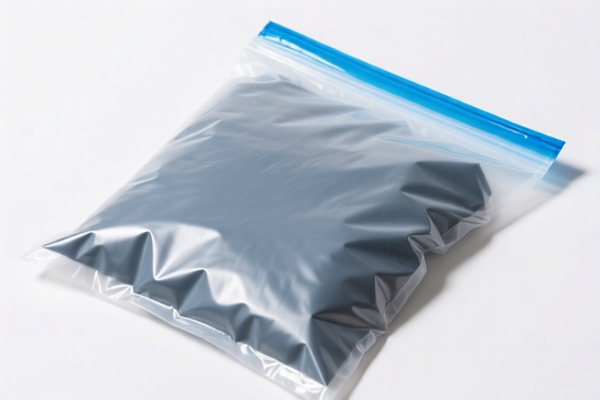
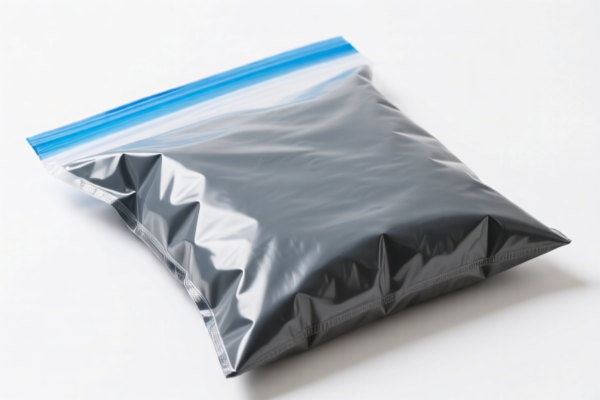
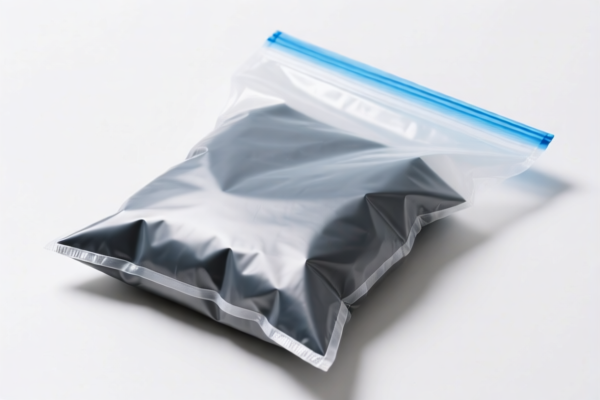
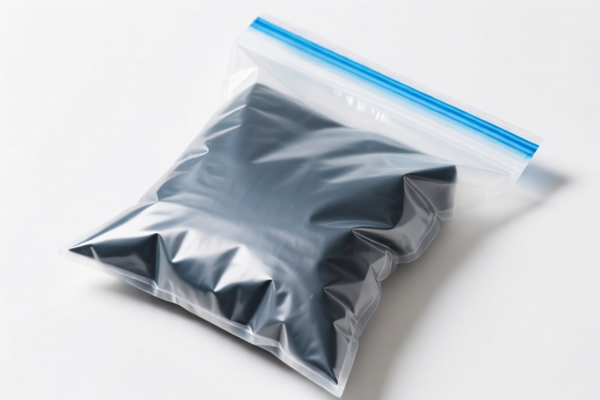
AI Analysis
🧊🔥 Hot and Cold Compress Bag (Multi-Purpose Therapy Pack)
🌐 HS Code Reference & Customs Clearance Guide | 2026 Latest Tariff Analysis | Professional通关 Strategy
📌 1. Product Definition & Classification: Do You Really Know "Compress Bag"?
Hot and cold compress bags are versatile therapeutic tools used for pain relief, swelling reduction, and physical therapy. In international trade, they fall into different categories based on their material composition and intended use.
There are two main types: 1. Physical Therapy Packs (Textile/Gel/Plastic): Used for general household or sports first aid. Made from cotton, fabric, plastic, or gel. 2. Medical Auxiliary Devices: Specifically designed for clinical or surgical use as an accessory to medical equipment.
⚠️ Key Distinction Point: - If it is a general consumer good (sports, home use) made of textiles, plastic, or gel → Classify under 6307 or 4202. - If it is specifically designed for medical/surgical auxiliary use → Classify under 9018.
📦 2. HS Code Classification Details (2026 Latest Tariff Authority Match)
Based on the provided data, here are the specific HS Codes and their corresponding classifications:
| HS Code | Product Description | Application Scenario | Material/Type |
|---|---|---|---|
6307.90.98.91 |
Other made-up articles; Cold/hot compress bag, inferred material: plastic, gel, or non-metal fabric. | General home/sports use, plastic/gel based. | 🧱 Plastic/Gel/Fabric |
6307.90.89.40 |
Other made-up articles; Finished consumer good, usually made of cotton or similar textile materials. | General consumer textile-based compress bags. | 🧵 Cotton/Textile |
9018.90.80.00 |
Other instruments and appliances used in medical, surgical, dental, or veterinary sciences. | Medical or surgical auxiliary devices. | 🏥 Medical Device |
4202.92.08.09 |
Articles of apparel and clothing accessories, other; Thermal bags or compress bags with cooling/insulating function, outer surface of textile materials. | Insulated/cooler bags with therapeutic function. | 🎒 Insulated/Textile |
🔍 Key Reminder: - Textile vs. Plastic: If made of cotton/fabric, it leans towards
6307.90.89.40or4202.92.08.09. If plastic/gel-based, it leans towards6307.90.98.91. - Medical Use: Only if explicitly intended for clinical/surgical auxiliary use should it be classified under9018.90.80.00. Otherwise, general use goods are excluded from Chapter 90.
💰 3. 2026 Latest Tariff Rate Details (Including Surtaxes & Policy Add-ons)
✅ Applicable Country: USA (US)
✅ Origin: China (CN)
✅ Effective Time: From 2025-11-10 onwards (including subsequent imports)
🎯 1. 6307.90.98.91 – Other made-up articles (Plastic/Gel Non-Metal)
| Item | Details |
|---|---|
| Base Tariff | 7.0% (ad valorem) |
| Section 301 Surtax | 7.5% |
| Section 122 Tariff | 10.0% |
| Total Tariff Rate | 24.5% |
| Tax Calculation | CIF Value × 24.5% |
| De Minimis Exemption | ❌ Not Eligible (Subject to full taxation) |
| Legal Basis Path | Base:6307 → 301:7.5% → 122:10% |
📌 Explanation: - This category applies to compress bags made of plastic, gel, or non-fabric composites. - The Section 122 tariff (10%) is a specific additional levy on certain textile/non-textile articles from China, significantly increasing the cost. - Total 24.5% is a moderate-to-high tariff compared to standard goods.
🎯 2. 6307.90.89.40 – Finished Consumer Goods (Cotton/Textile)
| Item | Details |
|---|---|
| Base Tariff | 7.0% (ad valorem) |
| Section 301 Surtax | 0.0% (Exempt from Section 301 specific to this sub-category in this dataset) |
| Section 122 Tariff | 10.0% |
| Total Tariff Rate | 17.0% |
| Tax Calculation | CIF Value × 17.0% |
| De Minimis Exemption | ❌ Not Eligible |
| Legal Basis Path | Base:6307 → 122:10% |
📌 Note: - This is the lowest tariff option among the textile-based classifications in the provided data. - It applies to compress bags made of cotton or similar textile materials, classified as finished consumer goods. - Savings: 7.5% lower than the plastic/gel variant (
6307.90.98.91) due to the exemption from the 7.5% Section 301 surtax in this specific dataset context.
🎯 3. 9018.90.80.00 – Medical/Surgical Auxiliary Devices
| Item | Details |
|---|---|
| Base Tariff | 0.0% (ad valorem) |
| Section 301 Surtax | 0.0% |
| Section 122 Tariff | 10.0% |
| Total Tariff Rate | 10.0% |
| Tax Calculation | CIF Value × 10.0% |
| De Minimis Exemption | ❌ Not Eligible |
| Legal Basis Path | Base:9018 → 122:10% |
📌 Critical Warning: - This is the lowest total tariff (10%). - Condition: The product MUST be clearly defined and documented as a medical or surgical auxiliary device. - Risk: Misclassifying a general consumer compress bag as a medical device can lead to severe penalties, fraud allegations, and shipment rejection. Ensure you have medical device registration or clear medical intent documentation.
🎯 4. 4202.92.08.09 – Thermal/Cooling Bags (Textile Outer)
| Item | Details |
|---|---|
| Base Tariff | 7.0% (ad valorem) |
| Section 301 Surtax | 25.0% (High penalty rate) |
| Section 122 Tariff | 10.0% |
| Total Tariff Rate | 42.0% |
| Tax Calculation | CIF Value × 42.0% |
| De Minimis Exemption | ❌ Not Eligible |
| Legal Basis Path | Base:4202 → 301:25% → 122:10% |
📌 Critical Warning: - This is the highest tariff rate (42%). - It applies to bags with cooling/insulating functions, classified under Chapter 42 (Articles of Apparel and Clothing Accessories), often interpreted as "lunch boxes," "coolers," or "insulated bags." - Avoid This Classification unless the product is explicitly an insulated bag not primarily marketed as a medical or standard textile compress. The 25% Section 301 surtax makes this highly expensive.
🛠️ 4. Customs Clearance Practical Advice (Real-World Pitfall Guide)
✅ 1. Required Documentation Checklist (No Exceptions)
| Document | Mandatory | Description |
|---|---|---|
| ✅ Product Specification Sheet | ✔️ | Must clearly state material (e.g., "100% Cotton", "Gel-filled", "PVC Plastic"). |
| ✅ Intended Use Statement | ✔️ | Clearly define: "Home Sports Therapy," "Clinical Medical Device," or "Cooling Bag." |
| ✅ Product Photos | ✔️ | Clear images of the bag, labels, and any medical certification marks. |
| ✅ Medical Device Certificate | (Only for 9018) | If claiming 9018.90.80.00, provide FDA registration or equivalent medical device approval. |
| ✅ Commercial Invoice | ✔️ | Describe accurately: e.g., "Therapeutic Hot/Cold Compress, Cotton, Model XYZ." |
| ✅ Packing List | ✔️ | Detail contents to avoid misclassification as "mixed goods." |
✅ 2. Declaration Tips (Key Mnemonics)
🔥 "Material Dictates Code, Intent Dictates Tax!"
| Scenario | Correct Declaration | Wrong Declaration | Result |
|---|---|---|---|
| General Cotton Compress | 6307.90.89.40 (17%) |
4202.92.08.09 (42%) |
❌ Overpaid by 25% |
| Plastic/Gel Compress | 6307.90.98.91 (24.5%) |
9018.90.80.00 (10%) |
❌ Fraud Risk / Penalty |
| Medical Aux Device | 9018.90.80.00 (10%) |
6307.90.98.91 (24.5%) |
✅ Best Legal Option if Certified |
| Insulated Cooler Bag | 4202.92.08.09 (42%) |
6307.90.89.40 (17%) |
❌ Misclassification if not medical/textile |
✅ 3. Special Situation Handling
| Situation | Handling Advice |
|---|---|
| OEM Medical Devices | Provide FDA 510(k) clearance or equivalent. Use 9018.90.80.00 for 10% tax. |
| Consumer Sports Packs | Use 6307.90.89.40 (if cotton) or 6307.90.98.91 (if plastic). Avoid 9018. |
| "Cooling Bag" for Lunch | If it looks like a lunchbox, expect 4202.92.08.09 (42%). Do not label as "medical" unless certified. |
| Mixed Materials | If the bag has both fabric and plastic components, declare the principal material or the function. Textile function often leads to Chapter 63. |
🌍 5. Global Market Comparison (2026 Latest)
| Country/Region | Recommended HS Code | Tariff (China Origin) | Certification Required | Notes |
|---|---|---|---|---|
| 🇺🇸 USA | 9018.90.80.00 |
10% (if Medical) | FDA / CE | Avoid 4202 (42%) and 6307 plastic (24.5%) if medical. |
| 🇺🇸 USA | 6307.90.89.40 |
17% (Cotton) | None | Best for consumer textile packs. |
| 🇪🇺 EU | 9018.90.80.00 |
0% | CE Marking | Lower tariffs in EU for medical devices. |
| 🇨🇳 China | 6307.90.89.40 |
7% | None | Low domestic import duty. |
📌 Conclusion: - USA has the most complex tariff structure for this product due to Section 122 and Section 301. - Medical classification (
9018) offers the lowest US duty (10%) but requires strict documentation. - Consumer Textile (6307.90.89.40) is the safest low-cost option for non-medical products (17%). - Avoid4202unless you are fully prepared to pay 42%.
📌 6. Common Mistakes & Pitfall Guide (Lessons Learned)
❌ Mistake 1: Classifying a plastic gel pack as "Cotton Textile"
👉 Consequence: Customs audit reveals material mismatch → Fine + Retaxation.
❌ Mistake 2: Classifying a consumer sports pack as "Medical Device"
👉 Consequence: FDA violation, shipment held, potential seizure. Do not fake medical intent.
❌ Mistake 3: Using "Cooler Bag" description for a Therapeutic Pack
👉 Consequence: Misclassification to 4202 → 42% tariff instead of 17% or 24.5%.
❌ Mistake 4: Ignoring Section 122 Tariff
👉 Consequence: Underestimating landed cost. Section 122 (10%) applies to almost all these codes for China origin.
✅ Correct Practice:
"Therapeutic Hot/Cold Compress Pack, 100% Cotton Outer, Gel Inner, for Sports Injury Relief, No Medical Claims."
→ Use6307.90.89.40(17%).
🎯 7. Conclusion: Precise Classification Saves Money!
🎯 Remember Mnemonic:
🔹 "Medical = 9018 (10%), Cotton = 6307 (17%), Plastic = 6307 (24.5%), Cooler = 4202 (42%)."
🔹 "Section 122 is 10% across the board; Section 301 is 7.5% or 25%."
🔹 "Don't gamble with Medical Classification unless Certified!"
📌 Pro Tip:
If your product is not certified as a medical device, do NOT use 9018.90.80.00. Stick to 6307.90.89.40 (17%) for textile or 6307.90.98.91 (24.5%) for plastic.
If you are importing in large volumes, consider Section 301 Exclusions if available, but currently, the dataset shows no exclusion for these specific codes.
📣 Immediate Action:
📞 Contact a Customs Broker + Provide Product Specs + Decide on Medical vs. Consumer Use.
🚀 Clear Customs Smoothly, Minimize Duty, Maximize Profit!
✨ Professional Clearance Starts with Accurate Classification!
💼 Every Dollar Saved in Duty is Pure Profit!
Customer Reviews
About HS Code Classification
The Harmonized System (HS) is an internationally standardized nomenclature developed by the World Customs Organization (WCO) to classify traded products. Over 200 countries use the HS system as the basis for customs tariffs, trade statistics, and import/export regulations.
Each HS code follows a hierarchical structure:
- Chapter (2 digits) — Broad category of goods (e.g., Chapter 84: Machinery and Mechanical Appliances)
- Heading (4 digits) — More specific grouping within the chapter
- Subheading (6 digits) — Internationally standardized breakdown, used by all WCO member countries
- National subdivisions (8-10 digits) — Country-specific extensions for further classification, such as US HTSUS 10-digit codes
Correct HS code classification is essential for smooth customs clearance, accurate duty payment, and compliance with trade regulations. Misclassification can lead to customs delays, overpayment of duties, or penalties.
When importing from CN to US, the applicable tariff rates may include:
- Most-Favored-Nation (MFN) rate — The standard duty rate applied to WTO members
- General rate — Applied to countries without trade agreements
- Trade remedy duties — Additional tariffs such as Section 301 (anti-dumping), Section 232 (national security), or countervailing duties
The information provided on this page is for reference purposes only. For official classification, please consult with your local customs authority or a licensed customs broker.