Hot rolled flat bar or non alloy steel product
CN → US| HS Code | Tariff Rate | Origin | Destination | Doc |
|---|---|---|---|---|
| 7214910016 | 35.0% | CN | US | Official Doc |
| 7214910020 | 35.0% | CN | US | Official Doc |
| 7211130000 | 35.0% | CN | US | Official Doc |
| 7211140090 | 35.0% | CN | US | Official Doc |
| 7208260060 | 35.0% | CN | US | Official Doc |
| 7208256000 | 35.0% | CN | US | Official Doc |
Product Images
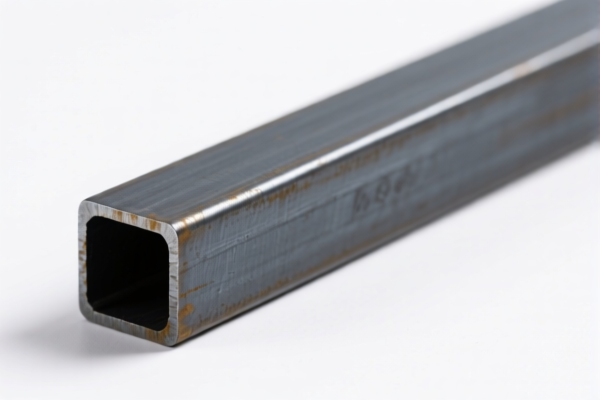
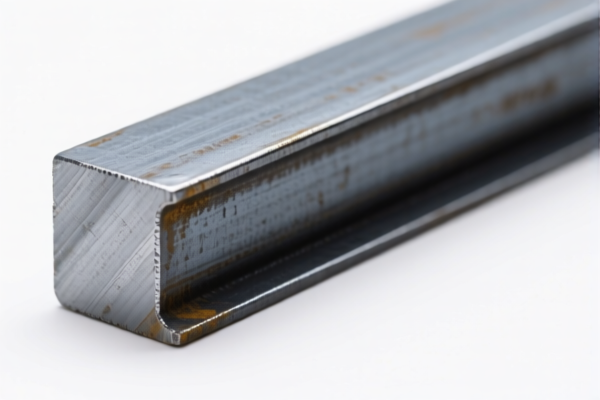
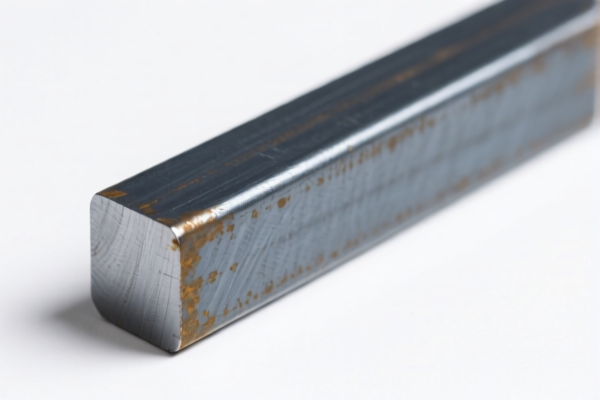
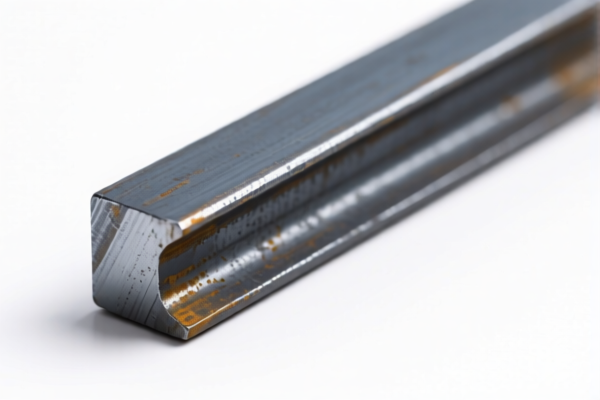
AI Analysis
🏗️ Hot-Rolled Flat Bars & Non-Alloy Steel Products (Iron/Steel)
🌐 HS Code Reference & Customs Clearance Guide | 2026 Latest Tariff Analysis | Professional Level Clearance Strategy
📌 Part 1: Product Definition & Classification: Do You Really Understand "Hot-Rolled Steel"?
Hot-rolled flat bars and non-alloy steel products are the foundational materials for construction, machinery, and structural engineering. In international trade, these products are strictly categorized by width, thickness, surface treatment, and cross-sectional shape.
Key Distinctions:
Flat Rolled Products (Plates/Sheets) Defined by width.
- Width < 600mm: Treated as narrow sheets/bars.
- Width ≥ 600mm: Treated as wide plates/coils.
* Bars and Rods: Defined by cross-section (rectangular, square, etc.).
- Forged/Hot-Rolled/Extruded: Basic mechanical working only.
* Surface Condition*: "Not clad, plated, or coated" means they are raw steel, ready for further processing or direct use.
⚠️ Critical Classification Points:
- If width is < 600 mm and not further worked → Chapter 7211
- If width is ≥ 600 mm and in coils → Chapter 7208
- If rectangular cross-section (bar) with < 0.25% Carbon → Chapter 7214
📦 Part 2: HS Code Classification Details (2026 Latest Tariff Authority Comparison)
| HS Code | Product Description | Applicable Scenario | Max Cross-Section / Width | Carbon Content |
|---|---|---|---|---|
7211.13.00.00 |
Flat-rolled products, width < 600 mm, universal mill plate | Narrow steel plates, structural bars, narrow coils | < 600 mm | N/A (General) |
7211.14.00.90 |
Flat-rolled products, width < 600 mm, thickness ≥ 4.75 mm | Thick narrow steel bars, heavy-duty structural components | < 600 mm | N/A (General) |
7214.91.00.16 |
Bars/Rods, rectangular cross-section, < 152 mm max cross-section | Standard structural steel bars, rebar blanks, small beams | < 152 mm | < 0.25% Carbon |
7214.91.00.20 |
Bars/Rods, rectangular cross-section, ≥ 152 mm max cross-section | Large structural steel beams, heavy forging billets | ≥ 152 mm | < 0.25% Carbon |
7208.26.00.60 |
Flat-rolled, width ≥ 600 mm, in coils, thickness 3 mm ≤ t < 4.75 mm | Medium-thick steel coils for welding tubes, structural shaping | ≥ 600 mm | N/A (General) |
7208.25.60.00 |
Flat-rolled, width ≥ 600 mm, in coils, thickness ≥ 4.75 mm | Heavy-thick steel coils for shipbuilding, pressure vessels, bridges | ≥ 600 mm | N/A (General) |
🔍 Key Reminder:
- All products listed below are Hot-Rolled and Not Further Worked (no painting, galvanizing, or polishing).
- Carbon Content Matters: For bars (7214), "Non-alloy steel" with < 0.25% carbon is classified differently than high-carbon steel.
- Width Threshold: The 600mm line is critical. A 599mm wide plate is7211.xxxx; a 601mm wide plate is7208.xxxx.
💰 Part 3: 2026 Latest Tariff Rate Details (Including Surtaxes & Policy Add-ons)
✅ Applicable Country: United States (US)
✅ Origin: China (CN)
✅ Effective Date: 2025/2026 (Includes subsequent imports)
🎯 1. 7211.13.00.00 & 7211.14.00.90 —— Narrow Flat-Rolled Products (< 600 mm)
| Item | Detail |
|---|---|
| Base Tariff | 0.0% (ad valorem) |
| USITC Surtax (Section 301) | +25.0% |
| Total Tax Rate | 25.0% |
| Tax Calculation | CIF Value × 25% |
| De Minimis Exemption? | ❌ NO (High-risk category for Section 301) |
| Legal Basis | USITC:7211.13.00.00 / USITC:7211.14.00.90 → Footnote: Section 301 |
📌 Explanation:
- These narrow steel products are subject to the standard 25% Section 301 tariff on Chinese steel.
- Even if the base duty is 0%, the additional surtax makes the effective rate 25%.
- No IEEPA 10% add-on is explicitly listed in the provided data for these codes, so the total remains 25%.
🎯 2. 7214.91.00.16 & 7214.91.00.20 —— Rectangular Steel Bars (< 0.25% Carbon)
| Item | Detail |
|---|---|
| Base Tariff | 0.0% |
| USITC Surtax (Section 301) | +25.0% |
| Total Tax Rate | 25.0% |
| Tax Calculation | CIF Value × 25% |
| De Minimis Exemption? | ❌ NO |
| Legal Basis | USITC:7214.91.00.16 / USITC:7214.91.00.20 → Footnote: Section 301 |
📌 Note:
- These are "bars and rods" (not coils/sheets).
- The classification depends strictly on cross-section size (<152mm vs ≥152mm) and carbon content (<0.25%).
- Despite being structural shapes, they are still subject to the 25% surtax.
🎯 3. 7208.26.00.60 & 7208.25.60.00 —— Wide Hot-Rolled Coils (≥ 600 mm)
| Item | Detail |
|---|---|
| Base Tariff | 0.0% |
| USITC Surtax (Section 301) | +25.0% |
| Total Tax Rate | 25.0% |
| Tax Calculation | CIF Value × 25% |
| De Minimis Exemption? | ❌ NO |
| Legal Basis | USITC:7208.26.00.60 / USITC:7208.25.60.00 → Footnote: Section 301 |
📌 Explanation:
- These are wide coils (≥600mm width).
- The distinction between7208.25(thick, ≥4.75mm) and7208.26(medium-thick, 3mm–4.75mm) is based on thickness.
- Both categories incur the 25% additional tariff.
- Warning: Misdeclaring width (e.g., declaring 650mm as 599mm) to avoid the 7208 code is a high-risk customs violation.
🛠️ Part 4: Customs Clearance Practical Advice (Battle-Tested Pitfall Avoidance Guide)
✅ 1. Document Checklist (Non-Negotiable)
| Document | Required | Description |
|---|---|---|
| ✅ Commercial Invoice | ✔️ | Must clearly state: "Hot-Rolled," "Non-Alloy Steel," "Not Clad/Plated." |
| ✅ Packing List | ✔️ | Must specify weight, dimensions, and packaging type (coils/bundles). |
| ✅ Product Specification Sheet | ✔️ | Include: Width, Thickness, Cross-section, Carbon Content (%C). |
| ✅ Certificate of Origin (CO) | ✔️ | Essential for proving origin. If from China, 25% surtax applies. |
| ✅ Bill of Lading (B/L) | ✔️ | Ensure HS Codes match exactly. |
| ✅ Third-Party Inspection Report | ✔️ | Recommended to verify dimensions and chemical composition. |
✅ 2. Declaration Tips (Key Mantras)
🔥 “Width Defines Chapter, Thickness Defines Subheading, Carbon Defines Bar Code”
| Scenario | Correct Declaration | Wrong Practice |
|---|---|---|
| Width < 600mm, Flat | 7211.13 or 7211.14 |
Misdeclare as 7208 → Penalty + Rejection |
| Width ≥ 600mm, Coils | 7208.25 or 7208.26 |
Misdeclare as 7211 → Penalty + Rejection |
| Rectangular Bar, <0.25% C | 7214.91.00.16/20 |
Misdeclare as 7211 → Incorrect Duty |
| Thick Plate, ≥4.75mm | 7211.14 (if <600mm) or 7208.25 (if ≥600mm) |
Confusing thickness thresholds |
✅ 3. Special Situation Handling
| Situation | Handling Advice |
|---|---|
| OEM Custom Shapes | Provide detailed engineering drawings. If not "standard" bars, may require advance ruling. |
| Mixed Widths in One Shipment | Declare separately by HS code. Do not average or consolidate incorrectly. |
| Hot-Rolled but Pickled | Still classified as "Not Further Worked." Do not declare as "Cold-Rolled" or "Coated." |
| High Carbon Steel (>0.25% C) | Not covered in this specific data snippet. Check other HS codes (e.g., 7213, 7215). |
🌍 Part 5: Global Market Clearance Comparison (2026 Latest)
| Country/Region | Recommended HS Code Range | Tariff (China Origin) | Certification | Notes |
|---|---|---|---|---|
| 🇺🇸 USA | 7211, 7208, 7214 |
25% (Section 301) | None specific for steel, but FDA/USDA not applicable | High Risk. Strict Section 301 enforcement. |
| 🇨🇳 China | 7211, 7208, 7214 |
0% ~ 5% | N/A | No additional surtax for import into China. |
| 🇪🇺 EU | 7208, 7211, 7214 |
0% ~ 1.7% | CE (if finished goods) | Low base duty, but anti-dumping may apply. |
| 🇬🇧 UK | 7208, 7211, 7214 |
0% ~ 5% | UKCA | Post-Brexit rules apply. |
| 🇯🇵 Japan | 7208, 7211, 7214 |
0% ~ 3.1% | JIS Standards | Low tariffs, but strict quality controls. |
📌 Conclusion:
- USA is the most expensive market for hot-rolled steel due to the 25% Section 301 surtax.
- EU/UK/Japan have low base tariffs but may have anti-dumping duties. Always verify if your specific product is under anti-dumping investigation.
- China is a low-cost destination for these goods.
📌 Part 6: Common Mistakes & Pitfall Guide (Lessons from Blood & Tears)
❌ Mistake 1: Declaring a 601mm wide coil as "Width < 600mm" to use 7211 instead of 7208.
👉 Consequence: Customs audit reveals true width → Back taxes + Penalties + Loss of Importer Record.
❌ Mistake 2: Failing to specify "Not Clad/Plated."
👉 Consequence: Customs may classify as "Coated Steel" (7210 or 7212), which has different duties, leading to reclassification and delays.
❌ Mistake 3: Confusing "Hot-Rolled" with "Cold-Rolled."
👉 Consequence: Cold-rolled (7209, 7210) has different tax structures. Misdeclaration = Fraud Risk.
❌ Mistake 4: Ignoring Carbon Content for Bars.
👉 Consequence: For 7214, declaring high-carbon steel as low-carbon (<0.25%) changes the HS subheading. Accuracy is critical.
✅ Correct Action:
"Hot-Rolled, Non-Alloy Steel, Rectangular Bar, 150mm x 20mm, <0.25% Carbon, Not Further Worked, Model ABC, Origin: China"
🎯 Part 7: Conclusion: Precision in Classification Saves Money!
🎯 Remember the Mantra:
🔹 "Width < 600 is 7211, Width ≥ 600 is 7208".
🔹 "Bars are 7214, Check Carbon, Check Cross-Section".
🔹 "25% Surtax is Fixed for US, No Escape".
🔹 "Document Everything, Avoid Misclassification".
📌 Pro Tip:
If your steel is originated from Vietnam, Mexico, or India, check for Free Trade Agreement (FTA) benefits (e.g., USMCA for Mexico). You may avoid the 25% surtax!
🚀 Recommendation: Apply for an Advance Ruling with CBP (Customs and Border Protection) if the product configuration is ambiguous.
📣 Immediate Action:
📞 Consult a licensed customs broker.
📝 Provide exact specs: Width, Thickness, Cross-Section, Carbon %.
🚀 Ensure smooth clearance, minimize costs, and maximize profit!
✨ Professional Clearance Starts with Accurate Classification!
💼 Every Cent Saved is a Cent Earned!
Customer Reviews
About HS Code Classification
The Harmonized System (HS) is an internationally standardized nomenclature developed by the World Customs Organization (WCO) to classify traded products. Over 200 countries use the HS system as the basis for customs tariffs, trade statistics, and import/export regulations.
Each HS code follows a hierarchical structure:
- Chapter (2 digits) — Broad category of goods (e.g., Chapter 84: Machinery and Mechanical Appliances)
- Heading (4 digits) — More specific grouping within the chapter
- Subheading (6 digits) — Internationally standardized breakdown, used by all WCO member countries
- National subdivisions (8-10 digits) — Country-specific extensions for further classification, such as US HTSUS 10-digit codes
Correct HS code classification is essential for smooth customs clearance, accurate duty payment, and compliance with trade regulations. Misclassification can lead to customs delays, overpayment of duties, or penalties.
When importing from CN to US, the applicable tariff rates may include:
- Most-Favored-Nation (MFN) rate — The standard duty rate applied to WTO members
- General rate — Applied to countries without trade agreements
- Trade remedy duties — Additional tariffs such as Section 301 (anti-dumping), Section 232 (national security), or countervailing duties
The information provided on this page is for reference purposes only. For official classification, please consult with your local customs authority or a licensed customs broker.