Hot rolled flat iron or non alloy steel products
CN → US| HS Code | Tariff Rate | Origin | Destination | Doc |
|---|---|---|---|---|
| 7211130000 | 35.0% | CN | US | Official Doc |
| 7211140090 | 35.0% | CN | US | Official Doc |
| 7208260060 | 35.0% | CN | US | Official Doc |
| 7208103000 | 10.0% | CN | US | Official Doc |
| 7226915000 | 35.0% | CN | US | Official Doc |
| 7226917000 | 35.0% | CN | US | Official Doc |
Product Images
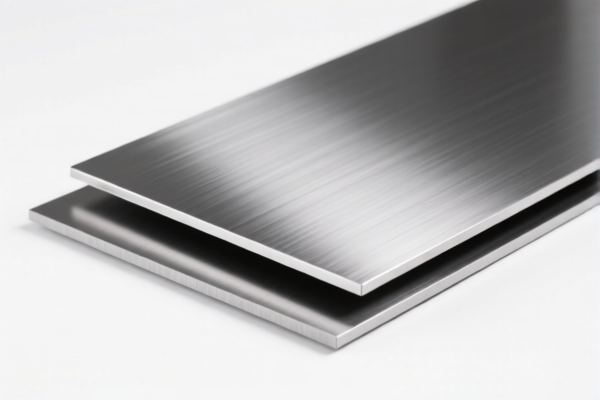
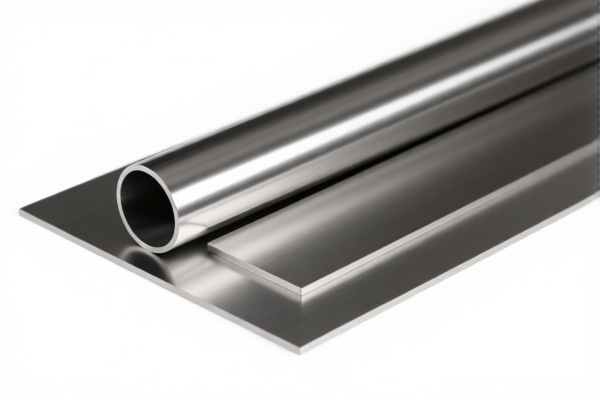
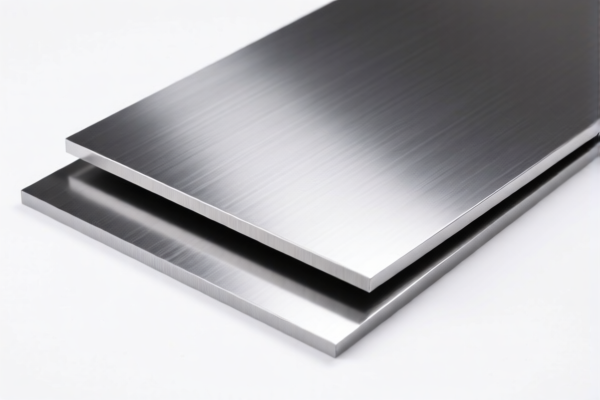
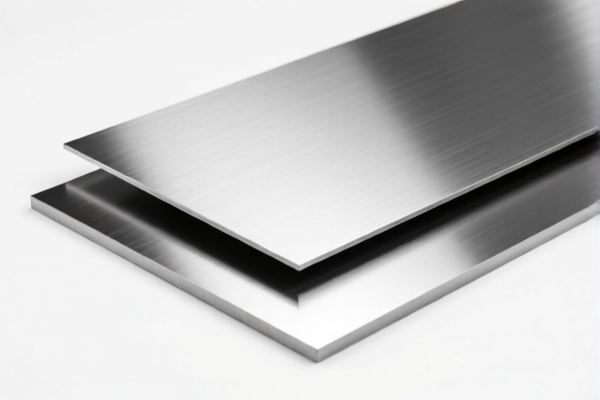
AI Analysis
⚙️ Hot-Rolled Flat Iron or Non-Alloy Steel Products (Ferrous Metals)
🌐 HS Code Reference & Customs Clearance Guide | 2026 Latest Tariff Analysis | Professional Clearance Strategy
📌 I. Product Definition & Classification: Do You Know Your Steel?
"Hot-rolled flat products of iron or non-alloy steel" are the backbone of global construction, automotive, and manufacturing industries. In international trade, these products are strictly categorized by width and surface condition.
The critical distinction lies in the width: 1. < 600 mm width: Often used for specialized bars, strips, or narrow plates. 2. ≥ 600 mm width: Standard plates, sheets, and coils for structural use.
⚠️ Key Classification Point:
- If the width is less than 600 mm, it generally falls under headings 7210 (if coated) or 7211 (if not clad/plated/coated).
- If the width is 600 mm or more, it falls under heading 7208 (Hot-rolled, in coils) or 7209 (Hot-rolled, not in coils).
- "Non-alloy steel" means the steel does not contain specified amounts of other elements (like chromium, nickel, etc.) that would classify it as "alloy steel" (Heading 7225/7226).
📦 II. HS Code Classification Details (2026 Latest Tariff Authority Match)
Based on the provided <DATA>, here are the specific HS Codes applicable to Hot-Rolled Flat Iron/Non-Alloy Steel:
| HS Code | Product Description | Width | Form/Condition | Tax Rate (Total) |
|---|---|---|---|---|
| 7211.13.00.00 | Not further worked than hot-rolled: Universal mill plate | < 600 mm | Hot-rolled, not clad/plated/coated | 25.0% |
| 7211.14.00.90 | Not further worked than hot-rolled: Other, ≥ 4.75 mm thick | < 600 mm | Hot-rolled, not clad/plated/coated | 25.0% |
| 7208.26.00.60 | Hot-rolled, in coils, pickled: ≥ 3 mm but < 4.75 mm thick | ≥ 600 mm | Hot-rolled, not clad/plated/coated, Pickled | 25.0% |
| 7208.10.30.00 | Hot-rolled, in coils, with patterns in relief: ≥ 4.75 mm thick | ≥ 600 mm | Hot-rolled, not clad/plated/coated, Patterned | 0.0% |
🔍 Critical Note:
- The data provided includes Alloy Steel (7226...) which is NOT relevant to your query about "Non-Alloy Steel." Therefore, 7226.91.50.00 and 7226.91.70.00 are excluded from this guide.
- For Non-Alloy Steel, the tax rate is either 0% or 25% depending on the specific shape (patterned vs. plain) and thickness.
💰 III. 2026 Latest Tariff Rate Detailed Explanation
✅ Applicable Country: United States (US)
✅ Origin: China (CN) (Note: If origin is not China, base tariffs may apply, but the "Additional Tariff" structure below reflects the provided data which implies US-China trade context with 25% additional duties)
✅ Effective Date: Current regulations apply.
🎯 1. 7211.13.00.00 & 7211.14.00.90 — Narrow Hot-Rolled Plates/Strips (< 600 mm)
| Item | Content |
|---|---|
| Product Type | Hot-rolled flat products, width < 600 mm, not clad/plated/coated |
| Specifics | Universal mill plates (7211.13) OR Other types ≥ 4.75 mm (7211.14) |
| Base Tariff | 0.0% |
| Additional Tariff (Section 301) | +25.0% |
| Total Tax Rate | 25.0% |
| Calculation | CIF Value × 25% |
| Legal Basis | USITC Section 301 List 4 (typically applies to these steel products) |
📌 Explanation:
- These narrow steel products are subject to a 25% additional duty on top of the base rate (which is 0%).
- This is a high-cost item for importers. Ensure the product is indeed "non-alloy" and "hot-rolled" without further working (e.g., cold-rolled or galvanized would change the HS code).
🎯 2. 7208.26.00.60 — Wide Hot-Rolled Coils, Pickled (≥ 600 mm)
| Item | Content |
|---|---|
| Product Type | Hot-rolled, in coils, width ≥ 600 mm, Pickled |
| Thickness | ≥ 3 mm but < 4.75 mm |
| Base Tariff | 0.0% |
| Additional Tariff (Section 301) | +25.0% |
| Total Tax Rate | 25.0% |
| Calculation | CIF Value × 25% |
📌 Explanation:
- "Pickled" means the surface has been chemically treated to remove scale from the hot-rolling process.
- This specific thickness range (3–4.75 mm) in pickled coils attracts the 25% additional duty.
- Warning: If the steel is not pickled (i.e., with scale intact), it may fall under a different subheading not listed in the provided<DATA>with a 0% rate (e.g.,7208.25), so accurate description is crucial.
🎯 3. 7208.10.30.00 — Wide Hot-Rolled Coils, Patterned/Relief (≥ 600 mm)
| Item | Content |
|---|---|
| Product Type | Hot-rolled, in coils, width ≥ 600 mm, With patterns in relief |
| Thickness | ≥ 4.75 mm |
| Base Tariff | 0.0% |
| Additional Tariff | 0.0% |
| Total Tax Rate | 0.0% |
| Calculation | CIF Value × 0% |
📌 Explanation:
- "Patterns in relief" refers to products like checkered plate or tread plate (often used for flooring, truck beds).
- This is a zero-duty item!
- Critical Distinction: If you misclassify checkered plate as "flat hot-rolled coils" (7208.26), you will pay 25%. If correctly classified as "with patterns in relief," you pay 0%.
- Documentation: Must include product samples or clear photos showing the relief pattern in the customs declaration.
🛠️ IV. Customs Clearance Practical Advice (Avoid Pitfalls)
✅ 1. Documentation Checklist (Must-Have)
| Document | Required? | Notes |
|---|---|---|
| ✅ Commercial Invoice | ✔️ | Must clearly state: "Hot-Rolled Flat Products of Non-Alloy Steel," Width, Thickness, and Form (Coils/Plates). |
| ✅ Bill of Lading/Air Waybill | ✔️ | Show weight and volume. |
| ✅ Product Specification Sheet | ✔️ | Confirm "Non-Alloy" composition (C, Mn, Si limits) to prove it's not "Alloy Steel" (7226). |
| ✅ Photos of Product | ✔️ | Crucial for 7208.10.30.00: Must show the relief pattern to qualify for 0% duty. |
| ✅ Certificate of Origin | ✔️ | To determine if Section 301 duties apply (if origin is China). |
| ✅ Packing List | ✔️ | Detail if pickled or with scale. |
✅ 2. Declaration Tips (Key Mnemonics)
🔥 "Width < 600: 25%; Width ≥ 600: Check Pattern. Pattern = 0%, Pickled/Flat = 25%!"
| Scenario | Correct HS Code | Tax Rate | Common Mistake |
|---|---|---|---|
| Narrow (<600mm), Hot-Rolled, ≥4.75mm | 7211.14.00.90 |
25% | None (Always 25% in this dataset) |
| Wide (≥600mm), Coils, Pickled, 3-4.75mm | 7208.26.00.60 |
25% | Misdeclaring as "with scale" to get 0% → Audit Risk |
| Wide (≥600mm), Coils, Patterned, ≥4.75mm | 7208.10.30.00 |
0% | Misdeclaring as "flat" → Pay 25% unnecessarily |
✅ 3. Special Cases & Handling
| Scenario | Handling Advice |
|---|---|
| Is it Alloy or Non-Alloy? | Provide Mill Test Certificate (MTC). If Cr > 1.2%, Mn > 1.65%, etc., it may be Alloy Steel (Heading 7226), which is NOT covered in this 0%/25% non-alloy guide. |
| Pickled vs. With Scale | "Pickled" products are subject to 25%. "With Scale" products (not pickled) in the same thickness range may have different duties (not in provided data, but often 0%). Be honest in declaration. |
| Checkered Plate | If it has a raised pattern (diamond, line, etc.), use 7208.10.30.00 for 0% duty. Do not use "Flat-rolled" codes. |
| Thickness < 4.75mm | For wide coils (< 4.75mm), if not pickled, check other 7208 subheadings. If pickled, it’s 7208.26.00.60 (25%). |
🌍 V. Global Market Comparison (2026)
| Country/Region | Recommended HS Code | Tariff (China Origin) | Notes |
|---|---|---|---|
| 🇺🇸 United States | 7208.10.30.00 |
0% | Best for patterned plate. |
| 🇺🇸 United States | 7211.14.00.90 |
25% | Narrow hot-rolled steel. |
| 🇪🇺 EU | Similar codes | Varies (often 0-4%) | No Section 301 equivalent, but anti-dumping may apply. |
| 🇨🇳 China | Similar codes | Varies (Export duties may apply) | Check China's export tax rebate policies. |
📌 Conclusion:
- The US tariff structure is highly dependent on width and surface treatment.
- Patterned steel is the only zero-duty option in the provided data.
- Narrow (<600mm) and Pickled Wide Coils are taxed at 25%.
📌 VI. Common Errors & Pitfalls (Lessons Learned)
❌ Error 1: Classifying Checkered Plate as "Flat Hot-Rolled Steel" (7208.26)
👉 Consequence: Pay 25% duty instead of 0%.
✅ Fix: Declare as "Hot-rolled flat products with patterns in relief."
❌ Error 2: Misdeclaring "With Scale" as "Pickled"
👉 Consequence: Incorrect declaration, potential penalty. If it’s pickled, it’s 25%. If it has scale, it might be 0% (check specific subheading).
✅ Fix: Provide photos of the surface. If dull and black (scale), it’s not pickled. If shiny and clean, it’s pickled.
❌ Error 3: Confusing Non-Alloy with Alloy Steel
👉 Consequence: Wrong HS Code (7211/7208 vs. 7226). Alloy steel may have different duties.
✅ Fix: Obtain Mill Test Certificate (MTC) to verify chemical composition.
🎯 VII. Conclusion: Precise Declaration for Cost Optimization
🎯 Remember the Rule:
🔹 "Narrow: 25%. Wide & Patterned: 0%. Wide & Pickled: 25%."
🔹 "Non-Alloy is Key: Verify MTC to avoid Heading 7226."
📌 Tip:
If your product is Patterned Plate, ensure the relief pattern is visible in photos. This single detail can save you 25% in customs duties.
For Pickled Coils, be prepared for the 25% additional tariff.
📣 Immediate Action:
📞 Contact your customs broker with the Mill Test Certificate (MTC) and product photos.
🚀 Optimize your HS Code to leverage the 0% duty for patterned steel if applicable!
✨ Professional Clearance Starts with Accurate Classification!
💼 Every percentage point of tariff saved is pure profit!
Customer Reviews
About HS Code Classification
The Harmonized System (HS) is an internationally standardized nomenclature developed by the World Customs Organization (WCO) to classify traded products. Over 200 countries use the HS system as the basis for customs tariffs, trade statistics, and import/export regulations.
Each HS code follows a hierarchical structure:
- Chapter (2 digits) — Broad category of goods (e.g., Chapter 84: Machinery and Mechanical Appliances)
- Heading (4 digits) — More specific grouping within the chapter
- Subheading (6 digits) — Internationally standardized breakdown, used by all WCO member countries
- National subdivisions (8-10 digits) — Country-specific extensions for further classification, such as US HTSUS 10-digit codes
Correct HS code classification is essential for smooth customs clearance, accurate duty payment, and compliance with trade regulations. Misclassification can lead to customs delays, overpayment of duties, or penalties.
When importing from CN to US, the applicable tariff rates may include:
- Most-Favored-Nation (MFN) rate — The standard duty rate applied to WTO members
- General rate — Applied to countries without trade agreements
- Trade remedy duties — Additional tariffs such as Section 301 (anti-dumping), Section 232 (national security), or countervailing duties
The information provided on this page is for reference purposes only. For official classification, please consult with your local customs authority or a licensed customs broker.