Household Maintenance Tool Set
CN → US| HS Code | Tariff Rate | Origin | Destination | Doc |
|---|---|---|---|---|
| 8708998180 | 37.5% | CN | US | Official Doc |
| 8708994850 | 35.0% | CN | US | Official Doc |
| 3926909989 | 22.8% | CN | US | Official Doc |
| 3926904590 | 38.5% | CN | US | Official Doc |
| 4016996010 | 37.5% | CN | US | Official Doc |
Product Images
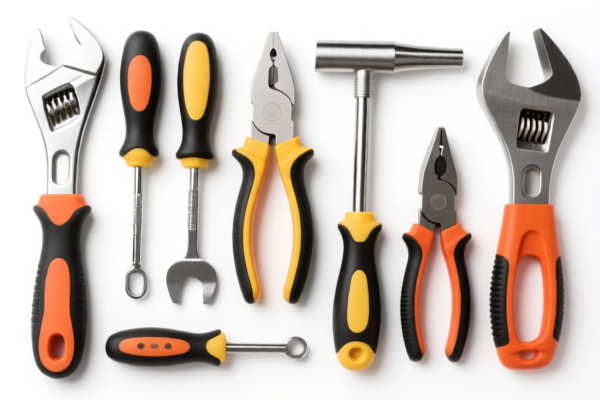
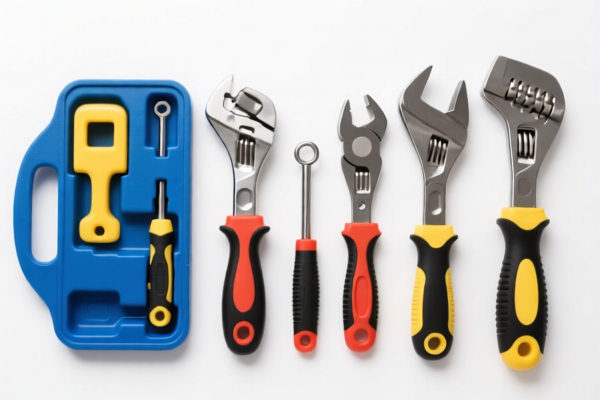
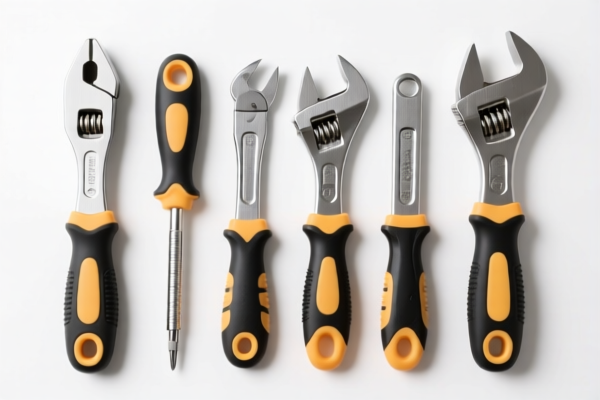
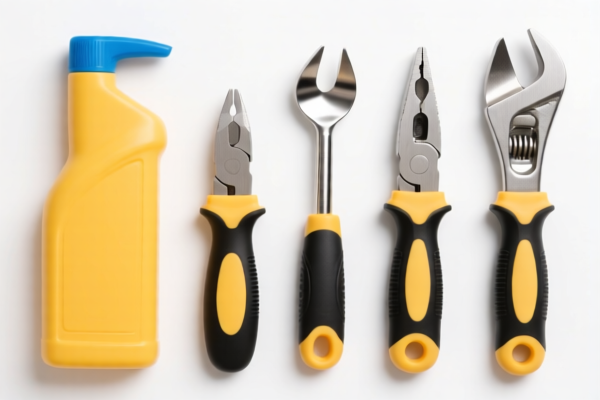
AI Analysis
🛠️ Household Maintenance Tool Set: The Ultimate HS Code & Tariff Guide (2026)
🌐 HS Code Reference & Customs Clearance Guide | 2026 Latest Tariff Analysis | Professional Level Compliance Strategy
📌 I. Product Definition & Classification: Do You Really Understand "Repair Kits"?
A "Household Maintenance Tool Set" (often classified as Repair Kits) is a complex category in international trade. It rarely consists of a single material or function. Instead, it is a composite good containing various components such as plastic handles, rubber seals, metal nuts, and adhesive tapes.
Because of this complexity, customs authorities often classify these sets into "Catch-all" (Residual) Categories based on the dominant material or function. Below, we analyze the six most likely HS Codes based on the provided data, explaining why each applies and what the total tax burden is.
⚠️ Critical Distinction:
- If the kit is primarily plastic tools → Likely 3926
- If the kit is primarily automotive/auto-parts related → Likely 8708
- If the kit contains rubber seals/gaskets → Likely 4016
- Warning: Misclassification leads to massive tariff shocks (up to 38.5%)!
📦 II. HS Code Classification Details (2026 Latest Tariff Authority Comparison)
| HS Code | Product Description | Reason for Classification | Total Tax Rate (US/CN) |
|---|---|---|---|
8708.99.81.80 |
Repair Kit (Automotive Parts Catch-All) | Classified under automotive spare parts. Used as a residual category for auto-related repair kits with no specific material conflict. | 37.5% |
8708.99.48.50 |
Repair Kit (Spare Parts/Components) | Classified under "Other parts and accessories." Based on the principle of "no obvious conflict," inferred as general spare parts. | 35.0% |
3926.90.99.89 |
Repair Kit (Plastic Tools/Stands) | Based on inference that repair kits often contain plastic tools or supports. Classified under plastic articles catch-all. | 22.8% |
3926.90.45.90 |
Repair Kit (Plastic Gaskets/Washers) | Based on residual category principle. May include plastic components like gaskets/washers. No material conflict. | 38.5% |
4016.99.60.10 |
Repair Kit (Rubber/Synthetic Seals) | Based on inference that kits often contain rubber or synthetic sealing/gasket components. No material conflict. | 37.5% |
4016.99.03.00 |
Repair Kit (Rubber Seals/Gaskets) | Classified under other residual categories. Typically contains rubber sealing parts or gaskets. No vulcanized rubber conflict. | 38.0% |
🔍 Key Insight:
- The lowest tax rate is 22.8% (3926.90.99.89) if the kit is predominantly plastic-based.
- The highest tax rate is 38.5% (3926.90.45.90) for plastic-based kits in a different residual subheading.
- Automotive-related kits (8708) carry high tariffs (~35-37.5%) due to 122 Section and Section 301 duties.
💰 III. 2026 Latest Tariff Rate Breakdown (Including Surcharges & Policy Add-ons)
✅ Applicable Country: United States (US)
✅ Origin: China (CN)
✅ Effective Date: Post-November 10, 2025 (including subsequent imports)
🎯 1. 3926.90.99.89 — Plastic Repair Kit Tools (Lowest Tax)
| Item | Content |
|---|---|
| Base Tariff | 5.3% (Ad Valorem) |
| USITC Additional Tariff | +7.5% (Under specific USITC provisions) |
| Section 122 Tariff | +10% (Specific 122 Clause) |
| Total Tariff | 22.8% |
| Tax Calculation | CIF Value × 22.8% |
| De Minimis Exemption | ❌ Not Applicable (Standard for these HS codes) |
| Legal Basis Path | Base Tariff → USITC:7.5% → Section 122:10% |
📌 Explanation:
- This is the most cost-effective classification for household tool sets primarily made of plastic (handles, casings, non-metallic tools).
- The 22.8% rate is significantly lower than automotive parts (35%+), making it ideal for generic household repair kits.
🎯 2. 8708.99.48.50 — General Spare Parts Repair Kit
| Item | Content |
|---|---|
| Base Tariff | 0.0% |
| USITC Additional Tariff | +25.0% (Section 301) |
| Section 122 Tariff | +10.0% |
| Total Tariff | 35.0% |
| Tax Calculation | CIF Value × 35.0% |
| De Minimis Exemption | ❌ Not Applicable |
| Legal Basis Path | USITC:9903.88.01 (25%) → Section 122:10% |
📌 Explanation:
- Even though the base tariff is 0%, the 25% Section 301 duty pushes the total to 35%.
- This code is used when the kit is deemed a general spare part with no specific material dominance.
🎯 3. 4016.99.60.10 & 4016.99.03.00 — Rubber/Seal Repair Kits
| Item | Content |
|---|---|
| Base Tariff | 2.5% – 3.0% |
| USITC Additional Tariff | +25.0% (Section 301) |
| Section 122 Tariff | +10.0% |
| Total Tariff | 37.5% – 38.0% |
| Tax Calculation | CIF Value × 37.5% / 38.0% |
| De Minimis Exemption | ❌ Not Applicable |
📌 Explanation:
- If your kit is heavy on rubber gaskets, O-rings, or seals, it falls here.
- High Risk: The 25% Section 301 duty applies, resulting in 37.5%-38% total tax.
🎯 4. 3926.90.45.90 — Plastic Gasket/Washer Repair Kit
| Item | Content |
|---|---|
| Base Tariff | 3.5% |
| USITC Additional Tariff | +25.0% (Section 301) |
| Section 122 Tariff | +10.0% |
| Total Tariff | 38.5% |
| Tax Calculation | CIF Value × 38.5% |
| De Minimis Exemption | ❌ Not Applicable |
📌 Explanation:
- Highest Tax Rate (38.5%) among all options.
- Avoid this code unless your kit is specifically plastic washers/gaskets and cannot be classified under the lower3926.90.99.89.
🛠️ IV. Customs Clearance Practical Advice (Battle-Tested Pitfall Avoidance)
✅ 1. Required Documentation Checklist (Non-Negotiable)
| Document | Required | Note |
|---|---|---|
| ✅ Product Specification Sheet | ✔️ | List all components (e.g., "10% plastic handles, 5% rubber seals, 85% plastic tools"). |
| ✅ Product Photos (Labeled) | ✔️ | Show the kit’s contents clearly. Highlight dominant material. |
| ✅ Commercial Invoice | ✔️ | Must state: "Household Maintenance Tool Set – Plastic Based." |
| ✅ Packing List | ✔️ | Detail each item to support the "Plastic Dominance" argument. |
| ✅ Material Composition Breakdown | ✔️ | Critical: Prove that plastic > 50% to qualify for 3926.90.99.89 (22.8%). |
✅ 2. Declaration Strategy (Key Mantra)
🔥 “Plastic Dominance Wins, Rubber Costs Extra, Auto Parts Suck!”
| Scenario | Correct HS Code | Risk |
|---|---|---|
| Kit is mostly plastic tools/handles | 3926.90.99.89 |
✅ Lowest Tax (22.8%) |
| Kit is mostly rubber seals/O-rings | 4016.99.60.10 |
⚠️ High Tax (37.5%) |
| Kit is automotive-focused | 8708.99.48.50 |
⚠️ High Tax (35%) |
| Kit is mixed but no dominant material | 3926.90.45.90 |
❌ Highest Tax (38.5%) |
✅ 3. Special Handling Tips
| Situation | Handling Advice |
|---|---|
| Mixed Material Kit | Emphasize plastic components in description to justify 3926.90.99.89. |
| Automotive Specific Kit | If it’s for cars, use 8708. Don’t try to force it into 3926. |
| OEM Custom Kit | Provide client order + BOM (Bill of Materials) to prove material ratio. |
| De Minimis Threshold | ❌ Cannot use for these HS codes. Full duty applies regardless of value. |
🌍 V. Global Market Comparison (2026 Latest)
| Country/Region | Recommended HS Code | Tariff Rate | Notes |
|---|---|---|---|
| 🇺🇸 USA | 3926.90.99.89 |
22.8% | Best option for plastic kits. |
| 🇨🇳 China | 3926.90.99.89 |
~5% | No Section 301/122 duties. |
| 🇪🇺 EU | 3926.90.99.89 |
~6.5% | No Section 301/122. |
| 🇯🇵 Japan | 3926.90.99.89 |
~3-6% | Depends on specific subheading. |
📌 Conclusion:
- USA is the most expensive market due to Section 301 and 122 duties.
- China’s3926.90.99.89(22.8%) is the optimal classification for US-bound plastic tool sets.
- Avoid3926.90.45.90(38.5%) at all costs if possible.
📌 VI. Common Errors & Pitfall Guide (Lessons Learned)
❌ Error 1: Classifying a plastic kit as 8708 (Auto Parts)
👉 Consequence: Tax jumps from 22.8% to 35%. Unnecessary cost increase!
❌ Error 2: Classifying a plastic kit as 3926.90.45.90
👉 Consequence: Tax jumps from 22.8% to 38.5%. Loss of 15.7% profit margin!
❌ Error 3: Not providing material breakdown
👉 Consequence: Customs may assign the highest residual code (3926.90.45.90). Delay + Penalty!
✅ Correct Practice:
"Household Maintenance Tool Set – Primarily Plastic Components (Handles, Casings, Non-Metallic Tools), with minor Rubber Gaskets. Model XYZ, 10-Piece Set."
🎯 VII. Conclusion: Precision Classification Saves Money!
🎯 Remember the Mantra:
🔹 "Plastic Dominance = 22.8% Gold!"
🔹 "Rubber/Auto = 35%+ Penalty!"
🔹 "Wrong Code = 38.5% Nightmare!"
📌 Pro Tip:
If your tool set contains >50% plastic by value/weight, insist on 3926.90.99.89.
Request an Advance Ruling from US Customs (CBP) if the kit is complex.
📣 Take Action Now:
📞 Consult a customs broker + Provide BOM + Classify as Plastic-Based
🚀 Save 15%+ in tariffs, clear customs faster, boost profits!
✨ Professional clearance starts with precise classification!
💼 Every cent counts in 2026!
Customer Reviews
About HS Code Classification
The Harmonized System (HS) is an internationally standardized nomenclature developed by the World Customs Organization (WCO) to classify traded products. Over 200 countries use the HS system as the basis for customs tariffs, trade statistics, and import/export regulations.
Each HS code follows a hierarchical structure:
- Chapter (2 digits) — Broad category of goods (e.g., Chapter 84: Machinery and Mechanical Appliances)
- Heading (4 digits) — More specific grouping within the chapter
- Subheading (6 digits) — Internationally standardized breakdown, used by all WCO member countries
- National subdivisions (8-10 digits) — Country-specific extensions for further classification, such as US HTSUS 10-digit codes
Correct HS code classification is essential for smooth customs clearance, accurate duty payment, and compliance with trade regulations. Misclassification can lead to customs delays, overpayment of duties, or penalties.
When importing from CN to US, the applicable tariff rates may include:
- Most-Favored-Nation (MFN) rate — The standard duty rate applied to WTO members
- General rate — Applied to countries without trade agreements
- Trade remedy duties — Additional tariffs such as Section 301 (anti-dumping), Section 232 (national security), or countervailing duties
The information provided on this page is for reference purposes only. For official classification, please consult with your local customs authority or a licensed customs broker.