Household Metal Frame Floor Standing Ironing Board
CN → US| HS Code | Tariff Rate | Origin | Destination | Doc |
|---|---|---|---|---|
| 7326908688 | 87.9% | CN | US | Official Doc |
| 7326908660 | 87.9% | CN | US | Official Doc |
| 9403200011 | 85.0% | CN | US | Official Doc |
| 9403200050 | 85.0% | CN | US | Official Doc |
Product Images
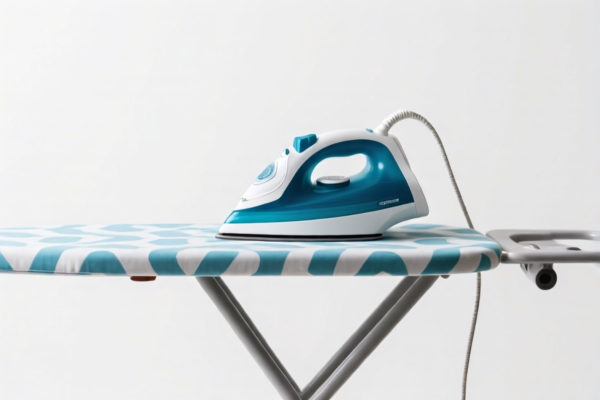
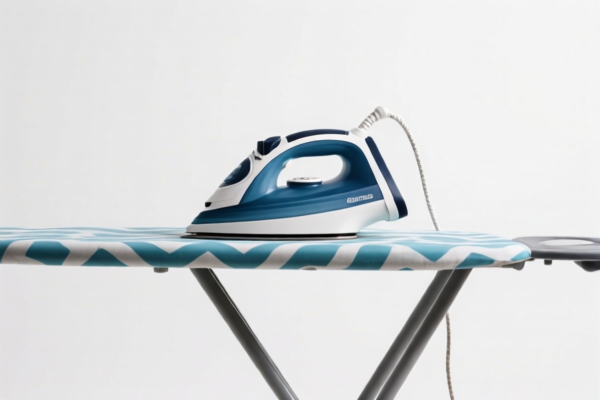
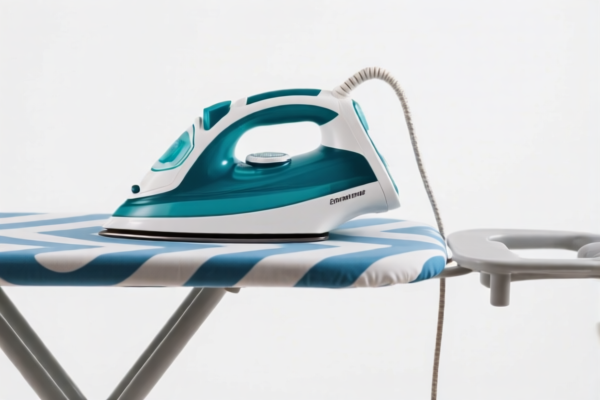
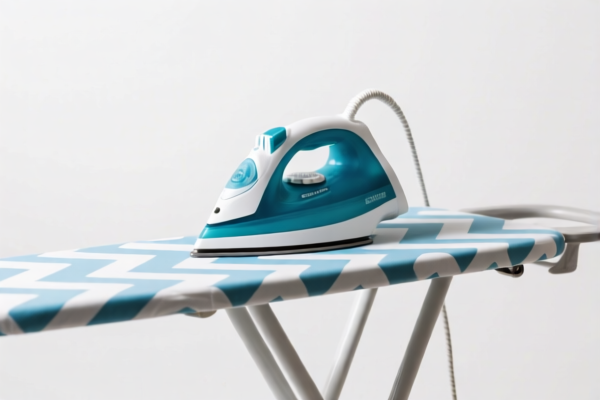
AI Analysis
🧺 Household Metal Frame Floor Standing Ironing Board
🌐 HS Code Reference & Customs Clearance Guide | 2026 Latest Tariff Analysis | Professional Compliance Strategy
📌 I. Product Definition & Classification: What Exactly Is a "Floor Standing Ironing Board"?
A Household Metal Frame Floor Standing Ironing Board is a versatile household appliance used for pressing clothes. In international trade, its classification depends heavily on its structure and primary function. It is primarily categorized into two distinct groups:
1. "Other Articles of Iron or Steel" (Chassis/Frame Focus):
- Boards where the core identity is the metal frame and the surface is a simple mesh or fabric.
- Often viewed as an industrial-style or simple utility item.
- Key Characteristic: The value and structure are dominated by the metal framework.
2. "Metal Furniture" (Household Appliance Focus):
- Boards designed specifically for household use, often featuring collapsible legs, adjustable height mechanisms, and a design that resembles furniture.
- Key Characteristic: Regarded as a household utility/furniture item rather than a generic metal good.
⚠️ Critical Distinction Point:
- If the item is a simple wire mesh board with a basic steel pipe frame, often marketed as "heavy-duty" or "industrial style" → It tends toward Chapter 73 (Iron/Steel Articles).
- If the item has collapsible legs, a fabric cover, a wooden/metal top board, and is clearly marketed as a household furnishing item → It tends toward Chapter 94 (Furniture).
📦 II. HS Code Classification Details (2026 Latest Tariff Authority Mapping)
| HS Code | Product Description | Application Scenario | Classification Logic |
|---|---|---|---|
7326.90.86.88 |
Other articles of iron or steel (Metal Ironing Board) | Simple metal frame, wire mesh surface, basic folding mechanism | ✅ General Metal Article: No specific furniture features |
7326.90.86.60 |
Other articles of metal (Metal Ironing Board) | Generic metal construction, less specific iron/steel detailing | ✅ General Metal Article: Broad metal category |
9403.20.00.11 |
Metal Furniture: Floor-standing Ironing Board | Collapsible, household-use specific, furniture-like design | ✅ Household Furniture: Meets "furniture" definition |
9403.20.00.50 |
Metal Furniture: Other (Metal Ironing Board) | Other metal household items including ironing boards | ✅ Household Furniture: General furniture category |
🔍 Key Insight:
- The difference between Chapter 73 and Chapter 94 is often debated by customs officers.
- Chapter 94 is generally preferred for consumer-grade, collapsible, household ironing boards because they are designed for domestic furnishing.
- Chapter 73 applies if the board is deemed a simple metal construction product without distinct furniture characteristics.
💰 III. 2026 Latest Tariff Rate Breakdown (Including Additional Duties & Policy Surcharges)
✅ Applicable Country: United States (US)
✅ Origin: China (CN)
✅ Effective Time: Current rates apply (post-2025 trade measures)
🎯 1. Classification: 7326.90.86.88 & 7326.90.86.60
(Category: Other Articles of Iron or Steel / Metal)
| Item | Details |
|---|---|
| Basic Tariff | 2.9% (Most Favored Nation) |
| Section 301 Additional Tariff | +25.0% (Trade War Tariff) |
| Section 122 Tariff (Steel/Aluminum/Copper) | +10% (Specifically for steel/aluminum products) |
| Section 232 Tariff (Steel/Aluminum/Copper) | +50% (National Security Tariff on Steel/Aluminum/Copper) |
| Total Tax Rate | 87.9% |
| Calculation Basis | CIF Value × 87.9% |
| De Minimis Exemption? | ❌ No (Cannot apply $800 de minimis exemption for Section 301/232 goods) |
| Legal Basis Path | USITC:7326.90.86.88 → Section 301: Footnote 9903.88.01 → Section 232: Steel/Aluminum |
📌 Explanation:
- 87.9% is an extremely high effective tax rate.
- The 50% comes from Section 232 (National Security) targeting steel/aluminum products.
- The 25% comes from Section 301 (Retaliatory Trade).
- The 10% comes from Section 122 (or similar specific steel surcharges).
- Result: These HS codes are highly expensive to import from China due to multiple overlapping tariffs.
🎯 2. Classification: 9403.20.00.11 & 9403.20.00.50
(Category: Metal Furniture)
| Item | Details |
|---|---|
| Basic Tariff | 0.0% (Often 0% for certain furniture items) |
| Section 301 Additional Tariff | +25.0% (Trade War Tariff) |
| Section 122 Tariff (Steel/Aluminum/Copper) | +10% (Specific for steel/aluminum products) |
| Section 232 Tariff (Steel/Aluminum/Copper) | +50% (National Security Tariff on Steel/Aluminum/Copper) |
| Total Tax Rate | 85.0% |
| Calculation Basis | CIF Value × 85.0% |
| De Minimis Exemption? | ❌ No (Cannot apply $800 de minimis exemption for Section 301/232 goods) |
| Legal Basis Path | USITC:9403.20.00.11 → Section 301: Footnote 9903.88.01 → Section 232: Steel/Aluminum |
📌 Explanation:
- Although the basic tariff is 0%, the additional tariffs still apply because the product contains steel/aluminum.
- 85.0% is slightly lower than the 87.9% for Chapter 73, but still prohibitive.
- Key Difference: The 0% base rate makes it slightly cheaper, but the 50% Section 232 and 25% Section 301 dominate the cost.
🛠️ IV. Customs Clearance Practical Advice (Real-World Pitfall Guide)
✅ 1. Documentation Checklist (Must-Have)
| Document | Required? | Notes |
|---|---|---|
| ✅ Product Specification Sheet | ✔️ | Must include dimensions, weight, material composition (e.g., "Steel Frame, Fabric Cover") |
| ✅ Product Photos | ✔️ | Show the board in both folded and unfolded states. Highlight hinges, legs, and surface. |
| ✅ Commercial Invoice | ✔️ | Clearly state: "Household Metal Frame Ironing Board, Model XXX, Made in China" |
| ✅ Packing List | ✔️ | Itemize components if sold disassembled (but note: customs may still treat as one unit) |
| ✅ Certificate of Origin (CO) | ✔️ | Required for origin verification |
| ✅ Third-Party Test Report | ✔️ | ASTM, CPSIA, or equivalent for household goods (safety standards) |
✅ 2. Declaration Strategy (Key Tips)
🔥 “Declare as Furniture if it Looks Like Furniture!”
| Scenario | Recommended HS Code | Why? |
|---|---|---|
| Collapsible, Household-Use Board | 9403.20.00.11 or 9403.20.00.50 |
Looks like furniture, has legs, used in homes. Slightly lower tax (85.0% vs 87.9%). |
| Simple Wire Mesh, Industrial Style | 7326.90.86.88 |
No furniture features, just metal structure. Higher tax (87.9%). |
| Board with Wooden Top + Metal Legs | 9403.20.00.50 |
Mixed material, but primary function is furniture. |
| Disassembled Parts Sold Separately | ❌ Risky | Customs may reassemble and tax at higher rate. Declare as complete unit. |
⚠️ Critical Warning:
- Do NOT declare as "Textile Product" (Chapter 63) or "Plastic Article" (Chapter 39) if the frame is metal. This will lead to customs audits and penalties.
- Do NOT try to split the shipment into "Frame" and "Cover" to avoid Section 232 tariffs. This is fraudulent misclassification.
✅ 3. Special Cases & Risk Mitigation
| Situation | Advice |
|---|---|
| OEM/Private Label | Ensure the invoice matches the buyer’s brand. Provide design drawings if requested. |
| Sample Shipments | Even samples are subject to Section 301/232 tariffs. No exemption. |
| Transshipment via Third Country | High risk of anti-circumvention investigation. US Customs tracks origin meticulously. |
| Steel Content Verification | Be prepared to provide mill certificates if challenged on Section 232 applicability. |
🌍 V. Global Market Comparison (2026)
| Country/Region | Recommended HS Code | Tariff (China Origin) | Notes |
|---|---|---|---|
| 🇺🇸 United States | 9403.20.00.11 |
85.0% | High tariffs due to Section 301/232. |
| 🇨🇳 China | 9403.20.00.11 |
0% - 5% | Low import duty. Domestic sale common. |
| 🇪🇺 European Union | 9403.20.00.11 |
0% - 4% | No Section 301/232 equivalent. Standard duty applies. |
| 🇬🇧 United Kingdom | 9403.20.00.11 |
0% - 4% | Post-Brexit rules apply. No US-style surcharges. |
| 🇨🇦 Canada | 9403.20.00.11 |
0% | CUSMA/USMCA benefits may apply if originating in North America. |
📌 Conclusion:
- The US market is the most challenging due to 85%+ effective tariffs.
- EU/UK/Canada are far more favorable for Chinese metal furniture.
- Consider supply chain diversification (e.g., Vietnam, Mexico) if targeting the US market to avoid Section 301/232 tariffs.
📌 VI. Common Mistakes & Pitfalls (Blood Lessons)
❌ Mistake 1: Declaring as "Textile Product" (e.g., 6307.90)
👉 Consequence: Customs will reclassify to 7326 or 9403 + penalties.
❌ Mistake 2: Splitting shipment into "Frame" and "Cover"
👉 Consequence: Customs treats as one article. Higher tax burden and delayed clearance.
❌ Mistake 3: Ignoring Section 232 Steel/Aluminum Surcharges
👉 Consequence: Underpayment of duties. Back taxes + interest + fines.
❌ Mistake 4: Using Incorrect HS Code for "Wooden" Boards
👉 Consequence: If the board is primarily metal, declaring as wood (9403.30) is fraud.
✅ Correct Approach:
"Household Metal Frame Ironing Board, Collapsible, Steel Frame, Fabric Cover, Model XYZ, Made in China, HS Code: 9403.20.00.11"
🎯 VII. Conclusion: Smart Declaration Saves Money!
🎯 Remember These Rules:
🔹 "Metal Frame + Household Use = Furniture (9403)"
🔹 "Simple Metal Structure = Article of Iron/Steel (7326)"
🔹 "Section 301/232 Tariffs Apply to Both"
🔹 "No De Minimis Exemption for Section 301/232 Goods"
📌 Pro Tip:
If your ironing boards are originating from Vietnam, Mexico, or Thailand, you may avoid Section 301 tariffs.
For the US market, consider pre-clearance rulings or supply chain restructuring to mitigate the 85%+ tax burden.
📣 Immediate Action:
📞 Contact a licensed customs broker.
📸 Provide product photos and specs.
📄 Apply for binding ruling if shipment volume is large.
🚀 Avoid surprises, ensure compliance, protect your margins!
✨ Professional Clearance Starts with Accurate Classification!
💼 Every cent counts in cross-border trade!
Customer Reviews
About HS Code Classification
The Harmonized System (HS) is an internationally standardized nomenclature developed by the World Customs Organization (WCO) to classify traded products. Over 200 countries use the HS system as the basis for customs tariffs, trade statistics, and import/export regulations.
Each HS code follows a hierarchical structure:
- Chapter (2 digits) — Broad category of goods (e.g., Chapter 84: Machinery and Mechanical Appliances)
- Heading (4 digits) — More specific grouping within the chapter
- Subheading (6 digits) — Internationally standardized breakdown, used by all WCO member countries
- National subdivisions (8-10 digits) — Country-specific extensions for further classification, such as US HTSUS 10-digit codes
Correct HS code classification is essential for smooth customs clearance, accurate duty payment, and compliance with trade regulations. Misclassification can lead to customs delays, overpayment of duties, or penalties.
When importing from CN to US, the applicable tariff rates may include:
- Most-Favored-Nation (MFN) rate — The standard duty rate applied to WTO members
- General rate — Applied to countries without trade agreements
- Trade remedy duties — Additional tariffs such as Section 301 (anti-dumping), Section 232 (national security), or countervailing duties
The information provided on this page is for reference purposes only. For official classification, please consult with your local customs authority or a licensed customs broker.