Household Plastic Clips
CN → US| HS Code | Tariff Rate | Origin | Destination | Doc |
|---|---|---|---|---|
| 3926902500 | 24.0% | CN | US | Official Doc |
| 3926908500 | 24.0% | CN | US | Official Doc |
| 3926906520 | 14.2% | CN | US | Official Doc |
| 3926906530 | 14.2% | CN | US | Official Doc |
| 3926305000 | 22.8% | CN | US | Official Doc |
Product Images


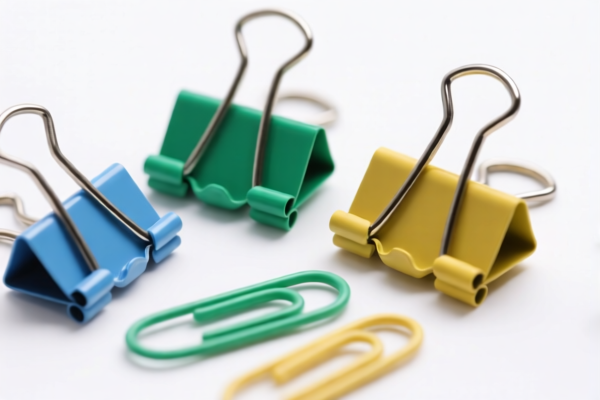

AI Analysis
📎 Household Plastic Clips: HS Code Classification & 2026 Customs Clearance Strategy
🌐 HS Code Reference & Customs Guide | 2026 Latest Tariff Analysis | Professional Clearance Strategy
📌 I. Product Definition & Classification: Do You Really Understand "Plastic Clips"?
Household Plastic Clips are versatile fastening devices made primarily from plastic polymers. They are used in daily life for organizing laundry, securing bags, holding documents, or attaching labels. However, in international trade, their classification depends heavily on specific morphology (shape/mechanism) and intended use.
⚠️ Key Distinction Point:
- If it is a generic plastic fastener without specific mechanical features → Classified under 3926.90.25.00 / 3926.90.85.00 (High Tariff).
- If it is a spring-type clothes peg → Classified under 3926.90.65.20 / 3926.90.65.30 (Lower Tariff).
- If it is specifically for automotive decoration → Classified under 3926.30.50.00 (Medium Tariff).
📦 II. HS Code Classification Details (2026 Latest Tariff Authority)
| HS Code | Product Description | Key Characteristics | Typical Use Case |
|---|---|---|---|
3926.90.25.00 |
Other plastic articles, classified as "Other" | Generic plastic clips, no specific mechanical form like springs | General purpose clips, office clips, non-spring types |
3926.90.85.00 |
Other plastic articles, classified as "Other" | Used as clamping fasteners | Industrial or heavy-duty plastic clamps, cable ties |
3926.90.65.20 |
Spring-type Plastic Clips | Spring mechanism, clothespeg shape | Laundry clips, spring pegs, spring-loaded holders |
3926.90.65.30 |
Spring-type Plastic Clips | Spring mechanism, clothespeg shape | Laundry clips, spring pegs, spring-loaded holders |
3926.30.50.00 |
Automotive Decoration Clips | Specifically for automotive body connections | Car interior trim clips, exterior molding clips |
🔍 Critical Reminder:
- Spring-type clips enjoy a lower tariff base (4.2%) compared to generic clips (6.5%).
- Misclassifying a generic clip as a spring clip (or vice versa) can lead to incorrect duty payments and customs penalties.
- Automotive clips are strictly for vehicle parts; using them for household purposes may still incur higher taxes if not declared correctly.
💰 III. 2026 Latest Tariff Rate Breakdown (Including Surtaxes & Policy Add-ons)
✅ Applicable Country: United States (US)
✅ Origin: China (CN)
✅ Effective Date: 2025+ (Current Trade Policy)
🎯 1. 3926.90.25.00 & 3926.90.85.00 —— Generic Plastic Clips / Clamping Fasteners
| Item | Content |
|---|---|
| Base Tariff Rate | 6.5% (ad valorem) |
| Section 301 Surtax | +7.5% (List 4B / Current Status) |
| Section 122 Tariff | +10% (Specific administrative provision) |
| Total Tariff Rate | 24.0% |
| Tax Calculation | CIF Value × 24% |
| De Minimis Eligibility | ❌ Not Eligible (Deny de minimis for plastic fasteners from China) |
| Legal Basis Path | USITC:3926.90.25.00 → Section 301: 7.5% → Section 122: 10% |
📌 Explanation:
- These are considered "Other plastic articles" without specific functional exemptions.
- The 24% total rate is significant for low-margin items.
- Section 122 refers to specific administrative tariffs applied to certain plastic goods from China.
🎯 2. 3926.90.65.20 & 3926.90.65.30 —— Spring-Type Plastic Clips (Clothespegs)
| Item | Content |
|---|---|
| Base Tariff Rate | 4.2% (ad valorem) |
| Section 301 Surtax | 0.0% (Exempt or not applicable under current list) |
| Section 122 Tariff | +10% |
| Total Tariff Rate | 14.2% |
| Tax Calculation | CIF Value × 14.2% |
| De Minimis Eligibility | ❌ Not Eligible |
| Legal Basis Path | USITC:3926.90.65.20/30 → Section 122: 10% |
📌 Advantage:
- 10% lower total tariff compared to generic clips.
- Section 301 surtax is 0%, making these more competitive.
- Crucial: Must be spring-type and clearly described as such.
🎯 3. 3926.30.50.00 —— Automotive Decoration Clips
| Item | Content |
|---|---|
| Base Tariff Rate | 5.3% (ad valorem) |
| Section 301 Surtax | +7.5% |
| Section 122 Tariff | +10% |
| Total Tariff Rate | 22.8% |
| Tax Calculation | CIF Value × 22.8% |
| De Minimis Eligibility | ❌ Not Eligible |
| Legal Basis Path | USITC:3926.30.50.00 → Section 301: 7.5% → Section 122: 10% |
📌 Note:
- Slightly lower than generic clips but higher than spring-type.
- Must be used for automotive body connections (e.g., trim, molding).
- Misdeclaration as "automotive" for household clips will lead to severe penalties.
🛠️ IV. Customs Clearance Practical Advice (Real-World Pitfall Guide)
✅ 1. Required Documentation Checklist (No Exceptions)
| Document | Required? | Notes |
|---|---|---|
| ✅ Product Specification Sheet | ✔️ | Must specify material (plastic type), mechanism (spring vs. non-spring), size, weight. |
| ✅ Product Photos | ✔️ | Must clearly show spring mechanism (if claiming lower rate) or generic form. |
| ✅ Commercial Invoice | ✔️ | Must include HS Code, Detailed Description, Country of Origin (China). |
| ✅ Packing List | ✔️ | Include Gross/Net Weight, Number of Pieces. |
| ✅ Declaration of Non-Automotive Use | ✔️ | If declaring as household clip, explicitly state NOT for automotive use. |
| ✅ Spring Mechanism Proof | ✔️ | If using 3926.90.65.x0, provide technical diagram showing spring function. |
✅ 2. Declaration Tips (Key Phrases for Success)
🔥 “Spring? Declare Spring! Generic? Be Generic! Automotive? Prove Automotive!”
| Scenario | Correct Declaration | Wrong Declaration | Consequence |
|---|---|---|---|
| Spring Clothes Peg | 3926.90.65.20 – "Plastic Spring-Type Clothes Peg" |
"Plastic Clip" | Missed 10% savings |
| Generic Binder Clip | 3926.90.25.00 – "Plastic Binder Clip, Non-Spring" |
"Plastic Spring Clip" | Incorrect classification, penalty |
| Car Trim Clip | 3926.30.50.00 – "Automotive Body Connection Clip" |
"Plastic Fastener" | Higher tariff, potential audit |
| Cable Tie / Zip Tie | 3926.90.85.00 – "Plastic Clamping Fastener" |
"Clothes Peg" | Misclassification, delay |
✅ 3. Special Handling Notes
| Situation | Advice |
|---|---|
| Mixed Containers | Do not mix spring clips and generic clips in one shipment without separate HS codes. |
| OEM Custom Clips | Provide design drawings to prove spring mechanism or lack thereof. |
| Sample Shipments | Still subject to 24% or 14.2%. No de minimis exemption for China-origin plastic clips. |
| Re-export from 3rd Country | If re-exported from Vietnam/Malaysia, rules of origin must be strictly followed to avoid US penalties. |
🌍 V. Global Market Customs Comparison (2026 Latest)
| Country/Region | Recommended HS Code | Tariff (China Origin) | Certification Requirements | Notes |
|---|---|---|---|---|
| 🇺🇸 USA | 3926.90.65.20 (Spring) / 3926.90.25.00 (Generic) |
14.2% / 24.0% | None specific, but Section 301 & 122 apply | High tariffs, strict classification |
| 🇪🇺 EU | 3926.90.97 (Other) |
6.5% | CE, REACH | No Section 122 equivalent |
| 🇨🇳 China (Import) | 3926.90.90 |
6.5% | CCC (if applicable) | Lower rates than US |
| 🇬🇧 UK | 3926.90.90 |
6.5% | UKCA | Post-Brexit alignment |
| 🇦🇺 Australia | 3926.90.90 |
5.0% | None | Competitive market |
📌 Conclusion:
- USA remains the most expensive market due to Section 301 + Section 122.
- Spring-type clips are the most cost-effective classification in the US (14.2% vs 24.0%).
- EU and other markets do not impose the same surtaxes, making them more favorable for generic clips.
📌 VI. Common Errors & Pitfalls (Lessons Learned)
❌ Error 1: Declaring spring clips as generic clips
👉 Consequence: Pay 24% instead of 14.2% → Loss of profit margin
❌ Error 2: Declaring generic clips as spring clips
👉 Consequence: Customs audit, penalties, back taxes, delayed shipment
❌ Error 3: Mixing automotive clips with household clips in one HS code
👉 Consequence: Misdeclaration, potential fraud allegations
❌ Error 4: Ignoring Section 122 tariffs
👉 Consequence: Underpayment of duties, retroactive charges
✅ Correct Approach:
- Spring Type: "Plastic Spring-Loaded Clothes Peg, for Household Use" →
3926.90.65.20- Generic Type: "Plastic Binder Clip, Non-Spring, for Office Use" →
3926.90.25.00- Automotive Type: "Plastic Clip for Automotive Trim Attachment" →
3926.30.50.00
🎯 VII. Conclusion: Precision Classification Saves Money!
🎯 Remember the Golden Rule:
🔹 "Spring = 14.2%, Generic = 24.0%, Automotive = 22.8%"
🔹 "Prove the spring, save 10%. Hide the spring, pay 24%."
📌 Pro Tip:
- For large shipments, consider pre-classification rulings with US Customs (CBP) to lock in the correct HS code.
- If spring clips are not feasible, explore alternative markets (EU, Australia) where tariffs are significantly lower.
📣 Immediate Action:
📞 Consult a licensed customs broker + Provide product photos + Verify HS Code
🚀 Ensure compliant clearance, cost control, and risk mitigation!
✨ Professional Clearance Starts with Accurate Classification!
💼 Every cent saved on duty is pure profit!
Customer Reviews
About HS Code Classification
The Harmonized System (HS) is an internationally standardized nomenclature developed by the World Customs Organization (WCO) to classify traded products. Over 200 countries use the HS system as the basis for customs tariffs, trade statistics, and import/export regulations.
Each HS code follows a hierarchical structure:
- Chapter (2 digits) — Broad category of goods (e.g., Chapter 84: Machinery and Mechanical Appliances)
- Heading (4 digits) — More specific grouping within the chapter
- Subheading (6 digits) — Internationally standardized breakdown, used by all WCO member countries
- National subdivisions (8-10 digits) — Country-specific extensions for further classification, such as US HTSUS 10-digit codes
Correct HS code classification is essential for smooth customs clearance, accurate duty payment, and compliance with trade regulations. Misclassification can lead to customs delays, overpayment of duties, or penalties.
When importing from CN to US, the applicable tariff rates may include:
- Most-Favored-Nation (MFN) rate — The standard duty rate applied to WTO members
- General rate — Applied to countries without trade agreements
- Trade remedy duties — Additional tariffs such as Section 301 (anti-dumping), Section 232 (national security), or countervailing duties
The information provided on this page is for reference purposes only. For official classification, please consult with your local customs authority or a licensed customs broker.