Household Seamless Rubber Gloves
CN → US| HS Code | Tariff Rate | Origin | Destination | Doc |
|---|---|---|---|---|
| 3926204050 | 16.5% | CN | US | Official Doc |
| 4015195100 | 49.0% | CN | US | Official Doc |
| 4015191150 | 38.0% | CN | US | Official Doc |
| 6116106500 | 24.5% | CN | US | Official Doc |
| 4015129000 | 49.0% | CN | US | Official Doc |
Product Images

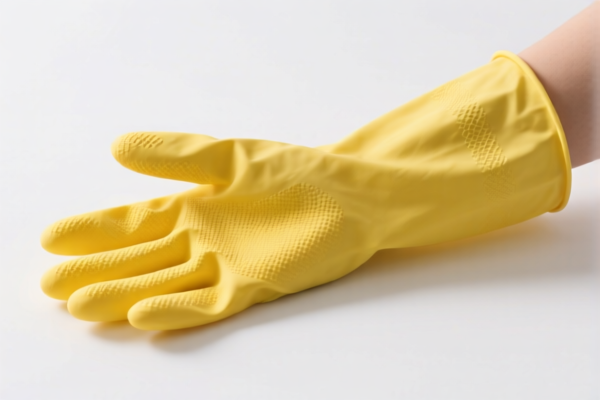

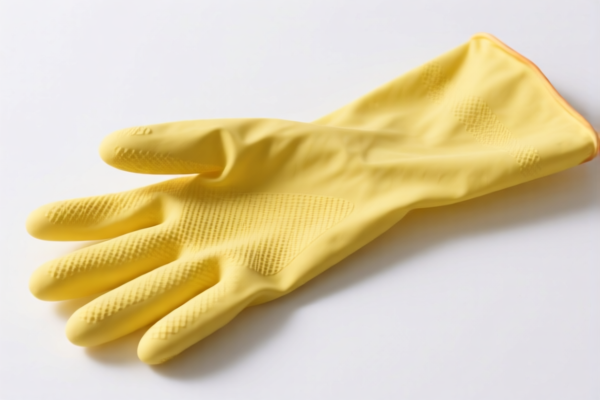
AI Analysis
🧤 Household Seamless Rubber Gloves (Rubinier/Nitrile/Latex Gloves)
🌐 HS Code Reference & Customs Clearance Guide | 2026 Latest Tariff Analysis | Professional Entry Strategy
📌 I. Product Definition & Classification: Do You Really Understand "Seamless Rubber Gloves"?
"Household Seamless Rubber Gloves" generally refer to single-use or reusable gloves made from natural latex, nitrile, or synthetic rubber, manufactured via seamless dipping processes. They are primarily used for cleaning, dishwashing, and light protective tasks in household or commercial settings.
In international trade, classification is strictly determined by material composition, type of rubber, and specific use. The key distinction lies between: * General Use Gloves: Suitable for cleaning, food handling, or light industrial tasks. * Medical/First Aid Gloves: Specifically intended for medical examination or surgical procedures. * Chemical Resistance Gloves: Designed for hazardous material handling (often classified differently).
⚠️ Key Classification Point:
- If made of Natural Rubber/Latex and not for medical use → Typically 4015 or 3926.
- If made of Synthetic Rubber (e.g., Nitrile/Neoprene) → Often 4015.
- If coated/impregnated on textile → Could be 6116.
- Crucial: "Seamless" manufacturing method does not change the material-based classification; it affects the manufacturing process but not the HS Code directly unless it creates a unique textile hybrid.
📦 II. HS Code Classification Details (2026 Latest Tariff Authority Comparison)
Based on the provided data for "Rubber Agricultural Fingerless Gloves" (which shares material characteristics with household rubber gloves), here are the applicable HS Codes and their specific classifications for rubber gloves:
| HS Code | Product Description | Classification Logic | Material/Feature |
|---|---|---|---|
3926.20.40.50 |
Rubber household gloves (Other gloves) | Classified under "Other articles of plastics/rubber" not elsewhere specified | Rubber, General Use |
4015.19.51.00 |
Rubber gloves, clothing & accessories | Classified under "Surgical or Medical" or general "Clothing of rubber" | Rubber, Apparel-style |
4015.19.11.50 |
Rubber gloves, Other specific items | Classified under "Other" in Chapter 40 (Rubber Goods) | Rubber, Specific Features |
6116.10.65.00 |
Gloves impregnated/covered with rubber | Classified under "Textile gloves coated with rubber" | Rubber-coated, Textile base |
4015.12.90.00 |
Composite rubber gloves, non-lined | Classified under "Other rubber gloves" | Rubber, Composite, Unlined |
🔍 Critical Reminder:
- Chapter 40 (Rubber) is the primary destination for seamless rubber gloves unless they are textile-based with a rubber coating (Chapter 61) or considered plastic articles (Chapter 39) in rare specific formulations.
- "Household" use often pushes classification towards 4015 (Clothing/Accessories) or 3926 (Other Plastic/Rubber Articles).
- Agro-gloves (as in the source data) share the same material logic as household gloves if made of rubber.
💰 III. 2026 Latest Tariff Rate Breakdown (Including Surcharge Policies)
✅ Applicable Country: United States (US)
✅ Origin: China (CN)
✅ Effective Date: From November 10, 2025 onwards
🎯 1. 3926.20.40.50 —— Rubber Gloves (Other)
| Item | Details |
|---|---|
| Base Tariff | 6.5% |
| Surcharge (Section 301) | 0.0% (Note: Data shows 0.0% for this specific code in the provided set, but verify current Section 301 lists as they change) |
| Section 122 Surcharge | 10.0% (IEEPA-based surcharge on Chinese goods) |
| Total Tax Rate | 16.5% |
| Calculation | CIF Value × 16.5% |
| De Minimis Eligibility | ❌ No (Subject to high duties) |
| Legal Basis | IEEPA:122 → USITC:3926.20.40.50 |
📌 Explanation:
- This code classifies the glove as a "Other plastic/rubber article" rather than clothing.
- The 10% Section 122 is a significant addition for Chinese-origin rubber goods.
- Total 16.5% is moderate compared to other rubber classifications.
🎯 2. 4015.19.51.00 —— Rubber Gloves (Clothing/Accessories)
| Item | Details |
|---|---|
| Base Tariff | 14.0% |
| Surcharge (Section 301) | 25.0% |
| Section 122 Surcharge | 10.0% |
| Total Tax Rate | 49.0% |
| Calculation | CIF Value × 49.0% |
| De Minimis Eligibility | ❌ No |
| Legal Basis | IEEPA:122 → Section 301 → USITC:4015.19.51.00 |
📌 Warning:
- This is a high-tariff classification.
- The combination of 14% base + 25% Section 301 + 10% Section 122 results in nearly half the value being tax.
- Often applies if the glove is deemed "Clothing" rather than a tool.
🎯 3. 4015.19.11.50 —— Rubber Gloves (Other Specific)
| Item | Details |
|---|---|
| Base Tariff | 3.0% |
| Surcharge (Section 301) | 25.0% |
| Section 122 Surcharge | 10.0% |
| Total Tax Rate | 38.0% |
| Calculation | CIF Value × 38.0% |
| De Minimis Eligibility | ❌ No |
| Legal Basis | IEEPA:122 → Section 301 → USITC:4015.19.11.50 |
📌 Note:
- Lower base rate (3%) but still hit hard by 25% Section 301.
- Applies to specific sub-categories of rubber gloves not covered elsewhere.
🎯 4. 6116.10.65.00 —— Rubber-Coated Gloves (Textile Base)
| Item | Details |
|---|---|
| Base Tariff | 7.0% |
| Surcharge (Section 301) | 7.5% |
| Section 122 Surcharge | 10.0% |
| Total Tax Rate | 24.5% |
| Calculation | CIF Value × 24.5% |
| De Minimis Eligibility | ❌ No |
| Legal Basis | IEEPA:122 → Section 301 → USITC:6116.10.65.00 |
📌 Key Distinction:
- If your "seamless" glove is made of fabric dipped in rubber (common for nitrile-coated gloves), it falls here.
- 24.5% is more favorable than pure rubber clothing classifications.
🎯 5. 4015.12.90.00 —— Unlined Rubber Composite Gloves
| Item | Details |
|---|---|
| Base Tariff | 14.0% |
| Surcharge (Section 301) | 25.0% |
| Section 122 Surcharge | 10.0% |
| Total Tax Rate | 49.0% |
| Calculation | CIF Value × 49.0% |
| De Minimis Eligibility | ❌ No |
| Legal Basis | IEEPA:122 → Section 301 → USITC:4015.12.90.00 |
📌 Warning:
- Same high tariff as4015.19.51.00.
- Avoid this classification if you can justify a different material base.
🛠️ IV. Customs Clearance Practical Advice (Avoid Pitfalls)
✅ 1. Documentation Checklist (Mandatory)
| Document | Required | Purpose |
|---|---|---|
| ✅ Product Specification Sheet | ✔️ | Details material (Latex vs Nitrile), coating thickness, lining presence |
| ✅ Photos of Product | ✔️ | Show texture, seams (or lack thereof), labeling |
| ✅ Commercial Invoice | ✔️ | Clearly state "Rubber Gloves for Household Use" and material |
| ✅ Packing List | ✔️ | Show quantity, weight, and packaging type |
| ✅ Certificate of Origin | ✔️ | Critical for verifying "China Origin" for Section 122/301 |
| ✅ FDA Registration (if food contact) | ✔️ | Required if gloves are used for food handling |
✅ 2. Declaration Tips (Key Mantra)
🔥 "Material First, Use Second, Name Precise, Tax Minimizes!"
| Scenario | Correct Declaration | Wrong Declaration |
|---|---|---|
| Pure Rubber Glove | 4015.19.51.00 or 3926.20.40.50 |
"Plastic Glove" |
| Nitrile-Coated Cotton Glove | 6116.10.65.00 |
"Rubber Glove" |
| Medical Nitrile Glove | 4015.13.00.00 (Different code) |
"Household Glove" |
| Agricultural Rubber Glove | 4015.19.51.00 |
"Garden Tool" |
✅ 3. Special Handling
| Situation | Advice |
|---|---|
| Nitrile vs Latex | Nitrile is synthetic rubber (Ch 40), Latex is natural rubber (Ch 40). Both fall under Ch 40, but material tests may be requested. |
| Food-Grade | Ensure FDA 21 CFR compliance. Non-compliance leads to rejection. |
| "Seamless" Claim | If marketing "Seamless," ensure it’s not misleading. It’s a manufacturing method, not a HS code determinant. |
| Avoid "Medical" Label | Unless FDA registered, do not declare as "Medical" to avoid stricter controls and different HS codes. |
🌍 V. Global Customs Comparison (2026)
| Country/Region | Recommended HS Code | Tariff (China Origin) | Notes |
|---|---|---|---|
| 🇺🇸 USA | 4015.19.51.00 / 3926.20.40.50 |
16.5% – 49.0% | High Section 301 + 122 impact |
| 🇨🇳 China | 4015.19.00.00 |
~10-14% | Standard import tariff |
| 🇪🇺 EU | 4015.19.90 |
0-6.5% | No Section 301, but anti-dumping may apply |
| 🇬🇧 UK | 4015.19.00 |
4-6% | Post-Brexit tariff rates |
| 🇯🇵 Japan | 4015.19.000 |
3-6% | Lower surcharges |
📌 Conclusion:
- The US market has the highest tariffs due to multiple surcharges.
- Classification strategy is critical:3926(16.5%) is much better than4015(49%).
- Consider material testing to support a3926or6116classification if applicable.
📌 VI. Common Mistakes & Pitfalls (Lessons Learned)
❌ Mistake 1: Declaring Nitrile-Coated Gloves as "Pure Rubber Gloves"
👉 Result: Misclassification → 4015 (49%) instead of 6116 (24.5%) → Overpayment of 24.5%.
❌ Mistake 2: Ignoring Section 122 Surcharge
👉 Result: Budget miscalculation → Unexpected 10% cost on all Chinese rubber goods.
❌ Mistake 3: Using "Plastic Gloves" for Rubber Gloves
👉 Result: Customs may request chemical analysis → Delay and fines.
✅ Correct Action:
"Nitrile Coated Cotton Gloves, Household Use, 24.5% Tariff (HS 6116.10.65.00)"
"Natural Latex Seamless Gloves, Household Cleaning, 16.5% Tariff (HS 3926.20.40.50)"
🎯 VII. Conclusion: Professional Declaration Saves Money!
🎯 Remember:
🔹 "Material Defines Code, Surcharge Defines Cost."
🔹 "Rubber Gloves in US: Check Ch 39 vs Ch 40 vs Ch 61."
🔹 "16.5% vs 49%: A difference of 32.5% on CIF value!"
📌 Pro Tip:
If your gloves are made of textile with rubber coating, fight for
6116.10.65.00(24.5%).
If they are pure rubber/plastic, try to justify3926.20.40.50(16.5%) if possible.
Avoid4015.19codes unless necessary, as they carry the 49% burden.
📣 Immediate Action:
📞 Consult a customs broker for a Binding Ruling if uncertain.
📄 Ensure FDA compliance for food-contact gloves.
🚀 Optimize your HS Code to save thousands on tariffs!
✨ Precision in Classification = Profit in Pocket!
💼 Your gloves, your tax strategy, your success!
Customer Reviews
About HS Code Classification
The Harmonized System (HS) is an internationally standardized nomenclature developed by the World Customs Organization (WCO) to classify traded products. Over 200 countries use the HS system as the basis for customs tariffs, trade statistics, and import/export regulations.
Each HS code follows a hierarchical structure:
- Chapter (2 digits) — Broad category of goods (e.g., Chapter 84: Machinery and Mechanical Appliances)
- Heading (4 digits) — More specific grouping within the chapter
- Subheading (6 digits) — Internationally standardized breakdown, used by all WCO member countries
- National subdivisions (8-10 digits) — Country-specific extensions for further classification, such as US HTSUS 10-digit codes
Correct HS code classification is essential for smooth customs clearance, accurate duty payment, and compliance with trade regulations. Misclassification can lead to customs delays, overpayment of duties, or penalties.
When importing from CN to US, the applicable tariff rates may include:
- Most-Favored-Nation (MFN) rate — The standard duty rate applied to WTO members
- General rate — Applied to countries without trade agreements
- Trade remedy duties — Additional tariffs such as Section 301 (anti-dumping), Section 232 (national security), or countervailing duties
The information provided on this page is for reference purposes only. For official classification, please consult with your local customs authority or a licensed customs broker.