Household Wood Sawdust Fuel
CN → US| HS Code | Tariff Rate | Origin | Destination | Doc |
|---|---|---|---|---|
| 4401310000 | 35.0% | CN | US | Official Doc |
| 4401394210 | 35.0% | CN | US | Official Doc |
| 4405000000 | 38.2% | CN | US | Official Doc |
Product Images
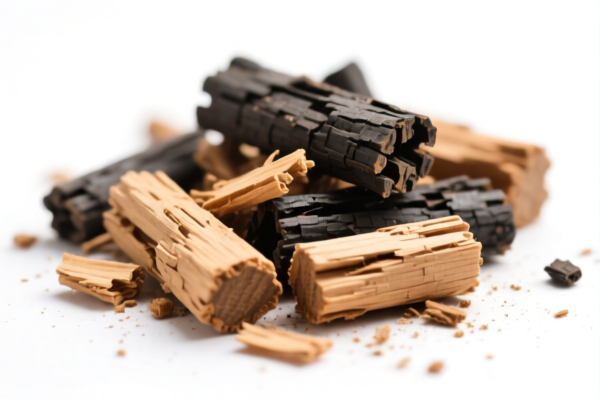
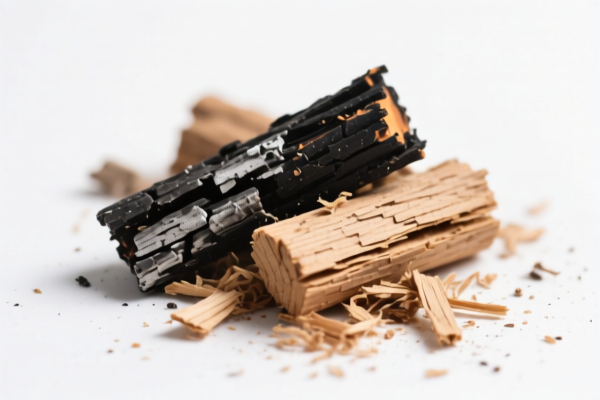
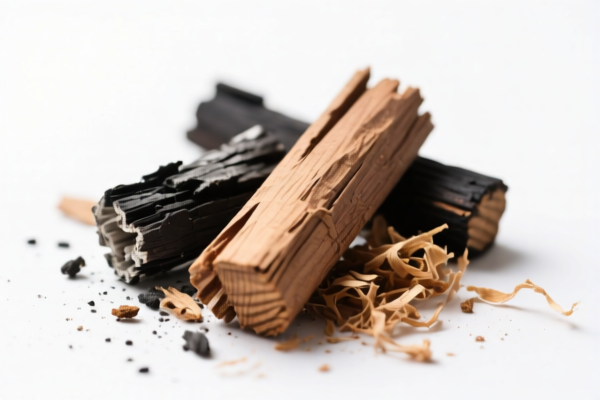
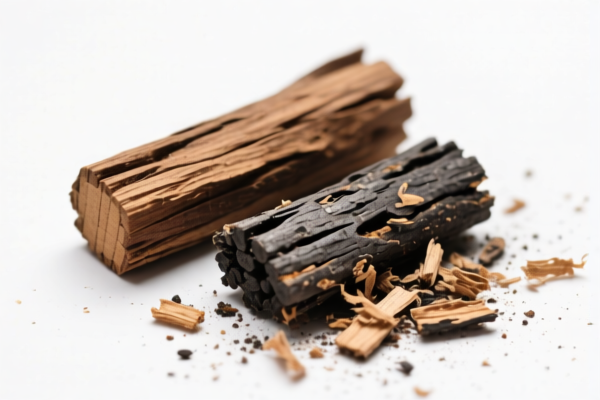
AI Analysis
🪵 Household Wood Sawdust Fuel (Biomass Fuel Pellets)
🌐 HS Code Reference & Customs Clearance Guide | 2026 Latest Tariff Analysis | Professional Clearance Strategy
📌 I. Product Definition and Classification: What Exactly Is "Wood Sawdust Fuel"?
"Household Wood Sawdust Fuel" typically refers to compressed biomass fuel made from wood residues (sawdust, wood chips, shavings). In international trade, the classification depends heavily on the physical form and processing level:
- Wood Chips/Shavings: Raw or loosely processed woody biomass.
- Pellets/Granules: Highly compressed, uniform cylinders or granules, often with higher density and burn efficiency.
- Wood Flour/Powder: Finely ground wood particles, less common as direct fuel but classified under specific headings.
⚠️ Key Distinction:
- If the product is loose chips or shavings → Likely falls under 4401.31 or 4401.39.
- If the product is compressed pellets/granules → Could fall under 4401.39 or 4405.00, depending on interpretation of "particles" vs. "pellets."
- If it is finely ground powder → Falls under 4405.00.
📦 II. HS Code Classification Details (2026 Latest Tariff Authority Comparison)
| HS Code | Product Description | Application Scenario | Key Classification Criteria |
|---|---|---|---|
4401.31.00.00 |
Wood chips and shavings; wood waste and scrap | Raw wood residues, loose biomass fuel | ✅ Loose form, not compressed into pellets |
4401.39.42.10 |
Other wood in chips, shavings or particles | Compressed pellets/granules from sawdust | ✅ Compressed form, suitable for fuel use |
4405.00.00.00 |
Wood charcoal; wood flour and granules | Finely ground wood flour or specific granular forms | ✅ Fine powder or granular form, not standard pellets |
🔍 Important Note:
- Pellets are often classified under 4401.39 (Other wood in chips/shavings/particles) if they are considered a form of "particle" or "shaving" derivative.
- Some customs authorities may classify compressed pellets under 4405.00 if they are deemed "granules" similar to wood flour.
- Wood flour (powder) strictly falls under 4405.00.
💰 III. 2026 Latest Tariff Rate Details (Including Additional Taxes, Policy Surcharges)
✅ Applicable Country: United States (US)
✅ Country of Origin: China (CN)
✅ Effective Date: 2025年11月10日起 (From November 10, 2025)
🎯 1. 4401.31.00.00 —— Wood Chips and Shavings (Loose Biomass)
| Item | Content |
|---|---|
| Base Tariff | 0.0% (ad valorem) |
| USITC Surtax | +25% (Under USITC Footnote 9903.88.01) |
| IEEPA Surtax | +10% (Against Chinese/HK products, effective Nov 10, 2025) |
| Total Tariff Rate | 35.0% |
| Tax Calculation | CIF Value × 35% |
| De Minimis Eligibility | ❌ Not Eligible (deny_de_minimis) |
| Legal Basis Path | IEEPA:9903.01.25 → IEEPA:9903.01.24 → USITC:4401.31.00.00 → FOOTNOTE:9903.88.01 |
📌 Explanation:
- The 25% USITC surtax is under the Section 301 tariffs for Chinese goods.
- The 10% IEEPA surtax is an additional national security-related tariff on Chinese imports.
- Total 35% is a high tariff, requiring careful cost planning!
🎯 2. 4401.39.42.10 —— Other Wood in Chips, Shavings, or Particles (Compressed Pellets)
| Item | Content |
|---|---|
| Base Tariff | 0.0% |
| USITC Surtax | +25% |
| IEEPA Surtax | +10% |
| Total Tariff Rate | 35.0% |
| Tax Calculation | CIF × 35% |
| De Minimis Eligibility | ❌ Not Eligible |
| Legal Basis Path | IEEPA:9903.01.25 → IEEPA:9903.01.24 → USITC:4401.39.42.10 → FOOTNOTE:9903.88.01 |
📌 Note:
- Same tariff rate as loose chips/shavings.
- Even if compressed into pellets, if classified under "other wood in chips/shavings/particles," it still incurs 35% total tariff.
🎯 3. 4405.00.00.00 —— Wood Flour and Granules (Fine Powder/Granular Form)
| Item | Content |
|---|---|
| Base Tariff | 3.2% |
| USITC Surtax | +25% |
| IEEPA Surtax | +10% |
| Total Tariff Rate | 38.2% |
| Tax Calculation | CIF × 38.2% |
| De Minimis Eligibility | ❌ Not Eligible |
| Legal Basis Path | IEEPA:9903.01.25 → IEEPA:9903.01.24 → USITC:4405.00.00.00 |
📌 Critical Point:
- If your "wood sawdust fuel" is finely ground powder or granular (not standard cylindrical pellets), it may be classified here.
- This classification has a higher base tariff (3.2%), leading to a total of 38.2%, which is 3.2% higher than the pellet/chip classification.
- Avoid this classification if possible by ensuring your product is clearly described as "pellets" or "chips" rather than "flour" or "granules."
🛠️ IV. Customs Clearance Practical Advice (Real-World Pitfall Avoidance Guide)
✅ 1. Required Documentation Checklist (All Mandatory)
| Document | Required | Description |
|---|---|---|
| ✅ Product Specification Sheet | ✔️ | Include material composition (100% wood?), density, moisture content, form (pellets/chips/powder) |
| ✅ Product Photos (with Label) | ✔️ | Show shape (cylindrical pellets vs. powder), packaging, and any certifications |
| ✅ Commercial Invoice | ✔️ | Clearly state "Wood Biomass Fuel Pellets" or "Wood Chips/Shavings," NOT "Wood Flour" |
| ✅ Packing List | ✔️ | Detail gross/net weight, number of packages, palletization |
| ✅ Certificate of Origin (CO) | ✔️ | If from non-China origin, may qualify for lower rates |
| ✅ MSDS (Material Safety Data Sheet) | ✔️ | Required for biomass fuels to confirm non-hazardous nature |
✅ 2. Declaration Tips (Key Mantras)
🔥 "Pellets vs. Flour: Naming Matters! Chips under 4401, Flour under 4405!"
| Scenario | Correct Declaration | Wrong Practice |
|---|---|---|
| Compressed cylindrical pellets | 4401.39.42.10 |
Misdeclare as "Wood Flour" → 38.2% |
| Loose wood chips/shavings | 4401.31.00.00 |
Misdeclare as "Pellets" → Still 35%, but mismatch may cause inspection |
| Finely ground wood powder | 4405.00.00.00 |
Misdeclare as "Pellets" → High risk of reclassification + penalties |
| Mixed forms (pellets + powder) | Declare separately | Combined declaration → Potential audit |
✅ 3. Special Case Handling
| Scenario | Handling Advice |
|---|---|
| OEM Custom Pellets | Provide customer orders + design specs to prove standardized pellet form |
| Pellets with Additives | If additives >5%, may change classification. Declare composition clearly. |
| Biomass Fuel for Industrial Use | If used in industrial boilers, still classified under HS 4401/4405. No special exemption. |
| Organic/Bio-certified | No tariff benefit, but may help in customs clarity if quality is emphasized. |
🌍 V. Global Main Market Clearance Comparison (2026 Latest)
| Country/Region | Recommended HS Code | Tariff | Certification | Notes |
|---|---|---|---|---|
| 🇺🇸 USA | 4401.39.42.10 |
35% (China) | No specific | High surtaxes apply |
| 🇨🇳 China | 4401.39.42.10 |
5% | None | No additional surtaxes |
| 🇪🇺 EU | 4401.39.42.10 |
0% (if FSC certified) | FSC/PEFC | No surtaxes |
| 🇬🇧 UK | 4401.39.42.10 |
0% | FSC/PEFC | Post-Brexit standards apply |
| 🇯🇵 Japan | 4401.39.42.10 |
0% | None | No surtaxes |
📌 Conclusion:
- USA is the only major market imposing high additional tariffs on Chinese wood biomass fuels.
- European and Asian markets offer zero or low tariffs, making them more attractive for Chinese exporters.
- Consider supply chain diversification if targeting the US market heavily.
📌 VI. Common Errors & Pitfall Guide (Lessons from Blood and Tears)
❌ Error 1: Declaring "Wood Pellets" as "Wood Flour"
👉 Consequence: Tariff jumps from 35% to 38.2% → Unnecessary extra cost!
❌ Error 2: Declaring loose chips as "Pellets"
👉 Consequence: Mismatch in physical form → Customs inspection delay, potential penalty.
❌ Error 3: Not providing MSDS for biomass fuel
👉 Consequence: Customs may flag as hazardous material → Shipment held or returned.
❌ Error 4: Using vague terms like "Wood Fuel" without specifying form
👉 Consequence: Customs may assign highest rate or delay classification → Uncertainty and risk.
✅ Correct Practice:
"Wood Biomass Fuel Pellets, 100% Natural Wood, Cylindrical, Diameter 6mm, Length 10-30mm, Moisture Content <10%, Packaged in 15kg Bags"
🎯 VII. Conclusion: Precise Declaration, Save Time, Reduce Costs!
🎯 Remember the Mantra:
🔹 "Pellets under 4401, Flour under 4405. Name it right, save 3.2%!"
🔹 "US Market: 35% Total. EU/Asia: 0-5%. Plan Your Supply Chain Wisely!"
📌 Pro Tip:
If your pellets are originally from Vietnam, Mexico, Thailand, or Malaysia, you may qualify for IEEPA exemptions, reducing tariffs to 0%~5%.
Recommend applying for Advance Rulings before shipment to ensure correct classification and avoid post-clearance adjustments.
📣 Take Action Now:
📞 Contact professional customs brokers + Provide product photos + Apply for HS Code Advance Ruling
🚀 Let your wood biomass fuel clear customs smoothly, export efficiently, and maximize profits!
✨ Professional clearance starts with accurate classification!
💼 Every cent of cost deserves precise calculation!
Customer Reviews
About HS Code Classification
The Harmonized System (HS) is an internationally standardized nomenclature developed by the World Customs Organization (WCO) to classify traded products. Over 200 countries use the HS system as the basis for customs tariffs, trade statistics, and import/export regulations.
Each HS code follows a hierarchical structure:
- Chapter (2 digits) — Broad category of goods (e.g., Chapter 84: Machinery and Mechanical Appliances)
- Heading (4 digits) — More specific grouping within the chapter
- Subheading (6 digits) — Internationally standardized breakdown, used by all WCO member countries
- National subdivisions (8-10 digits) — Country-specific extensions for further classification, such as US HTSUS 10-digit codes
Correct HS code classification is essential for smooth customs clearance, accurate duty payment, and compliance with trade regulations. Misclassification can lead to customs delays, overpayment of duties, or penalties.
When importing from CN to US, the applicable tariff rates may include:
- Most-Favored-Nation (MFN) rate — The standard duty rate applied to WTO members
- General rate — Applied to countries without trade agreements
- Trade remedy duties — Additional tariffs such as Section 301 (anti-dumping), Section 232 (national security), or countervailing duties
The information provided on this page is for reference purposes only. For official classification, please consult with your local customs authority or a licensed customs broker.