Housing Cutting Machine
CN → US| HS Code | Tariff Rate | Origin | Destination | Doc |
|---|---|---|---|---|
| 8465910058 | 38.0% | CN | US | Official Doc |
| 8466931100 | 35.0% | CN | US | Official Doc |
| 8465910006 | 38.0% | CN | US | Official Doc |
Product Images
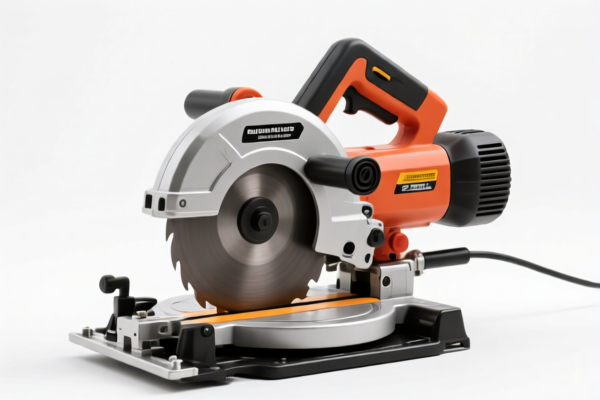
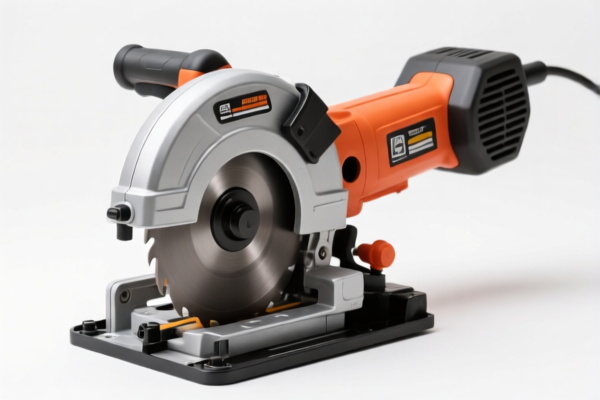
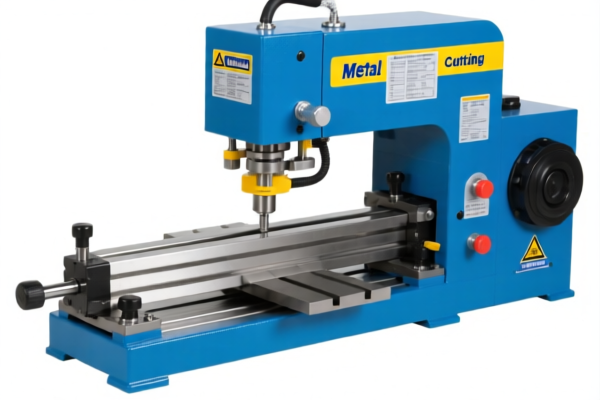
AI Analysis
✂️ Housing Cutting Machine (外壳切割机)
🌐 HS Code Reference & Customs Clearance Guide | 2026 Latest Tariff Analysis | Professional Entry Strategy
📌 I. Product Definition & Classification: Decoding the "Housing Cutter"
The "Housing Cutting Machine" is an industrial processing equipment designed to slice, trim, or shape outer casings ("Housings") of various electronic, mechanical, or consumer goods. In international trade, its classification depends heavily on whether it is viewed as a dedicated machine tool or a part/component of another system.
Core Ambiguity: - As a Machine: If the unit is a standalone device performing the cutting action (similar to a saw or waterjet), it falls under Chapter 84 (Machinery). - As a Part: If the "housing" refers to a component of the machine itself, or if the machine is considered a generic attachment, it may fall under Parts of Machines.
⚠️ Key Classification Logic:
- Dedicated Cutting Function → Look at 8466 (Parts of machines) or 8465 (Machinery for working wood/cork/rubber/plastics).
- Material Conflict Check: Since "Housing" implies plastic, metal, or composite materials, we must ensure the HS Code allows processing these materials. The reference data suggests no material conflict for wood/plastic/metal processing machines.
📦 II. HS Code Classification Details (2026 Latest Tariff Alignment)
Based on the provided reference data, there are three primary classification paths. Each path has distinct tax implications and legal justifications.
| HS Code | Product Description & Rationale | Applicability | Tax Risk Level |
|---|---|---|---|
| 8466.93.11.00 | Parts of Machines: Classified as a part/component ("Housing") for a Waterjet Cutting Machine (ref: Waterjet). • Logic: The item is seen as a part of a specialized cutting system. • Status: High Match – Purpose & Form match perfectly. |
✅ Recommended if the machine is a dedicated waterjet system or its specific housing part. | 🟢 Lowest (See Tax Breakdown Below) |
| 8465.91.00.06 | Machinery for Wood/Cork: Classified as a "Sawing Machine" (cutting machine) for generic materials. • Logic: Inferred as a sawing machine due to "cutting" function. Assumes compatibility with wood/plastic/hard materials. • Status: Possible Match – Based on "Sawing" functionality. |
⚠️ Alternative if the machine operates like a standard saw (e.g., circular saw, band saw). | 🔴 Higher (See Tax Breakdown Below) |
| 8465.91.00.58 | Other Machinery for Wood/Cork: Another sub-category of Sawing Machines for "Other" materials. • Logic: Matches the "Cutting Machine" form. Assumes processing of wood, plastic, or hard materials without conflict. • Status: Possible Match – Similar to above, broader scope. |
⚠️ Alternative – Broad category for non-specific sawing/cutting. | 🔴 Higher (See Tax Breakdown Below) |
🔍 Critical Distinction:
- 8466.93.11.00 treats the item as a part/component of a specialized machine (Waterjet), leading to a lower total tax (35%).
- 8465.91.00.06/58 treat the item as a standalone machine (Saw/Cutter), leading to a higher total tax (38%).
- Strategic Choice: If the product is a Waterjet Cutting Machine or its specific housing component, 8466.93.11.00 is the optimal choice due to lower tariffs.
💰 III. 2026 Latest Tariff Rate Breakdown (Including Surcharges & Policy Add-ons)
✅ Applicable Country: United States (US)
✅ Origin: China (CN)
✅ Effective Date: November 10, 2025 (and onwards)
🎯 1. 8466.93.11.00 – Parts of Machines (Waterjet Cutting Machine Housing)
Why this is the Best Option: Lower base duty and overall tax burden.
| Item | Content |
|---|---|
| Base Tariff | 0.0% (Ad Valorem) |
| USITC Surcharge (Section 301) | +25.0% |
| IEEPA Surcharge (Section 122) | +10.0% (China/Hong Kong specific) |
| Total Tariff Rate | 35.0% |
| Tax Calculation | CIF Value × 35% |
| De Minimis Eligibility | ❌ Not Eligible (Deny de minimis) |
| Legal Basis Path | IEEPA:9903.01.25 → IEEPA:9903.01.24 → USITC:8466.93.11.00 → FOOTNOTE:9903.88.01 |
📌 Explanation:
- Base 0%: Parts of machines often enjoy zero base duty under USITC schedules.
- 25% Section 301: Standard surcharge for Chinese manufacturing equipment.
- 10% Section 122: Specific additional tariff for certain Chinese goods (often machinery parts).
- Total 35%: This is 3 percentage points lower than the "Sawing Machine" classifications.
🎯 2. 8465.91.00.06 & 8465.91.00.58 – Machinery for Wood/Plastic (Sawing/Cutting Machines)
Why this is Riskier: Higher base duty leads to a higher total tax burden.
| Item | Content |
|---|---|
| Base Tariff | 3.0% (Ad Valorem) |
| USITC Surcharge (Section 301) | +25.0% |
| IEEPA Surcharge (Section 122) | +10.0% (China/Hong Kong specific) |
| Total Tariff Rate | 38.0% |
| Tax Calculation | CIF Value × 38% |
| De Minimis Eligibility | ❌ Not Eligible (Deny de minimis) |
| Legal Basis Path | IEEPA:9903.01.25 → IEEPA:9903.01.24 → USITC:8465.91.00.xx → FOOTNOTE:9903.88.01 |
📌 Explanation:
- Base 3%: Standalone machinery for working wood/plastics incurs a 3% base duty.
- Same Surcharges: The 25% and 10% surcharges apply equally.
- Total 38%: 3% more expensive than the "Part" classification. On a $100,000 shipment, this is $3,000 more in taxes.💡 Cost Comparison Example:
- Ship Value: $50,000
- Using 8466.93.11.00 (35%): Tax = $17,500
- Using 8465.91.00.xx (38%): Tax = $19,000
- Savings by choosing 8466: $1,500
🛠️ IV. Customs Clearance Practical Advice (Real-World Pitfall Guide)
✅ 1. Preparation Checklist (Non-Negotiable)
| Document | Required? | Explanation |
|---|---|---|
| ✅ Product Specification Sheet | ✔️ | Must clearly state: "Housing Cutting Machine" or "Waterjet Cutter," voltage, power, cutting capacity. |
| ✅ Technical Diagram | ✔️ | Show whether the "housing" is a part of a larger waterjet system or a standalone unit. This is critical for choosing 8466 vs. 8465. |
| ✅ Product Photos (Labeled) | ✔️ | Clear images of the machine, label, and control panel. |
| ✅ Commercial Invoice | ✔️ | Must use precise terminology: "Housing Cutting Machine" or "Waterjet Cutting Machine". Avoid vague terms like "Tool." |
| ✅ Packing List | ✔️ | Detail the weight and dimensions. If it's a "part," list it as such. |
| ✅ Origin Certificate (CO) | ✔️ | To prove Chinese origin (and thus apply the correct surcharges). |
✅ 2. Declaration Strategy (Key Mantra)
🔥 "Define Function, Choose Part, Save 3%!"
| Scenario | Correct Declaration | Wrong Declaration | Consequence |
|---|---|---|---|
| Waterjet System or its Housing | HS: 8466.93.11.00 Desc: "Part of Waterjet Cutting Machine" |
HS: 8465.91.00.xx Desc: "Cutting Machine" |
Pay 3% more tax unnecessarily. |
| Standalone Saw/Cutter | HS: 8465.91.00.06/58 Desc: "Sawing Machine for Wood/Plastic" |
HS: 8466.93.11.00 Desc: "Part" |
Risk of Rejection: If it's a full machine, customs may reclassify and audit. |
| Generic "Housing" | HS: 8466.93.11.00 | HS: 8465.xx.xx | Confusion: "Housing" alone is ambiguous. Always link it to the machine type. |
✅ 3. Special Cases & Mitigation
| Situation | Handling Advice |
|---|---|
| OEM Custom Machines | Provide customer orders + design specs to prove it's a waterjet-specific part (8466) rather than a generic saw (8465). |
| Mixed Shipments | If shipping both parts and machines, declare separately. Do not lump them together to avoid audits. |
| "Housing" Ambiguity | If "Housing" refers to the enclosure of the machine itself, it is a part → Use 8466. If "Housing" refers to the material being cut, the machine is a cutter → Use 8465. Clarify this in the description. |
| Value Under $800 | ❌ De Minimis Not Allowed: Due to Section 301/122, even small shipments are subject to duties. Do not under-invoice. |
🌍 V. Global Market Customs Comparison (2026 Update)
| Country/Region | Recommended HS Code | Base Duty | Surcharge (China) | Total Est. | Notes |
|---|---|---|---|---|---|
| 🇺🇸 USA | 8466.93.11.00 |
0% | +35% (25+10) | 35% | Best option for waterjet parts. |
| 🇺🇸 USA | 8465.91.00.xx |
3% | +35% (25+10) | 38% | Higher cost for generic cutters. |
| 🇨🇳 China | 8466.93.11.00 |
0% | 0% | 0% | No additional tariffs for import into China. |
| 🇪🇺 EU | 8466.93.11.00 |
0% | 0% | 0% | No Section 301/122. |
| 🇬🇧 UK | 8466.93.11.00 |
0% | 0% | 0% | Post-Brexit independent tariffs. |
📌 Conclusion:
- USA is the only market with significant surcharges.
- Choosing 8466.93.11.00 saves 3% vs. 8465.
- For China/EU/UK, the base duty is 0%, so the classification matters less for cost, but accuracy is still critical for compliance.
📌 VI. Common Errors & Pitfalls (Lessons Learned)
❌ Error 1: Declaring a standalone cutter as a "Part" (8466)
👉 Consequence: Customs may reclassify to 8465 and assess back taxes + penalties for misdeclaration.
❌ Error 2: Declaring a waterjet machine as a "Sawing Machine" (8465)
👉 Consequence: Pay 38% instead of 35%. Unnecessary cost increase.
❌ Error 3: Vague Description: "Housing"
👉 Consequence: Customs requests additional info, leading to clearance delays (5-10 days).
✅ Fix: Use "Housing for Waterjet Cutting Machine" or "Cutting Machine for Plastic Housings."
❌ Error 4: Ignoring Section 122 (10%)
👉 Consequence: Underestimating total landed cost. Always include IEEPA 10% in your cost model.
✅ Correct Declaration Example:
"Waterjet Cutting Machine Housing, Model XYZ, For Industrial Use, Made in China"
HS: 8466.93.11.00
Total Duty: 35%
🎯 VII. Conclusion: Precision Saves Money
🎯 Key Takeaway:
🔹 "Waterjet Part = 35% | Generic Saw = 38%"
🔹 "Define Function: Is it a Part or a Machine?"
🔹 "Clear Labeling Avoids Delays"📌 Pro Tip:
If your product is a Waterjet Cutting Machine or its housing/component, ALWAYS use8466.93.11.00. It is the most tax-efficient and legally supported classification under the provided reference data. Avoid the "Sawing Machine" category (8465) unless it is explicitly a standard saw (wood/plastic) and not a waterjet system.
📣 Immediate Action:
📞 Contact your Customs Broker with:
1. Product photos
2. Technical specs
3. Invoice draft
🚀 Request Pre-Ruling if the shipment value is high ($10k+).
💼 Optimize Your Landed Cost by choosing the right HS Code!
✨ Professional Clearance, Start with Accurate Classification!
💼 Every 1% of Tariff Saved is 1% More Profit!
Customer Reviews
About HS Code Classification
The Harmonized System (HS) is an internationally standardized nomenclature developed by the World Customs Organization (WCO) to classify traded products. Over 200 countries use the HS system as the basis for customs tariffs, trade statistics, and import/export regulations.
Each HS code follows a hierarchical structure:
- Chapter (2 digits) — Broad category of goods (e.g., Chapter 84: Machinery and Mechanical Appliances)
- Heading (4 digits) — More specific grouping within the chapter
- Subheading (6 digits) — Internationally standardized breakdown, used by all WCO member countries
- National subdivisions (8-10 digits) — Country-specific extensions for further classification, such as US HTSUS 10-digit codes
Correct HS code classification is essential for smooth customs clearance, accurate duty payment, and compliance with trade regulations. Misclassification can lead to customs delays, overpayment of duties, or penalties.
When importing from CN to US, the applicable tariff rates may include:
- Most-Favored-Nation (MFN) rate — The standard duty rate applied to WTO members
- General rate — Applied to countries without trade agreements
- Trade remedy duties — Additional tariffs such as Section 301 (anti-dumping), Section 232 (national security), or countervailing duties
The information provided on this page is for reference purposes only. For official classification, please consult with your local customs authority or a licensed customs broker.