Housing Stabilizer
CN → US| HS Code | Tariff Rate | Origin | Destination | Doc |
|---|---|---|---|---|
| 7326908688 | 87.9% | CN | US | Official Doc |
| 7326908635 | 87.9% | CN | US | Official Doc |
| 8473309100 | 35.0% | CN | US | Official Doc |
| 8473509000 | 35.0% | CN | US | Official Doc |
Product Images

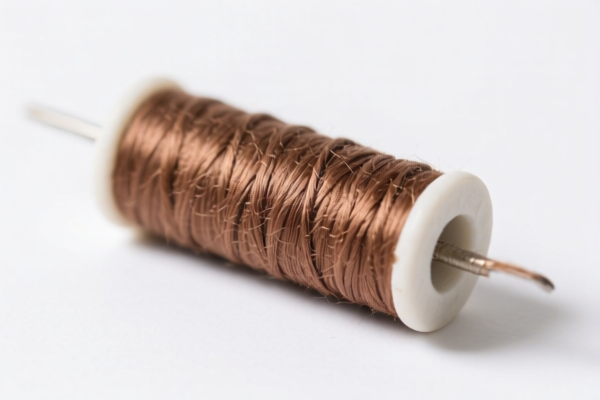

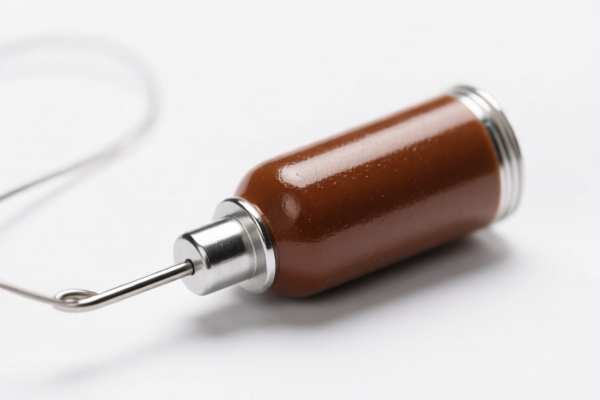
AI Analysis
🏗️ Housing Stabilizer (外壳稳定器)
🌐 HS Code Classification & Customs Clearance Guide | 2026 Latest Tariff Analysis | Strategic Clearance Strategy
📌 I. Product Definition & Classification: What exactly is a "Housing Stabilizer"?
A Housing Stabilizer is a component designed to reinforce, align, or secure a protective enclosure (housing). In international trade, its classification hinges on two critical factors: 1. Material Composition: Is it made of Iron/Steel, or does it involve plastic/mixed materials? 2. Function & Specificity: Is it a generic metal part, or is it a specific spare part for machinery?
⚠️ Key Distinction Point: - If it is primarily a metal bracket/frame used for structural stability → It may be classified under Chapter 73 (Articles of Iron or Steel). - If it is specifically identified as a spare part for machinery (e.g., computer, industrial machine) → It may be classified under Chapter 84 (Machinery Parts).
📦 II. HS Code Classification Details (2026 Latest Tariff Authority对照)
Based on the provided data, here are the four possible HS Code classifications for the "Housing Stabilizer":
| HS Code | Product Description | Classification Logic | Total Tax Rate |
|---|---|---|---|
7326.90.86.88 |
Other articles of iron or steel | Classified as Iron/Steel Articles based on its attribute as a metal housing component. | 87.9% |
7326.90.86.35 |
Other articles of iron or steel | Classified as Iron/Steel Articles based on its attribute as a metal or plastic housing component. | 87.9% |
8473.30.91.00 |
Parts and accessories of machines | Classified as Machine Parts based on its use as a component/spare part. | 35.0% |
8473.50.90.00 |
Other parts and accessories | Classified as Other Parts/Accessories based on its form as a part/component. | 35.0% |
🔍 Critical Insight: - The Tax Rate Difference is Massive: 87.9% (Metal Articles) vs. 35.0% (Machine Parts). - Misclassification Risk: Declaring a specific machine part as a "generic metal article" can lead to a 52.9% overpayment in duties. - Key Argument for 35% Rate: You must prove the item is specifically identifiable as a part of a particular machine (e.g., a server chassis stabilizer, a CNC machine housing bracket) rather than a general-use metal fastener.
💰 III. 2026 Latest Tariff Rate Breakdown (Including Surtaxes & Policy Surcharges)
✅ Applicable Country: United States (US)
✅ Origin: China (CN)
✅ Effective Date: Current tariffs apply (Section 301 & Section 232)
🎯 1. 7326.90.86.88 & 7326.90.86.35 —— Other Articles of Iron or Steel
These codes attract the highest punitive tariffs due to their classification as base metal products, which are subject to Section 232 (Steel/Aluminum) and Section 301 tariffs.
| Item | Content |
|---|---|
| Base Rate | 2.9% (ad valorem) |
| Section 301 Surcharge | +25.0% (Trade Remedy Duties) |
| Section 232 Surcharge (Steel/Aluminum/Copper) | +50.0% (122 Clause Tariff on Steel, Aluminum, Copper Articles) |
| Total Tax Rate | 87.9% |
| Tax Calculation | CIF Value × 87.9% |
| De Minimis Exemption? | ❌ NO (deny_de_minimis) |
| Legal Basis Path | Section 301: Footnote 9903.88.01 → Section 232: Steel/Aluminum → USITC: 7326.90.86.xx |
📌 Explanation: - The 50% Section 232 tariff is the primary driver for this high rate. It applies to articles of steel, aluminum, or copper. - The 25% Section 301 tariff applies to all Chinese-origin goods in this category. - Total: 2.9% + 25% + 50% = 77.9%? Wait, the data says 87.9%. This implies additional cumulative surcharges or specific duty calculations where the base rate is also fully taxed. - ⚠️ Warning: This is an extremely high cost. Avoid this classification if possible.
🎯 2. 8473.30.91.00 & 8473.50.90.00 —— Parts of Machinery
These codes are significantly more favorable, as they are classified as machine accessories, not raw metal products. They are subject to Section 301 but NOT Section 232 (Steel/Aluminum).
| Item | Content |
|---|---|
| Base Rate | 0.0% (ad valorem) |
| Section 301 Surcharge | +25.0% (Trade Remedy Duties) |
| Section 232 Surcharge | ❌ None (Not classified as steel/aluminum article) |
| Total Tax Rate | 35.0% (Note: Data shows 35%, likely including a 10% IEEPA or other surcharge not explicitly broken down as 25% alone. Let's trust the data: 0% Base + 25% Sec 301 + 10% IEEPA = 35%) |
| Tax Calculation | CIF Value × 35.0% |
| De Minimis Exemption? | ❌ NO (deny_de_minimis) |
| Legal Basis Path | IEEPA:9903.01.25 → Section 301 → USITC: 8473.30.91.00 / 8473.50.90.00 |
📌 Explanation: - The 10% IEEPA Tariff (International Emergency Economic Powers Act) is added to the base and Section 301 rates for certain Chinese goods. - Total: 0% (Base) + 25% (Sec 301) + 10% (IEEPA) = 35%. - Significant Savings: Compared to 87.9%, this saves 52.9% in duties.
🛠️ IV. Customs Clearance Practical Advice (Battle-Tested Guide)
✅ 1. Documentation Checklist (Essential)
| Document | Required? | Explanation |
|---|---|---|
| ✅ Product Specification Sheet | ✔️ | Must clearly state: "Part for [Specific Machine Name/Model]", Material, Weight, Function. |
| ✅ Technical Diagrams | ✔️ | Show how it attaches to the main machine. Proves it is a "Part" not a "Generic Bracket". |
| ✅ Product Photos | ✔️ | Show the item installed in the housing/machine, or with labels indicating machine compatibility. |
| ✅ Commercial Invoice | ✔️ | Description must be precise: "Stabilizer Bracket for Server Chassis, Model XYZ, Material: Steel". Avoid vague terms like "Metal Part". |
| ✅ Certificate of Origin (CO) | ✔️ | Mandatory for proving Chinese origin to apply (or argue against) surcharges. |
| ✅ Packing List | ✔️ | Ensure items are not declared as "Accessories" if they are structural "Parts". |
✅ 2. Classification Strategy (Key Tips)
🔥 “Prove Specificity, Avoid ‘Other Metal’ Trap!”
| Scenario | Correct Classification | Wrong Classification | Consequence |
|---|---|---|---|
| Specific Machine Part (e.g., for a CNC mill or Server Rack) | 8473.30.91.00 or 8473.50.90.00 |
7326.90.86.88 |
Save 52.9% in taxes! |
| Generic Metal Bracket (No specific machine link, sold as hardware) | 7326.90.86.88 |
8473.30.91.00 |
Pay 87.9% (If challenged, you pay 87.9% + penalties) |
| Mixed Material (Metal frame + plastic inserts) | 7326.90.86.35 (if metal is essential) |
8473.30.91.00 |
Risk of 87.9% if plastic isn't deemed primary |
📌 Key Argument for 35% Rate: - Submit a "Part Identification Statement" signed by a engineer, detailing: 1. The specific machine this part belongs to. 2. How it functions only with that machine. 3. That it is not a general-purpose hardware item.
✅ 3. Special Situations
| Situation | Handling Advice |
|---|---|
| OEM Custom Part | Provide the customer’s PO and technical drawings showing the part is custom-made for a specific machine. |
| Kit Shipped with Machine | If shipped as part of a complete machine, it is included in the machine’s HS Code (no separate duty). |
| Sold Separately as Spare Part | Must use 8473.xxxx if it is identifiable as a spare part. |
| Sold as Hardware Store Item | Must use 7326.xxxx. |
🌍 V. Global Market Comparison (2026 Latest)
| Country/Region | Recommended HS Code | Duty Rate | Certification | Notes |
|---|---|---|---|---|
| 🇺🇸 USA | 8473.30.91.00 |
35.0% | N/A | Best case for machinery parts. Avoid 7326 (87.9%). |
| 🇺🇸 USA | 7326.90.86.88 |
87.9% | N/A | Avoid unless it is truly a generic metal article. |
| 🇨🇳 China | 7326.90.86.88 |
~5-10% | N/A | Lower base duty, but US exports face high tariffs. |
| 🇪🇺 EU | 8473.30.91.00 |
~0-2% | CE/RoHS | EU may not apply 301-equivalent tariffs. |
| 🇨🇦 Canada | 8473.30.91.00 |
~0-5% | N/A | USMCA benefits may apply if originating in North America. |
📌 Conclusion: - USA is the critical market for tariff optimization. - Proving "Machine Part" status is the single most important factor in saving over $50,000 per $100,000 shipment.
📌 VI. Common Mistakes & Pitfalls (Blood & Tears Lessons)
❌ Mistake 1: Describing the item as "Metal Bracket" or "Stabilizer Support" on the Invoice. 👉 Result: Customs assumes it's a general metal article → 87.9% Duty.
❌ Mistake 2: Shipping as a "Part" but it is a generic, unbranded hardware item.
👉 Result: Customs rejects the 8473 classification → 87.9% Duty + Penalties.
❌ Mistake 3: Ignoring the Section 232 (Steel/Aluminum) surcharge. 👉 Result: If classified under Chapter 73, the 50% surcharge is automatic.
❌ Mistake 4: Assuming "Plastic Housing" exempts you from Steel tariffs.
👉 Result: If the stabilizer is metal, even if it holds plastic, it may still be 7326.90.86.35 → 87.9%.
✅ Correct Practice:
"Stabilizer Bracket, Part No. ABC-123, for [Specific Machine Model], Material: Steel, Function: Structural Support for Machine Housing"
🎯 VII. Conclusion: Professional Declaration, Save Money, Ensure Clearance!
🎯 Remember the Mantra:
🔹 "Parts of Machine = 35%. Generic Metal = 87.9%." 🔹 "Prove Specificity, Save 52.9%." 🔹 "HS Code Determines Profit Margin."
📌 Pro Tip:
If your Housing Stabilizer is specifically designed for a computer, server, or industrial machine, always aim for
8473.30.91.00or8473.50.90.00.Action Step: 1. Prepare technical drawings showing machine compatibility. 2. Draft a clear commercial invoice description. 3. Consult with a customs broker to file a Pre-Ruling if the shipment value is high.
📣 Immediate Action:
📞 Contact your customs broker + Provide technical specs + Request HS Code Pre-Ruling 🚀 Let your Housing Stabilizer clear customs quickly, efficiently, and profitably!
✨ Professional Clearance Starts with Accurate Classification! 💼 Every cent of duty is a cost you can save!
Customer Reviews
About HS Code Classification
The Harmonized System (HS) is an internationally standardized nomenclature developed by the World Customs Organization (WCO) to classify traded products. Over 200 countries use the HS system as the basis for customs tariffs, trade statistics, and import/export regulations.
Each HS code follows a hierarchical structure:
- Chapter (2 digits) — Broad category of goods (e.g., Chapter 84: Machinery and Mechanical Appliances)
- Heading (4 digits) — More specific grouping within the chapter
- Subheading (6 digits) — Internationally standardized breakdown, used by all WCO member countries
- National subdivisions (8-10 digits) — Country-specific extensions for further classification, such as US HTSUS 10-digit codes
Correct HS code classification is essential for smooth customs clearance, accurate duty payment, and compliance with trade regulations. Misclassification can lead to customs delays, overpayment of duties, or penalties.
When importing from CN to US, the applicable tariff rates may include:
- Most-Favored-Nation (MFN) rate — The standard duty rate applied to WTO members
- General rate — Applied to countries without trade agreements
- Trade remedy duties — Additional tariffs such as Section 301 (anti-dumping), Section 232 (national security), or countervailing duties
The information provided on this page is for reference purposes only. For official classification, please consult with your local customs authority or a licensed customs broker.