Humidity Alarm
CN → US| HS Code | Tariff Rate | Origin | Destination | Doc |
|---|---|---|---|---|
| 9025803500 | 18.9% | CN | US | Official Doc |
| 9025804000 | 18.5% | CN | US | Official Doc |
| 8531100045 | 36.3% | CN | US | Official Doc |
| 8531100025 | 36.3% | CN | US | Official Doc |
Product Images
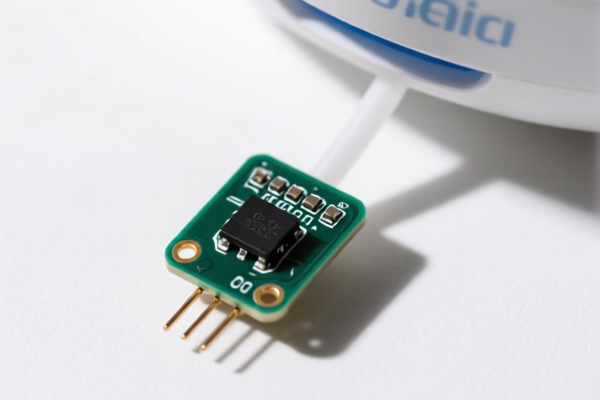
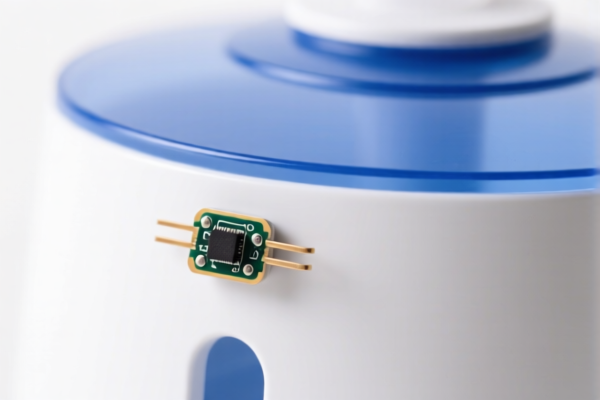
AI Analysis
🚨 Humidity Alarm (Humidity Warning Device)
🌐 HS Code Reference & Customs Clearance Guide | 2026 Latest Tariff Analysis | Professional Clearance Strategy
📌 Part 1: Product Definition & Classification: Do You Really Understand "Humidity Alarms"?
A Humidity Alarm is a device designed to monitor environmental moisture levels and trigger a visual or auditory warning when thresholds are exceeded. In international trade, these devices fall into two distinct logical categories depending on their primary function:
- Signal/Alarm Devices (Chapter 85): If the device’s primary function is to alert users (sound/light) regardless of the sensor type, it is classified as an electrical signaling device.
- Measuring Instruments (Chapter 90): If the device’s primary function is to measure humidity (even if it alarms), it is classified as a hygrometer or humidity monitoring instrument.
⚠️ Key Distinction Point:
- If the focus is on the alarm mechanism (buzzer, flashing light) as the core utility →归类 to 8531.10.xx.xx
- If the focus is on the measurement accuracy and sensing element (hygrometer probe) → 归类 to 9025.80.xx.xx
📦 Part 2: HS Code Classification Details (2026 Latest Tariff Authority Comparison)
| HS Code | Product Description | Application Scenario | Primary Function |
|---|---|---|---|
8531.10.00.45 |
Other electrical sound or visual signaling apparatus | Industrial humidity alarms with high-decibel sirens or industrial LED indicators | ✅ Signal/Alarm (Deduction/Catch-all) |
8531.10.00.25 |
Electrical sound or visual signaling apparatus (Alarm devices) | Home/Commercial humidity alarms similar to smoke detectors in logic | ✅ Signal/Alarm (Specific Alarm Category) |
9025.80.35.00 |
Other thermometers, hygrometers, and psychrometers (Non-recording) | Precision humidity monitors with alarm functions, focusing on measurement | ✅ Measurement (Non-recording) |
9025.80.40.00 |
Other thermometers, hygrometers, and psychrometers | Commercial/Industrial humidity recorders or monitors with alarm outputs | ✅ Measurement (Monitoring/Recording) |
🔍 Key Reminder:
- If the product is marketed as an "Alarm" (e.g., "Humidity Alarm" with no data logging), customs may lean towards 8531.
- If the product is marketed as a "Hygrometer" or "Humidity Monitor" (even with an alarm), customs often prefer 9025 due to the measuring instrument definition.
- Material Conflict: Ensure the device does not contain significant amounts of precious metals or specialized optical components that might push it to other chapters.
💰 Part 3: 2026 Latest Tariff Rate Breakdown (Including Surtaxes & Policy Add-ons)
✅ Applicable Country: United States (US)
✅ Country of Origin: China (CN)
✅ Effective Time: From November 10, 2025 (and subsequent imports)
🎯 1. 8531.10.00.45 & 8531.10.00.25 —— Electrical Signaling Devices (Alarms)
These codes share the same tariff structure because they both fall under the "Other" or "Alarm" categories within Chapter 85, which are subject to the same US trade remedies.
| Item | Content |
|---|---|
| Base Tariff Rate | 1.3% (ad valorem) |
| Section 301 Surtax | +25.0% (Added tariff) |
| Section 122 Tariff | +10.0% (Specific to certain Chinese electronics/alarm devices) |
| Total Tax Rate | 36.3% |
| Tax Calculation | CIF Value × 36.3% |
| De Minimis Eligibility | ❌ No (deny_de_minimis) |
| Legal Basis Path | USITC:8531.10.00.25/45 → Section 301: 25% → Section 122: 10% |
📌 Explanation:
- Base Tariff (1.3%): Standard MFN rate for signaling apparatus. - Section 301 Surtax (25%): Applies to most Chinese-made electronic goods, including alarms. - Section 122 Tariff (10%): A specific additional duty often applied to certain alarm devices originating from China. - Total Effective Rate: 36.3%. This is a high tariff bracket. Clearance agents must verify if the "122 Clause" applies to your specific model, as misclassification could lead to penalties.
🎯 2. 9025.80.35.00 & 9025.80.40.00 —— Hygrometers & Humidity Monitoring Instruments
These codes are classified under Chapter 90 (Instruments), which generally benefits from lower base rates and different surtax structures compared to Chapter 85.
| Item | Content |
|---|---|
| Base Tariff Rate | 1.0% - 1.4% (ad valorem) |
| Section 301 Surtax | +7.5% (Reduced surtax for specific instruments) |
| Section 122 Tariff | +10.0% (Still applicable to Chinese origin) |
| Total Tax Rate | 18.5% - 18.9% |
| Tax Calculation | CIF Value × (18.5% ~ 18.9%) |
| De Minimis Eligibility | ❌ No (deny_de_minimis) |
| Legal Basis Path | USITC:9025.80.35/40 → Section 301: 7.5% → Section 122: 10% |
📌 Explanation:
- Base Tariff (1.0%-1.4%): Significantly lower than signaling devices. - Section 301 Surtax (7.5%): Note that Section 301 rates for measuring instruments (Chapter 90) are often lower (7.5%) than for general electronics (25%). This is a crucial cost-saving opportunity. - Section 122 Tariff (10%): Still applies. - Total Effective Rate: 18.5% - 18.9%. This is much more favorable than the 36.3% rate for alarms.
🛠️ Part 4: Customs Clearance Practical Advice (Real-World Pitfall Avoidance)
✅ 1. Preparation Checklist (Missing Any One Will Cause Delays)
| Document | Required | Description |
|---|---|---|
| ✅ Product Spec Sheet | ✔️ | Must clearly state: "Is this a measuring instrument (Hygrometer) or a signaling device (Alarm)?" |
| ✅ Internal Circuit Diagram | ✔️ | To prove if the microprocessor is primarily for measurement or for triggering a siren. |
| ✅ Product Photos | ✔️ | Show the sensor probe, display screen, and any alarm indicators. |
| ✅ Commercial Invoice | ✔️ | Description should match HS Code logic (e.g., "Digital Hygrometer with Alarm" vs. "Humidity Alarm Siren"). |
| ✅ Origin Certificate (CO) | ✔️ | Essential for calculating Section 122 and Section 301 duties. |
| ✅ Packing List | ✔️ | Detail batteries, sensors, and main unit separately if shipped in parts. |
✅ 2. Declaration Tips (Key Mantras)
🔥 “Measure First, Alarm Second. Chapter 90 Saves Money!”
| Scenario | Correct Declaration Strategy | Risk of Wrong Strategy |
|---|---|---|
| Device has a digital display showing %RH and an alarm buzzer | Declare as 9025.80.35.00 (Hygrometer) |
Declaring as 8531 (Alarm) → Pays ~36.3% instead of ~18.5% |
| Device is ONLY a buzzer/light with a simple humidity switch | Declare as 8531.10.00.45 (Signal Device) |
Declaring as 9025 → Customs may reject as it lacks measurement precision |
| Hybrid Device (Measures + Alarms + Data Logs) | Declare as 9025.80.40.00 (Recorder/Monitor) |
Splitting declaration → High risk of audit and penalties |
💡 Pro Tip:
If your device displays the humidity percentage, even if it also alarms, argue for Chapter 90. Customs authorities generally classify devices with measurement displays as instruments, not just signalers. This can save you nearly 18% in duties.
✅ 3. Special Situations
| Situation | Handling Advice |
|---|---|
| OEM Custom Alarm | Provide design docs showing the sensor type. If it’s a standard hygrometer sensor, push for 9025. |
| Battery-Powered | Ensure batteries are properly declared. Lithium batteries may require additional safety data sheets (MSDS). |
| Smart Home Integration | If the device connects to Wi-Fi/App, it may face additional FCC certification requirements, but HS Code logic remains based on function (Measure vs. Alarm). |
| Industrial vs. Home Use | Industrial use does not change HS Code, but may affect the "Section 122" applicability if specific exclusions apply (check current trade lists). |
🌍 Part 5: Global Market Comparison (2026 Latest)
| Country/Region | Recommended HS Code | Estimated Duty (China Origin) | Certification Requirements | Remarks |
|---|---|---|---|---|
| 🇺🇸 USA | 9025.80.xx.xx |
18.5% - 18.9% | FCC + RoHS | Best for cost-saving if measurable |
| 🇺🇸 USA (Alarm) | 8531.10.xx.xx |
36.3% | FCC + RoHS | High cost; use only if non-measuring |
| 🇨🇳 China | 9025.80.xx.xx |
1.0% - 1.4% | CCC (if applicable) | Low duty; no surtaxes |
| 🇪🇺 EU | 9025.80.xx.xx |
0% - 2% | CE + RoHS | Generally zero duty if CE marked |
| 🇬🇧 UK | 9025.80.xx.xx |
0% - 2% | UKCA + RoHS | Post-Brexit trade terms apply |
📌 Conclusion:
- USA is the critical market where classification matters most for cost.
- Chapter 90 (9025) is significantly cheaper than Chapter 85 (8531) for Chinese-origin humidity alarms due to lower Section 301 surtaxes (7.5% vs 25%).
- Always prioritize "Measuring Instrument" classification if the product displays humidity data.
📌 Part 6: Common Mistakes & Pitfall Guide (Lessons Learned)
❌ Mistake 1: Calling the product "Humidity Alarm" in the invoice and declaring 8531
👉 Consequence: You pay 36.3% instead of 18.5%.
👉 Fix: Use descriptive name like "Digital Hygrometer with Alarm Function" and declare 9025.
❌ Mistake 2: Ignoring the "Section 122" tariff
👉 Consequence: Underpayment by 10% + penalties.
👉 Fix: Always verify if Section 122 applies to your specific HS Code and Origin.
❌ Mistake 3: Declaring a measuring device as a "Part" or "Accessory"
👉 Consequence: Wrong duty rate application, potential audit.
👉 Fix: Declare the complete unit as a finished good.
✅ Correct Practice:
"Digital Hygrometer/Thermometer with Humidity Alarm, LCD Display, Battery Operated, Model XYZ, FCC Certified, Designed for Home/Industrial Use"
🎯 Part 7: Conclusion: Professional Declaration Saves Money!
🎯 Remember the Mantra:
🔹 "If it Measures, It’s Chapter 90. If it Only Beeps, It’s Chapter 85."
🔹 "Chapter 90 Saves You ~18% in US Duties on Chinese Goods!"
📌 Pro Tip:
If your humidity alarm contains smart connectivity (Wi-Fi/Bluetooth), ensure you have FCC ID documentation ready. While this doesn’t change the HS Code, it is critical for US customs clearance compliance.
📣 Immediate Action:
📞 Consult your customs broker with the product specification sheet.
📊 Request a Binding Tariff Information (BTI) or US CBP Advance Ruling if the volume is high.
🚀 Optimize your supply chain costs by choosing the right HS Code!
✨ Professional Customs Clearance Starts with Accurate Classification!
💼 Every Percentage Point in Duty Counts!
Customer Reviews
About HS Code Classification
The Harmonized System (HS) is an internationally standardized nomenclature developed by the World Customs Organization (WCO) to classify traded products. Over 200 countries use the HS system as the basis for customs tariffs, trade statistics, and import/export regulations.
Each HS code follows a hierarchical structure:
- Chapter (2 digits) — Broad category of goods (e.g., Chapter 84: Machinery and Mechanical Appliances)
- Heading (4 digits) — More specific grouping within the chapter
- Subheading (6 digits) — Internationally standardized breakdown, used by all WCO member countries
- National subdivisions (8-10 digits) — Country-specific extensions for further classification, such as US HTSUS 10-digit codes
Correct HS code classification is essential for smooth customs clearance, accurate duty payment, and compliance with trade regulations. Misclassification can lead to customs delays, overpayment of duties, or penalties.
When importing from CN to US, the applicable tariff rates may include:
- Most-Favored-Nation (MFN) rate — The standard duty rate applied to WTO members
- General rate — Applied to countries without trade agreements
- Trade remedy duties — Additional tariffs such as Section 301 (anti-dumping), Section 232 (national security), or countervailing duties
The information provided on this page is for reference purposes only. For official classification, please consult with your local customs authority or a licensed customs broker.