Hydraulic Oil Tester Special Liquid
CN → US| HS Code | Tariff Rate | Origin | Destination | Doc |
|---|---|---|---|---|
| 3403195000 | 40.8% | CN | US | Official Doc |
| 2710193070 | 0.0% | CN | US | Official Doc |
| 3403191000 | 35.2% | CN | US | Official Doc |
| 3819000090 | 41.5% | CN | US | Official Doc |
| 3824994900 | 41.5% | CN | US | Official Doc |
Product Images
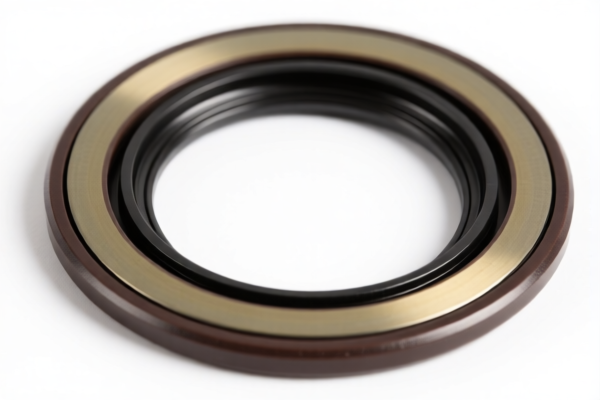
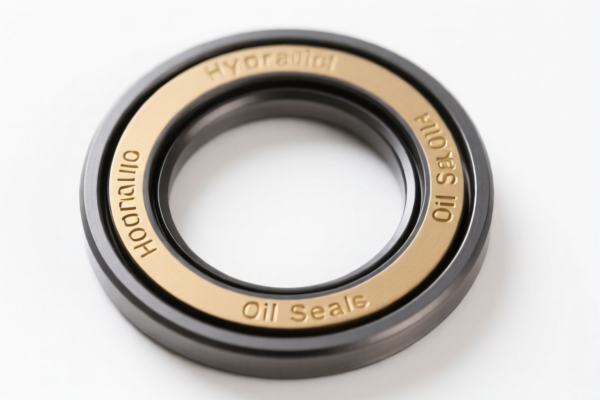
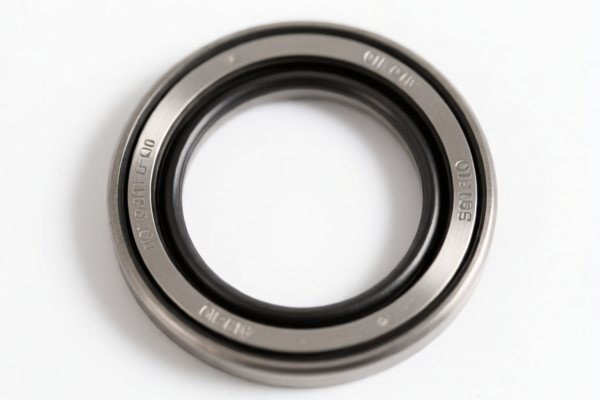
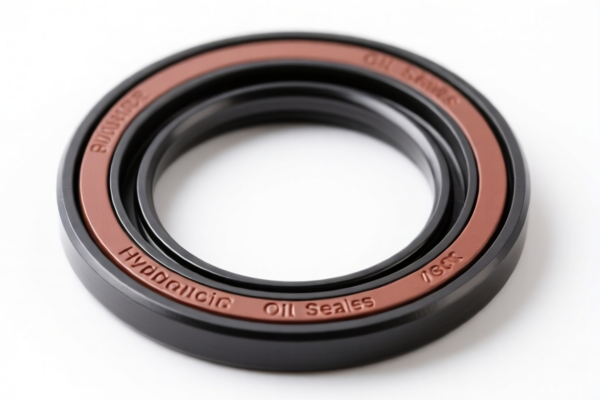
AI Analysis
🛢️ Hydraulic Oil Tester Special Liquid | 🇺🇸 US Import Duty & HS Code Analysis 2026
🌐 HS Code Reference & Customs Clearance Guide | Latest 2026 Tariff Analysis | Professional Strategy for Hydraulic Fluids
📌 I. Product Definition & Classification: Do You Really Understand "Hydraulic Test Fluid"?
Hydraulic Oil Tester Special Liquid is a specialized chemical medium used for testing, calibration, or simulation of hydraulic systems. In international trade, it is primarily classified under Chapter 34 (Lubricants) or Chapter 38 (Miscellaneous Chemical Products), depending on its specific composition (e.g., petroleum content vs. synthetic chemical base).
The classification hinges on two critical factors: 1. Composition: Is it primarily petroleum-based oil? Or is it a synthetic chemical preparation? 2. Function: Is it acting as a lubricant/working fluid (Chapter 34) or a specialized chemical test agent (Chapter 38)?
⚠️ Key Distinction:
- If it functions as a hydraulic working fluid with lubricating properties → Likely Chapter 34 (3403).
- If it is a specialized chemical mixture for testing/analysis with low petroleum content → Likely Chapter 38 (3824/3819).
- If it is pure petroleum oil without significant chemical modification → Likely Chapter 27 (2710).
📦 II. HS Code Classification Details (2026 Latest Tariff Concordance)
| HS Code | Product Description | Application Scenario | Primary Characteristic |
|---|---|---|---|
3403.19.50.00 |
Hydraulic test oil as a lubricant/hydraulic fluid; contains petroleum-based ingredients. | General hydraulic system testing; lubricating function. | ✅ Petroleum-based, Lubricant nature |
2710.19.30.70 |
Petroleum oils (excluding crude); falls under "Petroleum Oils & Preparations." | Pure petroleum-based test fluid; no complex chemical additives. | ✅ High Petroleum Content (>50%) |
3403.19.10.00 |
Lubricating & functional oils containing ≥50% petroleum oil by weight. | High-performance hydraulic test fluids with significant oil base. | ✅ ≥50% Petroleum Oil |
3819.00.00.90 |
Hydraulic transmission fluids (non-petroleum mineral oils or low-petroleum media). | Synthetic hydraulic fluids; specialized non-petroleum test media. | ❌ Low/No Petroleum, Chemical Base |
3824.99.49.00 |
Prepared chemical products not elsewhere specified; contains hydrocarbon components. | Complex chemical mixtures for testing; proprietary formulations. | ✅ Chemical Preparation, Hydrocarbon trace |
🔍 Critical Reminder:
- High Petroleum Content pushes classification to 2710 or 3403.10/19.10.
- Low Petroleum/Synthetic Base pushes classification to 3819 or 3824.
- Functionality: If it lubricates, Chapter 34 is preferred. If it is purely a test agent without lubricity, Chapter 38 may apply.
💰 III. 2026 Latest Tariff Rate Breakdown (Including Additional Duties & Policy Add-ons)
✅ Applicable Country: United States (US)
✅ Origin: China (CN)
✅ Effective Date: Post-November 10, 2025 (Subject to ongoing Section 301 & IEEPA regulations)
🎯 1. 3403.19.50.00 — Lubricating/Hydraulic Oils (Petroleum-based)
| Item | Details |
|---|---|
| Basic Tariff | 5.8% (Ad Valorem) |
| Section 301 Additional Tariff | +25.0% |
| Section 122 Tariff (IEEPA) | +10.0% |
| Total Effective Rate | 40.8% |
| Tax Calculation | CIF Value × 40.8% |
| De Minimis Exemption | ❌ Not Eligible (Denied) |
| Legal Basis Path | USITC:3403.19.50.00 → Section 301: Footnote 9903.88.01 → IEEPA:9903.01.24 |
📌 Explanation:
- This code attracts a moderate basic tariff but is heavily impacted by Section 301 (25%) and IEEPA Section 122 (10%) due to its origin (China).
- Total tax burden is 40.8%, which is significant but slightly lower than pure petroleum codes due to the "Lubricant" classification nuance.
🎯 2. 2710.19.30.70 — Petroleum Oils & Preparations
| Item | Details |
|---|---|
| Basic Tariff | $0.84 per Barrel (bbl) + 35.0% (Effective Ad Valorem equivalent varies) |
| Section 301 Additional Tariff | +25.0% |
| Section 122 Tariff (IEEPA) | +10.0% |
| Total Effective Rate | 35% + Specific Duty |
| Tax Calculation | Specific Duty (per bbl) + Ad Valorem on CIF |
| De Minimis Exemption | ❌ Not Eligible |
| Legal Basis Path | USITC:2710.19.30.70 → Section 301: Footnote 9903.88.01 → IEEPA:9903.01.24 |
📌 Note:
- This is a pure petroleum code. The $0.84/bbl specific duty is fixed, but the 35% ad valorem component is the main driver.
- With additional tariffs, the total effective rate is ~35%+, but the specific duty adds complexity.
- Often results in a higher effective percentage for small-volume imports compared to volume-based shipments.
🎯 3. 3403.19.10.00 — Lubricants with ≥50% Petroleum Oil
| Item | Details |
|---|---|
| Basic Tariff | 0.2% |
| Section 301 Additional Tariff | +25.0% |
| Section 122 Tariff (IEEPA) | +10.0% |
| Total Effective Rate | 35.2% |
| Tax Calculation | CIF Value × 35.2% |
| De Minimis Exemption | ❌ Not Eligible |
| Legal Basis Path | USITC:3403.19.10.00 → Section 301: Footnote 9903.88.01 → IEEPA:9903.01.24 |
📌 Strategy:
- If your product contains ≥50% petroleum, this code offers the lowest basic tariff (0.2%).
- However, the additional tariffs (35%) still apply.
- Recommendation: Use this code if you can substantiate the petroleum content ≥50% to avoid the higher 5.8% base of3403.19.50.00.
🎯 4. 3819.00.00.90 — Hydraulic Transmission Fluids (Non-Petroleum/Low-Petroleum)
| Item | Details |
|---|---|
| Basic Tariff | 6.5% |
| Section 301 Additional Tariff | +25.0% |
| Section 122 Tariff (IEEPA) | +10.0% |
| Total Effective Rate | 41.5% |
| Tax Calculation | CIF Value × 41.5% |
| De Minimis Exemption | ❌ Not Eligible |
| Legal Basis Path | USITC:3819.00.00.90 → Section 301: Footnote 9903.88.01 → IEEPA:9903.01.24 |
📌 Note:
- Applicable if the fluid is synthetic or has low petroleum content.
- Basic tariff is higher (6.5%) than the ≥50% petroleum code.
- Total tax is 41.5%, which is the highest among the lubricant-related codes.
🎯 5. 3824.99.49.00 — Prepared Chemical Products (Miscellaneous)
| Item | Details |
|---|---|
| Basic Tariff | 6.5% |
| Section 301 Additional Tariff | +25.0% |
| Section 122 Tariff (IEEPA) | +10.0% |
| Total Effective Rate | 41.5% |
| Tax Calculation | CIF Value × 41.5% |
| De Minimis Exemption | ❌ Not Eligible |
| Legal Basis Path | USITC:3824.99.49.00 → Section 301: Footnote 9903.88.01 → IEEPA:9903.01.24 |
📌 Note:
- Used for complex chemical mixtures that don’t fit neatly into lubricant categories.
- Same tax rate as3819.
- Riskier classification; requires strong justification that it is not a lubricant.
🛠️ IV. Customs Clearance Practical Advice (Real-World Pitfall Avoidance)
✅ 1. Documentation Checklist (Mandatory)
| Document | Required | Description |
|---|---|---|
| ✅ Product Specifications | ✔️ | Must detail composition (e.g., % petroleum, synthetic additives). |
| ✅ Safety Data Sheet (SDS) | ✔️ | Critical for hazard classification (flammable, toxic, etc.). |
| ✅ Third-Party Lab Report | ✔️ | Proves petroleum content % or chemical nature to support HS code. |
| ✅ Commercial Invoice | ✔️ | Must clearly state "Hydraulic Test Fluid" and intended use. |
| ✅ Origin Certificate | ✔️ | Essential for verifying China origin and applying/additional tariffs. |
| ✅ Manufacturer’s Letter | ✔️ | Explaining why it is classified as a lubricant vs. chemical prep. |
✅ 2. Declaration Tips (Key Mnemonic)
🔥 “Base Tariff Low, Add Tariffs High, Petroleum Content is King!”
| Scenario | Correct HS Code | Wrong Action |
|---|---|---|
| High petroleum content (≥50%) | 3403.19.10.00 |
Misclassifying as 3403.19.50.00 → Higher base tax (5.8% vs 0.2%) |
| Pure petroleum oil | 2710.19.30.70 |
Misclassifying as 3819 → Risk of penalty for incorrect chemical declaration |
| Synthetic/Low petroleum | 3819.00.00.90 |
Misclassifying as 3403 → May be rejected if no lubricity proven |
| Complex chemical mix | 3824.99.49.00 |
Misclassifying as 2710 → If not primarily petroleum |
📌 Critical Warning:
- Do not split shipment into parts to avoid tariffs. CBP may consolidate and assess full duty.
- De Minimis (Section 321) is NOT available for Chinese-origin goods in these categories due to Section 301 and IEEPA exclusions.
✅ 3. Special Case Handling
| Situation | Handling Advice |
|---|---|
| OEM Custom Fluids | Provide formulation details to support ≥50% petroleum claim for 3403.19.10.00. |
| Hybrid Formulas | If petroleum content is borderline (e.g., 49%), consider 3819 or 3824 if no lubricity. |
| Testing Equipment Included | If fluid is sold with a tester, declare separately if possible to avoid misclassification. |
| Re-imports | If previously exported from US, may qualify for duty drawback (consult specialist). |
🌍 V. Global Market Comparison (2026 Latest)
| Country/Region | Recommended HS Code | Tariff Rate | Certification | Notes |
|---|---|---|---|---|
| 🇺🇸 USA | 3403.19.10.00 |
35.2% | SDS, MSDS | Highest duty burden due to 301/IEEPA |
| 🇨🇳 China | 3403.19.10.00 |
5% | CCC (if applicable) | Low import duty, but export controls may apply |
| 🇪🇺 EU | 3819.00.00.90 |
0% | REACH, CLP | No additional tariffs, but strict chemical registration |
| 🇬🇧 UK | 3819.00.00.90 |
5.8% | UK REACH | Post-Brexit tariffs apply |
| 🇯🇵 Japan | 3819.00.00.90 |
0% | JIS | Favorable tariffs for lubricants/chemicals |
📌 Conclusion:
- USA is the most expensive market due to 35-41% effective duties.
- EU/UK/Japan are significantly cheaper but require strict chemical compliance (REACH, etc.).
- Strategy: Consider transshipment (if legal) or supply chain optimization to mitigate US tariff impact.
📌 VI. Common Errors & Pitfall Guide (Lessons Learned)
❌ Error 1: Misclassifying Petroleum-Based Fluid as 3824 to avoid basic tariff.
👉 Consequence: CBP audits reveal high petroleum content → Back taxes + Penalties.
❌ Error 2: Ignoring Section 122 (10%) IEEPA Tariff.
👉 Consequence: Underpayment of duties → Shipment hold-up at customs.
❌ Error 3: Assuming De Minimis ($800) applies.
👉 Consequence: Package seized or duty assessed on entire value. Chinese origin is explicitly excluded.
❌ Error 4: Vague Description "Hydraulic Liquid".
👉 Consequence: CBP issues Request for Information (RFI) → Delays in clearance.
✅ Correct Practice:
“Hydraulic Test Fluid, Synthetic/Petroleum Blend, NSF H1 Certified, SDS Provided, HS Code 3403.19.10.00”
🎯 VII. Conclusion: Professional Declaration, Cost Savings, Efficiency!
🎯 Remember the Mantra:
🔹 “Petroleum Content Dictates Base Rate, Origin Dictates Add-on Tax!”
🔹 “3403.10/10 is Lowest Base, 3819/3824 is Risky but Same Add-on!”📌 Pro Tip:
- If your product contains ≥50% petroleum, aggressively pursue3403.19.10.00to save 5.6% in basic duty (0.2% vs 5.8%).
- Always secure a Pre-shipment Lab Report to substantiate composition.
- Apply for Advance Rulings from CBP if the formulation is complex.
📣 Immediate Action:
📞 Consult a Customs Broker + Provide SDS & Formula + Request HS Code Ruling
🚀 Ensure Smooth Clearance, Avoid Seizures, and Maximize Profit Margins!
✨ Professional Customs Compliance Starts with Accurate Classification!
💼 Every Percent of Duty Saved is Pure Profit!
Customer Reviews
About HS Code Classification
The Harmonized System (HS) is an internationally standardized nomenclature developed by the World Customs Organization (WCO) to classify traded products. Over 200 countries use the HS system as the basis for customs tariffs, trade statistics, and import/export regulations.
Each HS code follows a hierarchical structure:
- Chapter (2 digits) — Broad category of goods (e.g., Chapter 84: Machinery and Mechanical Appliances)
- Heading (4 digits) — More specific grouping within the chapter
- Subheading (6 digits) — Internationally standardized breakdown, used by all WCO member countries
- National subdivisions (8-10 digits) — Country-specific extensions for further classification, such as US HTSUS 10-digit codes
Correct HS code classification is essential for smooth customs clearance, accurate duty payment, and compliance with trade regulations. Misclassification can lead to customs delays, overpayment of duties, or penalties.
When importing from CN to US, the applicable tariff rates may include:
- Most-Favored-Nation (MFN) rate — The standard duty rate applied to WTO members
- General rate — Applied to countries without trade agreements
- Trade remedy duties — Additional tariffs such as Section 301 (anti-dumping), Section 232 (national security), or countervailing duties
The information provided on this page is for reference purposes only. For official classification, please consult with your local customs authority or a licensed customs broker.