Hydraulic Oil Water Separator
CN → US| HS Code | Tariff Rate | Origin | Destination | Doc |
|---|---|---|---|---|
| 8421290015 | 35.0% | CN | US | Official Doc |
| 8421290040 | 35.0% | CN | US | Official Doc |
| 8481301090 | 38.0% | CN | US | Official Doc |
| 8481200050 | 37.0% | CN | US | Official Doc |
| 3824994900 | 41.5% | CN | US | Official Doc |
Product Images
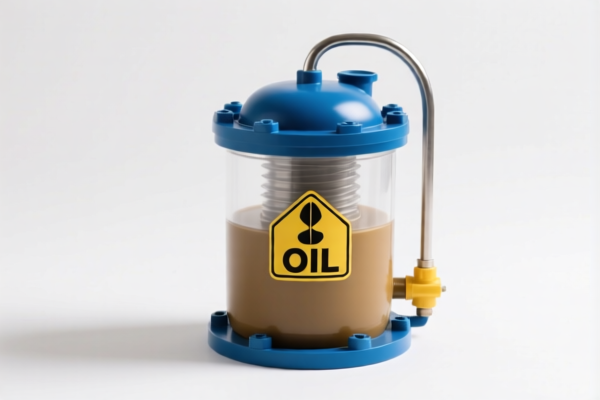
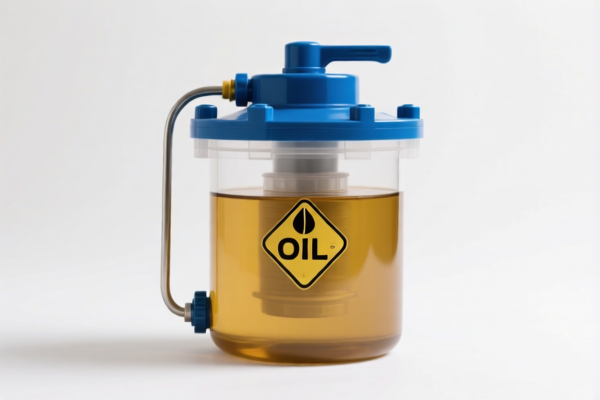
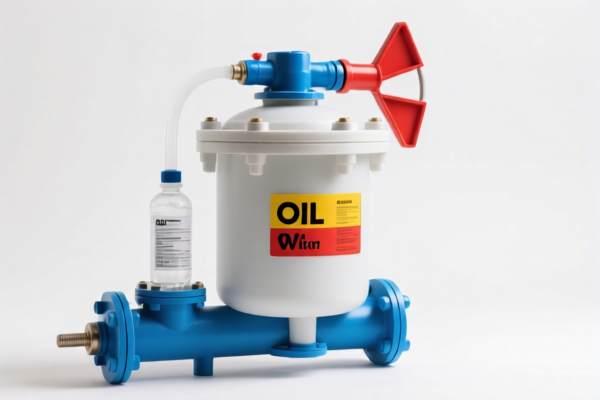
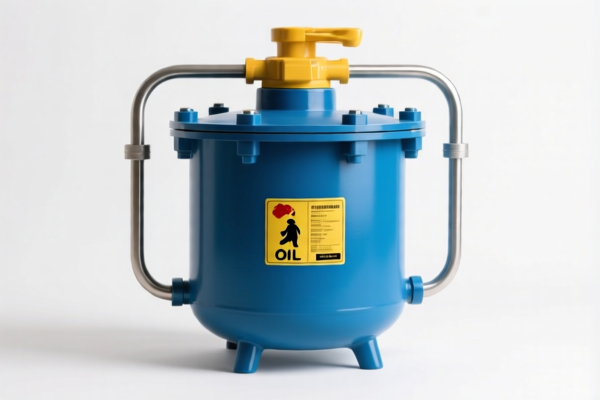
AI Analysis
💧 Hydraulic Oil Water Separator (Industrial Filtration & Separation Units)
🌐 HS Code Reference & Customs Clearance Guide | 2026 Latest Tariff Analysis | Professional Compliance Strategy
📌 I. Product Definition & Classification: Do You Understand "Hydraulic Oil Water Separator"?
A Hydraulic Oil Water Separator is a specialized filtration device designed to remove water contamination from hydraulic oil systems. It is critical for maintaining the viscosity and lubrication properties of hydraulic fluids in industrial machinery, construction equipment, and manufacturing plants.
In international trade, classification depends on the primary function and technical nature of the device:
Type A: Mechanical/Valve Component (Valve-like Structure)
- Devices that function as part of a fluid control system, often involving metal housings and valve mechanisms, where the primary attribute is mechanical separation within a pressurized system.
- Classified under Chapter 84 (Nuclear reactors, boilers, machinery, mechanical appliances), specifically as parts or mechanisms.
Type B: Specialized Filtration/Purification Unit (Liquid Treatment)
- Devices whose primary purpose is the purification of liquids (hydraulic oil) by removing specific contaminants (water/oil).
- Classified under Chapter 84, specifically as filtering or purifying machinery for liquids.
⚠️ Key Distinction Point:
- If the device is structurally a valve or mechanical assembly controlling flow while separating → 8481.xxxx
- If the device is a dedicated filter/purifier unit for hydraulic fluids → 8421.xxxx
📦 II. HS Code Classification Details (2026 Latest Tariff Authority Comparison)
| HS Code | Product Description | Application Scenario | Classification Logic |
|---|---|---|---|
8481.30.10.90 |
Valves and similar devices for pipelines, tanks, vessels, etc. (Other) | Hydraulic valves with integrated separation functions; metal-bodied mechanical assemblies | ✅ Valve/Component Logic |
8481.20.00.50 |
Pressure-reducing valves and parts thereof | Hydraulic pressure control components with separation features; hydraulic system modules | ✅ Hydraulic Control Logic |
8421.29.00.15 |
Filtering or purifying machinery for liquids (Other) | Dedicated oil/water separation units; liquid purification equipment | ✅ Liquid Purification Logic |
8421.29.00.40 |
Hydraulic fluid power filters | Specialized filters for hydraulic fluid power systems; hydraulic oil purifiers | ✅ Hydraulic Fluid Filter Logic |
🔍 Important Note:
- 8481 codes focus on the mechanical/valve nature of the product. If the separator is essentially a valve body with a filter element, it may fall here. - 8421 codes focus on the filtration/purification function. If the product is a standalone filter/purifier unit for hydraulic oil, it fits here. - Material Assumption: Unless specified otherwise, these devices are typically assumed to be metal (steel/aluminum) or composite, consistent with hydraulic system durability requirements.
💰 III. 2026 Latest Tariff Rate Breakdown (Including Additional Taxes & Policy Surcharges)
✅ Applicable Country: United States (US)
✅ Country of Origin: China (CN)
✅ Effective Date: From November 10, 2025 (including subsequent imports)
🎯 1. 8481.30.10.90 —— Valves and Similar Devices (Other)
| Item | Content |
|---|---|
| Base Duty Rate | 3.0% (ad valorem) |
| Section 301 Duty (Additional) | +25.0% |
| Section 122 Duty (Additional) | +10.0% |
| Total Effective Tax Rate | 38.0% |
| Tax Calculation | CIF Value × 38% |
| De Minimis Eligibility | ❌ Not Eligible (deny_de_minimis) |
| Legal Basis Path | USITC:8481.30.10.90 → FOOTNOTE:301 → IEEPA:122 |
📌 Explanation:
- Base Rate (3.0%): Standard Most Favored Nation (MFN) duty for valves. - Section 301 Duty (25%): Additional tariff imposed on Chinese goods under Trade Act Section 301. - Section 122 Duty (10%): Additional tariff under Section 122 of the Trade Act (national security/defense industrial base grounds). - Total: 38% – A significant cost burden for mechanical components.
🎯 2. 8481.20.00.50 —— Pressure-Reducing Valves and Parts
| Item | Content |
|---|---|
| Base Duty Rate | 2.0% (ad valorem) |
| Section 301 Duty (Additional) | +25.0% |
| Section 122 Duty (Additional) | +10.0% |
| Total Effective Tax Rate | 37.0% |
| Tax Calculation | CIF Value × 37% |
| De Minimis Eligibility | ❌ Not Eligible (deny_de_minimis) |
| Legal Basis Path | USITC:8481.20.00.50 → FOOTNOTE:301 → IEEPA:122 |
📌 Note:
- Slightly lower base rate (2.0%) compared to other valves. - Still subject to the same high additional tariffs (25% + 10%). - Applies if the separator is classified as a pressure-regulating hydraulic component.
🎯 3. 8421.29.00.15 —— Filtering/Purifying Machinery for Liquids (Other)
| Item | Content |
|---|---|
| Base Duty Rate | 0.0% (ad valorem) |
| Section 301 Duty (Additional) | +25.0% |
| Section 122 Duty (Additional) | +10.0% |
| Total Effective Tax Rate | 35.0% |
| Tax Calculation | CIF Value × 35% |
| De Minimis Eligibility | ❌ Not Eligible (deny_de_minimis) |
| Legal Basis Path | USITC:8421.29.00.15 → FOOTNOTE:301 → IEEPA:122 |
📌 Explanation:
- Base Rate (0.0%): Zero duty for general liquid filtration/purification equipment. - However, due to the high additional tariffs (25% + 10%), the total effective rate is 35%. - This is the most favorable option among the four, as it starts from 0% base.
🎯 4. 8421.29.00.40 —— Hydraulic Fluid Power Filters
| Item | Content |
|---|---|
| Base Duty Rate | 0.0% (ad valorem) |
| Section 301 Duty (Additional) | +25.0% |
| Section 122 Duty (Additional) | +10.0% |
| Total Effective Tax Rate | 35.0% |
| Tax Calculation | CIF Value × 35% |
| De Minimis Eligibility | ❌ Not Eligible (deny_de_minimis) |
| Legal Basis Path | USITC:8421.29.00.40 → FOOTNOTE:301 → IEEPA:122 |
📌 Important:
- Specifically designed for hydraulic fluid power systems. - Base Rate (0.0%) makes this the best-case scenario for cost optimization. - Applies if the product is clearly a filter for hydraulic oil.
🛠️ IV. Customs Clearance Practical Advice (Real-World Pitfall Avoidance Guide)
✅ 1. Required Documentation Checklist (None Missing)
| Document | Mandatory | Description |
|---|---|---|
| ✅ Product Specification Sheet | ✔️ | Must detail: Flow rate, pressure rating, filtration precision, compatibility with hydraulic fluids |
| ✅ Technical Diagram/Structure | ✔️ | To prove whether it is a valve (8481) or a filter/purifier (8421) |
| ✅ Product Photos (Including Nameplate) | ✔️ | Clear view of model, brand, input/output ports, and labeling |
| ✅ Third-Party Test Report | ✔️ | Performance tests for water separation efficiency (e.g., ISO 4406 standards) |
| ✅ Commercial Invoice | ✔️ | Must clearly state: "Hydraulic Oil Water Separator, For Industrial Hydraulic Systems" |
| ✅ Packing List | ✔️ | Detailing main unit and any accessories (filters, mounts) |
✅ 2. Declaration Techniques (Key Mnemonics)
🔥 “Function First, Structure Second, Name Precision, Tax Savings!”
| Scenario | Correct Declaration | Incorrect Practice |
|---|---|---|
| Standalone Filter Unit | 8421.29.00.40 |
Misdeclared as valve → 38% |
| Integrated Valve with Separator | 8481.30.10.90 |
Misdeclared as filter → 35% (might be rejected if structure is valve) |
| Hydraulic System Component | 8481.20.00.50 |
Generic "Part" declaration → Audit risk |
| Dedicated Oil Purifier | 8421.29.00.15 |
Vague "Filter" → 35% (acceptable but less specific) |
✅ 3. Special Case Handling
| Scenario | Handling Advice |
|---|---|
| OEM Custom Separator | Provide client PO + design specs to prove it’s a specialized hydraulic component |
| With Replacement Filter Elements | Declare main unit as 8421 or 8481; filter elements separately if possible (check tariff for filters) |
| For Marine/Ship Hydraulic Systems | Provide end-use certificate; may qualify for different interpretations, but 35-38% still likely applies |
| New vs. Used | New units are preferred for clear classification; used units may face additional scrutiny and potential higher duties |
🌍 V. Global Market Comparison (2026 Latest)
| Country/Region | Recommended HS Code | Duty Rate | Certification | Notes |
|---|---|---|---|---|
| 🇺🇸 USA | 8421.29.00.40 |
35% | No specific CE/FCC | Highest additional tariffs (35% total) |
| 🇨🇳 China | 8421.29.00.40 |
~2-3% | CCC (if applicable) | No Section 301/122 |
| 🇪🇺 EU | 8421.29.90 |
~0-3% | CE + RoHS | No Section 301/122 |
| 🇬🇧 UK | 8421.29.90 |
~0-3% | UKCA | No Section 301/122 |
| 🇦🇺 Australia | 8421.29.00 |
~5% | RCM | Moderate duty |
📌 Conclusion:
- The USA imposes the highest total duty (35-38%) due to Section 301 (25%) and Section 122 (10%) surcharges. - China and EU are significantly more cost-effective, with no punitive additional tariffs. - For US-bound goods, opt for8421.29.00.40to minimize base duty to 0%.
📌 VI. Common Mistakes & Pitfall Guide (Blood-and-Tears Lessons)
❌ Mistake 1: Declaring a valve-type separator as a filter (8421)
👉 Consequence: Customs may reclassify it as 8481 → 38% duty instead of 35%. If caught, penalties apply.
❌ Mistake 2: Vague description: "Hydraulic Part"
👉 Consequence: Customs delays, manual inspection, potential penalty for misclassification.
❌ Mistake 3: Ignoring Section 122 tariffs
👉 Consequence: Underestimating total cost by 10%. Total duty is not just 25%, but 25% + 10% + Base.
❌ Mistake 4: Assuming De Minimis exemption applies
👉 Consequence: Not eligible for shipments under $800 (for these HS codes from China). All duties apply.
✅ Correct Practice:
"Hydraulic Oil Water Separator, Model XYZ, For Industrial Hydraulic Systems, 10 Micron Filtration, Metal Housing, USA Bound"
🎯 VII. Conclusion: Precise Classification, Cost Optimization!
🎯 Remember the Mnemonic:
🔹 "Function First: Filter = 35%, Valve = 38%."
🔹 "Base 0% is King:8421.29.00.40saves you 3% base duty."
🔹 "Total Duty = Base + 25% (301) + 10% (122)."
📌 Pro Tip:
- If your product is exclusively a filter for hydraulic oil, insist on 8421.29.00.40 with a clear technical description emphasizing filtration over valve mechanics.
- Consider Advance Ruling (Pre-classification) with US Customs (CBP) to lock in the 8421 classification and avoid disputes.
- Evaluate supply chain relocation (e.g., Vietnam, Mexico) if possible, to avoid Section 301 & 122 tariffs entirely.
📣 Immediate Action:
📞 Contact a professional customs broker + Provide product specs + Apply for HS Code Pre-classification
🚀 Ensure smooth customs clearance, minimize costs, and protect your margins!
✨ Professional Clearance Starts with Precise Classification!
💼 Every Percent Saved is Pure Profit!
Customer Reviews
About HS Code Classification
The Harmonized System (HS) is an internationally standardized nomenclature developed by the World Customs Organization (WCO) to classify traded products. Over 200 countries use the HS system as the basis for customs tariffs, trade statistics, and import/export regulations.
Each HS code follows a hierarchical structure:
- Chapter (2 digits) — Broad category of goods (e.g., Chapter 84: Machinery and Mechanical Appliances)
- Heading (4 digits) — More specific grouping within the chapter
- Subheading (6 digits) — Internationally standardized breakdown, used by all WCO member countries
- National subdivisions (8-10 digits) — Country-specific extensions for further classification, such as US HTSUS 10-digit codes
Correct HS code classification is essential for smooth customs clearance, accurate duty payment, and compliance with trade regulations. Misclassification can lead to customs delays, overpayment of duties, or penalties.
When importing from CN to US, the applicable tariff rates may include:
- Most-Favored-Nation (MFN) rate — The standard duty rate applied to WTO members
- General rate — Applied to countries without trade agreements
- Trade remedy duties — Additional tariffs such as Section 301 (anti-dumping), Section 232 (national security), or countervailing duties
The information provided on this page is for reference purposes only. For official classification, please consult with your local customs authority or a licensed customs broker.