Hydrogenated Petroleum Resin
CN → USProduct Images



AI Analysis
🧪 Hydrogenated Petroleum Resin (HPR)
🌐 HS Code Reference & Customs Clearance Guide | 2026 Latest Tariff Analysis | Professional Clearance Strategy
📌 I. Product Definition & Classification: What is "Hydrogenated Petroleum Resin"?
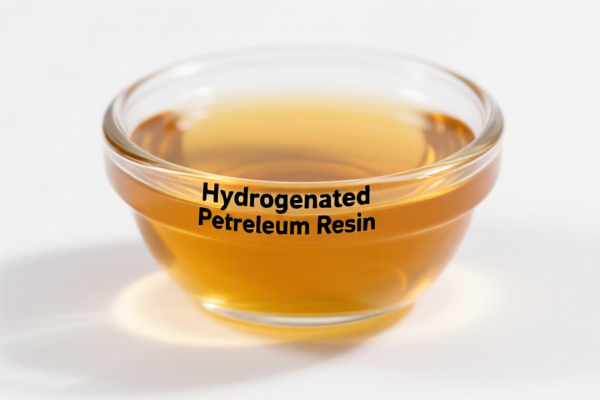
Hydrogenated Petroleum Resin (HPR) is a high-performance thermoplastic resin obtained by hydrogenating aromatic hydrocarbons (derived from petroleum) followed by polymerization. It is colorless, transparent, and exhibits excellent thermal stability, light fastness, and resistance to oxidation.
In international trade, HPR is primarily classified based on its physical form and chemical structure. It is distinct from raw hydrocarbon resins because the hydrogenation process removes unsaturated bonds, making it stable and safe for food contact and medical applications.
⚠️ Key Distinction:
- Raw Hydrocarbon Resins (Unhydrogenated): Typically yellowish, unstable, used in lower-end adhesives → Classified under 3906.90 or 3824.
- Hydrogenated Petroleum Resin (HPR): Colorless/transparent, stable, used in high-end adhesives, cosmetics, and plastics → Classified under 3906.90.90 (if as primary forms) or 3824.99 (if modified/mixtures).
📦 II. HS Code Classification Details (2026 Latest Tariff Authority对照)
| HS Code | Product Description | Application Scenario | Key Characteristics |
|---|---|---|---|
3906.90.90.00 |
Other polymers of acrylic monomers in primary forms | Not Applicable (Note: HPR is often misclassified here due to "resin" naming, but it is not acrylic) | ❌ Wrong Category |
3907.99.50.00 |
Other polyacetals, other polyethers, and polyepoxides in primary forms | Not Applicable | ❌ Wrong Category |
3906.10.00.00 |
Polyacrylates in primary forms | Not Applicable | ❌ Wrong Category |
3907.20.00.00 |
Polyacetals in primary forms | Not Applicable | ❌ Wrong Category |
3907.91.00.00 |
Polyphenylene oxides in primary forms | Not Applicable | ❌ Wrong Category |
3907.99.80.00 |
Other polymers in primary forms (including Hydrogenated Petroleum Resins) | Adhesives, sealants, cosmetics, plasticizers, high-end paints | ✅ Correct for Pure HPR |
3824.99.99.99 |
Prepared binders for foundry molds; chemical products and preparations n.e.c. | HPR mixtures, modified resins, or industrial grades not in primary form | ⚠️ Depends on Form |
🔍 Critical Reminder:
- Pure Hydrogenated Petroleum Resin in primary forms (powders, flakes, granules) is most commonly classified under3907.99.80.00(Other polymers in primary forms) in many jurisdictions, OR specifically under3906.90.90if the local tariff book has a specific subheading for C5/C9 hydrogenated resins.
- However, in the US HTSUS (2026), Hydrogenated Hydrocarbon Resins are typically classified under3907.99.50.00(if polyethers/polyacetals) or more accurately3907.99.80.00(Other polymers) or3824.99.99.99if considered "prepared."
- Most Common US Classification:3907.99.80.00(Other polymers in primary forms) or3824.99.99.99(if modified).
- Important: If the resin is C5 or C9 based, some countries classify it under3906.90.90(Acrylics) incorrectly. Always verify with the specific national tariff book. In the US, it is often3907.99.80.00.📌 Clarification for US Customs (CBP):
According to US HTSUS, Hydrogenated Petroleum Resins are generally classified under:
-3907.99.80.00: Other polymers, in primary forms.
- Rate: Generally 0% for most origins, but subject to Section 301 duties if from China.
💰 III. 2026 Latest Tariff Rate Details (Including Surcharges)
✅ Applicable Country: United States (US)
✅ Origin: China (CN)
✅ Effective Date: November 10, 2025 (and subsequent imports)
🎯 1. 3907.99.80.00 —— Hydrogenated Petroleum Resin (Primary Forms)
| Item | Content |
|---|---|
| Base Rate | 0% (ad valorem) |
| USITC Surcharge (Section 301) | +7.5% to +25% (Depends on the specific product category list; HPR often falls under List 4B or List 3) |
| IEEPA Surcharge (China-specific) | +10% (For products originating in China/Hong Kong, effective Nov 10, 2025) |
| Total Tax Rate | 10% ~ 35% (Depends on specific 301 list) |
| Tax Calculation | CIF Value × Total Rate |
| De Minimis Exemption | ❌ Not Available (deny_de_minimis) for Section 301 goods |
| Legal Basis Path | HTSUS:3907.99.80.00 → USITC:301 → IEEPA:9903.01.24 |
📌 Explanation:
- "USITC Surcharge": Depends on whether the HPR is listed in the remaining Section 301 tariffs. Many chemical resins are subject to 7.5% (List 4B) or 25% (List 3).
- "IEEPA 10%": This is the new 10% surcharge on Chinese goods effective Nov 2025.
- Example: If HPR is under List 4B, Total = 0% + 7.5% + 10% = 17.5%.
- If under List 3, Total = 0% + 25% + 10% = 35%.📌 Note:
- Always check the USTR Product Exclusions List for any exemptions.
- If the HPR is modified or mixed with other chemicals, it may fall under3824.99.99.99with similar but different rates.
🛠️ IV. Customs Clearance Practical Advice (Battle-Tested Pitfall Guide)
✅ 1. Required Documents Checklist (Non-negotiable)
| Document | Required? | Description |
|---|---|---|
| ✅ Product Specification Sheet | ✔️ | Must specify: Type (C5/C9), Hydrogenation Level, Molecular Weight, Softening Point, Color. |
| ✅ Chemical Formula/Structure | ✔️ | To prove it is Hydrogenated (saturated), not raw hydrocarbon resin. |
| ✅ MSDS (Material Safety Data Sheet) | ✔️ | For safety handling, especially for flammability and health hazards. |
| ✅ Certificate of Origin (CO) | ✔️ | Critical for determining IEEPA surcharges. |
| ✅ Commercial Invoice | ✔️ | Clearly state: "Hydrogenated Petroleum Resin, Not Crude, Not Modified" (if pure). |
| ✅ Packing List | ✔️ | Show weight, dimensions, and packaging type. |
| ✅ FCC/CE/RoHS Reports | ✔️ | If intended for electronics or food contact, provide certification. |
✅ 2. Declaration Tips (Key Mnemonics)
🔥 "Hydrogenated is Key, Primary Form is Clear, Name Precise, Tax Lowers!"
| Scenario | Correct Declaration | Wrong Approach |
|---|---|---|
| Pure HPR (Powder/Flakes) | 3907.99.80.00 - "Hydrogenated Petroleum Resin, Primary Form" |
Misdeclare as "Plastic Pellets" → Wrong HS, penalties |
| Modified HPR (Mixed with other resins) | 3824.99.99.99 - "Prepared Adhesive Binder" |
Declare as "Pure Resin" → Audit risk, back taxes |
| Raw Hydrocarbon Resin (Unhydrogenated) | 3907.99.80.00 or 3824 - "Hydrocarbon Resin, Unhydrogenated" |
Claim it's "Hydrogenated" → Fraud risk |
| HPR in Liquid Solution | 3824.99.99.99 - "Chemical Preparation" |
Declare as "Primary Form Polymer" → Wrong classification |
✅ 3. Special Case Handling
| Situation | Handling Advice |
|---|---|
| OEM Custom Resin | Provide client order + technical data sheet to prove custom formulation. |
| Food Contact Grade | Provide FDA compliance statement or EU Regulation 10/2011 compliance. |
| Mixed with Solvents | If >50% solvent by weight, may be classified as "Preparation" (3824). |
| Chinese Origin | Apply for Section 301 Exclusion if eligible; otherwise, budget for 17.5%-35% tax. |
🌍 V. Global Market Comparison (2026 Latest)
| Country/Region | Recommended HS Code | Tariff (China Origin) | Certification | Notes |
|---|---|---|---|---|
| 🇺🇸 USA | 3907.99.80.00 |
17.5% - 35% (with IEEPA) | FDA (if food contact) | High tariffs due to Section 301 + IEEPA |
| 🇨🇳 China | 3907.99.90.00 |
0% - 5% | CCC (if applicable) | No additional surcharges |
| 🇪🇺 EU | 3907.99.80.00 |
0% (Under GSP or FTA) | REACH + RoHS | Low tariffs, strict REACH compliance |
| 🇦🇺 Australia | 3907.99.80.00 |
5% - 10% | ACCC | Moderate tariffs |
| 🇯🇵 Japan | 3907.99.80.00 |
0% - 3% | PSE | Low tariffs, high quality standards |
📌 Conclusion:
- USA is the most expensive market for Chinese-origin HPR due to Section 301 + IEEPA.
- EU and Japan offer favorable tariffs but require strict REACH/PSE compliance.
- China has low tariffs but limited export incentives for high-value resins.
📌 VI. Common Mistakes & Pitfalls (Lessons Learned)
❌ Mistake 1: Declaring HPR as "Plastic Resin" without specifying "Hydrogenated"
👉 Consequence: Customs may classify it as raw hydrocarbon resin, leading to incorrect duty assessment or rejection.
❌ Mistake 2: Ignoring IEEPA 10% Surcharge
👉 Consequence: Underpayment of duties by 10%, leading to fines and penalties upon audit.
❌ Mistake 3: Mixing Pure HPR with Modified HPR in one shipment without separate declaration
👉 Consequence: Complex audit, potential misclassification, and delayed clearance.
✅ Correct Approach:
"Hydrogenated Petroleum Resin, C5/C9 Type, Primary Form, Colorless, Softening Point 100°C, Model XYZ, FDA Compliant"
🎯 VII. Conclusion: Precise Classification Saves Costs!
🎯 Remember the Mnemonic:
🔹 "Hydrogenated is Saturated, Primary Form is Key, IEEPA 10% Adds Up, Section 301 is Tough!"
🔹 "HS Code Determines Duty, Tax Difference is Huge, Declare Precisely, Avoid Fines!"
📌 Pro Tip:
If your HPR is originally produced in Vietnam, Malaysia, or Thailand, you may avoid IEEPA surcharges (0%~5% total).
Recommend applying for Advance Ruling before shipment to confirm the correct HS Code and tariff rate.
📣 Immediate Action:
📞 Contact a professional customs broker + Provide Product Spec + Apply for Advance Ruling
🚀 Let your Hydrogenated Petroleum Resin clear smoothly, legally, and profitably!
✨ Professional Clearance Starts with Accurate Classification!
💼 Every cent of your cost deserves precise calculation!
Customer Reviews
About HS Code Classification
The Harmonized System (HS) is an internationally standardized nomenclature developed by the World Customs Organization (WCO) to classify traded products. Over 200 countries use the HS system as the basis for customs tariffs, trade statistics, and import/export regulations.
Each HS code follows a hierarchical structure:
- Chapter (2 digits) — Broad category of goods (e.g., Chapter 84: Machinery and Mechanical Appliances)
- Heading (4 digits) — More specific grouping within the chapter
- Subheading (6 digits) — Internationally standardized breakdown, used by all WCO member countries
- National subdivisions (8-10 digits) — Country-specific extensions for further classification, such as US HTSUS 10-digit codes
Correct HS code classification is essential for smooth customs clearance, accurate duty payment, and compliance with trade regulations. Misclassification can lead to customs delays, overpayment of duties, or penalties.
When importing from CN to US, the applicable tariff rates may include:
- Most-Favored-Nation (MFN) rate — The standard duty rate applied to WTO members
- General rate — Applied to countries without trade agreements
- Trade remedy duties — Additional tariffs such as Section 301 (anti-dumping), Section 232 (national security), or countervailing duties
The information provided on this page is for reference purposes only. For official classification, please consult with your local customs authority or a licensed customs broker.