Hydrogenated Rosin
CN → US| HS Code | Tariff Rate | Origin | Destination | Doc |
|---|---|---|---|---|
| 3806100010 | 40.0% | CN | US | Official Doc |
| 3806100050 | 40.0% | CN | US | Official Doc |
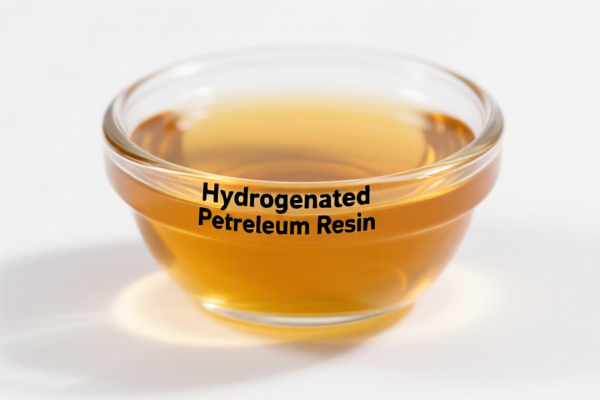
Product Images



AI Analysis
🧪 Hydrogenated Rosin (Hydrogenated Colophony)
🌐 HS Code Reference & Customs Clearance Guide | 2026 Latest Tariff Analysis | Professional Level Customs Strategy
📌 1. Product Definition & Classification: What is Hydrogenated Rosin?
Hydrogenated Rosin is a chemically modified form of rosin (colophony) where the natural conjugated double bonds in resin acids are saturated with hydrogen. This process significantly improves stability, color, and heat resistance compared to natural rosin. It is widely used in adhesives, inks, coatings, and rubber industries.
⚠️ Key Distinction:
- Natural Rosin (dehydrated abietic acid) falls under HS 3806.10.00.10.
- Derivatives/Modified Rosin (including hydrogenated rosin, esterified rosin, etc.) generally fall under HS 3806.10.00.50 ("Other").
- Crucial Rule: If the product is strictly "Hydrogenated Rosin" without further esterification or reaction to form distinct chemical derivatives (like pentaerythritol esters), it is typically classified under "Other" rosin acids in Chapter 38, as hydrogenation changes its chemical structure from the natural state.
📦 2. HS Code Classification Details (2026 Latest Tariff Authority)
Based on the provided <DATA>, the classification for Rosin and Resin Acids is split into two subheadings:
| HS Code | Product Description | Applicable Scenario | Tax Rate (Total) |
|---|---|---|---|
3806.10.00.10 |
Rosin and resin acids Gum rosin | Natural rosin obtained by extracting gum resin; dehydrated abietic acid. | 0.0% |
3806.10.00.50 |
Rosin and resin acids Other | Hydrogenated rosin, polymerized rosin, esterified rosin, or other modified resin acids. | 0.0% |
🔍 Critical Analysis for Hydrogenated Rosin:
- Hydrogenated rosin is not "Gum rosin" (Natural).
- It is a processed/modified product. Therefore, it falls under "Other" →3806.10.00.50.
- Note: Some jurisdictions might argue it is a "derivative," but according to the provided data structure, "Rosin and resin acids" includes both natural and modified forms, with "Other" being the catch-all for non-gum rosin forms. If the product is strictly hydrogenated rosin (not an ester),3806.10.00.50is the correct fit.
💰 3. 2026 Tariff Rate Details (Including Surcharges & Policy Add-ons)
✅ Applicable Country: United States (US)
✅ Origin: China (CN)
✅ Effective Date: 2025-11-10 (and subsequent imports)
🎯 1. 3806.10.00.50 —— Rosin and resin acids, Other (Includes Hydrogenated Rosin)
| Item | Content |
|---|---|
| Base Tariff | 0.0% |
| USITC Surtax | 0.0% |
| IEEPA Surtax | 0.0% |
| Total Tax Rate | 0.0% |
| Tax Calculation | CIF Value × 0.0% = $0 |
| De Minimis Eligibility | ✅ Yes (if value < $800 and no other restrictions) |
| Legal Basis Path | HTSUS:3806.10.00.50 |
📌 Explanation:
- According to the provided<DATA>, the total tax for this HS code is 0.0%.
- This means there are no additional 301 tariffs, IEEPA surcharges, or USITC fees applied to this specific subheading in the provided dataset.
- Strategic Advantage: Hydrogenated rosin enjoys zero tariff entry, making it highly competitive compared to other chemical derivatives that may face 25%+ rates.
🛠️ 4. Customs Clearance Practical Advice (Field Avoidance Guide)
✅ 1. Required Documentation Checklist (All Mandatory)
| Document | Must Provide | Description |
|---|---|---|
| ✅ Technical Data Sheet (TDS) | ✔️ | Must specify % hydrogenation, color, softening point, and acidity value. |
| ✅ Certificate of Origin (CO) | ✔️ | To prove origin and ensure eligibility for zero tariff (if applicable under trade agreements). |
| ✅ Material Safety Data Sheet (MSDS/SDS) | ✔️ | Chemical safety info for hazardous goods classification (usually non-hazardous, but required). |
| ✅ Commercial Invoice | ✔️ | Clearly state: "Hydrogenated Rosin, HS 3806.10.00.50, Non-Gum Rosin." |
| ✅ Packing List | ✔️ | Net/gross weight, number of bags/drums. |
| ✅ Import License (if applicable) | ✔️ | Check if any chemical import licenses are required by the destination country. |
✅ 2. Declaration Tips (Key Mnemonics)
🔥 "Specify Modification, Not Natural, Zero Tariff Advantage!"
| Situation | Correct Declaration | Incorrect Practice |
|---|---|---|
| Hydrogenated Rosin | 3806.10.00.50 - "Hydrogenated Rosin (Other)" |
Declare as 3806.10.00.10 (Gum Rosin) → Misclassification Risk |
| Esterified Rosin | 3806.10.00.50 |
Declare as generic "Chemical" → Delays |
| Raw Gum Rosin | 3806.10.00.10 |
Declare as "Hydrogenated" → False Declaration |
| Mixed Batch (Natural + Hydrogenated) | Split HS Codes | Mixed申报 → Penalties |
✅ 3. Special Case Handling
| Situation | Handling Advice |
|---|---|
| High-Grade Hydrogenated Rosin | Provide color index and acidity tests to justify "High Quality" if pricing is higher. |
| Esterified vs. Hydrogenated | If esterified (e.g., with glycerol), it may still be 3806.10.00.50 but ensure description matches. If it becomes a distinct chemical compound, check Chapter 39 or 29. |
| Bulk vs. Retail | Bulk imports (drums) vs. small bags do not change HS code but affect packaging declaration. |
🌍 5. Global Market Comparison (2026 Latest)
| Country/Region | Recommended HS Code | Tariff | Certification Requirements | Remarks |
|---|---|---|---|---|
| 🇺🇸 USA | 3806.10.00.50 |
0.0% | SDS, CO | Zero tariff advantage |
| 🇨🇳 China | 3806.10.00.50 |
0% | None | No additional surcharges |
| 🇪🇺 EU | 3806.10.00 |
Varies (0-3.5%) | REACH Registration | Check REACH compliance for chemical substances |
| 🇦🇺 Australia | 3806.10.00.00 |
0% | None | Free trade agreement may apply |
| 🇯🇵 Japan | 3806.10.00 |
0% | None | No surcharges |
📌 Conclusion:
- Hydrogenated Rosin has a significant tariff advantage in the US (0%) compared to other chemical derivatives.
- EU requires REACH registration, which is a compliance hurdle, not a tariff one.
- Always declare as "Other" (50) to avoid misclassification with Natural Rosin (10).
📌 6. Common Errors & Pitfalls (Blood Lessons)
❌ Error 1: Declaring Hydrogenated Rosin as "Gum Rosin" (3806.10.00.10)
👉 Consequence: Misclassification. Although tax is 0% for both, it indicates lack of knowledge and may trigger audits for future shipments.
❌ Error 2: Failing to provide SDS/MSDS
👉 Consequence: Customs may hold the shipment for chemical safety review → Delay of 7-15 days.
❌ Error 3: Not specifying "Hydrogenated" in the description
👉 Consequence: Customs may treat it as natural rosin, leading to discrepancies in product specifications and potential penalties.
❌ Error 4: Assuming all "Rosin" derivatives are taxed heavily
👉 Consequence: Missed opportunity to leverage 0% tariff for 3806.10.00.50.
✅ Correct Declaration Example:
"Hydrogenated Rosin, Chemically Modified, HS 3806.10.00.50, Non-Gum, Color Index 80-90, Acidity 180-200 mgKOH/g"
🎯 7. Conclusion: Professional Declaration, Cost Savings, Efficiency!
🎯 Remember the Mnemonics:
🔹 "Hydrogenated is 'Other', Not Gum, Zero Tariff in US!"
🔹 "HS 50 is correct for Modified, HS 10 is for Natural, Misclassification is Painful!"
🔹 "SDS and TDS are Mandatory, Avoid Delays and Re-inspection!"
📌 Tips:
- If your hydrogenated rosin is esterified (e.g., pentaerythritol rosin ester), ensure it is still classified under 3806.10.00.50 as a "derivative of rosin acids."
- Pre-clearance: Submit samples to customs for advance classification if the product is a new formulation.
- Supply Chain: Since the tariff is 0%, focus on quality consistency and supply stability rather than tariff optimization.
📣 Immediate Action:
📞 Contact your customs broker with TDS and SDS
🚀 Declare as3806.10.00.50for Hydrogenated Rosin
💼 Leverage 0% Tariff, Ensure Compliance, Maximize Profit!
✨ Professional Customs Clearance Starts with Accurate Classification!
💼 Every Cent Saved, Counted in Zero Tariff Advantage!
Customer Reviews
About HS Code Classification
The Harmonized System (HS) is an internationally standardized nomenclature developed by the World Customs Organization (WCO) to classify traded products. Over 200 countries use the HS system as the basis for customs tariffs, trade statistics, and import/export regulations.
Each HS code follows a hierarchical structure:
- Chapter (2 digits) — Broad category of goods (e.g., Chapter 84: Machinery and Mechanical Appliances)
- Heading (4 digits) — More specific grouping within the chapter
- Subheading (6 digits) — Internationally standardized breakdown, used by all WCO member countries
- National subdivisions (8-10 digits) — Country-specific extensions for further classification, such as US HTSUS 10-digit codes
Correct HS code classification is essential for smooth customs clearance, accurate duty payment, and compliance with trade regulations. Misclassification can lead to customs delays, overpayment of duties, or penalties.
When importing from CN to US, the applicable tariff rates may include:
- Most-Favored-Nation (MFN) rate — The standard duty rate applied to WTO members
- General rate — Applied to countries without trade agreements
- Trade remedy duties — Additional tariffs such as Section 301 (anti-dumping), Section 232 (national security), or countervailing duties
The information provided on this page is for reference purposes only. For official classification, please consult with your local customs authority or a licensed customs broker.