Hygiene Rubber Gasket
CN → US| HS Code | Tariff Rate | Origin | Destination | Doc |
|---|---|---|---|---|
| 4016935010 | 37.5% | CN | US | Official Doc |
| 4016993510 | 35.0% | CN | US | Official Doc |
| 8484900000 | 37.5% | CN | US | Official Doc |
| 3926904510 | 38.5% | CN | US | Official Doc |
| 4016935010 | 37.5% | CN | US | Official Doc |
Product Images
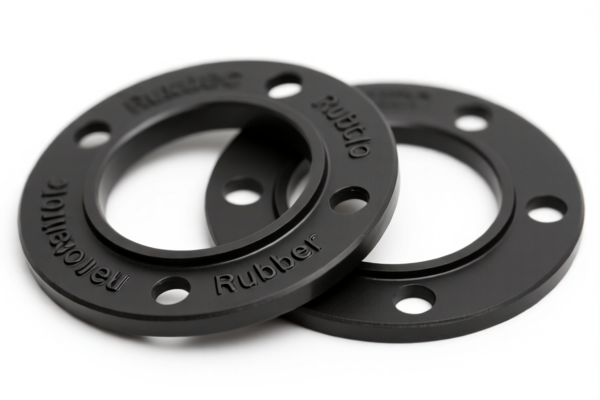


AI Analysis
🛡️ Hygiene Rubber Gasket (Sealing Components)
🌐 HS Code Reference & Customs Clearance Guide | 2026 Latest Tariff Breakdown | Professional Compliance Strategy
📌 I. Product Definition & Classification: What Exactly is a "Hygiene Rubber Gasket"?
A Hygiene Rubber Gasket is a specialized sealing component designed for environments requiring strict sanitary standards (e.g., food & beverage processing, pharmaceuticals, dairy equipment, and biotech reactors). Unlike industrial gaskets, these are typically manufactured from medical-grade or food-grade synthetic rubber/silicone to ensure non-toxicity, heat resistance, and ease of cleaning.
In international trade, the classification of rubber gaskets often triggers confusion between: 1. Rubber Articles (Chapter 40): If the primary material is rubber (natural or synthetic). 2. Mechanical Seals (Chapter 84): If the product is part of a machine assembly and functions specifically as a mechanical seal. 3. Plastic/Composite Articles (Chapter 39): If classified under specific plastic sealant or gasket categories (less common for pure rubber, but possible for composite materials).
⚠️ Key Distinction Point:
- If the gasket is a standalone rubber/vulcanized rubber item → Falls under Chapter 40 (specifically 4016).
- If it is marketed strictly as a mechanical seal part for pumps/valves → May fall under 8484.
- If it is a composite or plastic-based seal marketed as a "gasket" → May fall under 3926 or other plastic articles.
📦 II. HS Code Classification Details (Based on Provided Data)
The following HS codes and tax rates are derived strictly from the provided dataset for Hygiene Rubber Gaskets. Note that while the term "Hygiene" implies material quality, the function and material composition dictate the HS code.
| HS Code | Product Description | Applicable Scenario | Tax Rate (Total) |
|---|---|---|---|
4016.93.50.10 |
Natural Rubber Sealing Rings: Matches vulcanized rubber material and sealing application. | Standard natural rubber seals; high elasticity, chemical resistance. | 37.5% |
4016.99.35.10 |
Natural Rubber Sealing Rings: Rubber product, classified as vulcanized rubber article. | Broader category of vulcanized rubber parts not specified elsewhere. | 35.0% |
8484.90.00.00 |
Rubber Seat Seal Gasket: Non-metallic composite washer belonging to mechanical seal category. | Gaskets explicitly designed as mechanical seals for pumps, valves, or engines. | 37.5% |
4016.93.50.10 |
Rubber Seat Seal Gasket: Corresponds to vulcanized rubber material and gasket sealing application. | Same as above but emphasizes the "gasket" function within rubber articles. | 37.5% |
3926.90.45.10 |
Rubber Seat Seal Gasket: Fits into gaskets/washers and other sealing items; plastic/synthetic rubber category. | Composite seals or those classified under plastic/synthetic rubber gasket headings. | 38.5% |
🔍 Critical Insight:
-4016.93.50.10and8484.90.00.00both carry a 37.5% total tax rate.
-4016.99.35.10offers the lowest rate (35.0%) among rubber articles.
-3926.90.45.10is the highest (38.5%) and involves a different chapter (Plastics), so ensure your material is not purely plastic before using this.
💰 III. 2026 Latest Tariff Rate Breakdown (Including Additional Duties)
✅ Applicable Region: United States (US)
✅ Origin: China (CN)
✅ Effective Date: Post-2025 policies (Section 301 & IEEPA)
🎯 1. 4016.93.50.10 & 8484.90.00.00 — Vulcanized Rubber Gaskets / Mechanical Seals
| Item | Detail |
|---|---|
| Base Tariff | 2.5% |
| Section 301 Additional Duty | +25.0% |
| IEEPA Additional Duty | +10.0% |
| Total Tax Rate | 37.5% |
| Calculation Basis | CIF Value × 37.5% |
| De Minimis Exemption? | ❌ NO (Deny De Minimis for Chinese origin goods under current rules) |
| Legal Pathway | USITC:4016.93.50.10 → Section 301: 25% → IEEPA: 10% |
📌 Explanation:
- The 2.5% is the standard Most Favored Nation (MFN) rate for rubber articles or mechanical seal parts.
- The 25% is the standard Section 301 tariff on Chinese rubber products.
- The 10% is the additional IEEPA tariff.
- Total: 37.5%. This is a significant cost factor that must be included in your landed cost calculation.
🎯 2. 4016.99.35.10 — Other Vulcanized Rubber Articles
| Item | Detail |
|---|---|
| Base Tariff | 0.0% |
| Section 301 Additional Duty | +25.0% |
| IEEPA Additional Duty | +10.0% |
| Total Tax Rate | 35.0% |
| Calculation Basis | CIF Value × 35.0% |
| De Minimis Exemption? | ❌ NO |
| Legal Pathway | USITC:4016.99.35.10 → Section 301: 25% → IEEPA: 10% |
📌 Note:
- This code has a 0% base tariff, making it 2.5% cheaper than the4016.93.50.10code.
- Use this if the product is a generic vulcanized rubber seal not specifically described under "other rubber articles" with higher base rates.
🎯 3. 3926.90.45.10 — Plastic/Synthetic Rubber Gaskets
| Item | Detail |
|---|---|
| Base Tariff | 3.5% |
| Section 301 Additional Duty | +25.0% |
| IEEPA Additional Duty | +10.0% |
| Total Tax Rate | 38.5% |
| Calculation Basis | CIF Value × 38.5% |
| De Minimis Exemption? | ❌ NO |
| Legal Pathway | USITC:3926.90.45.10 → Section 301: 25% → IEEPA: 10% |
📌 Caution:
- This is the most expensive option at 38.5%.
- Only use this if the product is explicitly classified as a plastic or synthetic rubber article under Chapter 39, which may be appropriate for certain composite hygiene seals.
🛠️ IV. Customs Clearance Practical Advice (Avoiding Pitfalls)
✅ 1. Required Documentation Checklist
| Document | Required? | Purpose |
|---|---|---|
| ✅ Product Specification Sheet | ✔️ | Detail material (Natural Rubber vs. Synthetic vs. Silicone), hardness (Shore A), and hygiene compliance (FDA/USP Class VI). |
| ✅ Material Safety Data Sheet (MSDS) | ✔️ | To prove non-toxicity and hygiene standards. |
| ✅ Commercial Invoice | ✔️ | Clearly state "Rubber Gasket for Food/Pharma Use" and HS Code. |
| ✅ Certificate of Origin (CO) | ✔️ | Essential for verifying Chinese origin and applying correct Section 301/IEEPA rates. |
| ✅ Packing List | ✔️ | Show net/gross weight, dimensions, and quantity. |
| ✅ Third-Party Certifications | ✔️ | FDA, EU 10/2011, NSF certifications if marketed as "Hygiene" grade. |
✅ 2. Declaration Tips (Key Mnemonics)
🔥 "Material First, Function Second, Hygiene Proof, Tariff Clear!"
| Scenario | Correct Declaration | Incorrect Practice |
|---|---|---|
| Pure Rubber Seal | Use 4016.93.50.10 or 4016.99.35.10 |
Misdeclare as plastic → 3926.90.45.10 (Higher tax) |
| Mechanical Seal Assembly | Use 8484.90.00.00 if part of a pump/valve seal kit |
Declare as simple gasket → May be reclassified |
| Composite/Synthetic Seal | Use 3926.90.45.10 only if plastic-dominated |
Overstate rubber content → Audit risk |
| "Hygiene" Claim | Provide FDA/NSF certs | Claim hygiene without proof → Customs delay |
✅ 3. Special Cases
| Case | Handling Advice |
|---|---|
| Silicone Gaskets | If >90% silicone, still often classified under 4016 (Rubber) unless explicitly plastic. Check with customs broker. |
| OEM for Pharma | Provide end-user letter if applicable for potential exemptions, though Section 301/IEEPA usually apply regardless. |
| Small Samples | No De Minimis exemption for Chinese goods. Even low-value shipments are subject to 35-38.5% tax. |
🌍 V. Global Market Comparison (2026)
| Country/Region | Recommended HS Code | Tariff (China Origin) | Key Requirement | Note |
|---|---|---|---|---|
| 🇺🇸 USA | 4016.99.35.10 |
35.0% | FDA/USP Compliance | Lowest rate among options |
| 🇨🇳 China | 4016.93.50.10 |
15-20% | GB Standards | Domestic trade, not export-focused |
| 🇪🇺 EU | 4016.93.50 |
0-4% | REACH + LFGB | No Section 301/IEEPA |
| 🇬🇧 UK | 4016.93.50 |
0-4% | UKCA + Food Standards | Post-Brexit rules apply |
| 🇦🇺 Australia | 4016.93.50 |
5% | TGA Compliance | Low tariff, strict hygiene checks |
📌 Conclusion:
- USA is the most expensive market due to Section 301 + IEEPA tariffs.
- EU/UK/AU have no political tariffs, making them more cost-effective for exports.
- HS Code selection is critical:4016.99.35.10(35%) is better than4016.93.50.10(37.5%) if applicable.
📌 VI. Common Errors & Pitfalls (Blood-Lessons)
❌ Error 1: Misclassifying Silicone Gaskets as "Rubber" (4016) without checking if they fall under 3926.
👉 Result: If misclassified, potential penalties + back-taxes.
❌ Error 2: Ignoring Section 301/IEEPA and declaring low value to avoid taxes.
👉 Result: De Minimis exemption does NOT apply to Chinese rubber/plastic goods. Customs will assess full 35-38.5% + penalties.
❌ Error 3: Using 8484.90.00.00 for simple gaskets not part of a mechanical seal system.
👉 Result: Customs may reclassify to 4016, causing delays.
❌ Error 4: Not providing Hygiene Certificates for "Food/Pharma" grade claims.
👉 Result: Refusal of entry or destruction of goods due to health safety concerns.
✅ Correct Approach:
"Food-Grade Natural Rubber Gasket, FDA Compliant, HS Code 4016.99.35.10, CIF Value $10,000, Subject to 35% US Tariff."
🎯 VII. Conclusion: Precision in Classification Saves Money!
🎯 Remember the Mnemonic:
🔹 "Rubber is 4016, Plastic is 3926, Seal is 8484, Tax is 35-38.5%!"
🔹 "Hygiene needs proof, De Minimis is dead, Choose 4016.99.35.10 for lowest rate!"
📌 Pro Tip:
If your gaskets are produced in Vietnam, Thailand, or Malaysia, you may exempt Section 301/IEEPA tariffs, reducing taxes to 2.5-3.5%.
Recommend Advance Ruling from US CBP for large-volume shipments to ensure HS code accuracy and avoid post-entry audits.
📣 Immediate Action:
📞 Contact your customs broker + Provide Material Certs + Apply for Pre-Ruling
🚀 Ensure Hygiene Rubber Gaskets clear customs smoothly, efficiently, and profitably!
✨ Professional Clearance Starts with Accurate Classification!
💼 Every Percent of Tax Saved is Pure Profit!
Customer Reviews
About HS Code Classification
The Harmonized System (HS) is an internationally standardized nomenclature developed by the World Customs Organization (WCO) to classify traded products. Over 200 countries use the HS system as the basis for customs tariffs, trade statistics, and import/export regulations.
Each HS code follows a hierarchical structure:
- Chapter (2 digits) — Broad category of goods (e.g., Chapter 84: Machinery and Mechanical Appliances)
- Heading (4 digits) — More specific grouping within the chapter
- Subheading (6 digits) — Internationally standardized breakdown, used by all WCO member countries
- National subdivisions (8-10 digits) — Country-specific extensions for further classification, such as US HTSUS 10-digit codes
Correct HS code classification is essential for smooth customs clearance, accurate duty payment, and compliance with trade regulations. Misclassification can lead to customs delays, overpayment of duties, or penalties.
When importing from CN to US, the applicable tariff rates may include:
- Most-Favored-Nation (MFN) rate — The standard duty rate applied to WTO members
- General rate — Applied to countries without trade agreements
- Trade remedy duties — Additional tariffs such as Section 301 (anti-dumping), Section 232 (national security), or countervailing duties
The information provided on this page is for reference purposes only. For official classification, please consult with your local customs authority or a licensed customs broker.