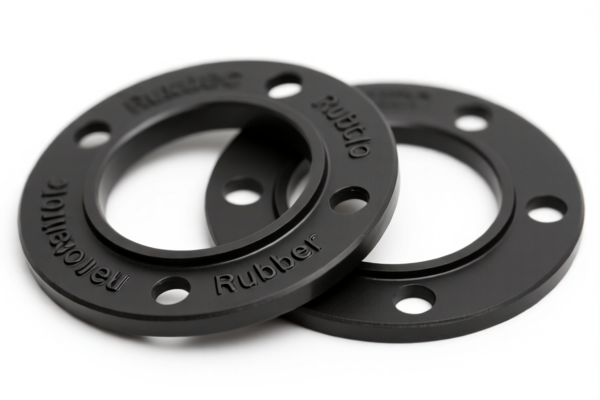
Hygienic Rubber Gaskets
CN → US| HS Code | Tariff Rate | Origin | Destination | Doc |
|---|---|---|---|---|
| 4016935010 | 37.5% | CN | US | Official Doc |
| 3926904510 | 38.5% | CN | US | Official Doc |
| 8481909085 | 85.0% | CN | US | Official Doc |
| 4016931010 | 37.5% | CN | US | Official Doc |
| 8481909060 | 85.0% | CN | US | Official Doc |
Product Images


AI Analysis
🛡️ Hygienic Rubber Gaskets: The Ultimate HS Code Classification & Tax Guide (2026 Edition)
🌐 HS Code Reference & Customs Clearance Strategy | Latest Tariff Analysis | Professional Compliance Guide
📌 I. Product Definition & Core Classification: What are "Hygienic Rubber Gaskets"?
Hygienic Rubber Gaskets are critical sealing components used in industries requiring high levels of cleanliness, such as food & beverage, pharmaceuticals, biotechnology, and dairy processing. They are designed to prevent contamination and ensure leak-proof seals in valves, pumps, and piping systems.
In international trade, these gaskets are not a single monolithic category. Their HS Code classification depends heavily on: 1. Material Composition: Are they pure rubber, sulfurized rubber, or mixed with plastics? 2. Functional Role: Are they standalone seals, or considered parts of a specific mechanism (like valves)? 3. Form: Are they flat gaskets, O-rings, or custom molded shapes?
⚠️ Critical Classification Point:
- If classified under Chapter 40 (Rubber), the duty is generally lower (2.5% base).
- If classified under Chapter 84 (Parts of Machinery/Valves), the duty can jump significantly (0% base + high additional tariffs).
- Misclassification can lead to huge tariff discrepancies (e.g., 37.5% vs. 85.0%).
📦 II. HS Code Classification Matrix (Based on Provided Data)
The following table details the five possible HS Codes for "Hygienic Rubber Gaskets" based on the provided dataset, along with their specific tax implications.
| HS Code | Product Description (Summary) | Key Classification Criteria | Base Duty | Additional Tariffs | Total Effective Rate |
|---|---|---|---|---|---|
| 4016.93.50.10 | Hygienic rubber gasket, material: Sulfurized rubber, form: Gasket, use: Hygienic sealing. | Material: Sulfurized Rubber. Function: General hygiene seal. |
2.5% | +25% (Trade War) +10% (Section 301) | 37.5% |
| 3926.90.45.10 | Hygienic rubber gasket, material: Rubber, form: Gasket, use: Hygienic sealing, classified as plastic/like material products. | Material: Rubber (but classified under Plastic Chapters due to specific material blend or regulatory interpretation). Chapter: 39 (Plastics). |
3.5% | +25% (Trade War) +10% (Section 301) | 38.5% |
| 8481.90.90.85 | Hygienic rubber gasket, form: Gasket, classified as part of valves/like apparatus, material: Rubber. | Function: Part of Valves. Chapter: 84 (Machinery/Parts). Note: Higher risk category. |
0.0% | +25% (Trade War) +10% (Section 301) +50% (Steel/Aluminum/Copper surcharge if applicable) | 85.0% |
| 4016.93.10.10 | Hygienic rubber gasket, material: Sulfurized rubber, form: Gasket, classified as "Other categories". | Material: Sulfurized Rubber. Classification: Specific rubber product code. |
2.5% | +25% (Trade War) +10% (Section 301) | 37.5% |
| 8481.90.90.60 | Hygienic rubber gasket, material: Rubber, classified as part of valves/like apparatus, use: Hygienic gasket. | Function: Part of Valves. Material: Rubber. |
0.0% | +25% (Trade War) +10% (Section 301) +50% (Steel/Aluminum/Copper surcharge if applicable) | 85.0% |
🔍 Key Insight:
- Codes 4016.93.50.10 & 4016.93.10.10 offer the lowest total tax (37.5%). These classify the item primarily as a rubber article. - Codes 8481.90.90.85 & 8481.90.90.60 carry the highest total tax (85.0%). These classify the item as a part of a valve. While functionally true, customs may penalize higher duties if the gasket is shipped separately without a valve. - Code 3926.90.45.10 is a middle ground (38.5%) but unusual for pure rubber; likely applies to specific composite materials.
💰 III. Detailed Tariff Breakdown & Policy Context (2026)
✅ Applicable Country: USA (US)
✅ Origin: China (CN)
✅ Effective Date: Current trade war provisions active.
🎯 Scenario A: Classification under Chapter 40 (Rubber Articles)
HS Codes: 4016.93.50.10 or 4016.93.10.10
| Component | Rate | Legal Basis / Policy |
|---|---|---|
| Base MFN Duty | 2.5% | Standard US HTS duty for rubber articles. |
| Section 301 Duty | +25% | "Trade Enhancement Act" / Section 301 tariffs on Chinese goods. |
| IEEPA / Section 232 | +10% | Specific surcharge for Chinese origin rubber/plastics. |
| Total Effective Rate | 37.5% | Standard Cost |
📌 Why this matters:
These gaskets are essential consumables. Classifying them as "Rubber Articles" (Chapter 40) is often more favorable than "Machine Parts" (Chapter 84) because the base duty is non-zero but the additional penalties are capped.
🎯 Scenario B: Classification under Chapter 84 (Parts of Valves)
HS Codes: 8481.90.90.85 or 8481.90.90.60
| Component | Rate | Legal Basis / Policy |
|---|---|---|
| Base MFN Duty | 0.0% | Parts of machinery often have lower base duties. |
| Section 301 Duty | +25% | Standard Section 301 rate. |
| IEEPA Surcharge | +10% | China-specific surcharge. |
| Steel/Aluminum/Copper Surcharge | +50% | ⚠️ Critical Note: The data specifies "Steel, Aluminum, Copper products surcharge: 50%". If the gasket includes metal reinforcement rings or is packaged with metal valve parts, this may apply. |
| Total Effective Rate | 85.0% | High Penalty Risk |
📌 Why this matters:
Although the base duty is 0%, the 85% total rate makes this classification prohibitively expensive. Customs may apply this if the gasket is imported with a valve unit and declared as a single "valve assembly."
🛠️ IV. Customs Clearance Practical Advice (Avoiding Pitfalls)
✅ 1. Documentation Checklist (Must-Haves)
| Document | Requirement | Why It Matters |
|---|---|---|
| Product Specification Sheet | ✅ Must list: Material (e.g., EPDM, Silicone, NBR), Cure Type (Sulfurized), Certifications (FDA, USP Class VI). | Proves "Hygienic" nature and material type. |
| Commercial Invoice | ✅ Description: "Hygienic Rubber Gasket, Sulfurized, For Food Industry Use". Avoid vague terms like "Seal Part". | Prevents classification as "Unspecified Rubber Part" (Chapter 40) vs. "Valve Part" (Chapter 84). |
| Packing List | ✅ Clearly state: "Gaskets Only" if shipped separately. Do not bundle with valves unless intended as a single unit. | Separating gaskets from valves supports Chapter 40 classification. |
| Material Safety Data Sheet (MSDS) | ✅ Required for chemical compliance. | Confirms rubber composition (no hidden plastics/metals). |
✅ 2. Classification Strategy & Tips
🔥 Golden Rule: "Material Defines, Function Follows. Ship Separately!"
| Situation | Recommended Action | Risk Level |
|---|---|---|
| Gaskets Shipped Alone | Declare as Chapter 40 (Rubber Articles). Use HS 4016.93.50.10. |
✅ Low Risk (37.5%) |
| Gaskets Shipped WITH Valves | Declare as Valve Assembly. Use HS 8481.90.90.xx. |
⚠️ High Tax (85.0%) |
| Gaskets with Metal Reinforcement | Check if metal >50% by weight. If so, may trigger Steel/Aluminum surcharge. | ⚠️ Extreme Tax (85%+) |
| Mixed Rubber/Plastic | If plastic content is dominant, may fall under Chapter 39 (3926.90.45.10). |
✅ Moderate (38.5%) |
📌 Pro Tip:
If you are exporting gaskets to be installed on-site, always declare them as "Rubber Articles" (Chapter 40) in the invoice. Do not describe them as "Parts of Valves" unless they are pre-installed and sold as a complete valve unit. This saves you 47.5% in taxes!
✅ 3. Common Mistakes to Avoid
❌ Mistake 1: Labeling as "Valve Part" in the description.
👉 Result: Customs may classify under 8481, triggering the 85% tariff.
❌ Mistake 2: Ignoring the "Sulfurized" vs. "Unvulcanized" distinction.
👉 Result: Unvulcanized rubber has different HS codes. Ensure your spec says "Sulfurized" or "Vulcanized" to match 4016.93.
❌ Mistake 3: Not declaring the "Hygienic" or "Food Grade" nature.
👉 Result: While it doesn't change the HS code directly, it supports the "General Rubber Article" classification by showing it's a specialized consumer/industrial good, not a generic industrial part.
🌍 V. Global Market Comparison (2026)
| Market | Recommended HS Code | Estimated Total Duty | Key Requirement |
|---|---|---|---|
| 🇺🇸 USA | 4016.93.50.10 |
37.5% | FDA Compliance, Clear "Rubber" description. |
| 🇪🇺 EU | 4016.93 (Generic) |
~1.7% + VAT | REACH Compliance, CE Marking. |
| 🇨🇳 China | 4016.93 |
5-10% | CCC Certification (if applicable). |
| 🇬🇧 UK | 4016.93 |
1.7% + VAT | UKCA Marking. |
📌 Conclusion:
The USA market is the most complex due to the Section 301 and IEEPA tariffs. The choice between Chapter 40 and Chapter 84 is critical. Chapter 40 (Rubber) is significantly cheaper.
📌 VI. Summary & Action Plan
🎯 Final Recommendation:
- Identify Material: Confirm if it is Sulfurized Rubber (most common).
- Choose HS Code: Use
4016.93.50.10or4016.93.10.10. - Tax Rate: Budget for 37.5% total duty.
- Documentation: Clearly state "Hygienic Rubber Gasket, Sulfurized, For Food/Pharma Use" on invoices.
- Packaging: Ship gaskets separately from valves to avoid "Valve Part" classification.
💡 Save Money:
By classifying as Chapter 40 instead of Chapter 84, you save 47.5% in duties. That’s nearly half the cost!
✨ Professional Clearance Starts with Precision!
💼 Don’t let misclassification cost you 85% in tariffs. Choose Chapter 40!
Customer Reviews
About HS Code Classification
The Harmonized System (HS) is an internationally standardized nomenclature developed by the World Customs Organization (WCO) to classify traded products. Over 200 countries use the HS system as the basis for customs tariffs, trade statistics, and import/export regulations.
Each HS code follows a hierarchical structure:
- Chapter (2 digits) — Broad category of goods (e.g., Chapter 84: Machinery and Mechanical Appliances)
- Heading (4 digits) — More specific grouping within the chapter
- Subheading (6 digits) — Internationally standardized breakdown, used by all WCO member countries
- National subdivisions (8-10 digits) — Country-specific extensions for further classification, such as US HTSUS 10-digit codes
Correct HS code classification is essential for smooth customs clearance, accurate duty payment, and compliance with trade regulations. Misclassification can lead to customs delays, overpayment of duties, or penalties.
When importing from CN to US, the applicable tariff rates may include:
- Most-Favored-Nation (MFN) rate — The standard duty rate applied to WTO members
- General rate — Applied to countries without trade agreements
- Trade remedy duties — Additional tariffs such as Section 301 (anti-dumping), Section 232 (national security), or countervailing duties
The information provided on this page is for reference purposes only. For official classification, please consult with your local customs authority or a licensed customs broker.