ID Card Case
CN → US| HS Code | Tariff Rate | Origin | Destination | Doc |
|---|---|---|---|---|
| 3920991000 | 41.0% | CN | US | Official Doc |
| 3926100000 | 15.3% | CN | US | Official Doc |
| 3926909989 | 22.8% | CN | US | Official Doc |
Product Images
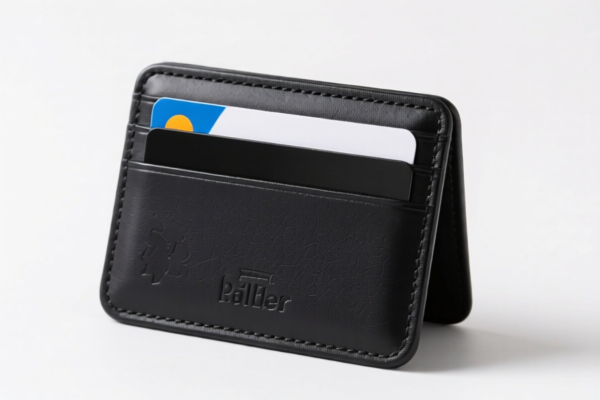
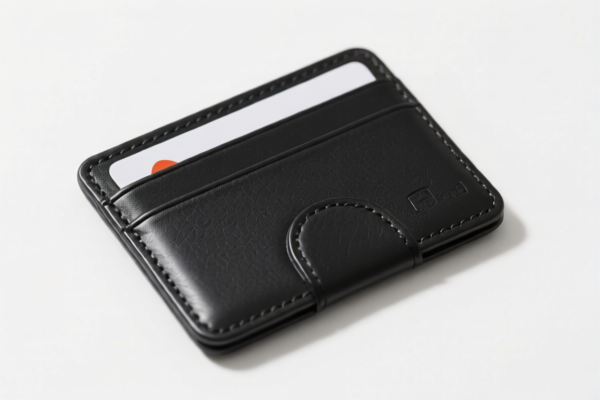
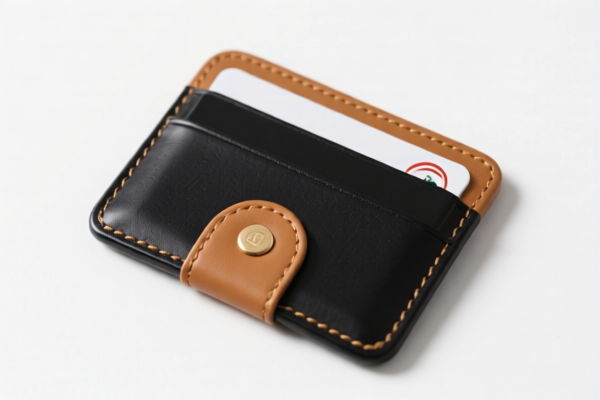
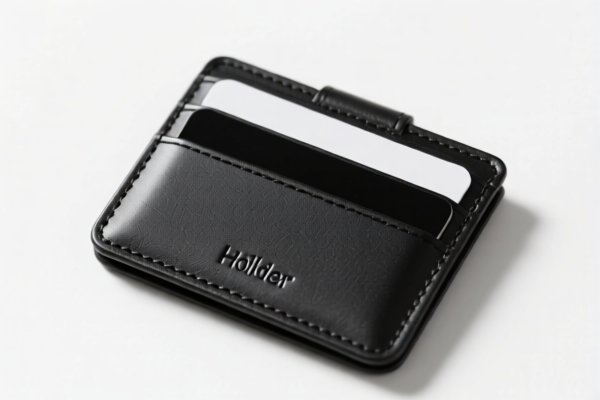
AI Analysis
🆔 ID Card Case (Plastic Laminated Holders)
🌐 HS Code Reference & Customs Clearance Guide | 2026 Latest Tariff Analysis | Strategic通关 Strategy
📌 Part I: Product Definition & Classification: Do You Really Understand "ID Card Cases"?
An ID Card Case, typically referred to as a plastic laminated holder or badge holder, is a common accessory in office, educational, and industrial settings used to protect personal identification, access cards, or membership passes. In international trade, these items are primarily classified under Chapter 39 (Plastics and Articles Thereof).
However, the specific HS Code depends heavily on the manufacturing method (layered/laminated vs. simple formed) and the customs interpretation of whether it constitutes a "laminated product" or a general "plastic article."
⚠️ Key Distinction Points:
- Layered/Laminated Structure: If the case is made by bonding multiple layers of plastic film or sheets together (e.g., PVC layers fused to provide rigidity or clarity), it may fall under 3920 (Plastics in primary forms, sheets, plates, etc.) or specific laminated categories. - General Plastic Article: If it is a simple molded or folded plastic pouch without complex lamination processes, it falls under 3926 (Other articles of plastics). - Customs Judgment: The definition of "laminated" can be strict. If the "lamination" is merely thermal sealing of two films, some customs authorities may still classify it under 3926.90 (Other plastic articles) rather than 3920, depending on local tariff schedules.
📦 Part II: HS Code Classification Details (2026 Latest Tariff Authority Reference)
Based on the provided data, here are the three possible HS Codes for Plastic Laminated ID Card Cases, along with their specific tax implications.
| HS Code | Product Description | Applicable Scenario | Total Tax Rate |
|---|---|---|---|
3920.99.10.00 |
Plastic laminated ID card case; material: plastic; form: laminated; meets requirements for lamination, support, or composite with other materials. | Cases specifically classified as laminated plastic sheets/boards used as cases. | 41.0% |
3926.10.00.00 |
Plastic laminated ID card case; material: plastic; form: laminated holder; purpose: office or personal document protection. | Cases classified as other plastic articles for office use or personal protection, where the "laminated" aspect is treated as a functional feature of a plastic article. | 15.3% |
3926.90.99.89 |
Plastic laminated ID card case; material: plastic; form: laminated ID card case; belongs to plastic articles. | General classification for other plastic articles not specified elsewhere, often used when "laminated" status is not strictly enforced as a sheet product. | 22.8% |
🔍 Critical Reminder:
- The difference in tax rates is significant: 15.3% vs. 41.0% depends on whether Customs views the product as a "laminated sheet product" (3920) or a "formed plastic article" (3926). - 3920.99.10.00 has the highest tax burden due to the "laminated" classification triggering higher base and additional tariffs. - 3926.10.00.00 is the most favorable if the product is viewed as a simple protective holder.
💰 Part III: 2026 Latest Tariff Rate Details (Including Surcharges & Policy Additions)
✅ Applicable Country: United States (US)
✅ Origin: China (CN)
✅ Effective Time: Current 2025/2026 Regulations (Section 301 & IEEPA)
🎯 1. 3920.99.10.00 – Plastic Laminated ID Card Case (High Risk)
| Item | Content |
|---|---|
| Base Tariff | 6.0% (Ad Valorem) |
| Section 301 Surcharge | 25.0% |
| IEEPA Section 122 Surcharge | 10.0% |
| Total Tax Rate | 41.0% |
| Tax Calculation | CIF Value × 41.0% |
| De Minimis Exemption | ❌ Not Eligible (High tariff rates usually trigger scrutiny) |
| Legal Basis Path | 3920.99.10.00 → Base: 6% + 301: 25% + IEEPA: 10% |
📌 Explanation:
- This classification attracts the highest total tax burden. - The 25% Section 301 tariff applies to many plastic products from China. - The 10% IEEPA (122 Clause) is a specific additional surcharge on Chinese-origin goods. - Result: For every $100 of goods, you pay $41 in duties. This significantly impacts profit margins.
🎯 2. 3926.10.00.00 – Plastic Laminated ID Card Case (Most Favorable)
| Item | Content |
|---|---|
| Base Tariff | 5.3% (Ad Valorem) |
| Section 301 Surcharge | 0.0% |
| IEEPA Section 122 Surcharge | 10.0% |
| Total Tax Rate | 15.3% |
| Tax Calculation | CIF Value × 15.3% |
| De Minimis Exemption | ❌ Not Eligible (Though lower, still subject to standard rules) |
| Legal Basis Path | 3926.10.00.00 → Base: 5.3% + 301: 0% + IEEPA: 10% |
📌 Explanation:
- This is the most cost-effective classification. - Key Advantage: The Section 301 (25%) surcharge is 0% for this specific subheading. This is a critical distinction. - Only the 10% IEEPA surcharge applies on top of the base rate. - Result: For every $100 of goods, you pay only $15.30 in duties.
🎯 3. 3926.90.99.89 – Plastic Laminated ID Card Case (Mid-Range)
| Item | Content |
|---|---|
| Base Tariff | 5.3% (Ad Valorem) |
| Section 301 Surcharge | 7.5% |
| IEEPA Section 122 Surcharge | 10.0% |
| Total Tax Rate | 22.8% |
| Tax Calculation | CIF Value × 22.8% |
| De Minimis Exemption | ❌ Not Eligible |
| Legal Basis Path | 3926.90.99.89 → Base: 5.3% + 301: 7.5% + IEEPA: 10% |
📌 Explanation:
- This classification falls under "Other plastic articles." - It incurs a partial Section 301 surcharge (7.5%) instead of the full 25% or 0%. - Result: For every $100 of goods, you pay $22.80 in duties.
🛠️ Part IV: Customs Clearance Practical Advice (Avoid Pitfalls)
✅ 1. Preparation Checklist (Essential Documents)
| Document | Required | Notes |
|---|---|---|
| ✅ Product Specification Sheet | ✔️ | Must clearly state material (PVC/PP/PE), dimensions, and manufacturing process (e.g., "thermal sealed," "laminated," or "molded"). |
| ✅ Product Photos | ✔️ | High-res images showing the cross-section (to prove lamination vs. solid molding) and usage (holding an ID card). |
| ✅ Commercial Invoice | ✔️ | Describe accurately: "Plastic ID Card Holder, Laminated, for Office Use." Avoid vague terms like "Plastic Case." |
| ✅ Packing List | ✔️ | Specify net/gross weight and packaging type. |
| ✅ Declaration Statement | ✔️ | Explicitly state: "This product is classified under 3926.10.00.00 as an office plastic article, not a laminated sheet." |
✅ 2. Declaration Strategy (Key Tips)
🔥 “Clarify Function, Specify Material, Choose Wisely!”
| Scenario | Recommended HS Code | Reason |
|---|---|---|
| Simple PVC Pocket/Holder | 3926.10.00.00 |
If it’s a simple folded/sealed pocket, argue it’s a "plastic article for office use," not a "laminated sheet product." |
| Multi-layer Rigid Holder | 3920.99.10.00 |
If it uses rigid laminated sheets for durability, customs may insist on 3920. High risk, high tax. |
| Generic Plastic Case | 3926.90.99.89 |
If unsure, this is a safe middle ground, but still incurs 7.5% Section 301. |
📌 Critical Advice:
- Avoid describing the product solely as "Laminated Plastic Sheet" if it’s a finished case. Emphasize "Holder," "Case," or "Article." - Proactive Communication: If possible, apply for a Pre-Ruling with CBP (U.S. Customs and Border Protection) to confirm the classification under 3926.10.00.00 to save 25% in tariffs.
✅ 3. Special Cases
| Situation | Handling Advice |
|---|---|
| OEM Custom Cases | Provide client’s design specs. If the design is simple, argue for 3926. |
| Bulk Import vs. Retail | For bulk shipments, ensure the invoice clearly states the unit type (e.g., "1000 pcs of ID holders") to avoid per-unit misclassification. |
| Mixed Packaging | If ID cases are packed with other plastic items (e.g., lanyards), declare them separately if HS codes differ significantly. |
🌍 Part V: Global Market Comparison (2026)
| Country/Region | Recommended HS Code | Base Tariff | Section 301 / IEEPA | Total Approx. Tax |
|---|---|---|---|---|
| 🇺🇸 USA | 3926.10.00.00 |
5.3% | IEEPA: 10% | 15.3% |
| 🇺🇸 USA | 3920.99.10.00 |
6.0% | 301: 25% + IEEPA: 10% | 41.0% |
| 🇨🇳 China | 3926.90.99.90 |
6.5% | None | 6.5% |
| 🇪🇺 EU | 3926.90.59 |
6.5% | None | 6.5% |
| 🇬🇧 UK | 3926.90.90 |
0% | None | 0% |
📌 Conclusion:
- USA is the most complex market due to Section 301 and IEEPA surcharges. - Correct classification under 3926.10.00.00 can save you 25.7% in taxes compared to 3920.99.10.00. - China, EU, and UK do not impose these surcharges, making clearance easier and cheaper.
📌 Part VI: Common Mistakes & Pitfalls (Lessons Learned)
❌ Mistake 1: Describing the product as "Laminated Plastic Sheet" in the invoice.
👉 Consequence: Customs may classify under 3920, resulting in a 41% tax rate.
❌ Mistake 2: Failing to provide photos showing the product is a "holder" and not a "sheet."
👉 Consequence: Customs rejects the 3926 classification and applies 3920.
❌ Mistake 3: Ignoring the IEEPA 10% surcharge.
👉 Consequence: Underestimating total landed cost by 10% on all plastic goods from China.
✅ Correct Approach:
"Plastic ID Card Holder, PVC, Laminated Design, for Office Use, Model XYZ, CBP Pre-Ruling Reference #XXXXX"
🎯 Part VII: Conclusion: Professional Declaration, Cost Savings!
🎯 Remember the Mantra:
🔹 "Case, not Sheet; Holder, not Lamination; Choose 3926 to Save!"
🔹 "3920 = 41% Tax; 3926 = 15% Tax; Save 25% by Declaring Correctly!"
📌 Pro Tip:
If your supplier is willing, request a Declaration of Origin and Manufacturing Process stating that the product is "Formed from Plastic Film/Sheets into a Holder, Not a Laminated Sheet Product." This supports the 3926.10.00.00 classification.
📣 Immediate Action:
📞 Contact your customs broker with the product photos and specifications.
🚀 Apply for a Binding Tariff Information (BTI) or CBP Ruling if importing large volumes.
💼 Optimize your supply chain costs by 25% through accurate HS Code selection!
✨ Professional Customs Clearance Starts with Precise Classification!
💼 Every Percent of Tariff Saved is Pure Profit!
Customer Reviews
About HS Code Classification
The Harmonized System (HS) is an internationally standardized nomenclature developed by the World Customs Organization (WCO) to classify traded products. Over 200 countries use the HS system as the basis for customs tariffs, trade statistics, and import/export regulations.
Each HS code follows a hierarchical structure:
- Chapter (2 digits) — Broad category of goods (e.g., Chapter 84: Machinery and Mechanical Appliances)
- Heading (4 digits) — More specific grouping within the chapter
- Subheading (6 digits) — Internationally standardized breakdown, used by all WCO member countries
- National subdivisions (8-10 digits) — Country-specific extensions for further classification, such as US HTSUS 10-digit codes
Correct HS code classification is essential for smooth customs clearance, accurate duty payment, and compliance with trade regulations. Misclassification can lead to customs delays, overpayment of duties, or penalties.
When importing from CN to US, the applicable tariff rates may include:
- Most-Favored-Nation (MFN) rate — The standard duty rate applied to WTO members
- General rate — Applied to countries without trade agreements
- Trade remedy duties — Additional tariffs such as Section 301 (anti-dumping), Section 232 (national security), or countervailing duties
The information provided on this page is for reference purposes only. For official classification, please consult with your local customs authority or a licensed customs broker.