IP Camera
CN → US| HS Code | Tariff Rate | Origin | Destination | Doc |
|---|---|---|---|---|
| 9013105000 | 22.8% | CN | US | Official Doc |
| 8525893000 | 35.0% | CN | US | Official Doc |
| 9013809100 | 22.0% | CN | US | Official Doc |
| 8525895050 | 35.0% | CN | US | Official Doc |
| 8543709860 | 37.6% | CN | US | Official Doc |
Product Images
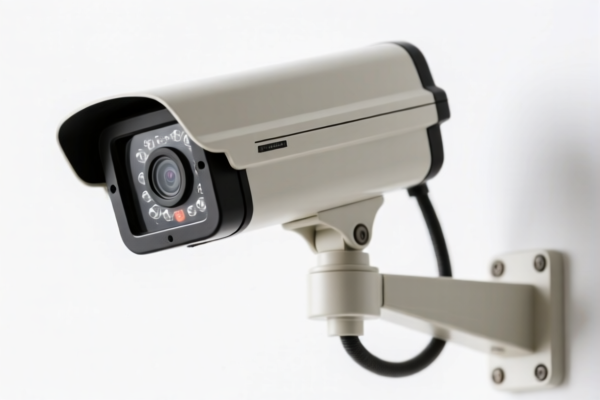


AI Analysis
🎥 IP Camera (Network Camera) – Ultimate HS Code & Duty Guide (2026 Edition)
🌐 HS Code Reference & Customs Clearance Strategy | 2026 Tax Law Breakdown | Professional Export Compliance
📌 I. Product Definition & Classification: What Exactly is an "IP Camera"?
An IP Camera is a digital video camera that sends and receives data via an IP network. Unlike analog CCTV cameras, it digitizes the video signal internally and transmits it over a LAN or the internet. In international trade, its classification is highly contentious because it straddles the line between: 1. Optical Instruments (Lenses/Sensors as components) → Chapter 90 2. Broadcasting/Recording Equipment (Video transmission function) → Chapter 85 3. Electronic Machinery (General-purpose processing) → Chapter 85
⚠️ Critical Distinction:
- Optical Focus: If the camera is treated purely as a lens/sensor assembly without broadcast function → HS Code 9013 (Lower Duty).
- Broadcast/Transmission Focus: If the camera is defined by its ability to capture and transmit video for monitoring/recording → HS Code 8525 (Higher Duty).
- General Machinery: If it has a unique, independent function not covered by optical or broadcast rules → HS Code 8543 (Highest Duty).
📦 II. HS Code Classification Matrix (2026 Latest Tariff Data)
| HS Code | Product Description | Key Classification Logic | Total Tax Rate |
|---|---|---|---|
9013.10.50.00 |
Optical Imaging Equipment | Treated as "Other Optical Appliances." Focuses on the lens/sensor assembly nature. | 22.8% |
8525.89.30.00 |
Video Capture Device | Classified under "Broadcasting or Television Transmission Equipment." Matches the function of TV cameras. | 35.0% |
9013.80.91.00 |
Other Optical Instruments | Falls under "Lasers & Other Optical Appliances." Specific sub-category for optical instruments not covered elsewhere. | 22.0% |
8525.89.50.50 |
Broadcast/Camera Equipment | Specifically for "Broadcasting/TV Transmission Equipment/Cameras." High precision in imaging capture. | 35.0% |
8543.70.98.60 |
Electronic Machinery | Treated as a "Machine with Independent Function." General purpose electronics not fitting optical/broadcast specific definitions. | 37.6% |
🔍 Critical Insight:
- The 35.0% and 37.6% rates apply to cameras deemed "Broadcasting/Transmission" or "Independent Machinery." - The 22.0% and 22.8% rates apply to cameras classified strictly under Optical Instruments. - Strategy: To minimize duty, arguments for Optical Classification (9013) are often pursued, but customs authorities frequently enforce Broadcast/Transmission (8525) based on the camera's primary function.
💰 III. Detailed 2026 Tariff Breakdown & Policy Analysis
✅ Applicable Region: United States (US)
✅ Origin: China (CN)
✅ 生效时间: Effective from November 2025 (including subsequent imports)
🎯 1. Optical Classifications (Lower Duty Tier)
A. 9013.10.50.00 – Other Optical Appliances
| Item | Detail |
|---|---|
| Base Duty | 5.3% |
| Section 301 (Additional) | +7.5% (Targeted US-China trade remedy) |
| Section 122 (Special) | +10% (Targeted Chinese Tech/Gov items) |
| Total Tax | 22.8% |
| Legal Path | Chapter 90 → 9013 → 9013.10 |
| Logic | Treated as a precision optical instrument; less emphasis on "video transmission." |
B. 9013.80.91.00 – Other Optical Instruments
| Item | Detail |
|---|---|
| Base Duty | 4.5% |
| Section 301 (Additional) | +7.5% |
| Section 122 (Special) | +10% |
| Total Tax | 22.0% |
| Legal Path | Chapter 90 → 9013.80 → 9013.80.91 |
| Logic | Fits "Other Optical Appliances/Lasers" category; often used for specialized sensing optics. |
🎯 2. Broadcasting & Independent Machinery Classifications (High Duty Tier)
A. 8525.89.30.00 & 8525.89.50.50 – TV Cameras / Broadcast Equipment
| Item | Detail |
|---|---|
| Base Duty | 0.0% (Free for general electronics) |
| Section 301 (Additional) | +25.0% (Heavy penalty on China Tech) |
| Section 122 (Special) | +10% |
| Total Tax | 35.0% |
| Legal Path | Chapter 85 → 8525 → 8525.89 |
| Logic | High Risk: Customs views IP cameras primarily as "Video Surveillance/Broadcasting" devices, triggering the highest 301 rates. |
B. 8543.70.98.60 – Independent Electronic Machinery
| Item | Detail |
|---|---|
| Base Duty | 2.6% |
| Section 301 (Additional) | +25.0% |
| Section 122 (Special) | +10% |
| Total Tax | 37.6% |
| Legal Path | Chapter 85 → 8543 → 8543.70 |
| Logic | Highest Risk: Applied if the camera is deemed a "General Machine" with no specific optical/broadcast sub-category fit. |
📌 Tax Warning:
- The Section 122 (10%) tax is a specific surcharge targeting Chinese technology products under the "Section 122" authority (often linked to national security concerns). - The Section 301 (25% or 7.5%) is the major driver of cost differences. - Optical (9013) classification saves ~13-15% compared to Broadcast (8525/8543).
🛠️ IV. Customs Clearance Operational Guide (Avoiding Pitfalls)
✅ 1. Required Documentation (The "Golden File")
| Document | Requirement | Why It Matters |
|---|---|---|
| Technical Datasheet | ✔️ Must include optical specs (Lens type, Focal length) & electronic specs (Processor, Sensor). | Proves if the primary function is optical imaging (9013) or data transmission (8525). |
| Circuit Diagram / Block Diagram | ✔️ Critical. | Shows if the "camera" is a sensor module (Optical) or a full processing unit (Machinery/Broadcast). |
| Product Photos (Labeled) | ✔️ Clear shots of lens, sensor, ports, and branding. | Customs officers visually inspect for "Broadcasting" features (antennas, Ethernet ports). |
| Function Description | ✔️ Detailed text: "Image capture for optical analysis" vs. "Video surveillance for security." | Wording is key. "Surveillance" triggers 8525. "Optical analysis" might lean toward 9013. |
| Commercial Invoice | ✔️ Must state "IP Camera" or "Network Camera" clearly. | Mislabeling as "Lens" or "Sensor" can lead to fraud accusations. |
✅ 2. Declaration Strategy (The "Winning Formula")
🔥 Formula: "Functional Analysis + Optical Priority"
| Scenario | Recommended HS Code | Duty Risk | Strategy |
|---|---|---|---|
| Standard Security Camera | 8525.89.30.00 |
35.0% | Accept: Hard to avoid. Market standard for surveillance. |
| Industrial Sensor Camera | 9013.80.91.00 |
22.0% | Argue: Emphasize "Machine Vision" or "Optical Measurement," not "Security/Surveillance." |
| Optical Module Only | 9013.10.50.00 |
22.8% | Argue: If sold as a lens/sensor assembly without housing/encoder, claim Optical status. |
| Smart IoT Device | 8543.70.98.60 |
37.6% | Avoid: Unless it has unique, non-standard logic. Best to avoid this "catch-all" high rate. |
💡 Pro Tip:
If the camera is used for industrial automation (e.g., counting parts, measuring dimensions) rather than security, argue for 9013.80.91.00 to save 13% in duties. Use phrases like "Machine Vision System" instead of "Security Camera."
🌍 V. Global Market Comparison (2026)
| Region | Recommended Code | Est. Duty (China) | Key Regulation |
|---|---|---|---|
| 🇺🇸 USA | 8525.89.30.00 |
35.0% | Strict enforcement of "Surveillance" as high-tech. |
| 🇨🇳 China | 8525.89.30.00 |
0% - 5% | No Section 122; low base duty. |
| 🇪🇺 EU | 8525.89.30.00 |
0% - 4% | No Section 122; CE Marking required. |
| 🇯🇵 Japan | 8525.89.30.00 |
0% - 3% | PSE Certification required. |
📌 Conclusion:
The US market is the most expensive due to Section 301 (25%) and Section 122 (10%) combined.
Optical Classification (9013) is the only viable way to reduce the effective duty to ~22%.
📌 VI. Common Errors & Risk Mitigation
❌ Error 1: Declaring as "Lens" or "Camera Module" when it is a full "IP Camera" unit.
👉 Consequence: Customs audit, seizure, or forced reclassification to 35.0%.
❌ Error 2: Failing to declare "Surveillance" function explicitly.
👉 Consequence: If the product is clearly a security camera, claiming "Optical Instrument" is considered fraud. Be honest but strategic in description.
❌ Error 3: Mixing "8543" (General Machinery) for standard cameras.
👉 Consequence: Highest duty (37.6%) with no legal justification.
✅ Best Practice:
For Security/Video: Declare
8525.89.30.00(Accept 35% duty).
For Industrial/Machine Vision: Declare9013.80.91.00(Argue 22% duty with technical proof).
🎯 VII. Final Verdict: Strategic Export Advice
🎯 Key Takeaway:
"If you sell Security Cameras, expect 35%. If you sell Machine Vision Sensors, fight for 22%."
✅ Action Plan:
1. Classify Strategically: Use 9013 only if the product is primarily an optical sensor/module for analysis, not a general video camera.
2. Pre-Ruling: Apply for a Binding Tariff Ruling (BTR) from US Customs to lock in the 9013 classification if applicable.
3. Documentation: Ensure the datasheet highlights "Optical Performance" over "Video Transmission" for industrial models.
✨ Expert Customs Clearance Starts with Precise Classification!
💼 Every 1% of duty saved is pure profit. Don't let classification errors eat your margins!
Customer Reviews
About HS Code Classification
The Harmonized System (HS) is an internationally standardized nomenclature developed by the World Customs Organization (WCO) to classify traded products. Over 200 countries use the HS system as the basis for customs tariffs, trade statistics, and import/export regulations.
Each HS code follows a hierarchical structure:
- Chapter (2 digits) — Broad category of goods (e.g., Chapter 84: Machinery and Mechanical Appliances)
- Heading (4 digits) — More specific grouping within the chapter
- Subheading (6 digits) — Internationally standardized breakdown, used by all WCO member countries
- National subdivisions (8-10 digits) — Country-specific extensions for further classification, such as US HTSUS 10-digit codes
Correct HS code classification is essential for smooth customs clearance, accurate duty payment, and compliance with trade regulations. Misclassification can lead to customs delays, overpayment of duties, or penalties.
When importing from CN to US, the applicable tariff rates may include:
- Most-Favored-Nation (MFN) rate — The standard duty rate applied to WTO members
- General rate — Applied to countries without trade agreements
- Trade remedy duties — Additional tariffs such as Section 301 (anti-dumping), Section 232 (national security), or countervailing duties
The information provided on this page is for reference purposes only. For official classification, please consult with your local customs authority or a licensed customs broker.