IPBC Preservative Anti settling Agent
CN → US| HS Code | Tariff Rate | Origin | Destination | Doc |
|---|---|---|---|---|
| 3809921000 | 41.5% | CN | US | Official Doc |
| 3809925000 | 41.0% | CN | US | Official Doc |
Product Images
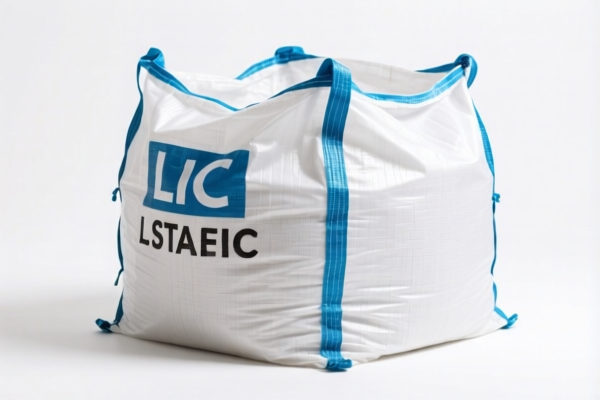
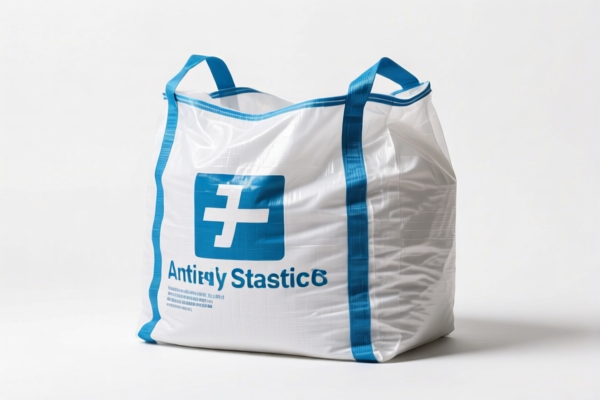
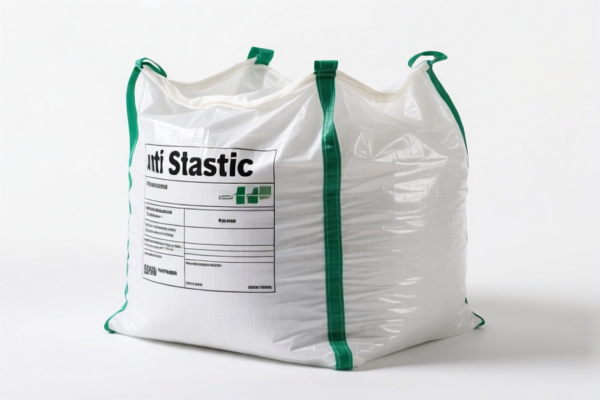
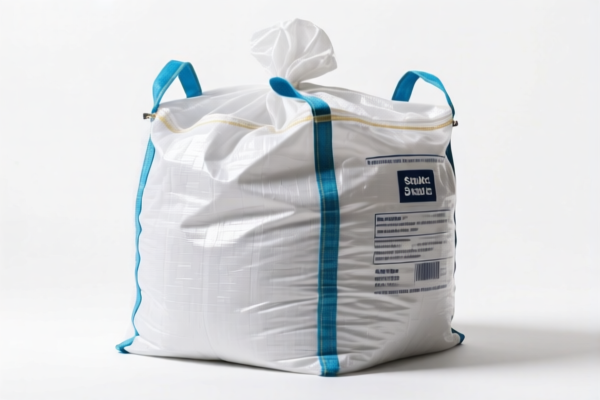
AI Analysis
🧪 IPBC Preservative & Anti-Settling Agent (Industrial Chemical Preparations)
🌐 HS Code Reference & Customs Clearance Guide | 2026 Latest Tariff Breakdown | Professional Entry Strategy
📌 I. Product Definition & Classification: Is It a Preservative, a Carrier, or Both?
IPBC (3-Iodo-2-Propynyl Butylcarbamate) is a broad-spectrum anti-fungal agent widely used in paints, coatings, and industrial fluids to prevent mold and algae growth. However, when imported into the US as a preparation (mix), its classification depends heavily on its primary function and chemical composition as defined in HS Code 3809.
In international trade, IPBC formulations are rarely classified as simple chemicals (Chapter 29). Instead, they are classified as "Finishing agents, dye carriers... or other products and preparations of a kind used in the textile, paper, leather or like industries."
Key Distinction: * IPBC as a "Finisher/Preparation": If the IPBC is mixed with other carriers, solvents, or additives specifically to accelerate fixing or act as a finish in industrial processes (like paper sizing or textile dyeing auxiliaries), it falls under 3809. * IPBC as a Simple Fungicide: If it is a pure fungicide preparation not specifically tied to textile/paper finishing processes, it might fall elsewhere (e.g., 3808). However, the provided Data explicitly links it to 3809.92 (Paper-like industries), implying the import is declared as a finishing agent/carrier for the paper or similar industry.
⚠️ Critical Classification Point:
- If the product is declared as a "Finishing Agent" or "Dye Carrier" for the Paper Industry, use 3809.92.
- The tax rate depends entirely on whether it contains ≥5% aromatic substances.
📦 II. HS Code Classification Details (2026 Latest Tariff Authority)
Based on the provided DATA, the product is classified under two subheadings of 3809.92. The divergence is based on chemical composition.
| HS Code | Product Description | Applicable Scenario | Aromatic Content |
|---|---|---|---|
3809.92.10.00 |
Finishing agents, dye carriers... of a kind used in the paper or like industries: Containing 5% or more by weight of one or more aromatic or modified aromatic substances | IPBC carriers with high aromatic solvents/resins (e.g., based on xylene, toluene derivatives) | ✅ ≥ 5% |
3809.92.50.00 |
Finishing agents, dye carriers... of a kind used in the paper or like industries: Other | IPBC carriers without significant aromatic content (e.g., water-based, aliphatic solvents) | ❌ < 5% |
🔍 Focus Reminder:
- Both codes fall under 3809.92 (Finishing agents for paper/like industries).
- Code .10 has a 31.5% total tax burden.
- Code .50 has a 31.0% total tax burden.
- Do not mix these up. Customs will inspect the Safety Data Sheet (SDS) to verify aromatic content.
💰 III. 2026 Latest Tariff Rate Breakdown (Including Additional Duties)
✅ Applicable Country: United States (US)
✅ Origin: China (CN) (Assumed based on "Additional Tariff" context in typical trade scenarios; verify origin)
✅ Effective Time: 2025/2026 Regime
🎯 1. 3809.92.10.00 — Containing ≥ 5% Aromatic Substances
| Item | Content |
|---|---|
| Base Tariff Rate | 6.5% (Standard MFN Rate) |
| Additional Tariff (Section 301) | +25.0% (Retaliatory/Add-on Tariff) |
| Total Tax Burden | 31.5% |
| Tax Calculation | CIF Value × 31.5% |
| De Minimis Exemption | ❌ NOT Eligible (Section 301 tariffs do not apply to de minimis, but high-value commercial shipments are affected; small parcels may still face scrutiny) |
| Legal Basis Path | HTSUS: 3809.92.10.00 → USITC Footnote: Section 301 List 3/4 |
📌 Explanation:
- The 6.5% is the standard US import duty for this chemical preparation.
- The 25.0% is the additional tariff imposed on Chinese goods under Section 301 of the Trade Act of 1974.
- Total: 31.5%. This is a high-cost classification.
- Risk: If the aromatic content is misdeclared as <5% to get the 31.0% rate, but analysis shows ≥5%, you face penalties for misclassification.
🎯 2. 3809.92.50.00 — Other (Arbitrary Content < 5%)
| Item | Content |
|---|---|
| Base Tariff Rate | 6.0% (Standard MFN Rate) |
| Additional Tariff (Section 301) | +25.0% (Retaliatory/Add-on Tariff) |
| Total Tax Burden | 31.0% |
| Tax Calculation | CIF Value × 31.0% |
| De Minimis Exemption | ❌ NOT Eligible |
| Legal Basis Path | HTSUS: 3809.92.50.00 → USITC Footnote: Section 301 List 3/4 |
📌 Note:
- The 6.0% base rate is slightly lower than .10.
- The 25.0% additional tariff remains the same.
- Total: 31.0%.
- Savings: Only 0.5% difference compared to .10. Do not risk misclassification for this small saving.
🛠️ IV. Customs Clearance Practical Advice (Real-World Pitfall Guide)
✅ 1. Document Checklist (Non-Negotiable)
| Document | Required? | Explanation |
|---|---|---|
| ✅ Safety Data Sheet (SDS) | ✔️ CRITICAL | Must explicitly list aromatic compounds and their exact percentages. Customs will use this to determine if .10 or .50 applies. |
| ✅ Formula/Composition Declaration | ✔️ | Detailed breakdown of all ingredients by weight. |
| ✅ Product Specification Sheet | ✔️ | Confirm use case: "Finishing agent for paper" or "Dye carrier." If used as a general pesticide, 3809 may be rejected. |
| ✅ Commercial Invoice | ✔️ | Clearly state "IPBC Preservative Preparation" and correct HS Code. |
| ✅ Bill of Lading / Packing List | ✔️ | Ensure weight/volume matches SDS. |
| ✅ FDA/Agency Notifications | ⚠️ Check | If used in food-contact paper or drinking water systems, additional EPA/FDA approvals may be needed. |
✅ 2. Classification Strategy (Key Mantra)
🔥 “Match the Solvent, Check the Aromatics, Declare the Use.”
| Scenario | Correct HS Code | Why? |
|---|---|---|
| IPBC in Xylene/Toluene-Based Solvent | 3809.92.10.00 |
Aromatic content likely ≥ 5%. High risk, high tax. |
| IPBC in Water/Aliphatic Solvent | 3809.92.50.00 |
Aromatic content < 5%. Lower base tax. |
| IPBC as a Pure Fungicide (No Dye Carrier) | NOT 3809 | If not a finishing agent/dye carrier, it may be 3808.93 (Insecticides/Rodenticides). Check 3808! |
| IPBC in Textile Dyeing Auxiliaries | 3809.91 (Textile) |
If used in textile, not paper, different subheading. |
📌 Warning:
- Do not declare as "Chemical Substance" if it is a preparation.
- Do not ignore the aromatic content. Customs labs can test for benzene/toluene derivatives.
- Use Case Matters: If the primary use is not finishing/dyeing for paper/textile, 3809 is incorrect. It might be 3808.93 (Fungicides). Check 3808 tax rates separately.
✅ 3. Special Situations
| Situation | Handling Advice |
|---|---|
| Mixed Shipment (Textile + Paper) | Separate by HS Code. Textile uses 3809.91, Paper uses 3809.92. |
| Low Concentration IPBC (< 1%) | May still be 3809 if the preparation is of a kind used in the industry. Focus on the function of the mixture. |
| EPA Registration Needed | If the product makes antifungal claims, ensure it is EPA-registered for the intended use in the US. Non-compliance leads to seizure. |
🌍 V. Global Market Comparison (2026 Snapshot)
| Country/Region | Recommended HS Code | Tariff (Approx.) | Key Requirement |
|---|---|---|---|
| 🇺🇸 USA | 3809.92.10.00 / .50 |
31.0% - 31.5% | Section 301 Tariff Applies. EPA Compliance. |
| 🇨🇳 China | 3809.92.10.00 |
~6.5% | Import License for Hazardous Chemicals. |
| 🇪🇺 EU | 3809.92 |
~6.5% | REACH Registration Required. |
| 🇬🇧 UK | 3809.92 |
~6.5% | UK REACH Registration. |
| 🇯🇵 Japan | 3809.92 |
~6.0% | Prudent Management of Industrial Safety. |
📌 Conclusion:
- USA is the most expensive due to Section 301 Add-on Tariffs (25%).
- EU/UK require strict chemical safety registrations (REACH) but no additional punitive tariffs.
- Always verify EPA/FDA regulations for IPBC, as it is a regulated biocide.
📌 VI. Common Mistakes & Pitfalls (Lessons Learned)
❌ Mistake 1: Declaring IPBC as "General Chemical" (e.g., 2933)
👉 Consequence: Customs rejects because IPBC preparations for industrial use are specifically listed in Chapter 38. Delay + Inspection.
❌ Mistake 2: Ignoring Aromatic Content
👉 Consequence: If declared as <5% (3809.92.50) but contains 6% xylene, Customs will reclassify to 3809.92.10 and charge back taxes + penalties.
❌ Mistake 3: Using "Preservative" as the Only Description
👉 Consequence: Customs may classify under 3808 (Pesticides) instead of 3809 (Finishing Agents). Check if it fits 3808 better. 3808 rates differ.
❌ Mistake 4: Not Providing SDS
👉 Consequence: Holds for Lab Testing. Clearance delay of 2-4 weeks.
✅ Correct Approach:
“IPBC Anti-Fungal Finishing Agent for Paper Industry, Containing 2% IPBC, 4% Aromatic Solvent, Water-Based Dispersion. Epa Registered.”
🎯 VII. Conclusion: Precision in Chemical Classification Saves Money!
🎯 Remember the Mantra:
🔹 “Aromatics ≥ 5%? Use .10. Less than 5%? Use .50.”
🔹 “Finishing Agent? 3809. General Fungicide? Check 3808.”
🔹 “25% Add-on Tax is Inevitable for China Origin. Minimize Base Tax by Correct Classification.”
📌 Pro Tip:
- If your IPBC product is used in textiles, use 3809.91 series.
- If used in paper, use 3809.92 series.
- Always confirm the primary function with your chemical supplier’s SDS.
📣 Immediate Action:
📞 Contact Customs Broker with full SDS.
📝 Request HS Code Pre-Ruling from US CBP if shipment value is high.
🚀 Ensure EPA Registration is valid before shipment to avoid seizure.
✨ Professional Clearance Starts with Accurate Classification!
💼 Every Percentage Point of Tax Matters in Chemical Trade!
Customer Reviews
About HS Code Classification
The Harmonized System (HS) is an internationally standardized nomenclature developed by the World Customs Organization (WCO) to classify traded products. Over 200 countries use the HS system as the basis for customs tariffs, trade statistics, and import/export regulations.
Each HS code follows a hierarchical structure:
- Chapter (2 digits) — Broad category of goods (e.g., Chapter 84: Machinery and Mechanical Appliances)
- Heading (4 digits) — More specific grouping within the chapter
- Subheading (6 digits) — Internationally standardized breakdown, used by all WCO member countries
- National subdivisions (8-10 digits) — Country-specific extensions for further classification, such as US HTSUS 10-digit codes
Correct HS code classification is essential for smooth customs clearance, accurate duty payment, and compliance with trade regulations. Misclassification can lead to customs delays, overpayment of duties, or penalties.
When importing from CN to US, the applicable tariff rates may include:
- Most-Favored-Nation (MFN) rate — The standard duty rate applied to WTO members
- General rate — Applied to countries without trade agreements
- Trade remedy duties — Additional tariffs such as Section 301 (anti-dumping), Section 232 (national security), or countervailing duties
The information provided on this page is for reference purposes only. For official classification, please consult with your local customs authority or a licensed customs broker.