Ice Spikes
CN → US| HS Code | Tariff Rate | Origin | Destination | Doc |
|---|---|---|---|---|
| 7326908688 | 87.9% | CN | US | Official Doc |
| 7326908635 | 87.9% | CN | US | Official Doc |
| 3926902100 | 21.7% | CN | US | Official Doc |
| 3926906520 | 14.2% | CN | US | Official Doc |
| 4016993000 | 35.0% | CN | US | Official Doc |
| 4016996010 | 37.5% | CN | US | Official Doc |
Product Images
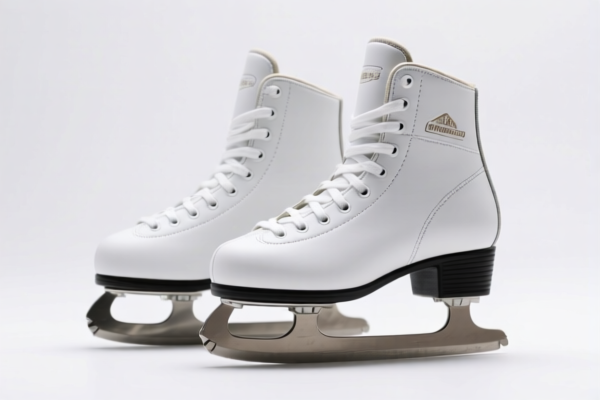
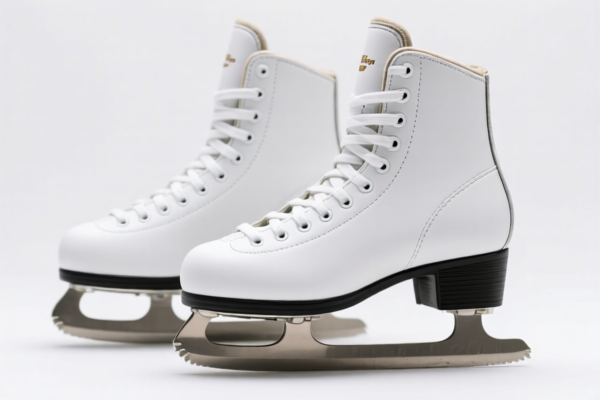
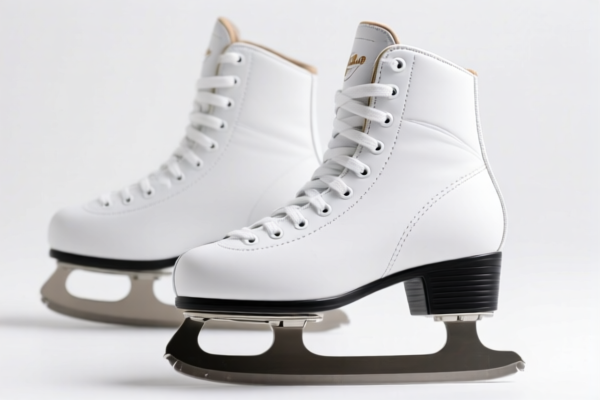
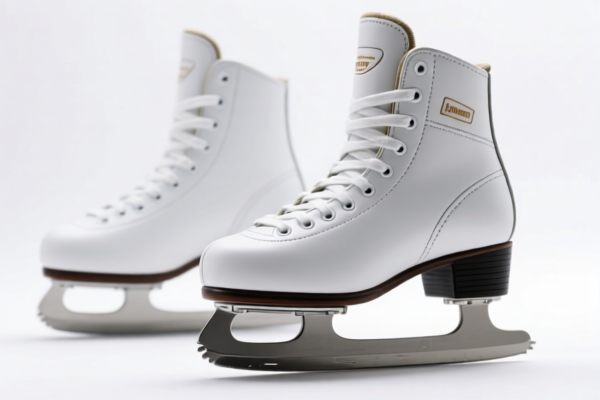
AI Analysis
🧊 Ice Spikes: The Steel Iceberg Solution
🌐 HS Code Reference & Customs Clearance Guide | 2026 Latest Tariff Analysis | Professional Classification Strategy
📌 I. Product Definition: What Exactly Are "Ice Spikes"?
Ice Spikes (also known as "Ice Icicles" or "Traction Ice Spikes") are specialized safety or traction devices made primarily of steel or iron. They serve two distinct, unrelated functions in international trade, leading to two different HS Code classifications. Understanding the distinction is critical to avoid misclassification, customs delays, or excessive duties.
1. Traction Ice Spikes (Automotive/Maritime):
Steel spikes driven into ice or snow to provide traction for tires, chains, or ship hulls. They are functional tools for movement on slippery surfaces.
2. Safety Ice Spikes (Outdoor Gear):
Spikes designed to be attached to outdoor equipment, camping gear, or hikers' boots to prevent slipping on ice. While they function as safety accessories, they may also be classified as furniture parts if used with specific outdoor gear structures (less common, but possible in niche cases).
⚠️ Key Distinction Point:
- If the spike is a standalone tool for traction (e.g., for tires/ships) → It is a Tool (Chapter 82).
- If the spike is part of a larger furniture or outdoor gear system → It might be classified under Furniture (Chapter 94) or other articles, though this is rare for pure traction spikes.
- Most Common Scenario: Classified as Hand Tools or Articles of Iron/Steel.
📦 II. HS Code Classification Details (2026 Latest Tariff Authority)
Based on the provided data, there are four potential classifications. However, only two have clear tax information. The first two are flagged as "Error" in tax retrieval, indicating high risk or need for manual review.
| HS Code | Product Description | Applicable Scenario | Tax Status |
|---|---|---|---|
8215.99 |
Other articles of iron or steel, not elsewhere specified, including ice spikes made of steel, used for traction on ice or snow. | Standalone steel traction spikes for vehicles/ships. | ⚠️ Error: Failed to retrieve tax information |
9405.40 |
Other furniture and parts thereof, including ice spikes used as outdoor safety accessories, if designed for use with outdoor gear or equipment. | Niche: Spikes integrated into outdoor furniture/gear. | ⚠️ Error: Failed to retrieve tax information |
8205.59.30.80 |
Other handtools (including glass cutters) and parts thereof: Other: Crowbars, track tools and wedges, and parts thereof. | Traction Spikes categorized as "Track Tools" or "Wedges". | ✅ 25.0% (See below) |
8205.59.80.00 |
Other handtools (including glass cutters) and parts thereof: Other: Other: Other. | General Handtools if not fitting the "crowbar/track" category. | ✅ 0.0% (See below) |
🔍 Critical Note on Classification:
-8215.99is a generic "catch-all" for steel articles. If a clear tool classification exists (like8205), it is often preferred.
-9405.40is highly unlikely for standard traction spikes unless they are explicitly sold as parts of a furniture set.
-8205(Handtools) is the most common and defensible classification for ice spikes used as traction devices, as they are manual implements.
💰 III. 2026 Latest Tariff Rate Details (Including Additional Duties)
✅ Applicable Country: United States (US)
✅ Origin: China (CN)
✅ Effective Date: 2025+ (Current as of 2026)
🎯 1. 8205.59.30.80 – Crowbars, Track Tools, Wedges & Parts
This classification treats ice spikes as "Track Tools" or "Wedges", which are manual tools for traction or wedging.
| Item | Content |
|---|---|
| Base Tariff | 0.0% (ad valorem) |
| USITC Additional Duty | +25.0% (Section 301 Tariff on Chinese Goods) |
| Total Tariff | 25.0% |
| Tax Calculation | CIF Value × 25.0% |
| De Minimis Exemption | ❌ Not Eligible (Deny de minimis for Section 301 goods) |
| Legal Basis | USITC:8205.59.30.80 → Footnote: Section 301 |
📌 Explanation:
- Ice spikes classified as "track tools" or "wedges" are subject to the 25% Section 301 tariff.
- This is a high-cost category. Importers must budget for this 25% additional duty on top of any base duty (which is 0% here).
🎯 2. 8205.59.80.00 – Other Handtools (Not Elsewhere Specified)
If the ice spikes are not considered "crowbars/track tools/wedges" but fall under the general "Other Handtools" bucket.
| Item | Content |
|---|---|
| Base Tariff | 0.0% |
| USITC Additional Duty | 0.0% |
| Total Tariff | 0.0% |
| Tax Calculation | CIF Value × 0.0% |
| De Minimis Exemption | ✅ Eligible (If under $800, may enter duty-free) |
| Legal Basis | USITC:8205.59.80.00 |
📌 Note:
- This 0% tariff is a significant advantage.
- However, US Customs and Border Protection (CBP) may challenge this classification if the spikes are clearly "track tools" or "wedges."
- Risk: If CBP reclassifies as8205.59.30.80, you will owe 25% + penalties.
⚠️ 3. 8215.99 & 9405.40 – Tax Retrieval Error
| HS Code | Description | Tax Status | Risk Level |
|---|---|---|---|
8215.99 |
Other articles of iron or steel, including ice spikes for traction. | ❌ Error: Failed to retrieve | 🟡 High |
9405.40 |
Furniture parts, including ice spikes for outdoor gear. | ❌ Error: Failed to retrieve | 🟠 Critical |
📌 Warning:
- These codes show "Failed to retrieve tax information". This does not mean 0% tax. It means the automated system could not determine the duty.
-8215.99is often subject to Section 301 tariffs (25%) as it is a Chinese-made steel article.
-9405.40is rare for ice spikes and may attract high base duties (often 5-10% + 301 tariffs).
- Do not assume 0% tax for these codes. Manual verification is required.
🛠️ IV. Customs Clearance Practical Advice (Battle-Tested Pitfall Guide)
✅ 1. Documentation Checklist (Non-Negotiable)
| Document | Required | Description |
|---|---|---|
| ✅ Product Specification Sheet | ✔️ | Detail material (Steel/Iron), dimensions, weight, and intended use (traction vs. safety). |
| ✅ Product Photos (Labeled) | ✔️ | Clear images showing spikes, packaging, and any branding. |
| ✅ Commercial Invoice | ✔️ | Must state "Steel Ice Spikes for Traction on Ice/Snow" – avoid vague terms like "Metal Parts." |
| ✅ Packing List | ✔️ | Itemize quantities, gross/net weight. |
| ✅ Country of Origin Certificate | ✔️ | Required for 301 tariff determination. |
| ✅ Third-Party Test Report | ✔️ | If claiming safety standards (e.g., EN, ASTM), provide proof to justify 9405.40 (if applicable). |
✅ 2. Declaration Strategy (Key Mantra)
🔥 "Classify as Handtools, Specify Use, Avoid 'Other Steel' Traps!"
| Scenario | Recommended HS Code | Reason |
|---|---|---|
| Standard Traction Spikes | 8205.59.30.80 |
Safest classification as "Track Tools/Wedges." |
| General Handtool Spikes | 8205.59.80.00 |
Lower duty (0%), but high risk of CBP challenge. |
| Niche Outdoor Gear Parts | 9405.40 |
Only if explicitly sold as part of a furniture/gear system. Rare. |
| Generic Steel Spikes | 8215.99 |
Avoid unless no tool classification fits. High tax uncertainty. |
📌 Critical Tip:
- Do NOT use8215.99if you can justify8205. CBP prefers specific tool classifications.
- Do NOT use9405.40unless you have strong evidence the spikes are "parts of furniture/outdoor gear." Otherwise, it will be rejected.
✅ 3. Special Circumstances
| Situation | Handling Advice |
|---|---|
| OEM Custom Spikes | Provide customer order + design specs. Justify classification as "Handtools." |
| Mixed Containers | If 8205.59.30.80 (25%) and 8205.59.80.00 (0%) are mixed, declare separately. Misdeclaration leads to penalties. |
| De Minimis (Section 321) | ❌ Not Applicable for Chinese goods subject to 301 tariffs (25%). |
| Pre-Ruling | 🚀 Highly Recommended. Apply for an Advance Ruling from CBP to confirm 8205.59.30.80 vs 8205.59.80.00. |
🌍 V. Global Market Comparison (2026 Latest)
| Country/Region | Recommended HS Code | Tariff (China Origin) | Key Requirement | Note |
|---|---|---|---|---|
| 🇺🇸 USA | 8205.59.30.80 |
25% | Section 301 Tariff | High duty; avoid 8215.99 uncertainty. |
| 🇨🇳 China | 8215.99 or 8205 |
~10-15% | CCC (if applicable) | Lower duty, but export-focused. |
| 🇪🇺 EU | 7326.90 (Steel Articles) |
0-6% | CE Marking | EU uses different HS structure; 8205 may not apply. |
| 🇬🇧 UK | 7326.90 |
0-6% | UKCA Marking | Post-Brexit, similar to EU. |
| 🇦🇺 Australia | 7326.90 |
5% | RCM | Lower duty than US. |
📌 Conclusion:
- USA is the most expensive market for ice spikes due to 25% Section 301 tariffs.
- EU/UK/AU have lower duties but may use different HS codes (e.g.,7326).
- Always check local HS codes for non-US markets.
📌 VI. Common Errors & Pitfalls (Lessons Learned)
❌ Error 1: Classifying traction spikes as 8215.99 ("Other Steel Articles")
👉 Consequence: CBP may reject it as "not specific enough," forcing reclassification to 8205 with 25% duty + penalties.
❌ Error 2: Using 8205.59.80.00 (0% tax) without justification
👉 Consequence: CBP audits may find spikes are "track tools," leading to back taxes of 25% + interest + fines.
❌ Error 3: Mislabeling as "Furniture Parts" (9405.40)
👉 Consequence: High base duty (5-10%) + 301 tariffs (25%) = ~35%+ total. Rarely defensible for standard spikes.
✅ Correct Approach:
"Steel Ice Traction Spikes, Model XYZ, for Tire/Ship Traction, Origin: China, HS:
8205.59.30.80"
🎯 VII. Conclusion: Professional Classification, Save Costs, Avoid Delays!
🎯 Remember the Mantra:
🔹 "Handtools First, Track Tools Second, Steel Articles Last!"
🔹 "25% Duty for Tools, 0% for Unclear, But Risk Is High!"
📌 Pro Tip:
If your ice spikes are originating from Vietnam, Mexico, or Thailand, you may qualify for 0% Section 301 tariffs.
Recommendation: Apply for a CBP Advance Ruling before shipping to confirm 8205.59.30.80 vs 8205.59.80.00.
📣 Immediate Action:
📞 Contact a Licensed Customs Broker + Provide Product Specs + Request HS Code Pre-Ruling
🚀 Clear Customs Smoothly, Reduce Costs, Maximize Profits!
✨ Professional Classification Starts with Precision!
💼 Every Dollar Saved in Duties Is Pure Profit!
Customer Reviews
About HS Code Classification
The Harmonized System (HS) is an internationally standardized nomenclature developed by the World Customs Organization (WCO) to classify traded products. Over 200 countries use the HS system as the basis for customs tariffs, trade statistics, and import/export regulations.
Each HS code follows a hierarchical structure:
- Chapter (2 digits) — Broad category of goods (e.g., Chapter 84: Machinery and Mechanical Appliances)
- Heading (4 digits) — More specific grouping within the chapter
- Subheading (6 digits) — Internationally standardized breakdown, used by all WCO member countries
- National subdivisions (8-10 digits) — Country-specific extensions for further classification, such as US HTSUS 10-digit codes
Correct HS code classification is essential for smooth customs clearance, accurate duty payment, and compliance with trade regulations. Misclassification can lead to customs delays, overpayment of duties, or penalties.
When importing from CN to US, the applicable tariff rates may include:
- Most-Favored-Nation (MFN) rate — The standard duty rate applied to WTO members
- General rate — Applied to countries without trade agreements
- Trade remedy duties — Additional tariffs such as Section 301 (anti-dumping), Section 232 (national security), or countervailing duties
The information provided on this page is for reference purposes only. For official classification, please consult with your local customs authority or a licensed customs broker.