Identity Recognition Label
CN → US| HS Code | Tariff Rate | Origin | Destination | Doc |
|---|---|---|---|---|
| 4821902000 | 35.0% | CN | US | Official Doc |
| 4821104000 | 35.0% | CN | US | Official Doc |
| 4821104000 | 35.0% | CN | US | Official Doc |
Product Images
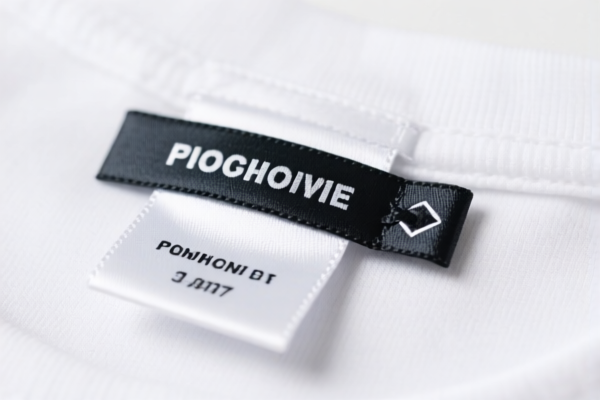
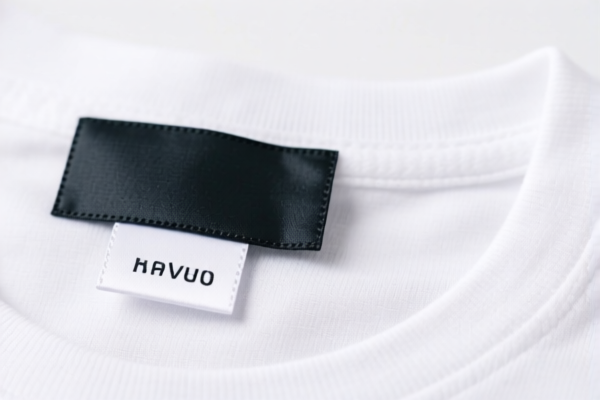
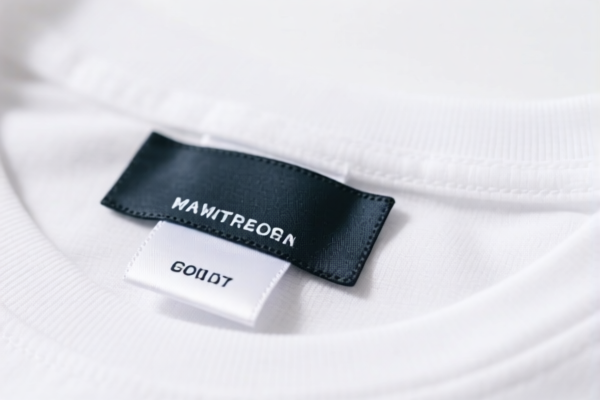

AI Analysis
🏷️ Identity Recognition Label (身份识别标签)
🌐 HS Code Reference & Clearance Guide | 2026 Latest Tariff Structure | Strategic Customs Strategy
📌 I. Product Definition & Classification: Do You Really Understand "Identity Recognition Labels"?
Identity Recognition Labels are specialized marking materials used to identify, track, and authenticate products, assets, or information. In international trade, the classification heavily depends on the material composition and printing status. Since the provided data specifies "paper or cardboard" and "printed," these fall squarely under Chapter 48 (Paper and Paperboard).
⚠️ Key Distinction:
- If the label is printed on paper/cardboard → Classified under 4821 (Paper labels); - If the label is self-adhesive → Still classified under 4821 (Paper labels) if material is paper; - If made of plastic/film → Would fall under Chapter 39 or 49, NOT the codes below.
📦 II. HS Code Classification Details (2026 Latest Tariff Authority Reference)
Based on the provided data, there are two primary HS Codes with distinct logical justifications. Both result in the same total tax rate, but the customs logic differs slightly.
| HS Code | Product Description | Logical Basis for Classification | Total Tax Rate |
|---|---|---|---|
4821.10.40.00 |
Identity Recognition Labels (Printed) | Direct Match: Paper/Cardboard material + Printed. Fits the "Printed Labels" category directly. | 35.0% |
4821.90.20.00 |
Identity Recognition Labels (Self-Adhesive/Inferred) | Inference: Assumed paper material based on common sense for ID labels. Falls under "Self-adhesive paper labels." | 35.0% |
🔍 Critical Insight:
-4821.10.40.00is the most direct and accurate classification if the label is explicitly printed on paper/cardboard. It covers "Printed labels." -4821.90.20.00is a fallback/inferred classification, useful if the label is self-adhesive but the material is reasonably inferred to be paper. It covers "Other paper labels." - Both codes share the same tax burden, so the choice depends on how you describe the physical form (printed sheet vs. self-adhesive roll).
💰 III. 2026 Latest Tariff Rate Breakdown (Including Additional Taxes)
✅ Applicable Country: United States (US)
✅ Country of Origin: China (CN)
✅ Effective Date: 2025 November 10 onwards (including subsequent imports)
🎯 1. 4821.10.40.00 & 4821.90.20.00 — Paper Labels (Printed/Self-Adhesive)
| Item | Content |
|---|---|
| Base Tariff | 0% (ad valorem) |
| Section 301 Tariff (USITC) | +25% (Additional duty on Chinese goods) |
| Section 122 Tariff (IEEPA) | +10% (Additional duty targeting specific Chinese goods) |
| Total Effective Tax Rate | 35.0% |
| Tax Calculation | CIF Value × 35% |
| De Minimis Exemption Eligible? | ❌ No (deny_de_minimis) — Small packages do NOT bypass this tariff. |
| Legal Basis Path | Section 301: 9903.88.01 → Section 122: 9903.01.25 → HS Code: 4821.xx.xx |
📌 Detailed Explanation:
- "Base Tariff 0%": Paper labels are generally low-tariff items under normal trade terms. - "Section 301 Tariff +25%": This is the major trade war tariff applied to many Chinese manufactured goods, including paper products. - "Section 122 Tariff +10%": A specific additional duty under the International Emergency Economic Powers Act (IEEPA), further increasing the cost for Chinese-origin labels. - Total 35%: This is a significant cost. For high-volume, low-margin labels, this can erode profits substantially.
🛠️ IV. Clearance Practical Advice (Real-World Pitfall Avoidance Guide)
✅ 1. Required Documentation Checklist (Non-Negotiable)
| Document | Must Provide | Description |
|---|---|---|
| ✅ Product Specification Sheet | ✔️ | Must clearly state: Material: Paper/Cardboard, Print Type: Offset/Digital, Usage: Identity/Label |
| ✅ Sample Image | ✔️ | Clear photo showing the label, its adhesive backing (if any), and printed content |
| ✅ Commercial Invoice | ✔️ | Must declare: "Identity Recognition Labels, Paper, Printed" — Do NOT use generic terms like "Stickers" |
| ✅ Packing List | ✔️ | Detail quantity, weight, and dimensions. Ensure no mixed materials (e.g., plastic parts) |
| ✅ Country of Origin Certificate | ✔️ | Proves Chinese origin, triggering the 35% tariff |
⚠️ Warning:
- If the label has plastic film backing or metallic foil, it may NOT qualify for4821and could fall under a higher-tariff category (e.g., Chapter 39 or 49). Stick to pure paper/cardboard for these codes.
✅ 2. Declaration Tips (Key Mantra)
🔥 “Paper is Key, Printed is Clear, Avoid Plastic, Stay in 4821!”
| Scenario | Correct Declaration | Wrong Practice |
|---|---|---|
| Label is paper + printed | 4821.10.40.00 |
Calling it "Sticker" → Risk of reclassification |
| Label is self-adhesive paper | 4821.90.20.00 |
Calling it "Plastic Label" → Wrong Chapter (39) |
| Label has non-paper elements | ❌ Not Eligible for these codes | Mixing materials → Higher tax or detention |
| Generic "Sticker" | ❌ Ambiguous | Leads to customs delay, inspection, and potential penalties |
✅ 3. Special Circumstances Handling
| Situation | Handling Advice |
|---|---|
| OEM Custom Labels | Provide design files + client order to prove "Identity Recognition" purpose |
| Bulk Rolls vs. Sheets | Declare accurately. Rolls may require additional specs on core size |
| Smart/RFID Tags | ⚠️ CAUTION: If it contains an electronic chip, it FAILS under 4821. It may fall under 8523 (ICs) or 8543 (Electric machines), which have different tax structures. Purely paper labels only! |
| High-Value Luxury Goods | Ensure the label value is declared correctly; undervaluation risks penalties |
🌍 V. Global Market Clearance Comparison (2026 Latest)
| Country/Region | Recommended HS Code | Tariff (China Origin) | Certification/Remarks |
|---|---|---|---|
| 🇺🇸 USA | 4821.10.40.00 / 4821.90.20.00 |
35% (0% + 25% + 10%) | No de minimis. High tariff. Must prove paper content. |
| 🇨🇳 China | 4821.10.40.00 |
~5% (Import into China) | Standard paper product tariff. No major restrictions. |
| 🇪🇺 EU | 4821.10.00.00 |
0% (Under GSP/Tariff Quotas) | CE/FSC certification may be required for eco-compliance. |
| 🇬🇧 UK | 4821.10.00.00 |
0% | Post-Brexit rules apply. Paper labels generally low-tariff. |
| 🇨🇦 Canada | 4821.10.40.00 |
0% | FTA benefits may apply if origin is verified. |
📌 Conclusion:
- USA is the ONLY market with the 35% punitive tariff on these specific Chinese paper labels. - EU, UK, Canada, and Asia have 0% or low tariffs, making them more attractive for exporting these goods if the end market is not the US.
📌 VI. Common Errors & Pitfall Guide (Blood-Learnings)
❌ Mistake 1: Calling "Paper Label" as "Sticker" without material specification
👉 Consequence: Customs may suspect plastic content → Re-classification → Delays & Inspections
❌ Mistake 2: Mixing paper labels with plastic tags in one shipment
👉 Consequence: The entire shipment may be inspected → Partial reclassification → Higher tax on plastic parts → Penalties
❌ Mistake 3: Ignoring the "Printed" aspect
👉 Consequence: If unprinted paper strips are declared as labels, they may be classified as "Paper for Technical Use" → Different HS Code → Audit Trigger
❌ Mistake 4: Assuming "De Minimis" (Under $800) applies to the US
👉 Consequence: WRONG! Section 301 and 122 tariffs do NOT have de minimis exemption. Even small packages pay 35%.
✅ Correct Approach:
"Paper-Based Identity Recognition Labels, Printed, Self-Adhesive (or Sheet), Model XYZ, 100% Paper Content, Origin: China"
🎯 VII. Conclusion: Precision Classification Saves Money!
🎯 Remember the Mantra:
🔹 "Paper is King, Print is Key, 35% US Tax is the Deal, Plastic is the Kill!"
🔹 "HS Code 4821, Tariff 35%, No De Minimis, Declare Clearly!"
📌 Pro Tip:
- If you are exporting to the USA, consider transshipment or third-country assembly (e.g., Vietnam, Mexico) if possible, to avoid the 35% combined tariff.
- For EU/UK/Canada, these labels are tariff-free or low-tariff, making them competitive.
- Pre-ruling: Apply for a Binding Tariff Information (BTI) or US Customs Ruling before large shipments to confirm the 35% rate and acceptable declaration wording.
📣 Immediate Action:
📞 Consult a licensed customs broker + Provide material specs + Verify "Paper-Only" content
🚀 Ensure smooth clearance, avoid 35% surprise costs, and keep your supply chain resilient!
✨ Professional Clearance Starts with Accurate Classification!
💼 Every percentage point of tax matters — get it right!
Customer Reviews
About HS Code Classification
The Harmonized System (HS) is an internationally standardized nomenclature developed by the World Customs Organization (WCO) to classify traded products. Over 200 countries use the HS system as the basis for customs tariffs, trade statistics, and import/export regulations.
Each HS code follows a hierarchical structure:
- Chapter (2 digits) — Broad category of goods (e.g., Chapter 84: Machinery and Mechanical Appliances)
- Heading (4 digits) — More specific grouping within the chapter
- Subheading (6 digits) — Internationally standardized breakdown, used by all WCO member countries
- National subdivisions (8-10 digits) — Country-specific extensions for further classification, such as US HTSUS 10-digit codes
Correct HS code classification is essential for smooth customs clearance, accurate duty payment, and compliance with trade regulations. Misclassification can lead to customs delays, overpayment of duties, or penalties.
When importing from CN to US, the applicable tariff rates may include:
- Most-Favored-Nation (MFN) rate — The standard duty rate applied to WTO members
- General rate — Applied to countries without trade agreements
- Trade remedy duties — Additional tariffs such as Section 301 (anti-dumping), Section 232 (national security), or countervailing duties
The information provided on this page is for reference purposes only. For official classification, please consult with your local customs authority or a licensed customs broker.