Imitation Pearl
CN → US| HS Code | Tariff Rate | Origin | Destination | Doc |
|---|---|---|---|---|
| 7117909000 | 28.5% | CN | US | Official Doc |
| 7116205000 | 17.5% | CN | US | Official Doc |
| 7113115000 | 22.5% | CN | US | Official Doc |
| 7113205000 | 22.7% | CN | US | Official Doc |
| 7117909000 | 28.5% | CN | US | Official Doc |
Product Images
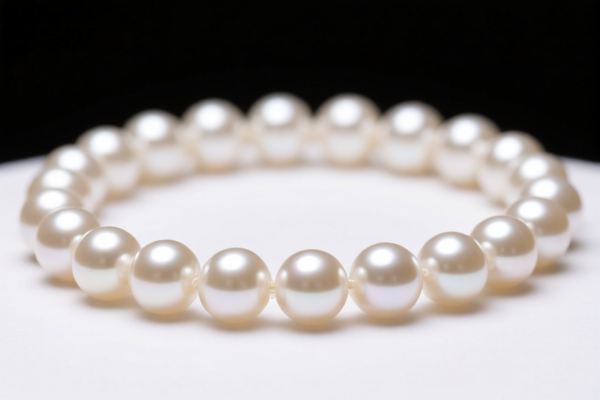
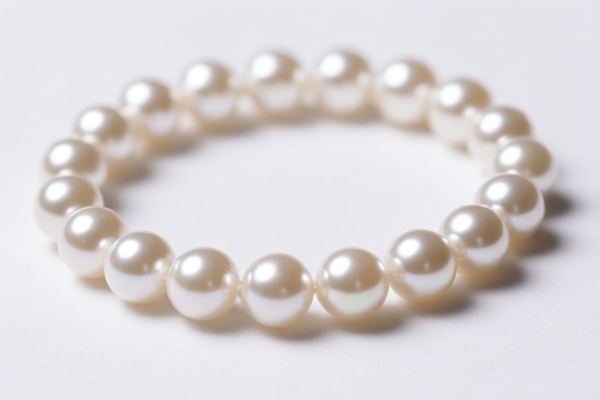
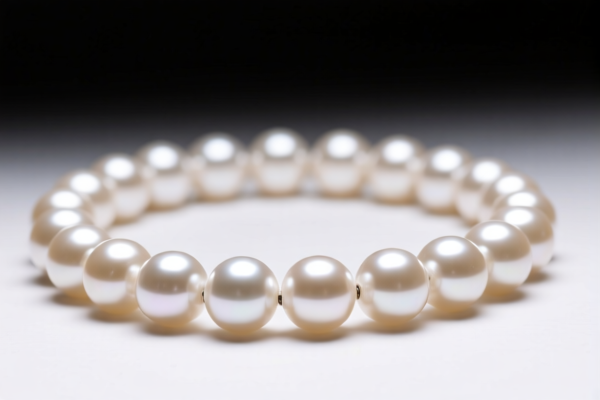
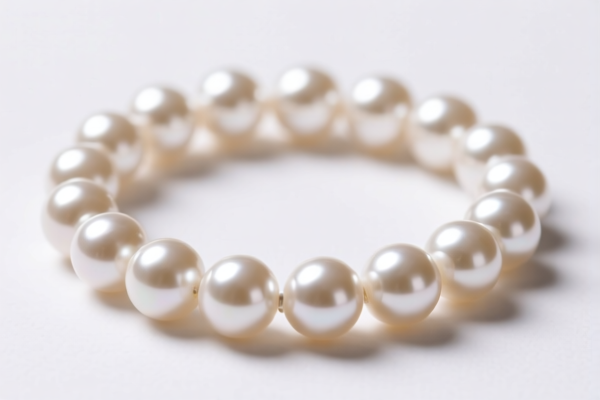
AI Analysis
💎 Imitation Pearl (Imitation Jewelry & Pearls)
🌐 HS Code Reference & Customs Clearance Guide | 2026 Latest Tariff Analysis | Professional-Level Clearance Strategy
📌 I. Product Definition & Classification: Do You Really Understand "Imitation Pearl"?
Imitation pearls are artificial gemstones designed to mimic the luster and appearance of natural or cultured pearls. In international trade, they are not treated as "pearls" (Chapter 71, Heading 05) but rather as imitation jewelry or synthetic/reconstructed articles. The classification depends heavily on the material composition (base metal vs. precious metal) and the form (loose beads vs. finished jewelry).
⚠️ Key Distinction Point:
- If the item is loose imitation pearl beads or simple costume jewelry without precious metal plating → Typically falls under 7117.90.90.00.
- If the item is classified as synthetic/reconstructed pearls (non-jewelry form) → May fall under 7116.20.50.00.
- If the item is finished jewelry made of base metal plated with precious metal → Falls under 7113.11.50.00 or 7113.20.50.00.
📦 II. HS Code Classification Details (2026 Latest Tariff Authoritative Comparison)
| HS Code | Product Description | Application Scenario | Key Attribute |
|---|---|---|---|
7116.20.50.00 |
Synthetic or reconstructed pearls (not set) | Loose imitation pearls, raw materials, non-jewelry forms | ✅ No precious metal |
7113.11.50.00 |
Jewelry of base metal, whether or not plated with precious metal | Finished imitation pearl jewelry, complex alloy structures | ✅ Base metal + Plating |
7113.20.50.00 |
Jewelry of base metal, whether or not plated with precious metal (other than gold) | Specific base metal imitation jewelry (often silver-plated or brass) | ✅ Base metal + Specific Plating |
7117.90.90.00 |
Imitation jewelry | General costume jewelry, simple imitation pearl sets | ✅ Standard imitation jewelry |
🔍 Key Reminder:
- 7116.20.50.00 is often the lowest tax option because it classifies the pearl itself as a synthetic article, avoiding the higher "jewelry" rates.
- 7117.90.90.00 is the most common for general "imitation jewelry" but carries a higher tax burden due to being classified as finished goods.
- 7113.xxxx codes apply when the item is clearly finished jewelry made of base metal with specific plating.
💰 III. 2026 Latest Tariff Rate Detail (Including Surcharges, Policy Add-ons)
✅ Applicable Country: United States (US)
✅ Origin: China (CN)
✅ Effective Date: From November 10, 2025 (including subsequent imports)
🎯 1. 7116.20.50.00 —— Synthetic or Reconstructed Pearls
| Item | Content |
|---|---|
| Base Tariff | 0.0% |
| USITC Surcharge (Section 301) | +7.5% |
| IEEPA Surcharge (Section 122) | +10.0% |
| Total Tax Rate | 17.5% |
| Tax Calculation | CIF Value × 17.5% |
| De Minimis Eligibility | ❌ No (deny_de_minimis) |
| Legal Basis Path | IEEPA:9903.01.25 → USITC:7116.20.50.00 |
📌 Explanation:
- This is the most favorable tax rate for imitation pearls.
- "0% Base Tariff" applies because synthetic pearls are not natural pearls.
- "7.5% USITC Surcharge" is the standard Section 301 rate for this chapter.
- "10% IEEPA Surcharge" is the additional penalty for Chinese origin under recent executive orders.
- Total 17.5% is significantly lower than the 28.5% rate for other imitation jewelry categories.
🎯 2. 7117.90.90.00 —— Imitation Jewelry (General)
| Item | Content |
|---|---|
| Base Tariff | 11.0% |
| USITC Surcharge (Section 301) | +7.5% |
| IEEPA Surcharge (Section 122) | +10.0% |
| Total Tax Rate | 28.5% |
| Tax Calculation | CIF Value × 28.5% |
| De Minimis Eligibility | ❌ No (deny_de_minimis) |
| Legal Basis Path | IEEPA:9903.01.25 → USITC:7117.90.90.00 |
📌 Warning:
- This is the default classification for most "imitation jewelry" if not specifically argued as synthetic pearls.
- The 11% Base Tariff is the primary driver of the higher cost.
- High Risk: If customs determines the item is "synthetic pearls" but you declare it as "imitation jewelry," you may be underpaying tax, leading to audits and penalties. Conversely, over-declaring increases costs unnecessarily.
🎯 3. 7113.11.50.00 —— Jewelry of Base Metal, Plated with Precious Metal
| Item | Content |
|---|---|
| Base Tariff | 5.0% |
| USITC Surcharge (Section 301) | +7.5% |
| IEEPA Surcharge (Section 122) | +10.0% |
| Total Tax Rate | 22.5% |
| Tax Calculation | CIF Value × 22.5% |
| De Minimis Eligibility | ❌ No (deny_de_minimis) |
| Legal Basis Path | IEEPA:9903.01.25 → USITC:7113.11.50.00 |
📌 Note:
- This classification applies if the imitation pearl jewelry is made of base metal (e.g., copper, zinc alloy) and plated with a precious metal (e.g., gold-plated, silver-plated).
- The base tariff is 5%, lower than 7117, but higher than 7116.
🎯 4. 7113.20.50.00 —— Other Jewelry of Base Metal, Plated
| Item | Content |
|---|---|
| Base Tariff | 5.2% |
| USITC Surcharge (Section 301) | +7.5% |
| IEEPA Surcharge (Section 122) | +10.0% |
| Total Tax Rate | 22.7% |
| Tax Calculation | CIF Value × 22.7% |
| De Minimis Eligibility | ❌ No (deny_de_minimis) |
| Legal Basis Path | IEEPA:9903.01.25 → USITC:7113.20.50.00 |
📌 Note:
- Similar to 7113.11.50.00, but for other types of base metal plated jewelry.
- The 0.2% difference in base tariff makes it slightly more expensive than 7113.11.50.00.
🛠️ IV. Customs Clearance Practical Suggestions (Battlefield Pit-Avoidance Guide)
✅ 1. Preparation Checklist (No Missing Items)
| Material | Must Provide | Explanation |
|---|---|---|
| ✅ Product Specification Sheet | ✔️ | Material composition (e.g., "Zinc Alloy, Gold Plated, Imitation Pearl Beads") |
| ✅ Product Photos | ✔️ | Clear images of beads, finished jewelry, and any hallmarks |
| ✅ Commercial Invoice | ✔️ | Accurate description: "Synthetic Pearl Beads" or "Costume Jewelry" |
| ✅ Packing List | ✔️ | Weight, quantity, and packaging details |
| ✅ Third-Party Test Report | ✔️ | Lead/Cadmium content test (CRUCIAL for jewelry in US/EU) |
| ✅ Material Declaration | ✔️ | Explicitly state "No Natural Pearls" to avoid Chapter 05 misclassification |
✅ 2. Declaration Techniques (Key Mnemonic)
🔥 “Pearls aren’t Pearls, Jewelry isn’t Simple, Material Dictates the Rate!”
| Scenario | Correct Declaration | Wrong Action |
|---|---|---|
| Loose imitation pearl beads | 7116.20.50.00 |
Misdeclare as "Pearls" (Chapter 05) → 100% penalty |
| Finished necklace with imitation pearls | 7117.90.90.00 or 7113.xxxx |
Misdeclare as "Beads" → Customs may reclassify and charge higher |
| Gold-plated imitation pearl ring | 7113.11.50.00 |
Declare as "Plastic Jewelry" → Lead content risk |
| Simple plastic imitation pearl earrings | 7117.90.90.00 |
Over-complex declaration → Delay in clearance |
✅ 3. Special Cases Handling
| Situation | Handling Advice |
|---|---|
| OEM Custom Jewelry | Provide design drawings and material specs. Clearly state "Imitation Pearl" to avoid "Natural Pearl" scrutiny. |
| Mixed Materials | If jewelry has both imitation pearls and other materials, declare based on the essential character. Usually, the pearl dominates. |
| Lead/Cadmium Content | Ensure compliance with CPSC regulations. High lead content can lead to product recall and customs seizure, regardless of HS Code. |
| Origin Labeling | Must clearly state "Made in China" on the product and packaging. Failure to do so results in penalties and potential denial of entry. |
🌍 V. Global Major Market Clearance Comparison (2026 Latest)
| Country/Region | Recommended HS Code | Tariff | Certification Requirements | Remarks |
|---|---|---|---|---|
| 🇺🇸 USA | 7116.20.50.00 |
17.5% (CN) | CPSIA + ASTM F963 | Highest risk due to Section 301 & 122 tariffs |
| 🇨🇳 China | 7116.20.50.00 |
0% | CCC (if applicable) | No import duty for imitation pearls |
| 🇪🇺 EU | 7117.90.90.00 |
0% | CE + REACH | No import duty for imitation jewelry |
| 🇦🇺 Australia | 7117.90.90.00 |
5% | ACCC | Low tariff, easy clearance |
| 🇯🇵 Japan | 7117.90.90.00 |
0% | PSE (if electrical) | No import duty for imitation jewelry |
📌 Conclusion:
- USA is the most expensive market due to 22.5% - 28.5% total taxes.
- EU and Japan offer zero tariffs, but have strict chemical safety regulations (REACH, CPSIA).
- Cost Optimization: Consider sourcing from non-China countries if targeting the US market to avoid Section 301/122 tariffs.
📌 VI. Common Mistakes & Pit-Avoidance Guide (Blood & Tears Lessons)
❌ Mistake 1: Declaring "Imitation Pearls" as "Natural Pearls" (Chapter 05)
👉 Consequence: 100% Penalty + Seizure. Natural pearls have different tax rates and are subject to CITES regulations if wild-caught.
❌ Mistake 2: Ignoring Lead/Cadmium Content
👉 Consequence: Product Recall + Customs Seizure. Even if the HS Code is correct, unsafe materials lead to rejection.
❌ Mistake 3: Over-Complicating the Description
👉 Consequence: Customs may reclassify as "Other Articles of Plastic" or "Metal Articles," leading to higher taxes or delays.
❌ Mistake 4: Not Providing Material Declaration
👉 Consequence: Additional Inspections + Delays. Customs needs to verify the "imitation" claim.
✅ Correct Practice:
"Imitation Pearl Beads, Synthetic, Made of Glass/Resin, No Natural Pearls, Compliant with CPSIA"
🎯 VII. Conclusion: Professional Declaration, Save Time and Money!
🎯 Remember the Mnemonic:
🔹 "Pearls ≠ Pearls, Material Matters, Taxes are High in USA!"
🔹 "HS Code Determines Cost, 17.5% vs 28.5%, Choose Wisely!"
📌 Pro Tip:
If your imitation pearls are sourced from Vietnam, India, or Thailand, you may qualify for lower Section 301 tariffs (if applicable).
Recommendation: Apply for an Advance Ruling from US Customs and Border Protection (CBP) to confirm the correct HS Code and avoid surprise taxes.
📣 Take Action Now:
📞 Contact a Professional Customs Broker + Provide Material Test Reports + Apply for Advance Ruling
🚀 Let your imitation pearls clear customs smoothly, boost profits, and expand globally!
✨ Professional Clearance Starts with Accurate Classification!
💼 Every Penny of Cost Should Be Precisely Calculated!
Customer Reviews
About HS Code Classification
The Harmonized System (HS) is an internationally standardized nomenclature developed by the World Customs Organization (WCO) to classify traded products. Over 200 countries use the HS system as the basis for customs tariffs, trade statistics, and import/export regulations.
Each HS code follows a hierarchical structure:
- Chapter (2 digits) — Broad category of goods (e.g., Chapter 84: Machinery and Mechanical Appliances)
- Heading (4 digits) — More specific grouping within the chapter
- Subheading (6 digits) — Internationally standardized breakdown, used by all WCO member countries
- National subdivisions (8-10 digits) — Country-specific extensions for further classification, such as US HTSUS 10-digit codes
Correct HS code classification is essential for smooth customs clearance, accurate duty payment, and compliance with trade regulations. Misclassification can lead to customs delays, overpayment of duties, or penalties.
When importing from CN to US, the applicable tariff rates may include:
- Most-Favored-Nation (MFN) rate — The standard duty rate applied to WTO members
- General rate — Applied to countries without trade agreements
- Trade remedy duties — Additional tariffs such as Section 301 (anti-dumping), Section 232 (national security), or countervailing duties
The information provided on this page is for reference purposes only. For official classification, please consult with your local customs authority or a licensed customs broker.