Impact Hammer
CN → US| HS Code | Tariff Rate | Origin | Destination | Doc |
|---|---|---|---|---|
| 8205206000 | 35.0% | CN | US | Official Doc |
| 8205203000 | 41.2% | CN | US | Official Doc |
| 8467290080 | 17.5% | CN | US | Official Doc |
| 8467290090 | 17.5% | CN | US | Official Doc |
Product Images
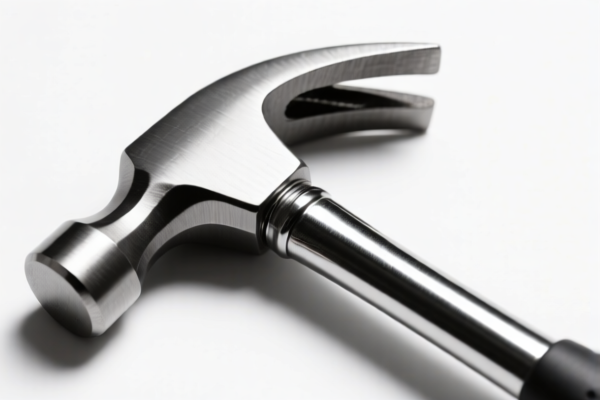
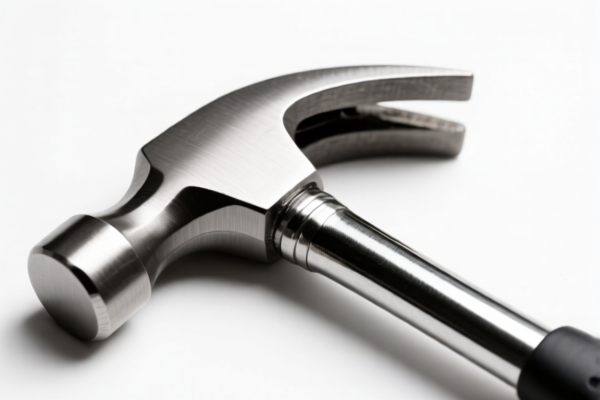


AI Analysis
🔨 Impact Hammers & Sledge Hammers: HS Code Classification & Tariff Breakdown
🌐 HS Code Reference & Customs Clearance Guide | 2026 Latest Tariff Analysis | Professional Clearance Strategy
📌 I. Product Definition & Classification: What Exactly is an "Impact Hammer"?
In international trade, the term "Impact Hammer" is ambiguous. It generally falls into two distinct categories based on their power source and structure:
-
Manual Impact Hammers (Hand Tools):
- These are non-powered tools used for striking, shaping, or driving. They include sledgehammers, wrecking hammers, and blacksmith’s hammers.
- They belong to Chapter 82 (Base Metal Tools, Implements, etc.).
- Critical Distinction: Classification depends strictly on the weight of the hammer head.
-
Power Impact Hammers (Electric/Pneumatic Tools):
- These are motored tools, often called Rotary Hammers or Electric Hammers. They have built-in motors and are used for drilling/concrete work.
- They belong to Chapter 84 (Machinery).
⚠️ Key Differentiator:
- If it is hand-held and non-powered → Look at HS 8205.
- If it has a self-contained electric motor → Look at HS 8467.
📦 II. HS Code Classification Details (2026 Latest Tariff Authority)
Based on the provided data, here are the specific HS Codes for Manual and Power Impact Hammers:
| HS Code | Product Description | Type | Head Weight |
|---|---|---|---|
8205.20.60.00 |
Hammers and sledge hammers, and parts thereof: With heads over 1.5 kg each | Manual (Hand Tool) | > 1.5 kg |
8205.20.30.00 |
Hammers and sledge hammers, and parts thereof: With heads not over 1.5 kg each | Manual (Hand Tool) | ≤ 1.5 kg |
8467.29.00.80 |
Tools for working in the hand, pneumatic, hydraulic... with self-contained electric motor: Other Electropneumatic rotary and percussion hammers | Power (Electric/Pneumatic) | N/A (Motorized) |
8467.29.00.90 |
Tools for working in the hand, pneumatic, hydraulic... with self-contained electric motor: Other Other | Power (Electric) | N/A (Motorized) |
🔍 Important Note:
- For Manual Hammers, the single most important factor is the head weight. A 1.6kg sledgehammer goes to8205.20.60.00, while a 1.4kg claw hammer goes to8205.20.30.00. - For Electric Hammers, they are classified under power tools (8467), regardless of brand.
💰 III. 2026 Latest Tariff Rate Breakdown
✅ Applicable Country: United States (US)
✅ Origin: China (CN)
✅ Effective Time: Current Trade Policies (Section 301 / IEEPA)
🎯 1. 8205.20.60.00 – Manual Hammers (Head > 1.5 kg)
| Item | Detail |
|---|---|
| Base Tariff | 0.0% |
| Additional Tariff (Section 301) | +25.0% |
| Total Tax Rate | 25.0% |
| Tax Calculation | CIF Value × 25% |
| De Minimis Eligibility | ❌ No (Subject to strict scrutiny) |
📌 Explanation:
- Although the base tariff is 0%, these heavy manual tools are subject to a 25% additional duty due to trade tensions. - This is a high-cost category. Importers must factor this 25% into landed costs.
🎯 2. 8205.20.30.00 – Manual Hammers (Head ≤ 1.5 kg)
| Item | Detail |
|---|---|
| Base Tariff | 0.0% |
| Additional Tariff (Section 301) | 0.0% |
| Total Tax Rate | 0.0% |
| Tax Calculation | CIF Value × 0% |
| De Minimis Eligibility | ⚠️ Check Limits (Subject to current de minimis rules) |
📌 Explanation:
- Zero Tariff! This is a highly favorable classification. - Lighter hand tools (under 1.5 kg head) are exempt from the additional duties that apply to heavier hammers. - Strategy Tip: If possible, design products to keep the head weight under 1.5 kg to benefit from this 0% rate.
🎯 3. 8467.29.00.80 & 8467.29.00.90 – Power Impact Hammers (Rotary/Percussion)
| Item | Detail |
|---|---|
| Base Tariff | 0.0% |
| Additional Tariff (Section 301) | +7.5% |
| Total Tax Rate | 7.5% |
| Tax Calculation | CIF Value × 7.5% |
| De Minimis Eligibility | ❌ No |
📌 Explanation:
- Electric/Pneumatic hammers are classified as power tools. - They face a 7.5% additional duty, which is significantly lower than the 25% for heavy manual hammers. - Note: There is a slight distinction between8467.29.00.80(Rotary/Percussion) and.90(Other), but both currently carry the same 7.5% total tax burden based on the provided data.
🛠️ IV. Customs Clearance Practical Advice
✅ 1. Preparation Checklist (Mandatory)
| Document | Required | Description |
|---|---|---|
| ✅ Product Specifications | ✔️ | Must clearly state Head Weight (for manual hammers) or Motor Power (for electric). |
| ✅ Product Photos | ✔️ | Clear images showing the entire tool, labels, and any power units. |
| ✅ Commercial Invoice | ✔️ | Must specify "Hand Tool" or "Power Tool" accurately. Avoid vague terms like "Tool". |
| ✅ Weight Declaration | ✔️ | For 8205 codes, exact head weight is critical for classification. |
| ✅ Origin Certificate | ✔️ | To confirm Chinese origin (if applicable). |
✅ 2. Classification Strategy (Key Tips)
| Scenario | Correct HS Code | Error Consequence |
|---|---|---|
| Heavy Sledgehammer (Head = 2.0 kg) | 8205.20.60.00 (25% Tax) |
Misclassifying as lighter hammer → Penalty + Back Taxes |
| Light Claw Hammer (Head = 0.8 kg) | 8205.20.30.00 (0% Tax) |
Misclassifying as power tool → Unnecessary Complexity |
| Electric Rotary Hammer | 8467.29.00.80 (7.5% Tax) |
Misclassifying as manual hammer → Incorrect Tax Rate |
🔥 Golden Rule:
"Weigh the head! If >1.5kg, pay 25%. If ≤1.5kg, pay 0%. If it has a plug, pay 7.5%."
✅ 3. Special Considerations
| Situation | Advice |
|---|---|
| Set of Hammers | If a kit contains one heavy hammer and one light hammer, declare separately or classify based on the primary item. |
| Replacement Heads | Declared as "Parts of Hammers" (8205.20) with same tax rate as the main tool. |
| Importing to US | Ensure the head weight is declared in Kilograms (kg) or converted accurately. US Customs is strict on metric conversions. |
🌍 V. Global Market Comparison (2026 Snapshot)
| Country/Region | Recommended HS Code | Tariff Rate | Notes |
|---|---|---|---|
| 🇺🇸 USA | 8205.20.30.00 / 8205.20.60.00 |
0% / 25% | Heavy hammers face 25% penalty. |
| 🇪🇺 EU | 8205.10.00 |
Varies (0-5%) | EU uses 8-digit codes differently; check local duty. |
| 🇨🇳 China | 8205.20 |
5-10% | Import duty may apply for foreign brands. |
| 🇬🇧 UK | 8205.20 |
0-5% | Post-Brexit trade policies apply. |
📌 Conclusion:
- USA is the most complex due to the weight-based tariff split and Section 301 additional duties. - Light manual hammers (≤1.5kg) are the most tariff-efficient entry point into the US market.
📌 VI. Common Mistakes & Pitfalls (Learn from Others' Errors)
❌ Mistake 1: Declaring a 2kg Sledgehammer as "Hand Tool" without specifying head weight.
👉 Result: Customs may assign a default higher rate or demand detailed inspection.
❌ Mistake 2: Confusing "Impact Hammer" (Manual) with "Hammer Drill" (Electric).
👉 Result: Wrong HS Code → 8205 vs 8467 → Tax difference of 17.5% (25% - 7.5%).
❌ Mistake 3: Ignoring the 1.5kg threshold.
👉 Result: A hammer weighing 1.501kg pays 25%, while 1.499kg pays 0%. Precision matters!
✅ Best Practice:
Clearly state: "Hand Hammer, Steel Head, Weight: 1.2 kg, No Motor" or "Electric Rotary Hammer, 800W, With Battery".
🎯 VII. Conclusion: Optimize for Low Duty!
🎯 Key Takeaway:
- Manual Hammers: Keep head weight under 1.5 kg to enjoy 0% additional tariff.
- Electric Hammers: Accept 7.5% additional tariff for higher productivity tools.
- Heavy Hammers (>1.5 kg): Budget for 25% additional tariff.
📌 Pro Tip:
If you are importing large volumes of heavy sledgehammers, consider product redesign to reduce head weight to just under 1.5 kg, or explore supply chain diversification to non-tariff-affected origins.
📣 Immediate Action:
📞 Consult a Customs Broker for Pre-Ruling if your product weight is borderline (1.4–1.6 kg).
🚀 Accurate classification saves money, delays, and legal risks!
✨ Precision in Classification is Profit in Your Pocket!
💼 Don't let weight differences cost you thousands!
Customer Reviews
About HS Code Classification
The Harmonized System (HS) is an internationally standardized nomenclature developed by the World Customs Organization (WCO) to classify traded products. Over 200 countries use the HS system as the basis for customs tariffs, trade statistics, and import/export regulations.
Each HS code follows a hierarchical structure:
- Chapter (2 digits) — Broad category of goods (e.g., Chapter 84: Machinery and Mechanical Appliances)
- Heading (4 digits) — More specific grouping within the chapter
- Subheading (6 digits) — Internationally standardized breakdown, used by all WCO member countries
- National subdivisions (8-10 digits) — Country-specific extensions for further classification, such as US HTSUS 10-digit codes
Correct HS code classification is essential for smooth customs clearance, accurate duty payment, and compliance with trade regulations. Misclassification can lead to customs delays, overpayment of duties, or penalties.
When importing from CN to US, the applicable tariff rates may include:
- Most-Favored-Nation (MFN) rate — The standard duty rate applied to WTO members
- General rate — Applied to countries without trade agreements
- Trade remedy duties — Additional tariffs such as Section 301 (anti-dumping), Section 232 (national security), or countervailing duties
The information provided on this page is for reference purposes only. For official classification, please consult with your local customs authority or a licensed customs broker.