Impregnated/Covered Paper (Packaging Base Paper)
CN → US| HS Code | Tariff Rate | Origin | Destination | Doc |
|---|---|---|---|---|
| 5907008090 | 35.0% | CN | US | Official Doc |
| 4811596000 | 35.0% | CN | US | Official Doc |
| 4811909080 | 35.0% | CN | US | Official Doc |
| 5907003500 | 43.0% | CN | US | Official Doc |
| 4811903000 | 35.0% | CN | US | Official Doc |
Product Images
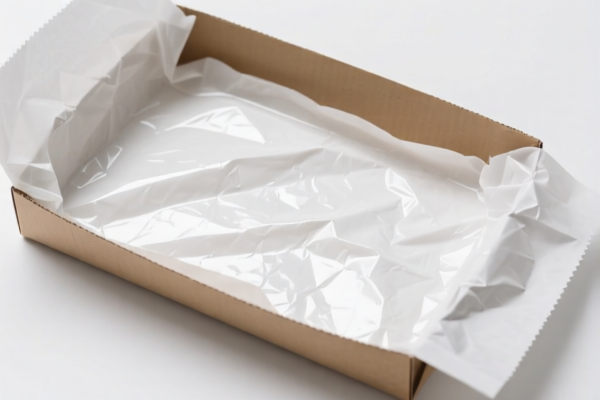
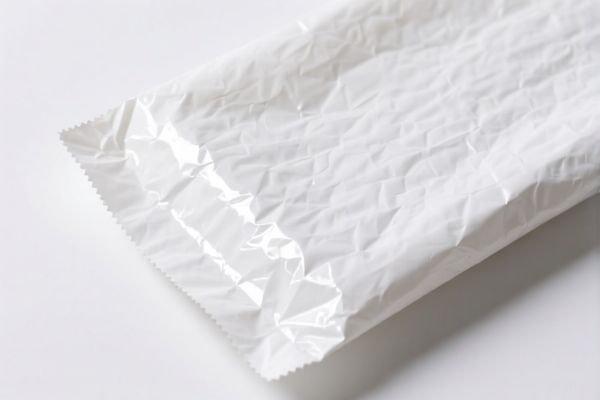
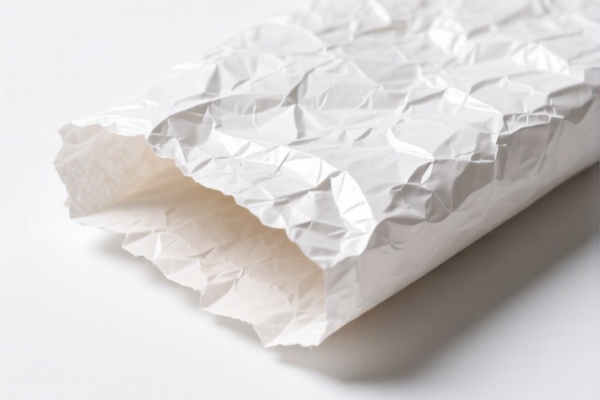
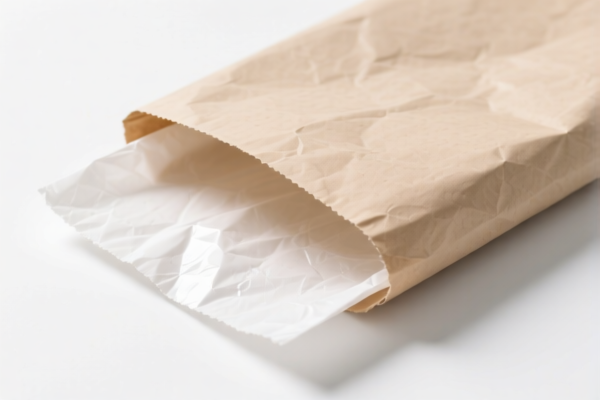
AI Analysis
📄 Impregnated/Covered Paper (Packaging Base Paper)
🌐 HS Code Reference & Customs Clearance Guide | 2026 Latest Tariff Analysis | Professional Customs Strategy
📌 I. Product Definition & Classification: Do You Really Understand "Impregnated Paper"?
"Impregnated/Covered Paper" refers to paper or paperboard that has been treated with substances such as resins, plastics, paints, or other materials to enhance its properties (water resistance, strength, printability, etc.). In international trade, it is primarily used as a packaging base material, industrial lining, or technical paper.
The key to classification lies in three factors: 1. Base Material: Is it primarily paper/cardboard, or a textile/fabric? 2. Processing Method: Is it "impregnated" (soaked), "coated/covered" (surface), or "laminated"? 3. Final Use: Is it for general packaging, specialized industrial use, or printed paper?
⚠️ Key Distinction Point:
- If the base is paper and the treatment is surface coating/impregnation for packaging → Generally falls under Chapter 48 (Paper).
- If the base is textile/fabric and treated with paper/plastic for reinforcement → Generally falls under Chapter 59 (Impregnated Textile Fabrics).
- If it is specialized printing paper (e.g., carbonless, thermal) → Falls under specific Chapter 48 subheadings.
📦 II. HS Code Classification Details (2026 Latest Tariff Authority Comparison)
Based on the provided data, here are the five most likely HS Codes for "Impregnated/Covered Paper (Packaging Base Paper)":
| HS Code | Product Description | Application Scenario | Base Material |
|---|---|---|---|
5907.00.80.90 |
Other textiles impregnated, coated, covered or laminated with paper | Packaging base, reinforced cardboard, industrial lining | Textile/Fabric (with paper covering) |
4811.59.60.00 |
Paper, paperboard, cardboard, fibrous sheet material, impregnated, coated, surface-colored, surface-decorated or printed, in rolls or sheets (other than those of heading 4803 to 4809) | General packaging base, coated paperboard | Paper |
4811.90.90.80 |
Paper, paperboard, cardboard, fibrous sheet material, other impregnated, coated, covered (not elsewhere specified) | Generic packaging paper, unlisted coated papers | Paper |
5907.00.35.00 |
Textiles impregnated, coated, covered or laminated with plastics, in rolls (width > 30cm) | Heavy-duty packaging, laminated fabric-paper composite | Textile (with plastic/paper layer) |
4811.90.30.00 |
Paper, paperboard, cardboard, fibrous sheet material, other impregnated, coated, covered (specifically for carbonless/printer paper) | Note: Data summary mentions "Carbonless/Printer Paper" – Misalignment Check | Paper |
🔍 Critical Alert:
- HS 5907 is for Textiles covered/impregnated with paper. If your product is truly paper-based (not fabric), HS 5907 is likely incorrect unless it is a paper-faced fabric.
- HS 4811 is for Paper that has been impregnated/coated. This is the most common classification for "Packaging Base Paper".
- HS 4811.90.30.00 summary in the data mentions "Carbonless/Printer Paper". If your product is not for printing/copying, this code may be inaccurate despite the "Impregnated" match. Verify the end-use.
💰 III. 2026 Latest Tariff Rate Breakdown (Including Surtaxes & Policy Add-ons)
✅ Applicable Country: United States (US)
✅ Country of Origin: China (CN)
✅ Effective Date: November 10, 2025 (and subsequent imports)
🎯 1. 4811.59.60.00 & 4811.90.90.80 & 4811.90.30.00 —— Paper Products (Coated/Impregnated)
| Item | Content |
|---|---|
| Base Duty Rate | 0% (ad valorem) |
| USITC Surtax (Section 301) | +25% (from USITC Footnote 9903.88.01) |
| IEEPA Surtax | +10% (for China/HK products, effective from Nov 10, 2025) |
| Total Duty Rate | 35.0% |
| Tax Calculation | CIF Value × 35% |
| De Minimis Eligibility | ❌ No (deny_de_minimis) |
| Legal Authority Path | IEEPA:9903.01.25 → IEEPA:9903.01.24 → USITC:4811.* → FOOTNOTE:9903.88.01 |
📌 Explanation:
- "USITC Surtax 25%" comes from the Section 301 Tariffs under the Trade Act of 1974.
- "IEEPA 10%" is the additional tariff under the International Emergency Economic Powers Act.
- Total 35% is a high tariff for paper products. Importers must calculate cost implications carefully.
🎯 2. 5907.00.80.90 & 5907.00.35.00 —— Impregnated Textiles (Paper/Fabric Composite)
| Item | Content |
|---|---|
| Base Duty Rate | 8.0% (for HS 5907.00.35.00), 0% (for HS 5907.00.80.90) |
| USITC Surtax (Section 301) | +25% |
| IEEPA Surtax | +10% |
| Total Duty Rate | 43.0% (for 5907.00.35.00), 35.0% (for 5907.00.80.90) |
| Tax Calculation | CIF Value × 43% or 35% |
| De Minimis Eligibility | ❌ No (deny_de_minimis) |
| Legal Authority Path | IEEPA:9903.01.25 → IEEPA:9903.01.24 → USITC:5907.* → FOOTNOTE:9903.88.01 |
📌 Note:
- If the product is classified as textile-based (HS 5907), the base duty may be higher (8%), leading to a 43% total rate.
- Paper-based products (HS 4811) are generally cheaper at 35% due to 0% base duty.
- Misclassification Risk: Classifying paper as textile (5907) increases cost by 8%. Classifying textile as paper (4811) may lead to penalties.
🛠️ IV. Customs Clearance Practical Advice (Pitfall Avoidance Guide)
✅ 1. Document Checklist (All Required)
| Document | Mandatory | Description |
|---|---|---|
| ✅ Product Specification Sheet | ✔️ | Details base material (paper vs. fabric), impregnation type (resin, plastic, paint), weight, dimensions. |
| ✅ Material Composition Statement | ✔️ | Explicitly state: "95% Paper, 5% Resin" or "Fabric Base with Paper Coating". |
| ✅ Product Photos (Labeled) | ✔️ | Show surface texture, cross-section (if possible), and packaging. |
| ✅ Commercial Invoice | ✔️ | Use precise description: "Impregnated Paper Board for Packaging, HS 4811.59.60.00". Avoid vague terms like "Packaging Material". |
| ✅ Certificate of Origin (CO) | ✔️ | If applicable, for potential FTA benefits (though Section 301/IEEPA usually still apply). |
| ✅ Third-Party Test Report | ✔️ | If chemical composition is disputed, provide test reports proving base material is paper, not textile. |
✅ 2. Declaration Tips (Key Mantra)
🔥 "Base Matters, Process Defines, Name Precise, Tax Lower!"
| Scenario | Correct Declaration | Wrong Practice |
|---|---|---|
| Paper Base + Coating | 4811.59.60.00 (35%) |
Misclassify as 5907 → 43% or Customs Penalty |
| Fabric Base + Paper Coating | 5907.00.80.90 (35%) |
Misclassify as 4811 → Customs Discrepancy |
| Printing/Carbonless Paper | 4811.90.30.00 (35%) |
Use generic "Impregnated Paper" → Risk of Audit |
| Mixed Paper-Fabric Composite | 5907 (if fabric is essential structure) |
Declare as "Paper" → 43% penalty if audited |
✅ 3. Special Handling Cases
| Scenario | Handling Advice |
|---|---|
| OEM Packaging Paper | Provide customer order + material spec sheet. Prove it is not "specialty printing paper". |
| High-Resin Content | If resin > paper by weight, customs may classify as Plastic Product (Chapter 39). Consult a broker. |
| Recycled Paper Base | Provide recycling certificate. No change in HS code, but may affect environmental compliance. |
| Large Rolls vs. Sheets | Ensure declaration matches roll/sheet dimensions. HS 4811 requires "in rolls or sheets". |
🌍 V. Global Market Clearance Comparison (2026 Latest)
| Country/Region | Recommended HS Code | Duty Rate | Certification | Remarks |
|---|---|---|---|---|
| 🇺🇸 USA | 4811.59.60.00 |
35% | No special certs | High tariff due to Section 301 + IEEPA |
| 🇨🇳 China | 4811.59.60.00 |
5-10% | N/A | Low duty, no surtaxes |
| 🇪🇺 EU | 4811.59.00 |
6.5% | REACH (if chemicals involved) | No US-style surtaxes |
| 🇦🇺 Australia | 4811.59.00 |
5% | None | Moderate duty |
| 🇯🇵 Japan | 4811.59.00 |
6% | None | Standard duty |
📌 Conclusion:
- USA is the most expensive market for Chinese-made impregnated paper due to 35% combined tariffs.
- EU, China, and Asia have significantly lower duty rates. Consider supply chain diversification if US market is primary.
📌 VI. Common Mistakes & Pitfall Guide (Lessons Learned)
❌ Mistake 1: Classifying paper-based product as 5907 (Textile)
👉 Result: Higher base duty (8%) → Total 43%. Unnecessary cost increase.
❌ Mistake 2: Using vague description "Packaging Paper"
👉 Result: Customs may reclassify to highest duty rate or demand additional docs → Delay.
❌ Mistake 3: Ignoring IEEPA 10% Surtax
👉 Result: Budget miscalculation. Many importers only account for Section 301 (25%).
❌ Mistake 4: Claiming De Minimis for small shipments
👉 Result: Denied. Section 301/IEEPA goods are not exempt from $800 de minimis.
✅ Correct Practice:
"Coated Kraft Paper, 200gsm, Resin-Impregnated, for Corrugated Packaging, in Rolls, HS 4811.59.60.00, Origin: China"
🎯 VII. Conclusion: Precise Classification Saves Money!
🎯 Remember the Mantra:
🔹 "Paper vs. Textile – Get it Right, or Pay 8% More!"
🔹 "35% is the US Price, 43% is the Mistake Price."
🔹 "Document Everything, Declare Precisely, Avoid Delays."
📌 Pro Tip:
If your impregnated paper is used for specialized applications (e.g., electrical insulation, medical), consult a customs broker for potential Chapter 85 or Chapter 30 classification, which may have different duty rates.
Apply for an Advance Ruling from U.S. Customs to lock in the HS Code and avoid post-clearance audits.
📣 Immediate Action:
📞 Contact a licensed customs broker + Provide Material Spec Sheet + Request HS Code Advance Ruling
🚀 Ensure Smooth Customs Clearance, Maximize Profit Margins!
✨ Professional Clearance Starts with Accurate Classification!
💼 Every Percent Counts – Optimize Your Tariff Strategy Today!
Customer Reviews
About HS Code Classification
The Harmonized System (HS) is an internationally standardized nomenclature developed by the World Customs Organization (WCO) to classify traded products. Over 200 countries use the HS system as the basis for customs tariffs, trade statistics, and import/export regulations.
Each HS code follows a hierarchical structure:
- Chapter (2 digits) — Broad category of goods (e.g., Chapter 84: Machinery and Mechanical Appliances)
- Heading (4 digits) — More specific grouping within the chapter
- Subheading (6 digits) — Internationally standardized breakdown, used by all WCO member countries
- National subdivisions (8-10 digits) — Country-specific extensions for further classification, such as US HTSUS 10-digit codes
Correct HS code classification is essential for smooth customs clearance, accurate duty payment, and compliance with trade regulations. Misclassification can lead to customs delays, overpayment of duties, or penalties.
When importing from CN to US, the applicable tariff rates may include:
- Most-Favored-Nation (MFN) rate — The standard duty rate applied to WTO members
- General rate — Applied to countries without trade agreements
- Trade remedy duties — Additional tariffs such as Section 301 (anti-dumping), Section 232 (national security), or countervailing duties
The information provided on this page is for reference purposes only. For official classification, please consult with your local customs authority or a licensed customs broker.