Impregnated/Processed Paper Sheets
CN → US| HS Code | Tariff Rate | Origin | Destination | Doc |
|---|---|---|---|---|
| 5907008090 | 35.0% | CN | US | Official Doc |
| 4811596000 | 35.0% | CN | US | Official Doc |
| 4811909080 | 35.0% | CN | US | Official Doc |
| 5907003500 | 43.0% | CN | US | Official Doc |
| 4811596000 | 35.0% | CN | US | Official Doc |
Product Images
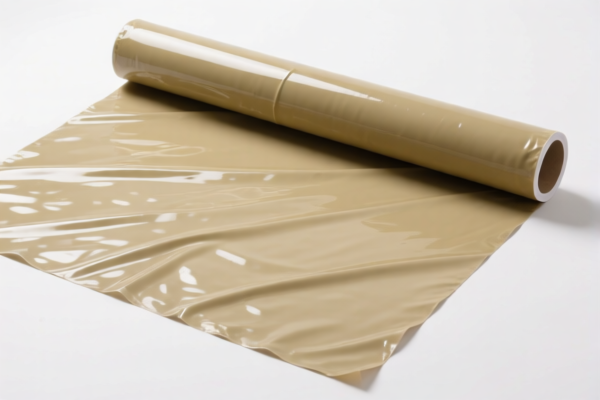
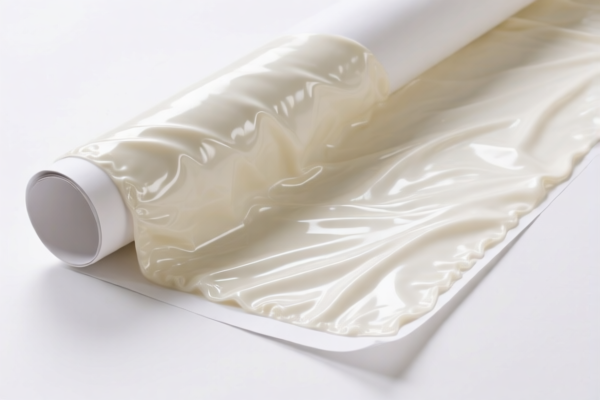
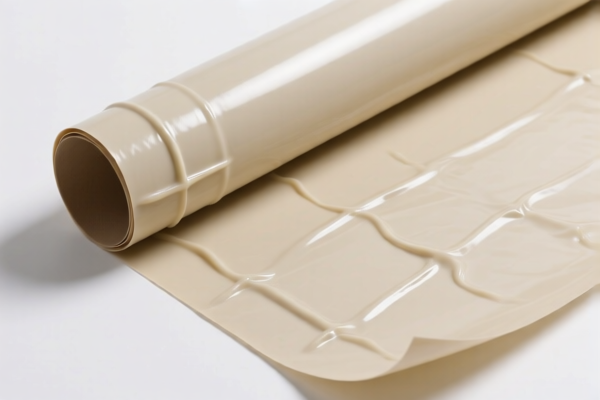

AI Analysis
📄 Impregnated/Processed Paper Sheets: The Plastics-Composite Classification Dilemma
🌐 HS Code Reference & Customs Clearance Guide | 2026 Latest Tariff Analysis | Professional Clearance Strategy
📌 One: Product Definition & Classification: Is it Paper or Plastic?
Impregnated/Processed Paper Sheets are not merely paper. They are composite materials where paper has been treated with chemicals (such as resins, thermosets, or thermoplastics) to enhance durability, water resistance, or electrical insulation.
In international trade, the critical distinction lies in whether the paper acts as a structural substrate embedded within a plastic matrix. If the material fits the definition of "Plastics" under Chapter 39 (specifically reinforced with paper), it falls under HS Code 3921, not Chapter 48 (Paper).
⚠️ Key Distinction Point:
- If the material is flexible, plastic-based, and reinforced with paper (e.g., paper-faced PVC, melamine-impregnated paper laminates) → It is classified as Plastics (HS 3921).
- If it is rigid, cellular, or made of other plastics without paper reinforcement → It may fall under HS 3921.19.
- If it is purely paper-based with minimal surface treatment → It remains Chapter 48 (Not covered in current DATA).
📦 Two: HS Code Classification Details (2026 Latest Tariff Authority Comparison)
Based on the provided , two specific HS Codes apply depending on the physical structure and plastic type:
| HS Code | Product Description | Applicable Scenario | Reinforcement Status |
|---|---|---|---|
3921.90.40.10 |
Other plates, sheets, film, foil and strip, of plastics: Other: Other: Flexible Reinforced with paper | Flexible plastic sheets/laminates where paper provides strength (e.g., industrial laminates, decorative laminates) | ✅ Reinforced with Paper |
3921.19.00.90 |
Other plates, sheets, film, foil and strip, of plastics: Cellular: Of other plastics Other | Rigid or semi-rigid cellular plastic sheets (e.g., foam boards, expanded polystyrene) | ❌ No Paper Reinforcement |
🔍 Critical Reminder:
-3921.90.40.10is the correct classification for flexible sheets where paper is embedded to reinforce the plastic matrix. This is common in decorative laminates (like Formica) or industrial packaging. -3921.19.00.90applies to cellular (foamed) plastics that do not contain paper reinforcement. Do not confuse "processed paper" with "cellular plastic." - Do not split declarations: If the product is a single composite sheet, it must be declared as one unit under the appropriate HS Code.
💰 Three: 2026 Latest Tariff Rate Breakdown (Including Surtaxes & Policy Add-ons)
✅ Applicable Country: United States (US)
✅ Origin: China (CN)
✅ Effective Date: From November 10, 2025 (and subsequent imports)
🎯 1. 3921.90.40.10 —— Flexible Reinforced with Paper (Plastics)
| Item | Detail |
|---|---|
| Base Tariff | 4.2% (ad valorem) |
| Additional Tariff (Section 301) | +25.0% |
| Total Tariff Rate | 29.2% |
| Tax Calculation | CIF Value × 29.2% |
| De Minimis Exemption Eligible? | ❌ No (High tariff threshold) |
| Legal Basis Path | HTSUS:3921.90.40.10 → Section 301 Footnote 3 → Total: 29.2% |
📌 Explanation:
- The 4.2% is the standard Most Favored Nation (MFN) duty for "Other plastics plates, sheets, film, etc." - The 25.0% is the Section 301 surtax specifically targeting Chinese-origin plastics and plastic products. - Total 29.2% is a significant cost factor. This classification applies to flexible composite materials. Ensure your product is indeed flexible and paper-reinforced to match this code.
🎯 2. 3921.19.00.90 —— Cellular Plastics (Other Plastics)
| Item | Detail |
|---|---|
| Base Tariff | 0.0% (ad valorem) |
| Additional Tariff (Section 301) | 0.0% |
| Total Tariff Rate | 0.0% |
| Tax Calculation | CIF Value × 0% |
| De Minimis Exemption Eligible? | N/A (Zero duty) |
| Legal Basis Path | HTSUS:3921.19.00.90 → Section 301 Excluded |
📌 Note:
- This code has 0% total tariff under current US-China trade rules. - However, this code is ONLY for cellular (foamed) plastics that are not reinforced with paper. - Trap: If your "processed paper sheet" is actually a foam board with a paper core, it might still be classified here. But if it is a flexible laminated sheet, it MUST go to3921.90.40.10(29.2%), even if it feels like paper.
🛠️ Four: Practical Customs Clearance Advice (Battle-Tested Pitfall Avoidance)
✅ 1. Preparation Checklist (Non-Negotiable)
| Document | Required | Description |
|---|---|---|
| ✅ Product Specification Sheet | ✔️ | Must specify: Base material (plastic type), reinforcement (paper type), thickness, flexibility, and processing method (impregnation/lamination). |
| ✅ Composition Analysis Report | ✔️ | Lab report confirming the ratio of plastic to paper. Crucial for distinguishing between 3921.90.40.10 and other codes. |
| ✅ Physical Samples | ✔️ | Provide a flexible sample (for 3921.90.40.10) or a rigid cellular sample (for 3921.19.00.90). |
| ✅ Commercial Invoice | ✔️ | Clear description: e.g., "Flexible PVC Sheet Reinforced with Kraft Paper, Impregnated with Resin." Avoid vague terms like "Paper Board." |
| ✅ Packing List | ✔️ | Detail weight and dimensions. Ensure no mixed shipments of flexible vs. cellular types. |
| ✅ Certification of Origin | ✔️ | Required for Section 301 verification. |
✅ 2. Declaration Tips (Key Mantra)
🔥 "Flexibility is King: Flexible + Paper = 29.2% | Cellular = 0% | Vague = Audit!"
| Scenario | Correct Declaration | Wrong Approach |
|---|---|---|
| Flexible laminate (e.g., paper-faced PVC) | 3921.90.40.10 |
Misclassifying as "Paper Products" (Ch 48) → Risk of penalty |
| Rigid foam board (no paper core) | 3921.19.00.90 |
Misclassifying as "Reinforced Paper" → Overpayment or underpayment risk |
| Mixed shipment (Flex + Cellular) | Split Declaration | Combined declaration → Customs may reject or assess highest duty |
| Unclear "Processed Paper" | Provide Lab Report | Declaring as "General Plastic" without details → Delays |
✅ 3. Special Handling Scenarios
| Scenario | Handling Advice |
|---|---|
| OEM Custom Laminates | Provide design specs showing the layer structure (Plastic-Paper-Plastic). |
| Thermo-Plastic Impregnation | Confirm if the plastic can be re-melted. If yes, it’s a plastic product, not paper. |
| Electrical Insulation Sheets | Often fall under 3921.90.40.10 if flexible. Check for specific electrical HS codes if applicable (not in current DATA). |
| Packaging Materials | If used for packaging, ensure the "flexible" nature is highlighted. Cardboard is Ch 48; Plastic-coated paper is Ch 39. |
🌍 Five: Global Market Comparison (2026 Latest)
| Country/Region | Recommended HS Code | Tariff (China Origin) | Certification | Remarks |
|---|---|---|---|---|
| 🇺🇸 USA | 3921.90.40.10 |
29.2% (Flexible) | N/A | High cost due to 301 Tariff. 3921.19.00.90 is 0%. |
| 🇨🇳 China | 3921.90.40.10 |
~5-7% | CCC (if electrical) | Lower import duty, no 301 surtax. |
| 🇪🇺 EU | 3921.90.40.10 |
~6.5% | REACH, RoHS | No Section 301 equivalent, but high environmental compliance. |
| 🇬🇧 UK | 3921.90.40.10 |
~6.5% | UKCA | Post-Brexit, aligns with EU but requires UK certs. |
| 🇦🇺 Australia | 3921.90.40.10 |
~5% | RCM | Moderate duty. |
📌 Conclusion:
- USA is the most expensive market for flexible plastic-paper composites (29.2%).
- Cellular plastics (3921.19.00.90) are duty-free in the US, so consider if product design can be optimized to be cellular rather than flexible paper-reinforced.
- EU/UK/AU offer lower duty rates but stricter environmental certifications (REACH).
📌 Six: Common Mistakes & Pitfall Guide (Lessons Learned)
❌ Mistake 1: Calling "Plastic-Coated Paper" "Paper Board"
👉 Consequence: Customs may reclassify to 3921.90.40.10 → Back-tariffs + Fines (29.2% vs. ~0-5%).
❌ Mistake 2: Assuming all "Processed Paper" is Chapter 48
👉 Consequence: If plastic content > structural limit, it becomes Chapter 39. Penalty for incorrect HS Code.
❌ Mistake 3: Confusing "Flexible" vs. "Rigid"
👉 Consequence: Misclassifying flexible sheets as cellular (3921.19.00.90) → 0% instead of 29.2%. If audited, you face heavy back-duties + interest.
❌ Mistake 4: Omitting "Reinforced with Paper" in Description
👉 Consequence: Customs may doubt the 3921.90.40.10 classification. Clear description is key.
✅ Correct Practice:
"Flexible PVC Sheet, Impregnated with Melamine Resin, Reinforced with Kraft Paper Core, Thickness: 1mm, Used for Decorative Laminates. HS: 3921.90.40.10."
🎯 Seven: Conclusion: Precision Saves Money!
🎯 Remember the Mantra:
🔹 "Flexible + Paper = 29.2% (USA)"
🔹 "Cellular = 0% (USA)"
🔹 "Don't Guess: Check Flexibility & Reinforcement!"
📌 Pro Tip:
If your product is flexible, consider if you can switch to a cellular foam structure to qualify for 0% duty in the US. This is a common supply chain optimization strategy.
For flexible products, pre-apply for an Advance Ruling from US Customs (CBP) to secure the 3921.90.40.10 classification and avoid future disputes.
📣 Immediate Action:
📞 Consult a Customs Broker + Submit Lab Reports + Verify Flexibility
🚀 Optimize Your HS Code, Save 29.2% Cost, Clear Goods Smoothly!
✨ Professional Classification Starts with Accurate Description!
💼 Every Percent Matters in Global Trade!
Customer Reviews
About HS Code Classification
The Harmonized System (HS) is an internationally standardized nomenclature developed by the World Customs Organization (WCO) to classify traded products. Over 200 countries use the HS system as the basis for customs tariffs, trade statistics, and import/export regulations.
Each HS code follows a hierarchical structure:
- Chapter (2 digits) — Broad category of goods (e.g., Chapter 84: Machinery and Mechanical Appliances)
- Heading (4 digits) — More specific grouping within the chapter
- Subheading (6 digits) — Internationally standardized breakdown, used by all WCO member countries
- National subdivisions (8-10 digits) — Country-specific extensions for further classification, such as US HTSUS 10-digit codes
Correct HS code classification is essential for smooth customs clearance, accurate duty payment, and compliance with trade regulations. Misclassification can lead to customs delays, overpayment of duties, or penalties.
When importing from CN to US, the applicable tariff rates may include:
- Most-Favored-Nation (MFN) rate — The standard duty rate applied to WTO members
- General rate — Applied to countries without trade agreements
- Trade remedy duties — Additional tariffs such as Section 301 (anti-dumping), Section 232 (national security), or countervailing duties
The information provided on this page is for reference purposes only. For official classification, please consult with your local customs authority or a licensed customs broker.