In Vitro Diagnostic Reagents (Antigen)
CN → US| HS Code | Tariff Rate | Origin | Destination | Doc |
|---|---|---|---|---|
| 3822190010 | 10.0% | CN | US | Official Doc |
| 3822190030 | 10.0% | CN | US | Official Doc |
Product Images
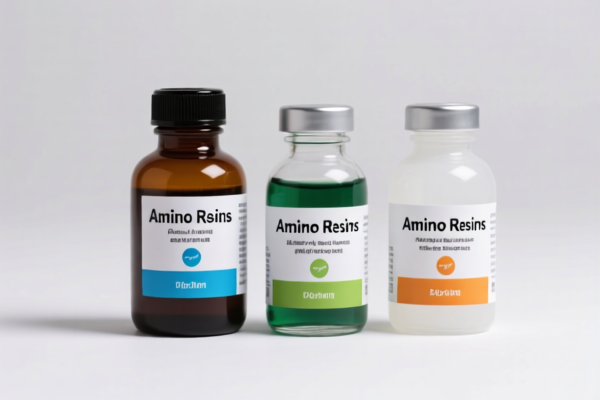
AI Analysis
🧪 In Vitro Diagnostic Reagents (Antigen)
🌐 HS Code Reference & Customs Clearance Guide | 2026 Latest Tariff Analysis | Professional Compliance Strategy
📌 I. Product Definition & Classification: Do You Truly Understand "Diagnostic Reagents"?
In Vitro Diagnostic (IVD) Reagents, specifically those containing Antigens, are critical chemical preparations used in laboratory medicine to detect specific substances (antibodies, hormones, viruses, bacteria, etc.) in human samples. They are foundational tools for disease diagnosis, monitoring, and epidemiological tracking.
In international trade, IVD reagents are primarily classified under Chapter 38 (Miscellaneous Chemical Products) or Chapter 90 (Optical, Photographic, Cinematographic, Measuring, Checking, Precision, Medical or Surgical Instruments), depending on their form, preparation, and intended use.
⚠️ Key Classification Criteria:
- Form: Are they on a backing (e.g., test strips, slides) or in liquid/solid form?
- Content: Do they contain antigens or antisera?
- Preparation: Are they prepared reagents, whether or not on a backing, whether or not in kits?
- Specific Chemicals: Do they contain restricted solvents like methyl chloroform or carbon tetrachloride?
📦 II. HS Code Classification Details (Based on Provided Data)
According to the provided data, the classification focuses on HS Code 3822.19, which covers "Diagnostic or laboratory reagents on a backing, prepared diagnostic or laboratory reagents whether or not on a backing, whether or not put up in the form of kits: Other Containing antigens or antisera."
| HS Code | Product Description | Key Features | Applicable Scenario |
|---|---|---|---|
| 3822.19.00.10 | Diagnostic/laboratory reagents (on backing or not, with/without kits): Other; Containing antigens or antisera; Containing methyl chloroform (1,1,1-trichloroethane) or carbon tetrachloride | Contains specific organic solvents (methyl chloroform or carbon tetrachloride) | Reagents using these specific chlorinated solvents as carriers or stabilizers. Note: These solvents are often restricted due to environmental/health concerns. |
| 3822.19.00.30 | Diagnostic/laboratory reagents (on backing or not, with/without kits): Other; Containing antigens or antisera; Other | Does not contain methyl chloroform or carbon tetrachloride | Most standard IVD antigen reagents (liquid, dry, on strips) that do not use the specifically restricted solvents mentioned above. |
🔍 Critical Distinction:
- If your reagent formulation includes methyl chloroform (1,1,1-trichloroethane) or carbon tetrachloride, it must be classified under 3822.19.00.10.
- If your reagent does not contain these specific solvents (i.e., it uses water-based buffers, other organic solvents, or is dry), it falls under 3822.19.00.30.
- Both categories are "Other" under the "Containing antigens or antisera" heading, implying they are not the primary focus of other subheadings (e.g., blood group reagents may have different codes).
💰 III. 2026 Latest Tariff Rate Details (Based on Provided Data)
✅ Tax Information from Data:
- HS Code 3822.19.00.10:
- Base Tariff: 0.0%
- Additional Tariff (e.g., Section 301, IEEPA): 0.0%
- Total Tax Rate: 0.0%
- HS Code 3822.19.00.30:
- Base Tariff: 0.0%
- Additional Tariff (e.g., Section 301, IEEPA): 0.0%
- Total Tax Rate: 0.0%
🎯 1. 3822.19.00.10 – Reagents with Restricted Solvents
| Item | Content |
|---|---|
| Base Tariff | 0% |
| Additional Tariffs | 0% |
| Total Tariff | 0.0% |
| Calculation | CIF Value × 0% = $0 |
| De Minimis Eligibility | ✅ Likely eligible (if under threshold, e.g., $800 in US) |
| Legal Basis | HS:3822.19.00.10 |
📌 Explanation:
- Despite containing potentially restricted chemicals (methyl chloroform/carbon tetrachloride), the tariff rate is 0%.
- However, be aware that while the tariff is 0, the importation of these specific chemicals may be heavily regulated by environmental or health agencies (e.g., EPA in the US, REACH in EU). Ensure compliance with environmental and safety regulations, not just tariff codes.
🎯 2. 3822.19.00.30 – Other Antigen/Antiserum Reagents
| Item | Content |
|---|---|
| Base Tariff | 0% |
| Additional Tariffs | 0% |
| Total Tariff | 0.0% |
| Calculation | CIF Value × 0% = $0 |
| De Minimis Eligibility | ✅ Likely eligible |
| Legal Basis | HS:3822.19.00.30 |
📌 Explanation:
- This is the most common classification for standard IVD antigen reagents.
- Zero duty makes it highly competitive for import.
- Documentation is key: Ensure the product description clearly states "Diagnostic Reagent containing Antigen" to justify the HS code.
🛠️ IV. Customs Clearance Practical Advice (Avoiding Pitfalls)
✅ 1. Documentation Checklist (Essential)
| Document | Required | Notes |
|---|---|---|
| ✅ Product Specification Sheet | ✔️ | Must clearly state: "Contains Antigen," formulation, and list all solvents. |
| ✅ Safety Data Sheet (SDS) | ✔️ | Critical: SDS must list ingredients. If methyl chloroform or carbon tetrachloride is present, it must be declared. |
| ✅ Commercial Invoice | ✔️ | Description should read: "Diagnostic Reagent, Antigen-based, Liquid/Dry, for In Vitro Use" |
| ✅ Manufacturer’s Declaration | ✔️ | Confirming whether the product contains methyl chloroform or carbon tetrachloride. |
| ✅ Import Licenses/Permits | ✔️ | Check if the destination country requires specific licenses for IVD reagents or regulated chemicals. |
| ✅ Certificate of Analysis (COA) | ✔️ | To prove the product’s composition and activity. |
✅ 2. Classification Strategy (Key Tips)
🔥 “Know Your Solvents, Know Your Code!”
| Scenario | Correct HS Code | Why? |
|---|---|---|
| Reagent uses water-based buffer or non-restricted organic solvents (e.g., ethanol, glycerol) | 3822.19.00.30 | Does not contain the specified restricted solvents. |
| Reagent explicitly contains methyl chloroform or carbon tetrachloride | 3822.19.00.10 | Meets the specific description for this subheading. |
| Reagent is not on a backing and not a kit | 3822.19.00.30 (or 10 if solvents present) | Still falls under "prepared reagents whether or not on a backing." |
| Reagent is not an antigen/antiserum (e.g., enzyme-only) | Not 3822.19 | May fall under different subheadings (e.g., 3822.00 for other diagnostic reagents). |
✅ 3. Special Considerations
| Issue | Handling Advice |
|---|---|
| Environmental Regulations | Even if duty is 0%, methyl chloroform and carbon tetrachloride are ODS (Ozone Depleting Substances) or tightly controlled. Ensure you have import permits for these chemicals. |
| IVD Regulatory Approval | Many countries require FDA (US), CE (EU), or NMPA (China) approval for IVD reagents. Tariff clearance is only one step; product compliance is equally critical. |
| Biological Hazard | Antigens may be classified as biological agents. Ensure proper packaging (UN 3373 for diagnostic specimens if applicable) and labeling. |
| Kit vs. Non-Kit | The HS code 3822.19 covers both kits and non-kits. However, if it’s a complete diagnostic kit with equipment, it might fall under Chapter 90. But based on the provided data, we are focusing on the reagent component. |
🌍 V. Global Market Comparison (2026)
| Country/Region | Recommended HS Code | Duty Rate | Regulatory Notes |
|---|---|---|---|
| 🇺🇸 USA | 3822.19.00.30 |
0% | FDA 510(k) or De Novo approval may be required. SDS must comply with OSHA HazCom. |
| 🇪🇺 EU | 3822.19.00 (8-digit) |
0-6% (varies by member state) | IVD Regulation (IVDR) compliance is mandatory. REACH registration may be needed for chemicals. |
| 🇨🇳 China | 3822.00.00 |
0-10% | NMPA registration required. Check specific subheadings for exact duty. |
| 🇬🇧 UK | 3822.19.00 |
0-6% | Post-Brexit rules apply. IVD Regulation (UK) compliance required. |
| 🇯🇵 Japan | 3822.19 |
0-5% | PMDA approval for IVDs. Chemical Substance Control Law (CSCL) compliance. |
📌 Conclusion:
- Tariff-wise, these reagents are favorable (0% in the provided data).
- Regulatory-wise, they are highly scrutinized. Focus on product registration and chemical safety compliance rather than just tariff costs.
📌 VI. Common Mistakes & Pitfalls (Lessons Learned)
❌ Mistake 1: Failing to disclose methyl chloroform or carbon tetrachloride in the SDS
👉 Consequence: Customs may classify incorrectly, or worse, seize the shipment for undeclared regulated chemicals.
👉 Solution: Always list all ingredients in the SDS and match the HS code accordingly.
❌ Mistake 2: Misclassifying as Chapter 90 (Medical Instruments)
👉 Consequence: Higher duties or regulatory mismatches.
👉 Solution: Reagents (chemical/biological) generally fall under Chapter 38 or Chapter 30 (Pharmaceuticals), not Chapter 90, unless they are part of a complete diagnostic device.
❌ Mistake 3: Assuming 0% duty means no restrictions
👉 Consequence: Shipment delayed due to lack of FDA/CE/NMPA approval.
👉 Solution: Complete all pre-market regulatory approvals before shipping.
✅ Best Practice:
“Declare Solvents, Register Product, Match Code to Chemistry!”
🎯 VII. Conclusion: Smooth Clearance Through Precision
🎯 Key Takeaways:
- HS Code 3822.19.00.30 is the most common for standard antigen reagents.
- HS Code 3822.19.00.10 is for reagents with specific restricted solvents.
- Tariff Rate: 0% for both categories in the provided data.
- Compliance Focus: SDS accuracy, chemical regulation, and IVD product registration.
📌 Pro Tip:
If you are importing from a country with trade tensions (e.g., China to US), verify if any Section 301 tariffs apply to Chapter 38. In the provided data, it shows 0%, but always cross-check with the latest USITC databases.
📣 Immediate Action:
📞 Contact Regulatory Experts for IVD product registration in your target market.
📄 Ensure SDS is up-to-date and lists all chemical components.
📦 Use accurate commercial invoices with clear product descriptions.
✨ Professional Clearance Starts with Accurate Classification!
💼 Your product’s safety and compliance are as important as its cost!
Customer Reviews
About HS Code Classification
The Harmonized System (HS) is an internationally standardized nomenclature developed by the World Customs Organization (WCO) to classify traded products. Over 200 countries use the HS system as the basis for customs tariffs, trade statistics, and import/export regulations.
Each HS code follows a hierarchical structure:
- Chapter (2 digits) — Broad category of goods (e.g., Chapter 84: Machinery and Mechanical Appliances)
- Heading (4 digits) — More specific grouping within the chapter
- Subheading (6 digits) — Internationally standardized breakdown, used by all WCO member countries
- National subdivisions (8-10 digits) — Country-specific extensions for further classification, such as US HTSUS 10-digit codes
Correct HS code classification is essential for smooth customs clearance, accurate duty payment, and compliance with trade regulations. Misclassification can lead to customs delays, overpayment of duties, or penalties.
When importing from CN to US, the applicable tariff rates may include:
- Most-Favored-Nation (MFN) rate — The standard duty rate applied to WTO members
- General rate — Applied to countries without trade agreements
- Trade remedy duties — Additional tariffs such as Section 301 (anti-dumping), Section 232 (national security), or countervailing duties
The information provided on this page is for reference purposes only. For official classification, please consult with your local customs authority or a licensed customs broker.