Indanone Resin Modified Elastomer
CN → USProduct Images
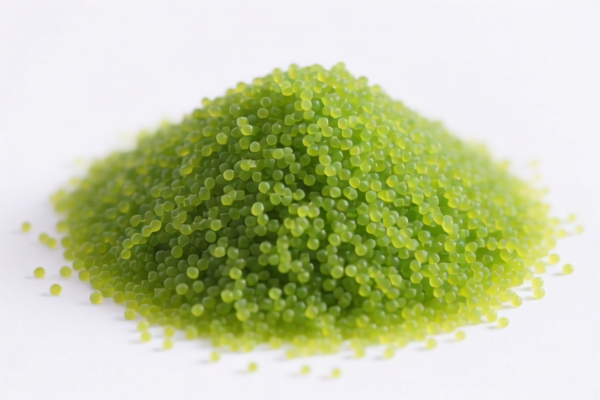
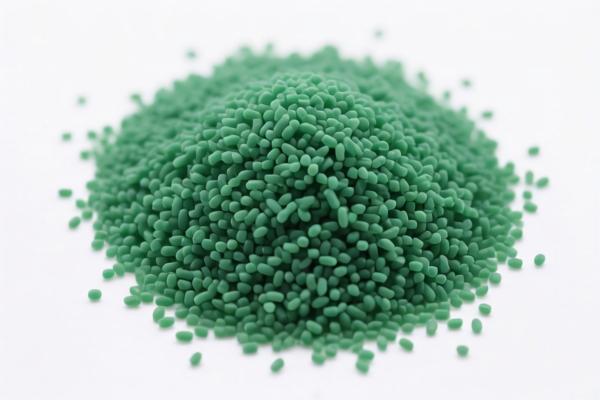
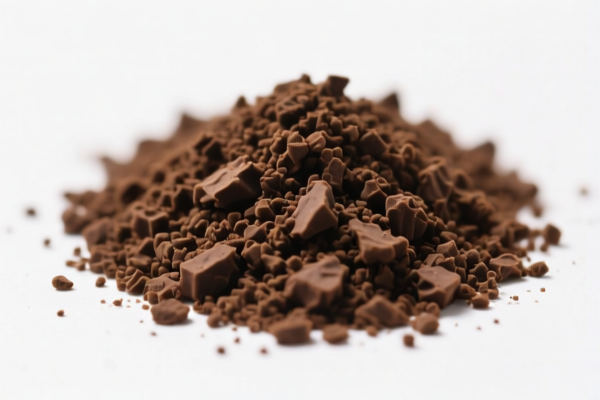
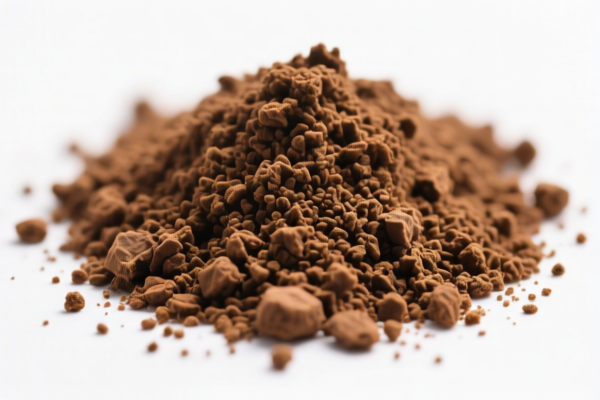
AI Analysis
🧪 Indanone Resin Modified Elastomer
🌐 HS Code Reference & Customs Clearance Guide | 2026 Latest Tariff Analysis | Professional Strategy
📌 I. Product Definition & Classification: What is "Indanone Resin Modified Elastomer"?
Indanone resin modified elastomers are advanced polymeric materials created by chemically modifying elastomers (such as styrene-butadiene rubber, ethylene-propylene rubber, or acrylic elastomers) with indanone resin. Indanone resin acts as a tackifier and compatibilizer, improving adhesion, heat resistance, and processability.
These materials are primarily used in: * Adhesives & Sealants: High-performance pressure-sensitive adhesives (PSA), hot-melt adhesives. * Coatings: Industrial protective coatings, wood finishes. * Plastics Modification: Impact modifiers for PVC, ABS, and other engineering plastics.
⚠️ Key Distinction:
- If the product is a pure resin (no elastomer base) → Classified under 3906.
- If the product is a modified rubber/elastomer where the base is rubber → Classified under 4002 or 4003.
- If the product is a mixed preparation (not a defined rubber or plastic) → Classified under 3906.90 or 3909.40.
- Crucial Note: Most "Indanone Resin Modified Elastomers" are considered modified rubbers if the elastomer content is significant, or intermediate products for adhesives.
📦 II. HS Code Classification Details (2026 Latest Tariff Authority Reference)
| HS Code | Product Description | Applicable Scenario | Key Classification Criteria |
|---|---|---|---|
4002.99.80.00 |
Other synthetic rubber, mixed with natural rubber, in primary forms or in plates, sheets, or strip | Elastomers mixed with natural rubber | Contains natural rubber |
4002.99.60.00 |
Other synthetic rubber, not mixed with natural rubber, in primary forms or in plates, sheets, or strip | Pure synthetic elastomer base (e.g., SBR, EPDM) | No natural rubber |
3906.90.90.00 |
Acrylic polymers in primary forms | If the base polymer is acrylic-based elastomer | Acrylic base |
3909.40.00.00 |
Urea and melamine resins, in primary forms; phenol or cresol resins in primary forms | If classified as a resin prep | Often misclassified here if resin content is high |
3506.91.00.00 |
Prepared glues and other prepared adhesives, whether or not containing thickeners or setting agents | Final Adhesive Products | If sold as a finished adhesive |
🔍 Critical Clarification:
- If sold as a raw material for rubber processing: It falls under Chapter 40 (Rubber). Most indanone-modified elastomers are treated as modified synthetic rubbers.
- If sold as a final adhesive: It falls under 3506.
- If sold as a plastic modifier: It may fall under 3906 (if acrylic-based) or 3907/3911 (if epoxy/phenolic modified).
- Default Assumption for "Elastomer": Typically 4002.99.60.00 (Synthetic rubber, not mixed with natural rubber).
💰 III. 2026 Latest Tariff Rate Details (Including Additional Duties & Policy Surcharges)
✅ Applicable Country: United States (US)
✅ Country of Origin: China (CN)
✅ Effective Date: November 10, 2025 (and subsequent imports)
🎯 1. 4002.99.60.00 —— Other Synthetic Rubber (Not Mixed with Natural Rubber)
| Item | Content |
|---|---|
| Base Tariff Rate | 5.3% (ad valorem) |
| USITC Additional Duty | +25% (Under USITC Footnote 9903.88.01 for certain chemical products) |
| IEEPA Additional Duty | +10% (For Chinese/HK products, effective from Nov 10, 2025) |
| Total Tariff Rate | 40.3% |
| Tax Calculation | CIF Value × 40.3% |
| De Minimis Exemption | ❌ Not Applicable (deny_de_minimis) |
| Legal Basis Path | IEEPA:9903.01.25 → IEEPA:9903.01.24 → USITC:4002.99.60.00 → FOOTNOTE:9903.88.01 |
📌 Explanation:
- The 25% USITC duty applies to certain synthetic rubbers and plastics intermediates under Section 301.
- The 10% IEEPA duty is the new surcharge on Chinese-origin goods in this category.
- Total 40.3% is a high cost driver. Misclassification as a "plastic" (3906) may result in 0% base duty but still face 301/IEEPA penalties if deemed rubber.
🎯 2. 3506.91.00.00 —— Prepared Adhesives (If Sold as Final Adhesive)
| Item | Content |
|---|---|
| Base Tariff Rate | 5.3% (ad valorem) |
| USITC Additional Duty | +25% |
| IEEPA Additional Duty | +10% |
| Total Tariff Rate | 40.3% |
| Tax Calculation | CIF Value × 40.3% |
| De Minimis Exemption | ❌ Not Applicable |
📌 Note:
- If the product is already a ready-to-use adhesive, it is classified under 3506.
- The tariff rate is identical to the rubber classification due to the nature of the materials.
- Risk: If classified as adhesive but the chemical composition is 80% elastomer, customs may reclassify to 4002, leading to penalties.
🛠️ IV. Customs Clearance Practical Advice (Real-World Pitfall Avoidance Guide)
✅ 1. Required Documentation Checklist (Non-negotiable)
| Document | Required | Description |
|---|---|---|
| ✅ Technical Data Sheet (TDS) | ✔️ | Must specify: Elastomer type, resin content %, physical state (pellet, powder, liquid) |
| ✅ Formula/Composition Sheet | ✔️ | Breakdown of elastomer vs. indanone resin vs. additives |
| ✅ Product Photos | ✔️ | Clear images of packaging, label, and physical form |
| ✅ FCC/CE/REACH Reports | ✔️ | If intended for electronic or consumer applications |
| ✅ Commercial Invoice | ✔️ | Clearly state "Indanone Resin Modified Synthetic Rubber" or "Prepared Adhesive" |
| ✅ Certificate of Origin (CO) | ✔️ | To verify non-origin if re-exported |
| ✅ Bill of Lading | ✔️ | Consistent with invoice description |
✅ 2. Declaration Tips (Key Mnemonic)
🔥 "Form Determines Code, Adhesive vs Rubber, Composition is Key!"
| Scenario | Correct Declaration | Wrong Practice |
|---|---|---|
| Raw material for rubber compounding | 4002.99.60.00 (Synthetic Rubber) |
Misdeclare as "Plastic" → 0% base but 301 penalty |
| Finished glue for bonding wood/metal | 3506.91.00.00 (Prepared Adhesive) |
Misdeclare as raw material → Delayed inspection |
| Acrylic-based modified elastomer | 3906.90.90.00 (Acrylic Polymer) |
Classify as general rubber → Higher risk |
| Mixed with natural rubber | 4002.99.80.00 |
Declare as synthetic only → Misclassification |
✅ 3. Special Case Handling
| Situation | Handling Advice |
|---|---|
| OEM Custom Modification | Provide client’s technical specification to prove intended use |
| High Resin Content (>50%) | Consider classifying under 3906 (Acrylic) or 3909 (Phenolic) if resin dominates |
| Liquid vs. Solid Form | Solid pellets → Chapter 40/39; Liquid solutions → Chapter 35/39 depending on solvent |
| Export to Non-US Markets | EU, Japan, Australia have lower rates for these codes. Check local HTS. |
🌍 V. Global Major Market Customs Comparison (2026 Latest)
| Country/Region | Recommended HS Code | Tariff Rate | Certification Requirement | Note |
|---|---|---|---|---|
| 🇺🇸 USA | 4002.99.60.00 |
40.3% (CN Origin) | TSCA (EPA) | High tariff due to 301/IEEPA |
| 🇨🇳 China | 4002.99.60.00 |
5.3% | No extra duties | Basic import duty |
| 🇪🇺 EU | 4002.99.90 |
6.5% (Most Favored Nation) | REACH + SVHC | No Section 301 equivalent |
| 🇦🇺 Australia | 4002.99.90 |
5.0% | AICIS | Low duty |
| 🇯🇵 Japan | 4002.99.00 |
6.0% | FSC (Fire Service) | Stable rates |
📌 Conclusion:
- USA is the most expensive market due to political tariffs.
- EU, Japan, and Australia offer significantly lower duty rates (~5-6.5%).
- China’s export duty is generally 0-5%, but the destination duty matters most.
📌 VI. Common Mistakes & Pitfall Guide (Lessons Learned)
❌ Mistake 1: Declaring "Modified Elastomer" as "Plastic Resin" (3906) to avoid rubber duties
👉 Consequence: Customs may reclassify based on chemical structure → 40.3% + Penalties
❌ Mistake 2: Failing to disclose elastomer base in the declaration
👉 Consequence: Customs request for additional documentation → Port Demurrage Charges
❌ Mistake 3: Using generic terms like "Rubber Adhesive" without specifying form
👉 Consequence: Ambiguity leads to random inspection → Delays
❌ Mistake 4: Ignoring IEEPA surcharge for Chinese-origin goods
👉 Consequence: Underpayment of 10% → Back-taxes + Interest
✅ Correct Approach:
"Indanone Resin Modified Styrene-Butadiene Rubber (SBR), Pellets, Synthetic, Not Mixed with Natural Rubber, HS Code 4002.99.60.00, TSCA Compliant"
🎯 VII. Conclusion: Precision Classification, Cost Control, Compliance!
🎯 Remember the Mnemonic:
🔹 "Elastomer Base = Chapter 40; Adhesive = Chapter 35; Resin = Chapter 39"
🔹 "40.3% is the US Price for Chinese Rubber; Plan Ahead!"
🔹 "Composition is King; Form is Queen; Declaration is the Court!"
📌 Pro Tip:
If your product is exported from Vietnam, Malaysia, or Thailand (with sufficient processing), you may qualify for IEEPA exemption, reducing the tariff to 0-5%.
Recommendation: Apply for Advance Ruling from CBP if unsure about classification.
📣 Immediate Action:
📞 Engage a Professional Customs Broker + Provide Technical Data Sheet + Apply for HS Code Advance Ruling
🚀 Ensure Smooth Clearance, Minimize Costs, Maximize Profit!
✨ Professional Customs Clearance Starts with Accurate Classification!
💼 Every Dollar Saved is a Dollar Earned!
Customer Reviews
About HS Code Classification
The Harmonized System (HS) is an internationally standardized nomenclature developed by the World Customs Organization (WCO) to classify traded products. Over 200 countries use the HS system as the basis for customs tariffs, trade statistics, and import/export regulations.
Each HS code follows a hierarchical structure:
- Chapter (2 digits) — Broad category of goods (e.g., Chapter 84: Machinery and Mechanical Appliances)
- Heading (4 digits) — More specific grouping within the chapter
- Subheading (6 digits) — Internationally standardized breakdown, used by all WCO member countries
- National subdivisions (8-10 digits) — Country-specific extensions for further classification, such as US HTSUS 10-digit codes
Correct HS code classification is essential for smooth customs clearance, accurate duty payment, and compliance with trade regulations. Misclassification can lead to customs delays, overpayment of duties, or penalties.
When importing from CN to US, the applicable tariff rates may include:
- Most-Favored-Nation (MFN) rate — The standard duty rate applied to WTO members
- General rate — Applied to countries without trade agreements
- Trade remedy duties — Additional tariffs such as Section 301 (anti-dumping), Section 232 (national security), or countervailing duties
The information provided on this page is for reference purposes only. For official classification, please consult with your local customs authority or a licensed customs broker.