Indexed Notepad
CN → US| HS Code | Tariff Rate | Origin | Destination | Doc |
|---|---|---|---|---|
| 4820102060 | 35.0% | CN | US | Official Doc |
| 4820104000 | 35.0% | CN | US | Official Doc |
Product Images
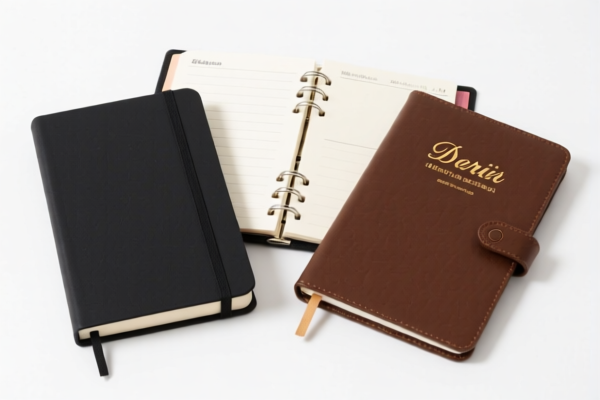

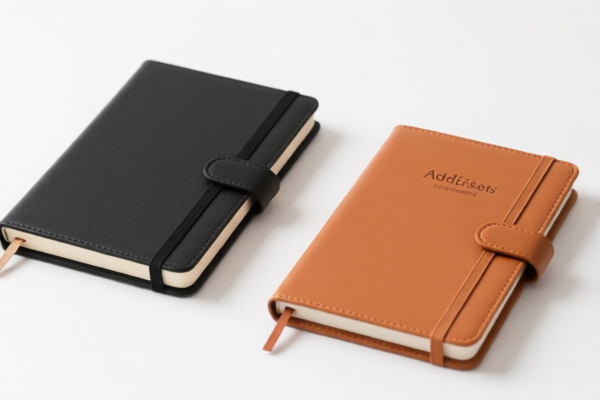
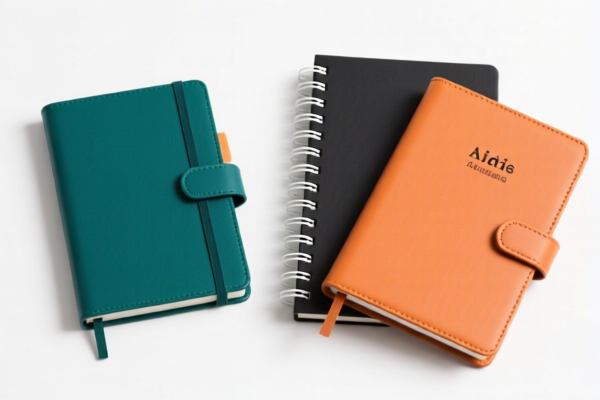
AI Analysis
📝 Index Notepad (Indexed Notepads)
🌐 HS Code Reference & Customs Clearance Guide | 2026 Latest Tariff Analysis | Professional Clearance Strategy
📌 1. Product Definition & Classification: What exactly is an "Indexed Notepad"?
An Indexed Notepad (often categorized under general "Notebooks" or "Stationery of Paper") is a paper product designed for recording information. In the context of international trade and tariff classification, it falls squarely under Chapter 48 of the Harmonized System (HS), specifically focusing on paper-based stationery items.
Key characteristics that define this classification: * Material: Made primarily of paper or paperboard. * Function: Used for writing, recording, or organizing information (diaries, address books, memo pads, etc.). * Structure: Bound or assembled in a manner that allows for repeated use but is not a bound book in the literary sense (e.g., loose-leaf, spiral-bound, or glued pads).
⚠️ Key Distinction:
- If the item is strictly a notebook (bound pages for writing), it falls under 4820.10.
- If it is a diary (with dates/pre-printed time slots), it also falls under 4820.10, but potentially different sub-codes depending on binding.
- Crucial Point: For customs purposes, "Indexed Notepads" are generally classified as Notebooks or Other Stationery Articles of paper, not as printed publications (which would be Chapter 49).
📦 2. HS Code Classification Details (2026 Latest Tariff Authority对照)
Based on the provided data (<DATA>), the specific HS Codes for "Indexed Notepad" (falling under Registers, Account Books, Notebooks, etc.) are:
| HS Code | Product Description | Applicable Scenario | Binding/Type |
|---|---|---|---|
4820.10.20.60 |
Diaries, notebooks and address books, bound; memorandum pads, letter pads and similar articles Other | Standard bound notebooks, memo pads, notepads with indexes | ✅ Bound/Attached |
4820.10.40.00 |
Other (Registers, account books, notebooks, order books, receipt books, letter pads, memorandum pads, diaries and similar articles) | Other paper stationery items not specifically listed in 4820.10.20 | ✅ Paper-based |
🔍 Focus Point:
- Both codes fall under Heading 4820: Registers, account books, notebooks, order books, receipt books, letter pads, memorandum pads, diaries and similar articles, exercise books, blotting pads, binders (looseleaf or other), folders, file covers, manifold business forms, interleaved carbon sets and other articles of stationery, of paper or paperboard...
-4820.10.20.60is more specific to bound notebooks/diaries/memo pads.
-4820.10.40.00is a catch-all for other similar paper stationery articles.
💰 3. 2026 Latest Tariff Rate Details (Including Surcharges)
✅ Applicable Country: United States (US)
✅ Country of Origin: China (CN)
✅ Effective Time: Current rates apply
🎯 1. 4820.10.20.60 —— Bound Notebooks, Diaries, Memo Pads
| Item | Content |
|---|---|
| Base Tariff Rate | 0.0% (ad valorem) |
| Additional Tariff (Section 301) | +25.0% |
| Total Tariff Rate | 25.0% |
| Tax Calculation | CIF Value × 25% |
| De Minimis Eligibility | ❌ Not Eligible (For China-origin goods under Section 301) |
| Legal Basis | HTSUS:4820.10.20.60 → USITC:Footnote 301 |
📌 Explanation:
- The base tariff for many paper stationery items is 0%, reflecting low trade barriers for general paper products.
- However, due to Section 301 tariffs on Chinese goods, a 25% surcharge is applied.
- Total Cost Impact: 25% of the CIF (Cost, Insurance, and Freight) value. This is a significant added cost compared to base rates.
🎯 2. 4820.10.40.00 —— Other Paper Stationery Articles
| Item | Content |
|---|---|
| Base Tariff Rate | 0.0% (ad valorem) |
| Additional Tariff (Section 301) | +25.0% |
| Total Tariff Rate | 25.0% |
| Tax Calculation | CIF Value × 25% |
| De Minimis Eligibility | ❌ Not Eligible (For China-origin goods under Section 301) |
| Legal Basis | HTSUS:4820.10.40.00 → USITC:Footnote 301 |
📌 Note:
- Same tariff structure as4820.10.20.60.
- Whether classified as "bound notebooks" or "other stationery," the 25% additional tariff applies equally to China-origin goods.
- Total Rate: 25.0%.
🛠️ 4. Customs Clearance Practical Advice (Best Practices for Avoiding Pitfalls)
✅ 1. Required Documentation Checklist
| Document | Mandatory? | Notes |
|---|---|---|
| ✅ Commercial Invoice | ✔️ | Must clearly state "Paper Notebooks," "Memo Pads," or "Notepads." Avoid vague terms like "Office Supplies." |
| ✅ Packing List | ✔️ | Detail quantity, weight, and dimensions. |
| ✅ Product Description | ✔️ | Specify material (e.g., "100% Paper," "Recycled Paper") and binding type (e.g., "Spiral-bound," "Glued"). |
| ✅ Country of Origin Certificate | ✔️ | Crucial for applying/confirming the 25% surcharge. |
| ✅ Labeling | ✔️ | Ensure "Made in China" is clearly marked on the product/packaging. |
✅ 2. Declaration Tips (Key Mnemonics)
🔥 "Paper Stationery, Not Books: Declare as 4820, Not 4901!"
| Scenario | Correct Declaration | Incorrect Practice |
|---|---|---|
| Standard Notebook/Memo Pad | 4820.10.20.60 or 4820.10.40.00 |
Misdeclaring as "Books" (4901) → Higher scrutiny |
| Printed Diaries (Pre-filled dates) | 4820.10.20.60 |
Misdeclaring as "Printed Publications" → Delayed clearance |
| Blank Paper Notebooks | 4820.10.40.00 |
Misdeclaring as "Blank Books" (4820.10.10) → Potential error if not "loose-leaf" |
| OEM Custom Notebooks | Provide design files if requested | Do not mislabel as "Gifts" to avoid duties |
✅ 3. Special Considerations
| Situation | Handling Advice |
|---|---|
| Mixed Shipments (Notebooks + Pens) | Declare separately! Pens may have different HS Codes (e.g., 9608). Do not bundle under one HS Code. |
| E-commerce (De Minimis) | ❌ Section 301 tariffs apply even under de minimis for China-origin goods. Do not assume $800 exemption removes duties. |
| Paper Quality (Recycled vs. Virgin) | No impact on HS Code, but may affect environmental certifications (e.g., FSC) for certain buyers. |
| Binding Type | "Loose-leaf" binders fall under 4820.10 as well. Ensure description matches physical product. |
🌍 5. Global Market Comparison (2026 Latest)
| Country/Region | Recommended HS Code | Tariff Rate (China Origin) | Notes |
|---|---|---|---|
| 🇺🇸 United States | 4820.10.20.60 / 4820.10.40.00 |
25.0% (0% Base + 25% 301) | High additional tariff. Critical to declare correctly. |
| 🇪🇺 European Union | 4820.10.20 / 4820.10.40 |
~6.5% | Standard EU duty for paper stationery. No Section 301 equivalent. |
| 🇨🇳 China (Import) | 4820.10.20 / 4820.10.40 |
0% - 5% | Low import duty for re-export or domestic use. |
| 🇬🇧 United Kingdom | 4820.10.20 / 4820.10.40 |
~5% | Post-Brexit tariff alignment with EU. |
| 🇯🇵 Japan | 4820.10.20 / 4820.10.40 |
0% - 5% | Often zero or low duty for paper products. |
📌 Conclusion:
- The US market is the most challenging due to the 25% Section 301 surcharge.
- EU, UK, Japan, and China have significantly lower tariff burdens for paper stationery.
- Cost Strategy: For US-bound goods, consider price absorption or supply chain diversification if margins are thin.
📌 6. Common Mistakes & Pitfalls (Lessons Learned)
❌ Mistake 1: Misclassifying "Notebooks" as "Books" (4901)
👉 Consequence: Higher base duty + potential anti-dumping investigations. Correct code is 4820.
❌ Mistake 2: Ignoring the 25% Surcharge for China-origin goods
👉 Consequence: Underpayment of duties → Penalties + Interest. Always calculate CIF × 25% for US imports.
❌ Mistake 3: Declaring "Office Supplies" generically
👉 Consequence: Customs may detain shipment for classification verification. Be Specific: "Paper Notebooks, Spiral-bound."
❌ Mistake 4: Assuming De Minimis ($800) exempts Section 301 tariffs
👉 Consequence: False! Section 301 tariffs apply to de minimis shipments from China.
✅ Correct Practice:
"Paper Notebooks, Spiral-bound, 100 sheets per pad, Made in China, HS 4820.10.20.60"
🎯 7. Conclusion: Professional Clearance for Competitive Advantage
🎯 Key Takeaway:
🔹 "Indexed Notepads are Paper Stationery (HS 4820), Not Books (HS 4901)."
🔹 "US Imports: 25% Total Duty (0% Base + 25% 301)."
🔹 "Accurate Declaration Saves Time and Money!"
📌 Pro Tip:
If you are exporting to the US, ensure your Commercial Invoice clearly states "Section 301 Applicable" and the correct HS Code.
For non-US markets, enjoy lower tariffs (often 0-6.5%) with fewer surcharges.
📣 Immediate Action:
📞 Verify HS Code with your customs broker.
📊 Calculate Landed Cost: CIF + 25% Duty + Customs Fees.
🚀 Optimize Supply Chain: Consider pricing strategies or alternative markets to mitigate US tariff impacts.
✨ Professional Clearance Starts with Accurate Classification!
💼 Every cent of duty saved is pure profit earned!
Customer Reviews
About HS Code Classification
The Harmonized System (HS) is an internationally standardized nomenclature developed by the World Customs Organization (WCO) to classify traded products. Over 200 countries use the HS system as the basis for customs tariffs, trade statistics, and import/export regulations.
Each HS code follows a hierarchical structure:
- Chapter (2 digits) — Broad category of goods (e.g., Chapter 84: Machinery and Mechanical Appliances)
- Heading (4 digits) — More specific grouping within the chapter
- Subheading (6 digits) — Internationally standardized breakdown, used by all WCO member countries
- National subdivisions (8-10 digits) — Country-specific extensions for further classification, such as US HTSUS 10-digit codes
Correct HS code classification is essential for smooth customs clearance, accurate duty payment, and compliance with trade regulations. Misclassification can lead to customs delays, overpayment of duties, or penalties.
When importing from CN to US, the applicable tariff rates may include:
- Most-Favored-Nation (MFN) rate — The standard duty rate applied to WTO members
- General rate — Applied to countries without trade agreements
- Trade remedy duties — Additional tariffs such as Section 301 (anti-dumping), Section 232 (national security), or countervailing duties
The information provided on this page is for reference purposes only. For official classification, please consult with your local customs authority or a licensed customs broker.