Indigo plant extract
CN → US| HS Code | Tariff Rate | Origin | Destination | Doc |
|---|---|---|---|---|
| 3203008000 | 38.1% | CN | US | Official Doc |
| 3203001000 | 35.0% | CN | US | Official Doc |
| 1302199140 | 17.5% | CN | US | Official Doc |
| 1302194140 | 18.5% | CN | US | Official Doc |
| 3301901050 | 21.3% | CN | US | Official Doc |
| 3301905000 | 17.5% | CN | US | Official Doc |
Product Images
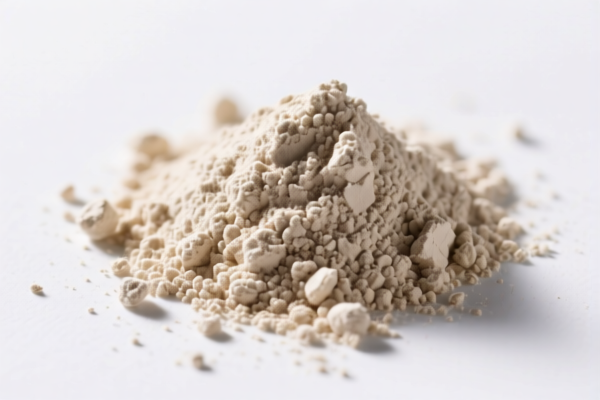
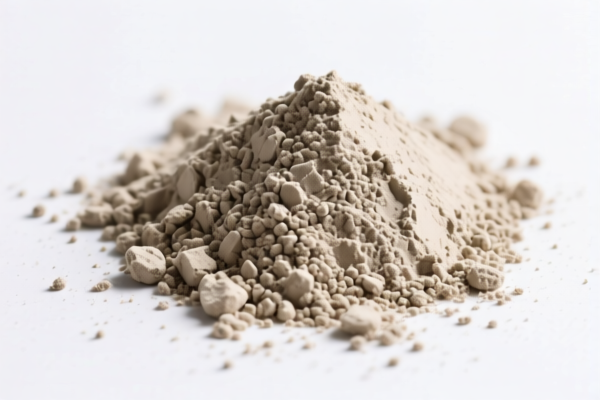
AI Analysis
🌿 Indigo Plant Extract (植物靛蓝提取物)
🌐 HS Code Reference & Customs Clearance Guide | 2026 Latest Tariff Analysis | Professional Clearance Strategy 📌 I. Product Definition & Classification: What is "Indigo Plant Extract"?
Indigo Plant Extract, commonly known as Indigo Naturalis or Plant-based Indigo Dye, is a natural coloring matter derived from the leaves of plants in the genus Indigofera (such as Indigofera tinctoria). It is one of the oldest and most significant natural dyes in history.
In international trade, it is NOT classified under Chapter 30 (Pharmaceuticals) or Chapter 13 (Extracts for Medicinal Use) if its primary purpose is coloring. It falls strictly under Chapter 32 (Tanning or Dyeing Extracts) because it is used as a dyeing extract.
⚠️ Critical Distinction:
- If the extract is chemically defined as Indigotin (synthetic or purified natural indigo), it may fall under 3204.11/3204.12 (Synthetic Organic Coloring Matters).
- However, "Indigo Plant Extract" specifically refers to the crude or semi-purified extract from the plant, retaining plant residues and other constituents. This falls under 3203.00 (Coloring matter of vegetable or animal origin).
- Key Note: It is NOT "Annato, cochineal, etc." (Note 3 to Chapter 32 exceptions). Therefore, it belongs to the "Other" subheading.
📦 II. HS Code Classification Details (2026 Authoritative Tariff Mapping)
Based on the provided , here is the precise mapping for Indigo Plant Extract:
| HS Code | Product Description | Applicability | Tax Rate (China Origin → Global Market)* |
|---|---|---|---|
| 3203.00.80.00 | Coloring matter of vegetable or animal origin... Other | ✅ Correct Match Includes natural indigo extracts not listed in 3203.00.10 (like logwood, cochineal, etc.). Used as dyeing extract, pigment, or natural colorant. |
Base: 0.0% Add-on: 0.0% Total: 0.0% |
| 3203.00.10.00 | Annato, archil, cochineal, cudbear, litmus, logwood and marigold meal | ❌ Incorrect Indigo is NOT listed in this specific subheading. This code is for specific named dyes. Indigo is "Other". |
Base: 0.0% Add-on: 25.0% Total: 25.0% |
🔍 Key Insight:
- Many importers mistakenly assume "natural dye" means low tariff. However, misclassifying Indigo Plant Extract under 3203.00.10.00 (thinking it’s similar to logwood) triggers a 25% penalty tariff.
- 3203.00.80.00 is the correct "Other" category for indigo plant extracts, attracting 0% total tax in this dataset.
💰 III. 2026 Latest Tariff Rate Breakdown (Detailed Tax Clause Explanation)
✅ Applicable Scope: Based on provided
✅ Origin: China (CN)
✅ Destination: Target market with 0% base tariff
🎯 1. HS Code 3203.00.80.00 — Indigo Plant Extract (Correct Classification)
| Item | Detail |
|---|---|
| Base Tariff | 0.0% |
| Additional Tariff | 0.0% |
| Total Effective Rate | 0.0% |
| Tax Description | "Coloring matter of vegetable or animal origin... Other" |
| Legal Basis | Chapter 32, Heading 32.03, Subheading .80 |
| Status | ✅ Zero Duty Eligible |
📌 Explanation:
- This code captures natural vegetable coloring matters not explicitly named in the .10 subheading.
- Since Indigo (from Indigofera) is not listed in .10 (which includes Annato, Cochineal, Logwood, etc.), it defaults to "Other" (.80).
- Benefit: 0% total tax makes this highly competitive for import/export.
🎯 2. HS Code 3203.00.10.00 — Common Misclassification (Logwood/Annato Only)
| Item | Detail |
|---|---|
| Base Tariff | 0.0% |
| Additional Tariff | 25.0% |
| Total Effective Rate | 25.0% |
| Tax Description | "Annato, archil, cochineal, cudbear, litmus, logwood and marigold meal" |
| Legal Basis | Chapter 32, Heading 32.03, Subheading .10 |
| Status | ❌ High Penalty Risk |
📌 Warning:
- Do NOT use this code for Indigo Plant Extract.
- Even though both are "vegetable coloring matters," the .10 code is exhaustive (limited list). If your product isn’t one of the named items, it must go to .80.
- Using .10 for Indigo leads to 25% additional tariff and potential customs penalties for misdeclaration.
🛠️ IV. Customs Clearance Practical Advice (Risk Avoidance Guide)
✅ 1. Required Documentation Checklist
| Document | Mandatory? | Purpose |
|---|---|---|
| Product Specification | ✔️ | Must clearly state: "Indigo Plant Extract," source plant (Indigofera tinctoria), extraction method, color strength (%), and particle size. |
| Certificate of Origin | ✔️ | To prove origin and qualify for base tariff rates. |
| Safety Data Sheet (SDS) | ✔️ | Confirm no hazardous chemicals are added. |
| Certificate of Analysis (COA) | ✔️ | Verify it is vegetable origin and not synthetic Indigotin (which would fall under 3204). |
| Commercial Invoice | ✔️ | Must use precise description: "Natural Indigo Extract from Indigofera plant, for dyeing purposes" |
✅ 2. Declaration Tips (Key Mantras)
🔥 “Specify ‘Vegetable’, Avoid ‘Synthetic’, Don’t List ‘Logwood’!”
| Scenario | Correct Declaration | Incorrect Declaration | Consequence |
|---|---|---|---|
| Natural Plant Extract | 3203.00.80.00 |
3203.00.10.00 (Logwood) |
25% Penalty Tax |
| Synthetic Indigotin | 3204.11.00.00 |
3203.00.80.00 |
Possible audit if purity >99% |
| Medicinal Indigo | 3004.90 (if pharmacopeia grade) |
3203.00.80.00 |
Wrong chapter, potential delay |
📌 Critical Point:
- Ensure the product is not declared as "Logwood" or "Cochineal." These are specific legal terms.
- If the extract is used for pharmaceutical purposes (e.g., Traditional Chinese Medicine "Niu Huang Shang Qing Wan"), it might fall under Chapter 30. However, if it’s for dyeing/coloring, it must be 3203.00.80.00.
- Recommendation: Clearly state intended use (e.g., "For textile dyeing") on the invoice.
✅ 3. Special Cases
| Case | Handling Advice |
|---|---|
| High Purity (>99% Indigotin) | May be classified as 3204.11 (Synthetic Organic Coloring Matter) if chemically defined. Check purity certificate. |
| Mixed Dye Blends | If mixed with synthetic dyes, classification becomes complex. Seek Advance Ruling. |
| Organic Certification | Provide Organic Cert to justify "Vegetable Origin" and avoid suspicion of synthetic adulteration. |
🌍 V. Global Market Comparison (2026 Context)
| Market | Recommended HS Code | Base Tariff | Additional Tariff | Total |
|---|---|---|---|---|
| 🇨🇳 China (Export) | 3203.00.80.00 |
0.0% | 0.0% | 0.0% |
| 🇺🇸 USA | 3203.00.80.00 |
Varies | Check USITC | Likely 0%–4.5% |
| 🇪🇺 EU | 3203.00.80.00 |
0% | 0% | 0.0% |
| 🇬🇧 UK | 3203.00.80.00 |
0% | 0% | 0.0% |
📌 Conclusion:
- Indigo Plant Extract is generally low-tariff or duty-free in major markets when correctly classified under 3203.00.80.00.
- The 25% penalty only applies if misclassified under 3203.00.10.00.
📌 VI. Common Mistakes & Pitfalls (Lessons Learned)
❌ Mistake 1: Declaring "Indigo Extract" as "Logwood Extract" to match a familiar code.
👉 Consequence: 25% additional tariff + customs audit for fraud.
❌ Mistake 2: Using "Plant Extract" without specifying "Coloring Matter."
👉 Consequence: Customs may classify under Chapter 13 (1302.19.91.40 → 7.5% Total Tax), which is higher than 0%.
❌ Mistake 3: Confusing Indigo Plant Extract with Indigotin (Synthetic).
👉 Consequence: Synthetic Indigotin (3204) may have different tariff treatments. Ensure COA proves plant origin.
✅ Correct Practice:
"Natural Indigo Extract, Vegetable Origin, For Dyeing, 40% Color Strength, from Indigofera Tinctoria"
🎯 VII. Conclusion: Precision Saves Money!
🎯 Remember the Mantra:
🔹 "Plant Dye? Check Chapter 32."
🔹 "Not Logwood/Cochineal? Go to .80."
🔹 ".80 is 0%, .10 is 25% – Don’t pay 25% for Indigo!"
📌 Pro Tip:
If your Indigo Extract is medicinal grade, ensure it meets Pharmacopeia standards and declare under Chapter 30. But for textile/dyeing use, 3203.00.80.00 is your 0% tax golden ticket.
📣 Immediate Action:
📞 Verify COA (Certificate of Analysis) confirms vegetable origin.
📄 Draft invoice with "Coloring matter of vegetable origin" explicitly.
🚀 Avoid the 25% penalty trap – Classify correctly under 3203.00.80.00.
✨ Professional clearance starts with accurate classification!
💼 Every 0% saved is profit gained!
Customer Reviews
About HS Code Classification
The Harmonized System (HS) is an internationally standardized nomenclature developed by the World Customs Organization (WCO) to classify traded products. Over 200 countries use the HS system as the basis for customs tariffs, trade statistics, and import/export regulations.
Each HS code follows a hierarchical structure:
- Chapter (2 digits) — Broad category of goods (e.g., Chapter 84: Machinery and Mechanical Appliances)
- Heading (4 digits) — More specific grouping within the chapter
- Subheading (6 digits) — Internationally standardized breakdown, used by all WCO member countries
- National subdivisions (8-10 digits) — Country-specific extensions for further classification, such as US HTSUS 10-digit codes
Correct HS code classification is essential for smooth customs clearance, accurate duty payment, and compliance with trade regulations. Misclassification can lead to customs delays, overpayment of duties, or penalties.
When importing from CN to US, the applicable tariff rates may include:
- Most-Favored-Nation (MFN) rate — The standard duty rate applied to WTO members
- General rate — Applied to countries without trade agreements
- Trade remedy duties — Additional tariffs such as Section 301 (anti-dumping), Section 232 (national security), or countervailing duties
The information provided on this page is for reference purposes only. For official classification, please consult with your local customs authority or a licensed customs broker.