Indoor Agglomerated Cork Wall Panel
CN → US| HS Code | Tariff Rate | Origin | Destination | Doc |
|---|---|---|---|---|
| 4504104000 | 35.0% | CN | US | Official Doc |
| 4503904000 | 35.0% | CN | US | Official Doc |
| 4504105000 | 35.0% | CN | US | Official Doc |
| 4503906000 | 49.0% | CN | US | Official Doc |
| 4504104000 | 35.0% | CN | US | Official Doc |
Product Images
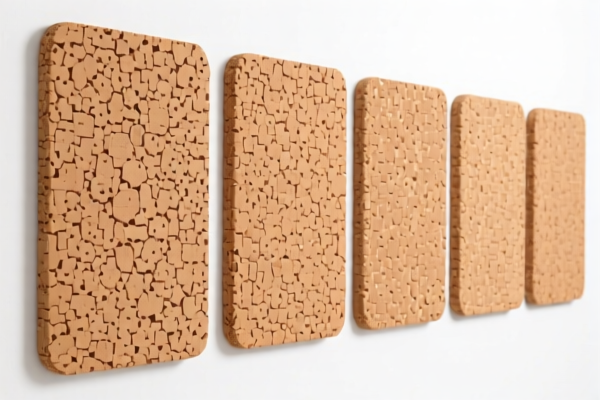
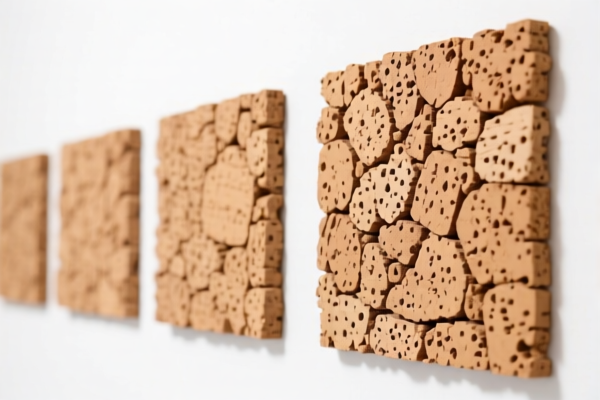
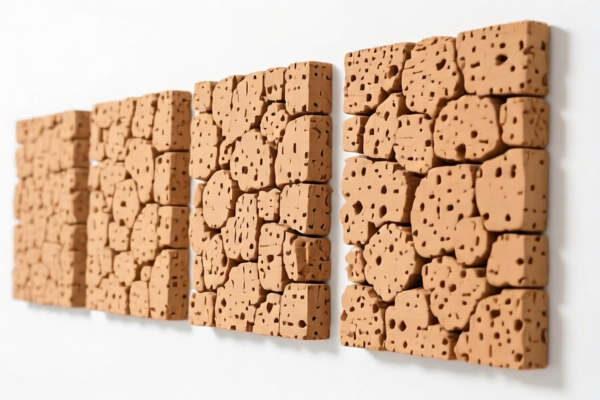
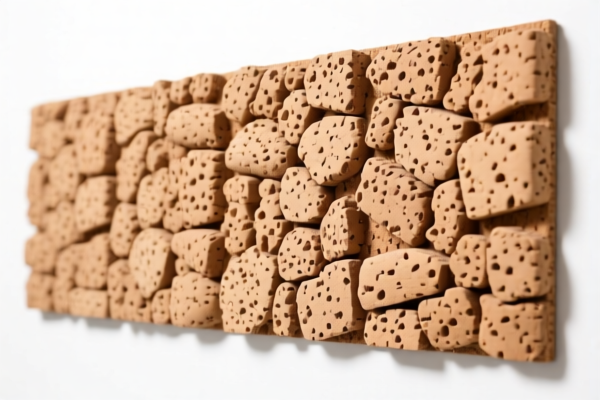
AI Analysis
🧱 Indoor Agglomerated Cork Wall Panel
🌐 HS Code Reference & Customs Clearance Guide | 2026 Latest Tariff Analysis | Professional Entry Strategy
📌 1. Product Definition & Classification: What is "Agglomerated Cork"?
Indoor Agglomerated Cork Wall Panels are interior building materials made from natural cork granules derived from the bark of the cork oak tree. Unlike "solid cork" (monolithic), agglomerated cork consists of cork particles bonded together using natural latex or synthetic adhesives under high pressure and temperature.
In international trade, the classification hinges on two key factors: 1. Material State: Is it pure cork (Ch. 45) or does it involve other materials like paper backing or significant non-cork binders that change its essential character? 2. Form & Use: Is it sold as a raw board/strip, or as a finished wall covering (wallpaper-like)?
⚠️ Key Distinction: * If the product is a solid board/panel made primarily of cork granules bonded together → Falls under Heading 4504 (Agglomerated Cork). * If the product is wallpaper or has a paper backing that serves as the primary structural support → It may fall under Heading 4503 (Other articles of cork) or potentially textile/paper headings if the cork is merely a decorative surface layer (though Ch. 45 usually prevails for substantial cork content). * Crucial Note: The provided data distinguishes between "Agglomerated Boards" (4504) and "Other Cork Articles/Wallpapers" (4503), with varying tariff impacts.
📦 2. HS Code Classification Details (2026 Authorized Reference)
Based on the provided data, here are the specific HS Codes for Agglomerated Cork Wall Panels:
| HS Code | Product Description | Application Scenario | Structural Nature |
|---|---|---|---|
4504.10.40.00 |
Natural agglomerated cork wall panels or wall贴纸 materials; material is cork, form is board, sheet, strip, or wallpaper-like | Standard agglomerated cork boards, thin panels, or wall stickers made purely of cork granules | ✅ Pure Agglomerated Cork |
4503.90.40.00 |
Natural cork articles, form is wall panels or wallpaper products with backing | Cork panels that may include a specific backing or are classified as "other" cork articles rather than agglomerated boards | ✅ Cork Article w/ Backing |
4504.10.50.00 |
Combined cork material, form is board/sheet, categorized under "other" cork articles | Agglomerated cork sheets/boards not specifically listed as wall panels, but generally agglomerated cork | ✅ Agglomerated Cork Board |
4503.90.60.00 |
Natural cork articles, form is wall panel, categorized under "other" reasonable scope | Wall panels classified as general cork articles (not agglomerated boards) | ✅ General Cork Panel |
4504.10.40.00 |
Natural cork wall sticker material, classified as wallpaper form supported/enhanced by paper | Cork wall stickers where paper serves as the primary support or reinforcement | ✅ Cork on Paper Support |
🔍 Critical Insight: * 4504.10.40.00 is the most common code for standard agglomerated cork boards/panels. * 4503.90.40.00 / 4503.90.60.00 are used for cork articles that might have a distinct backing or are not strictly "agglomerated boards" in the technical sense. * 4504.10.50.00 covers agglomerated cork sheets/boards that don't fit the specific "wall panel" description but are still agglomerated. * 4504.10.40.00 also covers cork stickers on paper, highlighting the importance of describing the "support" material if applicable.
💰 3. 2026 Latest Tariff Rate Breakdown (Including Surtaxes & Policy Add-ons)
✅ Applicable Country: United States (US)
✅ Origin: China (CN)
✅ Effective Time: As per current trade policies (includes 301 & IEEPA measures)
🎯 1. 4504.10.40.00 & 4504.10.50.00 — Agglomerated Cork Boards/Sheets
| Item | Content |
|---|---|
| Base Duty Rate | 0% (ad valorem) |
| USITC Additional Duty | +25% (Section 301 Tariff) |
| IEEPA Additional Duty | +10% (China-specific measure) |
| Total Tax Rate | 35.0% |
| Tax Calculation | CIF Value × 35% |
| De Minimis Exemption? | ❌ No (Denied) |
| Legal Basis Path | IEEPA:9903.01.25 → USITC:4504.10.40.00 → FOOTNOTE:Section301 |
📌 Explanation: * Base Duty: 0% reflects the low base tariff for cork products. * 301 Tariff (+25%): Applied to all Chinese-origin cork products under Heading 4504. * IEEPA (+10%): Additional surcharge for Chinese goods. * Total: 35%. This is a high tariff for a natural material. Must be factored into landed cost calculations.
🎯 2. 4503.90.40.00 & 4503.90.60.00 — Other Cork Articles (Wall Panels/Wallpaper)
| Item | Content |
|---|---|
| Base Duty Rate | 14% (ad valorem) |
| USITC Additional Duty | +25% (Section 301 Tariff) |
| IEEPA Additional Duty | +10% (China-specific measure) |
| Total Tax Rate | 49.0% |
| Tax Calculation | CIF Value × 49% |
| De Minimis Exemption? | ❌ No (Denied) |
| Legal Basis Path | IEEPA:9903.01.25 → USITC:4503.90.40.00 → FOOTNOTE:Section301 |
📌 Explanation: * Base Duty: 14% is significantly higher than for agglomerated boards (0%). * 301 Tariff (+25%): Applies to Chinese cork articles under Heading 4503. * IEEPA (+10%): Additional surcharge for Chinese goods. * Total: 49%. This is an extremely high tariff. Misclassification here can lead to significant cost overruns.
🔍 Key Difference: * Agglomerated Boards (4504): 35% Total. * Other Cork Articles (4503): 49% Total. * Strategy: If your product is a solid agglomerated board, always aim for 4504.10 to save 14% in base duty. Only use 4503 if the product is fundamentally a "wallpaper" or has a non-cork structural base.
🛠️ 4. Customs Clearance Practical Advice (Real-World Pitfall Guide)
✅ 1. Document Checklist (Mandatory)
| Document | Required | Notes |
|---|---|---|
| ✅ Product Specification Sheet | ✔️ | Must clearly state: "Agglomerated Cork," "Granule Size," "Binding Agent" (e.g., natural latex). |
| ✅ Material Composition | ✔️ | % of cork vs. adhesive. If >50% cork by weight, it’s Ch. 45. |
| ✅ Product Photos (Front/Back/Cross-section) | ✔️ | Show the granular structure to prove it’s "agglomerated," not solid or veneer. |
| ✅ Commercial Invoice | ✔️ | Must describe as "Agglomerated Cork Wall Panel," NOT "Wood Panel" or "Fabric." |
| ✅ Packing List | ✔️ | Detail dimensions, weight, and packaging type. |
| ✅ Binding Agent Declaration | ✔️ | Specify if natural latex (eco-friendly) or synthetic glue. May affect environmental certs. |
✅ 2. Classification Tips (Crucial Mnemonic)
🔥 "Agglomerated = 4504 (35%), Backed/Wallpaper = 4503 (49%)!"
| Scenario | Correct HS Code | Incorrect Code | Risk |
|---|---|---|---|
| Solid cork board made of granules | 4504.10.40.00 |
4503.90.60.00 |
Overpay 14% base duty |
| Cork wall sticker on paper backing | 4504.10.40.00 (if paper is minor) |
4503.90.40.00 |
Risk of 49% if paper is primary support |
| Cork veneer on MDF | Not Ch. 45 (Likely Ch. 44) | 4504.10.40.00 |
Major misclassification → Penalty |
| Natural solid cork block | 4503.90.60.00 |
4504.10.40.00 |
Underpay base duty (0% vs 14%) → Seizure |
📌 Note on "Wallpaper": If the cork is a thin layer on a paper or fabric base, it may still be classified under 4504 if the cork is the essential character. However, if it’s purely decorative and the base is paper, customs may argue for 4503 or even Chapter 48/59. Consult a broker for paper-backed products.
✅ 3. Special Cases
| Situation | Handling Advice |
|---|---|
| Eco-Friendly/Latex-Bound | Highlight "Natural Latex" binding. May appeal to customs for faster clearance (less synthetic chemicals). |
| Fire-Rated Cork | Provide UL or FM certification. Fire rating does NOT change HS Code, but may require additional safety docs. |
| Custom Sizes | Clearly state dimensions. Non-standard sizes don’t affect HS, but help prove it’s a "panel" not a raw log. |
| Mixed Materials | If cork is <50% by weight, it may not be Ch. 45. Check "Essential Character" test. |
🌍 5. Global Market Comparison (2026 Latest)
| Country/Region | Recommended HS Code | Tariff (China Origin) | Certification Required | Notes |
|---|---|---|---|---|
| 🇺🇸 USA | 4504.10.40.00 |
35% (Total) | None specific for cork | High tariff due to 301 + IEEPA |
| 🇨🇳 China | 4504.10.40.00 |
0% | CCC (if applicable) | No surtax for domestic trade |
| 🇪🇺 EU | 4504.10.40.00 |
0% (if FTA) | CE (for construction products) | No surtax; low base duty |
| 🇬🇧 UK | 4504.10.40.00 |
0% | UKCA | Post-Brexit standards apply |
| 🇦🇺 Australia | 4504.10.40.00 |
5% | None specific | Low duty, easy entry |
📌 Conclusion: * USA is the most challenging market for cork panels due to the 35-49% tariff. * EU/UK/Australia offer favorable conditions with 0-5% tariffs. * Consider supply chain diversification (e.g., sourcing from EU or Morocco) if targeting the US market to avoid surtaxes.
📌 6. Common Mistakes & Pitfall Guide (Lessons Learned)
❌ Mistake 1: Classifying Agglomerated Cork as "Wood Panel" (Ch. 44)
👉 Consequence: Incorrect HS Code → Customs rejection → Penalties + Delays. Cork is Ch. 45, not Ch. 44.
❌ Mistake 2: Misclassifying Agglomerated Boards (4504) as Other Cork Articles (4503)
👉 Consequence: Paying 49% instead of 35%. Losing 14% profit margin due to poor classification.
❌ Mistake 3: Ignoring the Backing Material
👉 Consequence: If paper is the main support, customs may argue for 4503 or even Chapter 48. Be precise in description.
❌ Mistake 4: Not declaring Binding Agent
👉 Consequence: If synthetic glue is used, it may raise environmental concerns. Declare "Natural Latex" if applicable for smoother clearance.
✅ Correct Approach:
"Agglomerated Cork Wall Panel, Natural Latex Bound, 5mm Thickness, Granule Size 1-3mm, for Indoor Decor, HS 4504.10.40.00"
🎯 7. Conclusion: Precision in Classification Saves Money!
🎯 Remember the Mnemonic:
🔹 "Agglomerated = 4504 (35%), Backed = 4503 (49%)!"
🔹 "Cork is Ch. 45, Not Ch. 44! Don’t mix wood and cork!"
🔹 "US Tariff is High, Plan Landed Cost Early!"
📌 Pro Tip:
If your cork panels are originating from Portugal, Spain, or Morocco, you cannot avoid the US IEEPA surtax if shipped from China, but direct shipment from EU may qualify for 0% base duty (though still subject to 301 if re-exported).
Recommend applying for an Advance Ruling (PB Ruling) from US CBP to confirm HS Code for your specific product.
📣 Immediate Action:
📞 Contact a licensed customs broker + Provide product photos + Apply for HS Code Pre-ruling
🚀 Ensure your cork panels clear US customs smoothly, avoid 49% traps, and maximize profit margins!
✨ Professional Customs Clearance Starts with Accurate Classification!
💼 Every percent of duty saved is pure profit!
Customer Reviews
About HS Code Classification
The Harmonized System (HS) is an internationally standardized nomenclature developed by the World Customs Organization (WCO) to classify traded products. Over 200 countries use the HS system as the basis for customs tariffs, trade statistics, and import/export regulations.
Each HS code follows a hierarchical structure:
- Chapter (2 digits) — Broad category of goods (e.g., Chapter 84: Machinery and Mechanical Appliances)
- Heading (4 digits) — More specific grouping within the chapter
- Subheading (6 digits) — Internationally standardized breakdown, used by all WCO member countries
- National subdivisions (8-10 digits) — Country-specific extensions for further classification, such as US HTSUS 10-digit codes
Correct HS code classification is essential for smooth customs clearance, accurate duty payment, and compliance with trade regulations. Misclassification can lead to customs delays, overpayment of duties, or penalties.
When importing from CN to US, the applicable tariff rates may include:
- Most-Favored-Nation (MFN) rate — The standard duty rate applied to WTO members
- General rate — Applied to countries without trade agreements
- Trade remedy duties — Additional tariffs such as Section 301 (anti-dumping), Section 232 (national security), or countervailing duties
The information provided on this page is for reference purposes only. For official classification, please consult with your local customs authority or a licensed customs broker.