Indoor Color Photo Rapid Printing Film
CN → US| HS Code | Tariff Rate | Origin | Destination | Doc |
|---|---|---|---|---|
| 3706106090 | 35.0% | CN | US | Official Doc |
| 3706900060 | 35.0% | CN | US | Official Doc |
| 8443321040 | 17.5% | CN | US | Official Doc |
| 3703203030 | 38.7% | CN | US | Official Doc |
| 3703203060 | 38.7% | CN | US | Official Doc |
Product Images
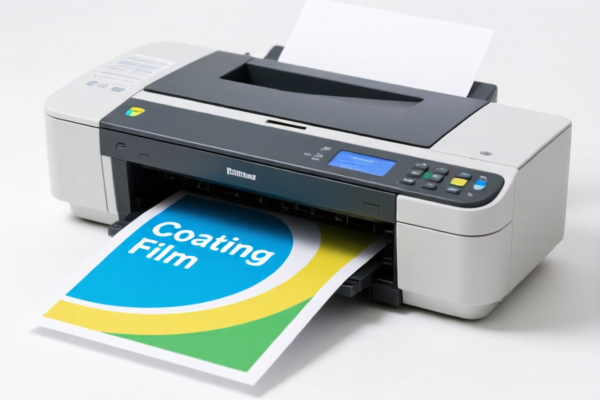
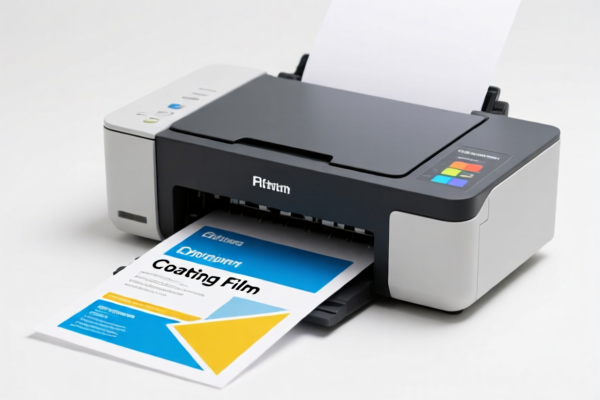
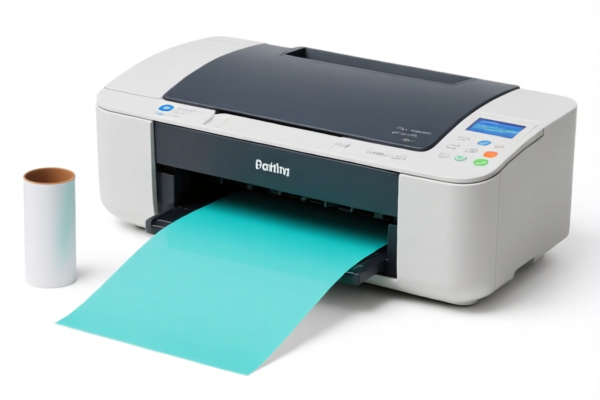

AI Analysis
🎞️ Indoor Color Photo Rapid Printing Film (Indoor Color Copying/Printing Film)
🌐 HS Code Reference & Customs Clearance Guide | 2026 Latest Tariff Analysis | Professional Clearance Strategy
📌 I. Product Definition and Classification: Do You Really Understand "Rapid Printing Film"?
Indoor Color Photo Rapid Printing Film is a specialized photographic material used for quick-turnaround color printing or copying indoors. In international trade, its classification depends heavily on its physical state (finished film vs.半成品/semi-finished) and its material nature (sensitized/emulsified vs. plain support).
Key Distinctions: * Sensitized Photographic Material: If the film contains light-sensitive emulsion (halide/silver halide) and is used for actual photographic recording, it falls under Chapter 37 (Photographic Goods). * Plain Recording Medium: If the film is merely a carrier medium without active sensitization, it might fall under 3706. * Semi-finished/Processing State: If the product is considered a semi-finished good related to printing machinery processes, it might be misclassified under Chapter 84.
⚠️ Critical Differentiator:
- If the film is sensitized (light-sensitive) for color photography/printing → 3703 or 3706.
- If the film is a semi-finished item linked to the printing mechanism itself (rare, but possible if defined as a part of the printing process) → 8443.
- Note: Misclassification between "Photographic Film" and "Printing Parts" is the most common error, leading to significant tax discrepancies.
📦 II. HS Code Classification Details (2026 Latest Tariff Authority Comparison)
| HS Code | Product Description | Application Scenario | Sensitization Status |
|---|---|---|---|
3706.10.60.90 |
Indoor color copying film, in the form of film, falling within the category of sensitized materials. | Professional indoor copying, high-volume color replication. | ✅ Yes (Sensitized) |
3706.90.00.60 |
Indoor color copying film, in the form of film, inferred as an image-carrying medium. | General indoor color copying, less specific sensitization requirements. | ✅ Yes (Image Carrier) |
8443.32.10.40 |
Color photo rapid printing film, semi-finished form, usage consistent with printing technology characteristics. | Semi-finished components for rapid color printers (Less common for final consumer film). | ⚠️ Semi-finished/Processing |
3703.20.30.30 |
Film for color photography, material is photosensitive/silver halide, used for color photography. | General color photographic film, strictly photographic use. | ✅ Yes (Silver Halide) |
3703.20.30.60 |
Photosensitive film for color photography, used for color photography, falls under residual categories. | General color photography film, catch-all for unspecified color photographic film. | ✅ Yes (Silver Halide) |
🔍 Key Reminder:
- Most "Rapid Printing Films" are considered Photographic Goods (Chapter 37).
- The classification under 8443 is highly specific to "semi-finished" status linked to printing machinery, which is atypical for standard roll/film sales. Verify if the product is a consumable (37xx) or a machine part (8443).
- 3703 is typically for photographic film, while 3706 is often for copying/reproducing film. Ensure the "copying" vs. "photography" usage matches the specific subheading.
💰 III. 2026 Latest Tariff Rate Details (Including Surcharges & Policy Add-ons)
✅ Applicable Country: United States (US)
✅ Origin: China (CN)
✅ Effective Date: From November 10, 2025 (Including subsequent imports)
🎯 1. 3706.10.60.90 & 3706.90.00.60 —— Indoor Color Copying Film
| Item | Content |
|---|---|
| Base Tariff | 0.0% (ad valorem) |
| USITC Surtax (Section 301) | +25.0% |
| IEEPA Surtax (Section 122) | +10.0% |
| Total Tariff Rate | 35.0% |
| Tax Calculation | CIF Value × 35% |
| De Minimis Exemption | ❌ Not Applicable (deny_de_minimis) |
| Legal Basis Path | IEEPA:9903.01.25 → IEEPA:9903.01.24 → USITC:3706 → FOOTNOTE:9903.88.01 |
📌 Explanation:
- Base 0%: Photographic goods often have low base tariffs.
- 25% Section 301: Standard additional tariff on Chinese goods.
- 10% Section 122 (IEEPA): Specific additional tariff targeting certain categories from China.
- Total 35%: This is a high tariff for a seemingly simple film. Cost calculation is critical.
🎯 2. 8443.32.10.40 —— Semi-finished Rapid Printing Film
| Item | Content |
|---|---|
| Base Tariff | 0.0% |
| USITC Surtax (Section 301) | +7.5% |
| IEEPA Surtax (Section 122) | +10.0% |
| Total Tariff Rate | 17.5% |
| Tax Calculation | CIF Value × 17.5% |
| De Minimis Exemption | ❌ Not Applicable |
| Legal Basis Path | IEEPA:9903.01.24 → USITC:8443 → FOOTNOTE:9903.88.01 |
📌 Note:
- If the product can be legitimately classified as a "semi-finished" part of printing machinery/process, the tariff is significantly lower (17.5%).
- However, this requires strong justification that it is not a standard photographic consumable. Customs may challenge this if it looks like regular film.
🎯 3. 3703.20.30.30 & 3703.20.30.60 —— Color Photography Film
| Item | Content |
|---|---|
| Base Tariff | 3.7% |
| USITC Surtax (Section 301) | +25.0% |
| IEEPA Surtax (Section 122) | +10.0% |
| Total Tariff Rate | 38.7% |
| Tax Calculation | CIF Value × 38.7% |
| De Minimis Exemption | ❌ Not Applicable |
| Legal Basis Path | IEEPA:9903.01.25 → IEEPA:9903.01.24 → USITC:3703 → FOOTNOTE:9903.88.01 |
📌 Warning:
- This category has the highest total tax rate (38.7%).
- The base tariff of 3.7% is the main differentiator.
- Only use this if the film is strictly for photography (creating images) and not copying (reproducing).
🛠️ IV. Customs Clearance Practical Advice (Pitfall Avoidance Guide)
✅ 1. Required Documentation Checklist
| Document | Mandatory? | Description |
|---|---|---|
| ✅ Product Specification Sheet | ✔️ | Must detail: Type (Color B&W), Size, Sensitivity, Packaged Form. |
| ✅ Material Composition | ✔️ | Specify if it contains silver halide or other sensitizing agents. |
| ✅ Product Photos | ✔️ | Clear shots of packaging, labeling, and the film roll itself. |
| ✅ Commercial Invoice | ✔️ | Must accurately describe "Indoor Color Copying Film" or "Color Photography Film". Avoid vague terms like "Plastic Sheet". |
| ✅ Packaging List | ✔️ | Detail net/gross weight and number of units. |
✅ 2. Declaration Strategy (Key Mnemonic)
🔥 "Film Type Determines Tax, Copy vs. Photo, Don't Mix Up!"
| Scenario | Correct HS Code | Incorrect Practice | Consequence |
|---|---|---|---|
| Indoor Copying Film (Sensitized) | 3706.10.60.90 or 3706.90.00.60 |
Declared as 3703 (Photography) |
Overpayment (38.7% vs 35%) |
| Color Photography Film | 3703.20.30.30 or 3703.20.30.60 |
Declared as 3706 (Copying) |
Overpayment (38.7% vs 35%) |
| Semi-finished Printing Component | 8443.32.10.40 |
Declared as 3706 |
Overpayment (17.5% vs 35%) if eligible |
| Non-Sensitized Plain Film | Check Chapter 39 | Declared as 3706 |
Misclassification, Penalties |
✅ 3. Special Case Handling
| Situation | Handling Advice |
|---|---|
| Ambiguous "Rapid Printing" | If it's for kiosk printing of photos, it's likely 3703 or 3706. If it's a blank film for industrial coating, it might be 3706. |
| Bundled Sales | If sold with printers, declare the film separately. Do not bundle into the printer's HS code. |
| Samples | Even samples are subject to duty. Declare accurately. |
| Origin Marking | Ensure the film packaging or label clearly states "Made in China" if applicable, for Section 122 compliance. |
🌍 V. Global Market Customs Comparison (2026 Latest)
| Country/Region | Recommended HS Code | Tariff (CN Origin) | Certification Requirements | Notes |
|---|---|---|---|---|
| 🇺🇸 USA | 3706 or 3703 |
35% or 38.7% | No specific, but accurate description | High Section 122/301 tariffs apply. |
| 🇨🇳 China | 3706 or 3703 |
5-10% (Varies) | No | Low base tax, no Section 122. |
| 🇪🇺 EU | 3706 or 3703 |
0-3.7% | CE (if electronic components involved) | No major surcharges for photographic film. |
| 🇬🇧 UK | 3706 or 3703 |
0-3.7% | UKCA (if applicable) | Post-Brexit rules apply. |
📌 Conclusion:
- USA is the most critical market due to Section 122 and 301 tariffs.
- EU/UK have much lower barriers for this category.
- Cost Optimization: If possible, verify if the product can be classified as8443(17.5%) through professional pre-ruling, but this is risky without strong technical evidence.
📌 VI. Common Mistakes & Pitfall Guide (Lessons Learned)
❌ Mistake 1: Declaring "Color Printing Film" as "Plastic Roll" (Chapter 39)
👉 Consequence: Misclassification. If it's sensitized, it MUST be Chapter 37. Penalty for wrong declaration.
❌ Mistake 2: Confusing "Copying Film" (3706) with "Photography Film" (3703)
👉 Consequence: Wrong tax rate (35% vs 38.7%). While the difference is 3.7%, consistency is key for audits.
❌ Mistake 3: Ignoring Section 122 (10%)
👉 Consequence: Customs will assess the 10% IEEPA surcharge if not accounted for, leading to unexpected costs or delays.
❌ Mistake 4: Using vague descriptions like "Photo Material"
👉 Consequence: Customs may detain for clarification, causing delays. Use precise terms: "Indoor Color Copying Film, Sensitized".
✅ Correct Declaration Example:
"Indoor Color Copying Film, Sensitized, Roll Form, 35mm Width, Made in China. HS Code: 3706.10.60.90"
🎯 VII. Conclusion: Professional Declaration for Cost Efficiency
🎯 Remember the Mantra:
🔹 "Copying is 3706, Photography is 3703, Semi-finished is 8443."
🔹 "35% vs 38.7%, Choose Right, Save Money."
🔹 "Section 122 is Always 10%, Don't Forget."
📌 Pro Tip:
If you are importing large volumes, consider applying for an Advance Ruling from US Customs and Border Protection (CBP) to confirm the HS Code and tariff liability before shipment. This provides legal certainty and avoids surprise duties.
📣 Immediate Action:
📞 Contact a licensed customs broker
📄 Prepare detailed product specs
🔍 Verify if "Semi-finished" status (8443) is defensible🚀 Ensure Smooth Clearance, Minimize Taxes, Maximize Profits!
✨ Professional Clearance Starts with Accurate Classification!
💼 Every Percent Counts in Your Bottom Line!
Customer Reviews
About HS Code Classification
The Harmonized System (HS) is an internationally standardized nomenclature developed by the World Customs Organization (WCO) to classify traded products. Over 200 countries use the HS system as the basis for customs tariffs, trade statistics, and import/export regulations.
Each HS code follows a hierarchical structure:
- Chapter (2 digits) — Broad category of goods (e.g., Chapter 84: Machinery and Mechanical Appliances)
- Heading (4 digits) — More specific grouping within the chapter
- Subheading (6 digits) — Internationally standardized breakdown, used by all WCO member countries
- National subdivisions (8-10 digits) — Country-specific extensions for further classification, such as US HTSUS 10-digit codes
Correct HS code classification is essential for smooth customs clearance, accurate duty payment, and compliance with trade regulations. Misclassification can lead to customs delays, overpayment of duties, or penalties.
When importing from CN to US, the applicable tariff rates may include:
- Most-Favored-Nation (MFN) rate — The standard duty rate applied to WTO members
- General rate — Applied to countries without trade agreements
- Trade remedy duties — Additional tariffs such as Section 301 (anti-dumping), Section 232 (national security), or countervailing duties
The information provided on this page is for reference purposes only. For official classification, please consult with your local customs authority or a licensed customs broker.