Indoor Decorative Cloth
CN → US| HS Code | Tariff Rate | Origin | Destination | Doc |
|---|---|---|---|---|
| 6304996040 | 20.7% | CN | US | Official Doc |
| 6304910170 | 23.3% | CN | US | Official Doc |
| 5407942090 | 49.9% | CN | US | Official Doc |
| 5407932090 | 47.0% | CN | US | Official Doc |
Product Images
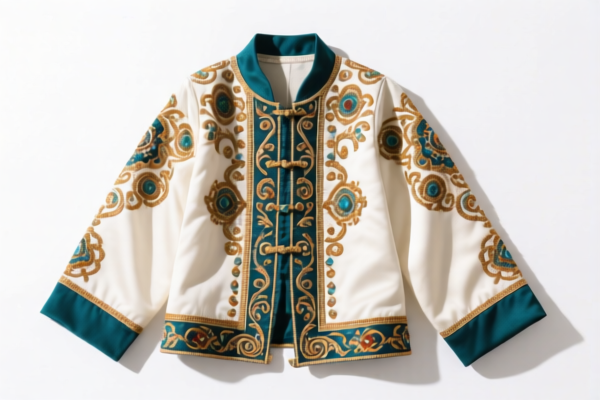
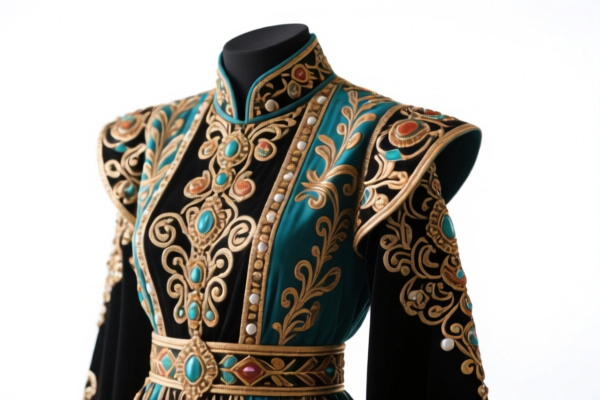
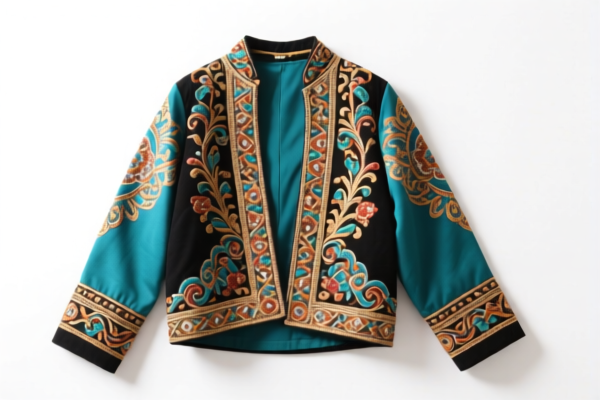
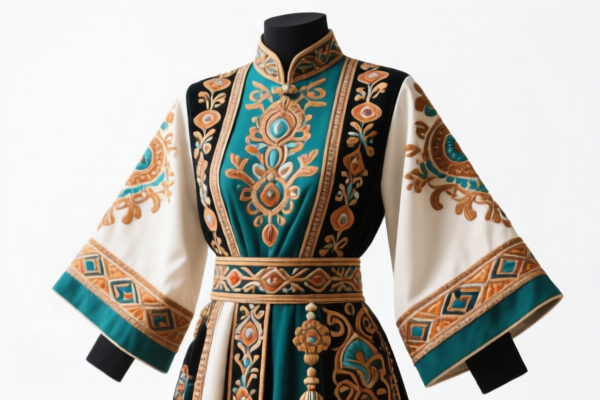
AI Analysis
🧵 Indoor Decorative Cloth: HS Code Classification & Customs Clearance Guide | 2026 Latest Tariff Analysis
🌐 HS Code Reference & Customs Clearance Guide | 2026 Latest Tariff Full Analysis | Professional Clearance Strategy
📌 I. Product Definition & Classification: Do You Really Understand "Indoor Decorative Cloth"?
Indoor Decorative Cloth refers to textile products used for interior decoration, such as curtains, drapes, tapestries, tablecloths, napkins, and other household fabric items. In international trade, these goods are classified based on material composition, manufacturing method (knitted vs. woven), and specific usage.
⚠️ Key Distinction Point:
- If the fabric is knitted or crocheted for furnishing → Falls under Chapter 63 (Other Made-up Textile Articles)
- If the fabric is woven synthetic fiber → May fall under Chapter 54 (Synthetic Filament Yarn & Woven Fabrics) depending on exact material and end-use
- The final application (decorative vs. functional) heavily influences classification
📦 II. HS Code Classification Details (2026 Latest Tariff Authority Comparison)
Based on the provided data, here are the four possible HS Codes for Indoor Decorative Cloth, along with their tax rates and detailed explanations:
| HS Code | Product Description | Applicable Scenario | Material/Structure |
|---|---|---|---|
| 6304.99.60.40 | Indoor decorative fabric, for interior decoration use, material inferred as "other" category | General decorative fabric (curtains, tapestries) | Non-specific material class (likely natural or blended fibers) |
| 6304.91.01.70 | Indoor decorative fabric, knitted or crocheted furnishing articles, fallback category | Knitted/crocheted decorative fabrics (lace, knit curtains) | Knitted or crocheted textile |
| 5407.94.20.90 | Indoor decorative fabric, woven form, material inferred as "other" under synthetic filament yarn | Woven fabric made from synthetic filament fibers | Synthetic filament woven fabric |
| 5407.93.20.90 | Indoor decorative fabric, woven form, material inferred as synthetic or natural fiber under "other" category | Woven fabric with mixed or unspecified synthetic/natural fibers | Mixed or unspecified fiber woven fabric |
🔍 Important Notes:
- 6304 codes apply to made-up textile articles (finished decorative items), regardless of whether they are knitted or woven.
- 5407 codes apply to woven fabrics made primarily from synthetic filament yarns, not yet made up into final decorative products.
- The difference between 6304.99 and 6304.91 lies in the manufacturing method: knitted/crocheted vs. other.
- The difference between 5407.94 and 5407.93 lies in the specific type of synthetic fiber used.
💰 III. 2026 Latest Tariff Rate Detailed Explanation (Including Surcharge, Policy Surcharge)
✅ Applicable Country: United States (US)
✅ Origin: China (CN)
✅ Effective Date: From November 10, 2025 (including subsequent imports)
🎯 1. 6304.99.60.40 —— Indoor Decorative Fabric (General Category)
| Item | Content |
|---|---|
| Base Tariff Rate | 3.2% (ad valorem) |
| Section 301 Surcharge | +7.5% |
| Section 122 Tariff | +10% |
| Total Tariff Rate | 20.7% |
| Tax Calculation | CIF Value × 20.7% |
| De Minimis Eligibility | ❌ Not Eligible (deny_de_minimis) |
| Legal Basis Path | Section 301: 7.5% → Section 122: 10% → USITC: 6304.99.60.40 → Base: 3.2% |
📌 Explanation:
- This code applies to general indoor decorative fabrics that do not fall into more specific subcategories.
- The total tariff of 20.7% is relatively moderate compared to other codes.
- Both Section 301 (7.5%) and Section 122 (10%) surcharges apply to Chinese-origin goods.
🎯 2. 6304.91.01.70 —— Knitted or Crocheted Decorative Fabric
| Item | Content |
|---|---|
| Base Tariff Rate | 5.8% |
| Section 301 Surcharge | +7.5% |
| Section 122 Tariff | +10% |
| Total Tariff Rate | 23.3% |
| Tax Calculation | CIF Value × 23.3% |
| De Minimis Eligibility | ❌ Not Eligible |
| Legal Basis Path | Section 301: 7.5% → Section 122: 10% → USITC: 6304.91.01.70 → Base: 5.8% |
📌 Note:
- This code specifically applies to knitted or crocheted decorative textiles (e.g., lace curtains, knit drapes).
- The higher base rate (5.8%) compared to general fabric (3.2%) reflects the more specialized nature of knitted/crocheted goods.
- Same surcharges apply as above.
🎯 3. 5407.94.20.90 —— Synthetic Filament Woven Fabric (Other)
| Item | Content |
|---|---|
| Base Tariff Rate | 14.9% |
| Section 301 Surcharge | +25.0% |
| Section 122 Tariff | +10% |
| Total Tariff Rate | 49.9% |
| Tax Calculation | CIF Value × 49.9% |
| De Minimis Eligibility | ❌ Not Eligible |
| Legal Basis Path | Section 301: 25.0% → Section 122: 10% → USITC: 5407.94.20.90 → Base: 14.9% |
📌 Warning:
- This code applies to woven fabrics made from synthetic filament yarns (e.g., polyester, nylon).
- The Section 301 surcharge is significantly higher at 25%, leading to a total rate of 49.9% — one of the highest among all categories.
- This is a high-cost category for Chinese-origin synthetic fabrics.
🎯 4. 5407.93.20.90 —— Mixed/Unspecified Fiber Woven Fabric (Other)
| Item | Content |
|---|---|
| Base Tariff Rate | 12.0% |
| Section 301 Surcharge | +25.0% |
| Section 122 Tariff | +10% |
| Total Tariff Rate | 47.0% |
| Tax Calculation | CIF Value × 47.0% |
| De Minimis Eligibility | ❌ Not Eligible |
| Legal Basis Path | Section 301: 25.0% → Section 122: 10% → USITC: 5407.93.20.90 → Base: 12.0% |
📌 Note:
- This code covers woven fabrics with mixed or unspecified synthetic/natural fibers.
- Similar to the previous code, it carries a 25% Section 301 surcharge, resulting in a total rate of 47.0%.
- Even slightly lower than the previous code, it remains a high-tariff category.
🛠️ IV. Customs Clearance Practical Advice (Real-World Pitfall Avoidance Guide)
✅ 1. Required Documentation Checklist (All Are Mandatory)
| Document | Required | Description |
|---|---|---|
| ✅ Product Specification Sheet | ✔️ | Includes dimensions, material composition, weave type, finishing process |
| ✅ Material Test Report | ✔️ | Third-party lab report confirming fiber content (e.g., polyester, cotton blend) |
| ✅ Product Photos (with label) | ✔️ | Clear images showing product, tags, care labels, and packaging |
| ✅ Commercial Invoice | ✔️ | Must clearly state "Indoor Decorative Cloth" and specify material |
| ✅ Packing List | ✔️ | Details quantity, weight, dimensions, and contents |
| ✅ Certificate of Origin (CO) | ✔️ | If non-Chinese origin, may qualify for reduced tariffs |
| ✅ Customs Declaration Form | ✔️ | Accurate HS Code declaration with supporting documentation |
✅ 2. Declaration Tips (Key Rules)
🔥 “Know Your Material, Declare Correctly, Avoid High Tariffs!”
| Scenario | Correct Declaration | Incorrect Action |
|---|---|---|
| Knitted/crocheted decorative fabric | 6304.91.01.70 (23.3%) |
Misdeclare as woven fabric → 47–49.9% |
| Woven synthetic filament fabric | 5407.94.20.90 (49.9%) |
Misdeclare as general fabric → 20.7% |
| General indoor decorative cloth | 6304.99.60.40 (20.7%) |
Misdeclare as knit fabric → 23.3% |
| Mixed fiber woven fabric | 5407.93.20.90 (47.0%) |
Misdeclare as synthetic only → 49.9% |
✅ 3. Special Case Handling
| Scenario | Handling Advice |
|---|---|
| OEM Custom Decorative Cloth | Provide customer order + design specifications to avoid misclassification |
| Fabric with Blended Fibers | Must declare actual fiber composition; misdeclaration leads to penalties |
| Fabric for Medical/Industrial Use | If not for decoration, may qualify for different HS Code; provide usage proof |
| Small Sample Shipments | Still subject to full tariffs; de minimis exemption does not apply |
🌍 V. Global Market Customs Clearance Comparison (2026 Latest)
| Country/Region | Recommended HS Code | Tariff | Certification Requirements | Notes |
|---|---|---|---|---|
| 🇺🇸 United States | 6304.99.60.40 / 6304.91.01.70 / 5407.94.20.90 / 5407.93.20.90 |
20.7%–49.9% | None required | Highest surcharges due to Section 301 & 122 |
| 🇨🇳 China | Same as US | 5%–15% | CCC (if applicable) | No surcharges; lower base rates |
| 🇪🇺 European Union | 6304.99 / 5407.94 |
0%–4% | CE (if textile chemicals) | No surcharges; favorable trade terms |
| 🇦🇺 Australia | 6304.99 |
5% | RCM (if electrical components) | No surcharges |
| 🇯🇵 Japan | 6304.99 |
0%–5% | PSE (if applicable) | No surcharges |
📌 Conclusion:
- The US is the only market with high additional tariffs due to Section 301 and Section 122.
- Chinese-origin decorative fabrics face significantly higher costs in the US market.
- Consider supply chain diversification (e.g., production in Vietnam, Thailand) to avoid surcharges.
📌 VI. Common Mistakes & Pitfall Avoidance (Lessons from Real Cases)
❌ Mistake 1: Misclassifying knitted fabric as woven fabric
👉 Consequence: Tariff jumps from 23.3% to 47–49.9% → Back taxes + penalties!
❌ Mistake 2: Declaring synthetic filament fabric as general fabric
👉 Consequence: Tariff drops from 49.9% to 20.7% → Customs audit + fines!
❌ Mistake 3: Not providing material test reports
👉 Consequence: Customs cannot verify fiber content → Delay in release or return shipment
❌ Mistake 4: Using vague terms like "Textile" or "Fabric" in declaration
👉 Consequence: Ambiguity leads to misclassification → Higher tariffs or penalties
✅ Correct Approach:
“Knitted Indoor Decorative Curtain, 100% Polyester, 300 GSM, Blackout Finish, Model XYZ, Certified to US Safety Standards”
🎯 VII. Conclusion: Precise Declaration Saves Time, Money, and Stress!
🎯 Remember the Key Rules:
🔹 “Know Your Material, Declare Correctly, Avoid High Tariffs!”
🔹 “HS Code Determines Tax, Small Difference Can Save Thousands!”
📌 Pro Tip:
If your indoor decorative cloth originates from Vietnam, Mexico, Thailand, or Malaysia, you may qualify for IEEPA exemptions, reducing tariffs to 0%–5%.
Recommend applying for an Advance Ruling to avoid clearance risks.
📣 Take Action Now:
📞 Contact professional customs brokers + Provide product photos + Apply for HS Code Advance Ruling
🚀 Let your indoor decorative cloth clear customs smoothly, export efficiently, and maximize profits!
✨ Professional clearance starts with accurate classification!
💼 Every dollar you save is precisely calculated!
Customer Reviews
About HS Code Classification
The Harmonized System (HS) is an internationally standardized nomenclature developed by the World Customs Organization (WCO) to classify traded products. Over 200 countries use the HS system as the basis for customs tariffs, trade statistics, and import/export regulations.
Each HS code follows a hierarchical structure:
- Chapter (2 digits) — Broad category of goods (e.g., Chapter 84: Machinery and Mechanical Appliances)
- Heading (4 digits) — More specific grouping within the chapter
- Subheading (6 digits) — Internationally standardized breakdown, used by all WCO member countries
- National subdivisions (8-10 digits) — Country-specific extensions for further classification, such as US HTSUS 10-digit codes
Correct HS code classification is essential for smooth customs clearance, accurate duty payment, and compliance with trade regulations. Misclassification can lead to customs delays, overpayment of duties, or penalties.
When importing from CN to US, the applicable tariff rates may include:
- Most-Favored-Nation (MFN) rate — The standard duty rate applied to WTO members
- General rate — Applied to countries without trade agreements
- Trade remedy duties — Additional tariffs such as Section 301 (anti-dumping), Section 232 (national security), or countervailing duties
The information provided on this page is for reference purposes only. For official classification, please consult with your local customs authority or a licensed customs broker.