Indoor Decorative Textile Composite Plastic Films
CN → US| HS Code | Tariff Rate | Origin | Destination | Doc |
|---|---|---|---|---|
| 3921901500 | 41.5% | CN | US | Official Doc |
| 3921901100 | 39.2% | CN | US | Official Doc |
| 3926909989 | 22.8% | CN | US | Official Doc |
| 3926400010 | 15.3% | CN | US | Official Doc |
| 4814900200 | 17.5% | CN | US | Official Doc |
Product Images
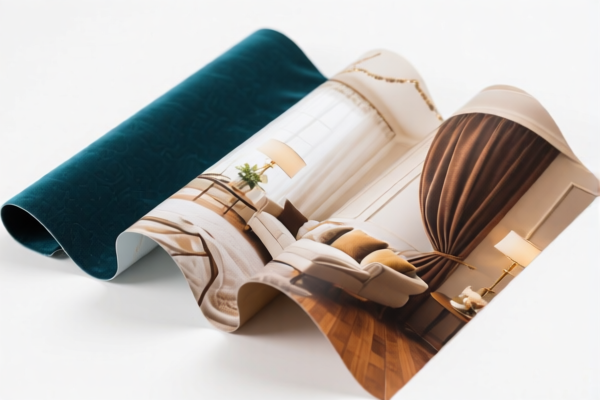
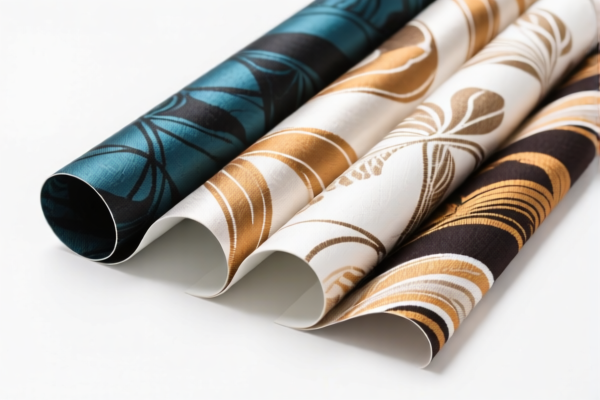
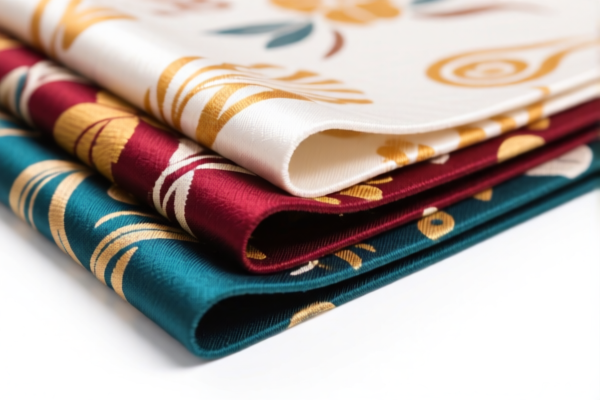

AI Analysis
🏠 Indoor Decorative Textile Composite Plastic Films (Wall Coverings & Linings)
🌐 HS Code Reference & Clearance Guide | 2026 Latest Tariff Analysis | Professional Customs Strategy
📌 I. Product Definition & Classification: What Exactly Are "Composite Plastic Films"?
Indoor Decorative Textile Composite Plastic Films are versatile materials used primarily for wall coverings, furniture linings, or decorative finishes. They combine the durability and aesthetic appeal of textiles with the moisture resistance and structural integrity of plastics.
In international trade, these products are classified based on their primary material composition and form: 1. Paper-like/Textile-plastic composites: Often viewed as wallpaper or wall coverings if they resemble paper or fabric-backed products. 2. Plastic Articles: If the plastic content is dominant or the product functions primarily as a protective sheet/film, it falls under Chapter 39 (Plastics and Articles Thereof). 3. Miscellaneous Plastic Articles: If the specific composite nature doesn't fit neatly into other specific subheadings, it may fall under general plastic articles.
⚠️ Key Distinction Point:
- If the product is explicitly marketed and structured as wallpaper/wall covering (paper/fabric base with plastic coating) → Look to Chapter 48.
- If it is a plastic sheet/film with textile backing where plastic is the defining characteristic → Look to Chapter 39.
- If it is a general-purpose plastic sheet without specific textile paper-like features → Look to Chapter 39 (Miscellaneous) or Chapter 39 (Articles).
📦 II. HS Code Classification Details (2026 Latest Tariff Authority Comparison)
| HS Code | Product Description | Application Scenario | Key Classification Logic |
|---|---|---|---|
3921.90.15.00 |
Other plates, sheets, film, foil and strip, of plastics: With base of textiles | Decorative films with textile backing; "Textile + Plastic" composite logic | Matches Plastic Material + Foil/Film Form; fits Textile-Plastic Composite characteristics. |
3921.90.11.00 |
Other plates, sheets, film, foil and strip, of plastics: With base of paper | Wall coverings, decorative laminates | Matches Plastic Material + Foil Form; fits High Plastic Ratio & Textile-Plastic Composite logic (often grouped with paper-based if structure is similar). |
3926.90.99.89 |
Other articles of plastics and articles of other materials of heading 39.01 to 39.14 | General plastic decorative sheets; non-specific fittings | Matches Plastic Material + Sheet Form; fits Plastic Article classification broadly. |
3926.40.00.10 |
Articles of apparel and clothing accessories, of plastics | Plastic decorative accessories, trimmings | Matches Plastic Material + Sheet/Form; fits Plastic Article logic (Note: Usually for apparel, but sometimes used for flexible plastic decorative items if not strictly wall covering). |
4814.90.02.00 |
Wallpaper and wallcoverings, of paper, whether or not painted, embossed or otherwise surface-coated | Indoor wall coverings; decorative panels | Matches Plastic-Coated Sheet Form + Indoor Decorative Use; fits Wall Covering category. |
🔍 Critical Reminder:
- If the product is explicitly Wallpaper (paper base with plastic coating), it often falls under 4814.90.02.00.
- If it is a Plastic Sheet with Textile Backing (not traditional wallpaper), 3921.90.15.00 is highly accurate.
- If the classification is ambiguous, customs may default to 3926.90.99.89 (General Plastic Articles).
💰 III. 2026 Latest Tariff Rate Breakdown (Including Additional Taxes & Policy Surcharges)
✅ Applicable Country: United States (US)
✅ Origin: China (CN)
✅ Effective Date: From November 10, 2025 (Including subsequent imports)
🎯 1. 3921.90.15.00 —— Plastic Plates/Sheets/Film with Textile Base
| Item | Content |
|---|---|
| Base Tariff | 6.5% (ad valorem) |
| Section 301 Additional Duty | +25.0% |
| IEEPA Additional Duty | +10.0% (Targeting China/HK products) |
| Total Tariff | 41.5% |
| Tax Calculation | CIF Value × 41.5% |
| De Minimis Eligibility | ❌ Not Eligible (deny_de_minimis) |
| Legal Basis Path | USITC:3921.90.15.00 → USITC:Footnote 9903.88.01 → IEEPA:9903.01.25 |
📌 Explanation:
- This code is for plastic composites with textile bases. The high tariff is due to the "Made in China" status and Section 301/IEEPA surcharges.
- 41.5% is a significant cost factor. Ensure your product description clearly states "Textile Base" to match this code.
🎯 2. 3921.90.11.00 —— Plastic Plates/Sheets/Film with Paper Base
| Item | Content |
|---|---|
| Base Tariff | 4.2% (ad valorem) |
| Section 301 Additional Duty | +25.0% |
| IEEPA Additional Duty | +10.0% |
| Total Tariff | 39.2% |
| Tax Calculation | CIF Value × 39.2% |
| De Minimis Eligibility | ❌ Not Eligible (deny_de_minimis) |
| Legal Basis Path | USITC:3921.90.11.00 → USITC:Footnote 9903.88.01 → IEEPA:9903.01.24 |
📌 Note:
- Although labeled "Paper Base," this code is often used for decorative laminates or composite sheets where the structure resembles paper-based wallpapers but has a high plastic content.
- 39.2% is slightly lower than the textile-base variant. Use this if the backing is paper-like or if customs accepts the "composite logic" under this subheading.
🎯 3. 3926.90.99.89 —— Other Plastic Articles
| Item | Content |
|---|---|
| Base Tariff | 5.3% (ad valorem) |
| Section 301 Additional Duty | +7.5% |
| IEEPA Additional Duty | +10.0% |
| Total Tariff | 22.8% |
| Tax Calculation | CIF Value × 22.8% |
| De Minimis Eligibility | ❌ Not Eligible (deny_de_minimis) |
| Legal Basis Path | USITC:3926.90.99.89 → USITC:Footnote 9903.88.01 → IEEPA:9903.01.25 |
📌 Advantage:
- Significantly Lower Total Tariff (22.8%) compared to the composite codes (39.2% - 41.5%).
- This code applies if the product is considered a general plastic sheet/article rather than a specific composite or wallpaper.
- Strategy: If your product is a plain plastic film with some texture, try to justify classification under this code to save ~15-20% in duties.
🎯 4. 3926.40.00.10 —— Articles of Apparel/Clothing Accessories of Plastics
| Item | Content |
|---|---|
| Base Tariff | 5.3% (ad valorem) |
| Section 301 Additional Duty | +0.0% |
| IEEPA Additional Duty | +10.0% |
| Total Tariff | 15.3% |
| Tax Calculation | CIF Value × 15.3% |
| De Minimis Eligibility | ❌ Not Eligible (deny_de_minimis) |
| Legal Basis Path | USITC:3926.40.00.10 → IEEPA:9903.01.24 |
📌 Caution:
- This code is strictly for apparel/clothing accessories.
- High Risk: Using this for wall coverings is likely to be rejected by customs as misclassification.
- Lowest Tariff (15.3%): Only use if the product is literally a plastic decorative trim for clothing or accessories, not for walls.
🎯 5. 4814.90.02.00 —— Wallpaper and Wall Coverings of Paper
| Item | Content |
|---|---|
| Base Tariff | 0.0% (ad valorem) |
| Section 301 Additional Duty | +7.5% |
| IEEPA Additional Duty | +10.0% |
| Total Tariff | 17.5% |
| Tax Calculation | CIF Value × 17.5% |
| De Minimis Eligibility | ❌ Not Eligible (deny_de_minimis) |
| Legal Basis Path | USITC:4814.90.02.00 → USITC:Footnote 9903.88.01 → IEEPA:9903.01.25 |
📌 Best Option for Wall Coverings:
- If your product can be legally defined as Wallpaper/Wall Covering (even with plastic coating), this code offers the lowest tariff (17.5%) among the realistic options.
- Condition: The base material must be paper or paper-like. If it's a textile base, this code might be rejected.
- Strategy: If your "Textile Composite" is actually a paper-based wall covering with a plastic finish, use this code for maximum savings.
🛠️ IV. Customs Clearance Practical Advice (Expert Pitfall Avoidance Guide)
✅ 1. Required Documentation Checklist (All Mandatory)
| Document | Mandatory | Description |
|---|---|---|
| ✅ Product Spec Sheet | ✔️ | Must detail material composition (e.g., "80% PVC, 20% Polyester Backing"), dimensions, and finish. |
| ✅ Commercial Invoice | ✔️ | Must clearly state "Indoor Decorative Wall Covering" or "Plastic Composite Film" and avoid vague terms like "Decorative Sheet." |
| ✅ Bill of Lading/Air Waybill | ✔️ | Consistent description with invoice. |
| ✅ Certificate of Origin | ✔️ | Essential for proving Chinese origin (or exempting from certain duties if from other regions). |
| ✅ Product Photos | ✔️ | Clear images showing texture, backing, and cross-section if possible. |
| ✅ Third-Party Test Report | ✔️ | Fire retardancy (if for walls), formaldehyde emissions, and chemical safety reports. |
✅ 2. Declaration Tips (Key Mnemonic)
🔥 "Define Base, Declare Use, Avoid Vague, Save Big!"
| Scenario | Correct Declaration | Wrong Practice |
|---|---|---|
| Wallpaper-like Product | 4814.90.02.00 (Wall Covering) |
Declaring as "Plastic Film" → 22.8%+ |
| Textile-Backed Plastic Sheet | 3921.90.15.00 (Textile Base Composite) |
Declaring as "Paper Wallcovering" → Risk of Rejection |
| General Plastic Sheet | 3926.90.99.89 (Other Plastic Article) |
Declaring as "Wallpaper" → Risk of Rejection |
| Decorative Trims (Clothing) | 3926.40.00.10 (Apparel Accessory) |
Using for Wall Coverings → High Audit Risk |
✅ 3. Special Handling Cases
| Situation | Handling Advice |
|---|---|
| OEM Custom Decorative Films | Provide design specs and customer PO. Prove it's not a standard wallpaper if claiming 3926. |
| Mixed Packaging (Film + Accessories) | Declare film as main item. Accessories should be minor and not trigger separate HS codes. |
| Fire-Retardant Wall Coverings | Ensure the declaration mentions "Fire Retardant" if required for building codes, but do not let it change the HS code unless it becomes a "Fireproof Material" (different chapter). |
| Importing from Vietnam/Mexico | Check for IEEPA Exemptions. If non-Chinese origin, tariffs could be 0-10%. |
🌍 V. Global Market Clearance Comparison (2026 Latest)
| Country/Region | Recommended HS Code | Tariff (China Origin) | Certification Requirements | Notes |
|---|---|---|---|---|
| 🇺🇸 United States | 4814.90.02.00 (if wallpaper) |
17.5% (Wallpaper) 41.5% (Composite) |
FCC (if electronic), EPA (VOCs) | High Tariff Risk for composites. Wallpaper is cheaper. |
| 🇨🇳 China | 4814.90.02.00 |
5% | CCC (if applicable) | No additional surcharges. |
| 🇪🇺 European Union | 4814.90.02.00 |
0% (if paper) | CE, REACH | No additional tariffs. |
| 🇬🇧 United Kingdom | 4814.90.02.00 |
0% | UKCA | Post-Brexit rules apply. |
| 🇦🇺 Australia | 4814.90.02.00 |
5% | RCM | No additional tariffs. |
📌 Conclusion:
- The US has the highest tariffs due to Section 301 and IEEPA.
- Wallpaper classification (4814) is the most cost-effective for wall coverings (17.5% vs 41.5%).
- Composite codes (3921) are expensive but accurate for textile-backed plastics.
📌 VI. Common Errors & Pitfall Guide (Lessons Learned)
❌ Error 1: Declaring "Plastic Wall Covering" under 4814.90.02.00 when the base is Textile.
👉 Consequence: Customs will reclassify to 3921.90.15.00 → Tax jumps from 17.5% to 41.5% + Penalties.
❌ Error 2: Declaring "Textile Composite" under 3926.90.99.89 to save tax.
👉 Consequence: High audit risk. If proven to be a textile composite, you owe the difference + interest.
❌ Error 3: Omitting "Fire Retardant" status in declaration for wall coverings.
👉 Consequence: Delayed clearance or rejection at destination due to building code violations.
❌ Error 4: Using "Wallpaper" description for non-paper products (e.g., vinyl sheet on foam).
👉 Consequence: Misclassification. Use 3921 or 3926 instead.
✅ Correct Practice:
"Decorative Wall Covering, Paper Base with PVC Coating, Fire Retardant, Model XYZ, RoHS Compliant" → Use
4814.90.02.00.
"Plastic Composite Film, Polyester Backing with PVC Layer, for Furniture Lining, Model ABC" → Use3921.90.15.00.
🎯 VII. Conclusion: Professional Declaration Saves Money!
🎯 Remember the Mnemonic:
🔹 "Paper Base = Wallpaper (17.5%), Textile Base = Composite (41.5%), General Plastic = Article (22.8%)."
🔹 "HS Code Defines Duty, 25% Difference Matters, Misclassification Costs Thousands!"
📌 Pro Tip:
If your product is non-Chinese origin (e.g., Vietnam, Thailand), you may qualify for IEEPA Exemptions, reducing tariffs to 0-10%.
Recommend applying for an Advance Ruling from US Customs if your product is on the borderline between "Wallpaper" and "Plastic Composite."
📣 Immediate Action:
📞 Contact a Professional Customs Broker + Provide Product Samples + Apply for HS Code Advance Ruling
🚀 Ensure Smooth Clearance, Efficient Export, and Maximized Profit Margins!
✨ Professional Customs Clearance Starts with Accurate Classification!
💼 Every Penny Saved on Duty is Pure Profit!
Customer Reviews
About HS Code Classification
The Harmonized System (HS) is an internationally standardized nomenclature developed by the World Customs Organization (WCO) to classify traded products. Over 200 countries use the HS system as the basis for customs tariffs, trade statistics, and import/export regulations.
Each HS code follows a hierarchical structure:
- Chapter (2 digits) — Broad category of goods (e.g., Chapter 84: Machinery and Mechanical Appliances)
- Heading (4 digits) — More specific grouping within the chapter
- Subheading (6 digits) — Internationally standardized breakdown, used by all WCO member countries
- National subdivisions (8-10 digits) — Country-specific extensions for further classification, such as US HTSUS 10-digit codes
Correct HS code classification is essential for smooth customs clearance, accurate duty payment, and compliance with trade regulations. Misclassification can lead to customs delays, overpayment of duties, or penalties.
When importing from CN to US, the applicable tariff rates may include:
- Most-Favored-Nation (MFN) rate — The standard duty rate applied to WTO members
- General rate — Applied to countries without trade agreements
- Trade remedy duties — Additional tariffs such as Section 301 (anti-dumping), Section 232 (national security), or countervailing duties
The information provided on this page is for reference purposes only. For official classification, please consult with your local customs authority or a licensed customs broker.