Indoor Natural Grass Woven Screens
CN → US| HS Code | Tariff Rate | Origin | Destination | Doc |
|---|---|---|---|---|
| 4601296000 | 39.8% | CN | US | Official Doc |
| 4601942000 | 41.6% | CN | US | Official Doc |
| 9403893020 | 35.0% | CN | US | Official Doc |
| 9403893010 | 35.0% | CN | US | Official Doc |
Product Images
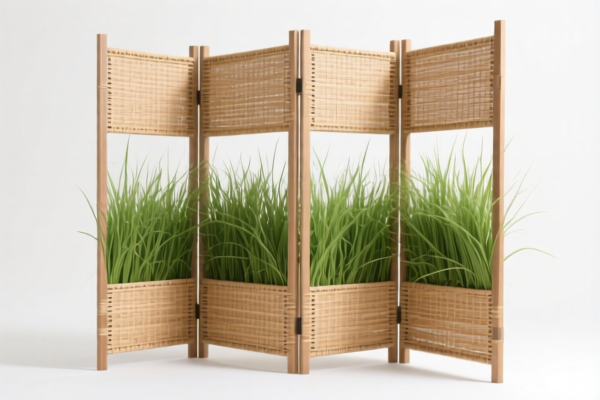
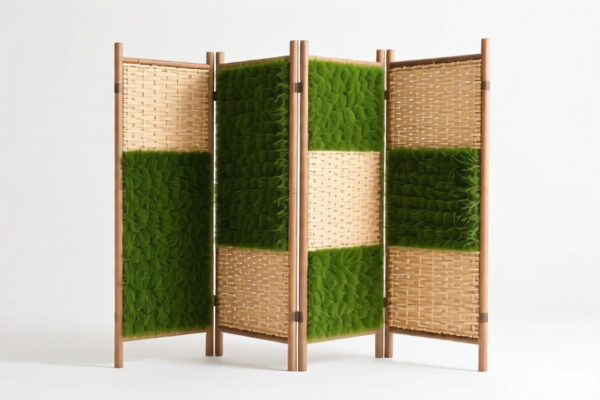
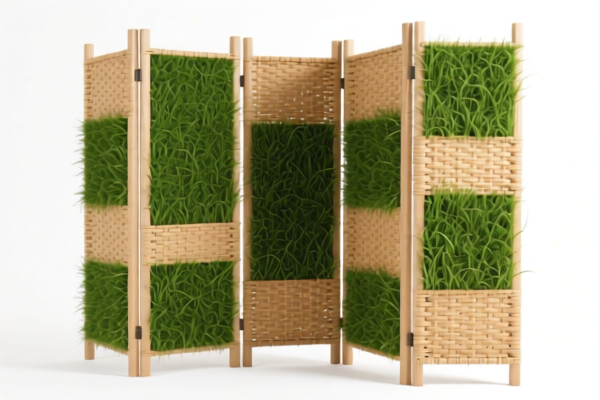
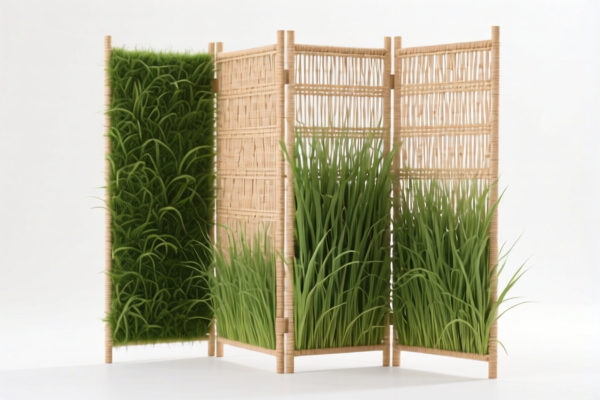
AI Analysis
🌿 Indoor Natural Grass Woven Screens
🌐 HS Code Reference & Customs Clearance Guide | 2026 Latest Tariff Analysis | Professional Clearance Strategy
📌 I. Product Definition & Classification: What Exactly Are "Indoor Natural Grass Woven Screens"?
"Indoor Natural Grass Woven Screens" are decorative or functional partitions made from natural vegetable materials, specifically processed grasses, willow, or similar plant fibers, woven into sheet-like structures. In international trade, these products fall under Chapter 46 (Plaits and similar products of plaiting materials; plaiting materials, plaits and similar products of plaiting materials, whether or not assembled into strips) or Chapter 94 (Furniture and parts thereof), depending on their final form and use.
Key Distinction:
- If sold as raw woven sheets/mats/screens (not yet assembled into a specific furniture frame) → Classified under Chapter 46.
- If assembled into a furniture item (e.g., a screen attached to a wooden frame, functioning as a room divider/furniture piece) → Classified under Chapter 94.
⚠️ Critical Differentiation Point:
- If it is a flat woven mat/screen without a structural furniture frame → HS 4601.x
- If it is a finished furniture piece (e.g., a standing room divider made of cane/grass) → HS 9403.x
📦 II. HS Code Classification Details (2026 Latest Tariff Authority对照)
Based on the provided data, here are the relevant HS Codes for "Indoor Natural Grass Woven Screens":
| HS Code | Product Description | Applicable Scenario | Material Type | Tax Rate (Total) |
|---|---|---|---|---|
4601.29.60.00 |
Mats, matting and screens of vegetable materials: Other: Woven or partly assembled: Other | Woven grass screens, mats, or partial assemblies without final furniture framing | Vegetable materials (Grass/Reeds) | 0.0% |
4601.94.20.00 |
Other: Of other vegetable materials: Other: Of willow or wood | Screens made specifically of willow or wood-like vegetable materials | Willow/Wood | 0.0% |
9403.89.30.20 |
Other furniture and parts thereof: Furniture of other materials...: Other: Of cane, osier or similar materials Other | Finished furniture items (e.g., room dividers, shelves) made of cane/osier/grass | Cane/Osier/Grass | 25.0% |
9403.89.30.10 |
Other furniture and parts thereof: Furniture of other materials...: Other: Of cane, osier or similar materials Household | Household furniture (e.g., decorative screens for homes) made of cane/osier/grass | Cane/Osier/Grass | 25.0% |
🔍 Key Insight:
- Chapter 46 (4601.x) items are taxed at 0% if they are merely woven sheets/screens/mats.
- Chapter 94 (9403.x) items are taxed at 25% (including additional tariffs) if they are considered finished furniture.
- Avoid misclassification: Do not classify a finished furniture screen as a "woven mat" to evade taxes; customs will inspect the structure. If it stands independently as furniture, it belongs to Chapter 94.
💰 III. 2026 Latest Tariff Rate Breakdown (Including Additional Taxes)
✅ Applicable Country: United States (US)
✅ Origin: China (CN)
✅ Effective Date: 2025+ (Current Trade Policy Context)
🎯 1. 4601.29.60.00 & 4601.94.20.00 —— Woven Vegetable Material Screens/Mats
| Item | Content |
|---|---|
| Base Tariff | 0% (ad valorem) |
| Additional Tariff (Section 301 / IEEPA) | 0% (as per provided data) |
| Total Tariff Rate | 0.0% |
| Tax Calculation | CIF Value × 0% = $0 |
| De Minimis Eligibility | ✅ Yes (if applicable under Section 321 for low-value shipments) |
| Legal Basis Path | HTSUS:4601.29.60.00 / 4601.94.20.00 |
📌 Explanation:
- These codes cover woven screens, mats, and plaits made of vegetable materials.
- The provided data indicates 0% total tax, meaning no additional Section 301 or IEEPA tariffs apply to these specific woven goods in this dataset.
- Benefit: This is a tax-free category for woven vegetable screens, provided they are not assembled into furniture.
🎯 2. 9403.89.30.20 & 9403.89.30.10 —— Furniture Made of Cane/Osier/Grass
| Item | Content |
|---|---|
| Base Tariff | 0% (ad valorem) |
| Additional Tariff (Section 301 / IEEPA) | +25% (as per provided data) |
| Total Tariff Rate | 25.0% |
| Tax Calculation | CIF Value × 25% |
| De Minimis Eligibility | ❌ No (High-value furniture items typically not eligible for de minimis) |
| Legal Basis Path | HTSUS:9403.89.30.10/20 → Footnote: 301 Tariff List |
📌 Explanation:
- These codes cover finished furniture (household or other) made of cane, osier, or similar vegetable materials.
- A 25% additional tariff applies, likely under Section 301 trade measures.
- Cost Impact: High. A $1,000 furniture screen incurs $250 in additional duties.
🛠️ IV. Customs Clearance Practical Advice (Real-World Pitfall Avoidance)
✅ 1. Required Documentation Checklist (Non-negotiable)
| Document | Must Provide? | Description |
|---|---|---|
| ✅ Product Specification Sheet | ✔️ | Detail materials (e.g., "100% natural dried grass," "willow weave"), dimensions, weight |
| ✅ Product Photos | ✔️ | Clear images showing: 1. Woven texture (for Chapter 46) 2. Structure/Framing (to prove if it's furniture) |
| ✅ Commercial Invoice | ✔️ | Clearly state: - "Woven Grass Screen, Not Assembled Furniture" (if using HS 4601) - OR "Cane Furniture Screen, Household Use" (if using HS 9403) |
| ✅ Packing List | ✔️ | Itemize components. If shipped disassembled, list "Woven Panels" vs. "Wooden Frame" separately |
| ✅ Material Declaration | ✔️ | Confirm no treated chemicals (if claiming "natural") to avoid phytosanitary issues |
✅ 2. Declaration Strategy (Key Mnemonics)
🔥 "Raw Woven? 0%! Assembled Furniture? 25%! Be Honest, Save Money!"
| Scenario | Correct Declaration | Wrong Declaration | Consequence |
|---|---|---|---|
| Loose woven mats/screens (no frame) | 4601.29.60.00 |
9403.89.30.10 |
Overpay 25% unnecessarily |
| Furniture screen with frame | 9403.89.30.10 |
4601.29.60.00 |
Underpay 25% → Penalty + Back Taxes + Seizure Risk |
| Willow-made screen | 4601.94.20.00 |
General "Grass Screen" | Misclassification → Audit |
| Partially assembled (panels + separate frame) | Split: 4601.x for panels, 4415/9403 for frame |
One line item | Complexity → Delay |
✅ 3. Special Cases & Handling
| Situation | Handling Advice |
|---|---|
| OEM Custom Designs | Provide design drawings to prove if it’s "furniture" or "decorative screen." |
| Imported with Wooden Frame | If the wooden frame is essential for function, classify as furniture (9403). If frame is just for support of a mat, argue for 4601 (risky, needs proof). |
| Phytosanitary Concerns | Natural grass/willow may require fumigation certificates or ISPM 15 compliance if raw. Ensure documentation proves processed/dried state. |
| Anti-Dumping Duties | Check if specific origin countries have AD/CVD orders on "Wicker Products." In this dataset, none are listed, but always verify current USITC lists. |
🌍 V. Global Market Clearance Comparison (2026 Context)
| Country/Region | Recommended HS Code | Tariff Rate | Certification | Notes |
|---|---|---|---|---|
| 🇺🇸 USA | 4601.29.60.00 (Woven) / 9403.89.30.10 (Furniture) |
0% / 25% | None specific | Big Tariff Gap! Furniture is heavily taxed. |
| 🇨🇳 China (Export) | Same as above | Varies by Export Policy | Phytosanitary Certificate | Ensure natural materials don’t carry pests. |
| 🇪🇺 EU | 4601 (Woven) / 9403 (Furniture) |
0% / ~0-2% | CE (if applicable), FSC (wood) | No 25% penalty like US. |
| 🇬🇧 UK | Same as EU | 0% / ~0-2% | UKCA | Post-Brexit rules may vary slightly. |
📌 Conclusion:
- The US is the most challenging market due to the 25% additional tariff on furniture (Chapter 94).
- Strategy: If possible, ship woven panels separately (HS 4601, 0% tax) and have the customer assemble the frame locally, OR ensure the product is clearly marketed as a "decorative woven screen" not "furniture."
📌 VI. Common Mistakes & Pitfall Guide (Lessons Learned)
❌ Mistake 1: Classifying a furniture room divider as a "woven mat" (4601)
👉 Result: 25% Underpayment → Customs seizure, penalties, and back taxes.
❌ Mistake 2: Overpaying on simple woven screens by using 9403
👉 Result: 25% Overpayment → Loss of competitiveness.
❌ Mistake 3: Ignoring Phytosanitary Rules for natural grass/willow
👉 Result: Quarantine/Destruction at port due to pest risks.
❌ Mistake 4: Vague Description ("Grass Screen")
👉 Result: Customs Inspection Delay → Clearing agent cannot determine if it’s 0% or 25%.
✅ Correct Practice:
"Woven Grass Decorative Screen Panel, Unassembled, 100% Natural Dried Pampas Grass, 60x40 inches, For Indoor Decor Only (Not Furniture)"
🎯 VII. Conclusion: Precise Classification, Maximum Savings!
🎯 Remember These Rules:
🔹 "Woven Sheet? 0%! Furniture? 25%! Frame Makes It Furniture!"
🔹 "Chapter 46 is your friend, Chapter 94 is your enemy (in US)!"
🔹 "Always provide photos and specs to prove your classification!"
📌 Pro Tip:
If your product is a room divider, consider selling it as "Woven Panels" (HS 4601) and shipping the wooden frame separately or letting the customer assemble it. This can save 25% in duties in the US market. Always consult a licensed customs broker for pre-classification rulings.
📣 Act Now:
📞 Contact Your Customs Broker + Provide High-Res Photos + Apply for Advance Ruling if Shipment is Large
🚀 Save 25% on Taxes, Clear Customs Smoothly, Maximize Profit!
✨ Professional Clearance Starts with Accurate Classification!
💼 Every Dollar Saved is a Dollar Earned!
Customer Reviews
About HS Code Classification
The Harmonized System (HS) is an internationally standardized nomenclature developed by the World Customs Organization (WCO) to classify traded products. Over 200 countries use the HS system as the basis for customs tariffs, trade statistics, and import/export regulations.
Each HS code follows a hierarchical structure:
- Chapter (2 digits) — Broad category of goods (e.g., Chapter 84: Machinery and Mechanical Appliances)
- Heading (4 digits) — More specific grouping within the chapter
- Subheading (6 digits) — Internationally standardized breakdown, used by all WCO member countries
- National subdivisions (8-10 digits) — Country-specific extensions for further classification, such as US HTSUS 10-digit codes
Correct HS code classification is essential for smooth customs clearance, accurate duty payment, and compliance with trade regulations. Misclassification can lead to customs delays, overpayment of duties, or penalties.
When importing from CN to US, the applicable tariff rates may include:
- Most-Favored-Nation (MFN) rate — The standard duty rate applied to WTO members
- General rate — Applied to countries without trade agreements
- Trade remedy duties — Additional tariffs such as Section 301 (anti-dumping), Section 232 (national security), or countervailing duties
The information provided on this page is for reference purposes only. For official classification, please consult with your local customs authority or a licensed customs broker.