Indoor Safety Barrier Gate
CN → US| HS Code | Tariff Rate | Origin | Destination | Doc |
|---|---|---|---|---|
| 3926305000 | 22.8% | CN | US | Official Doc |
| 3926909989 | 22.8% | CN | US | Official Doc |
| 9403999010 | 85.0% | CN | US | Official Doc |
| 9403910005 | 35.0% | CN | US | Official Doc |
Product Images
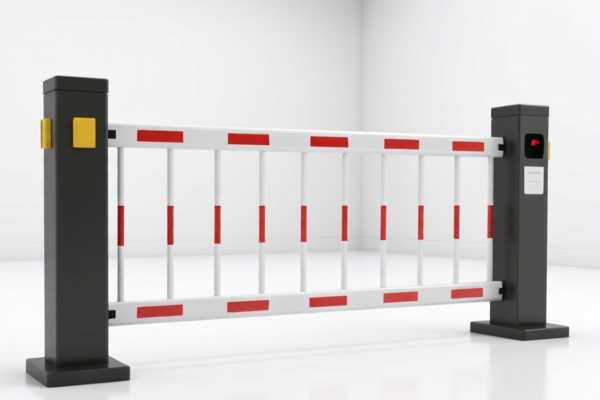
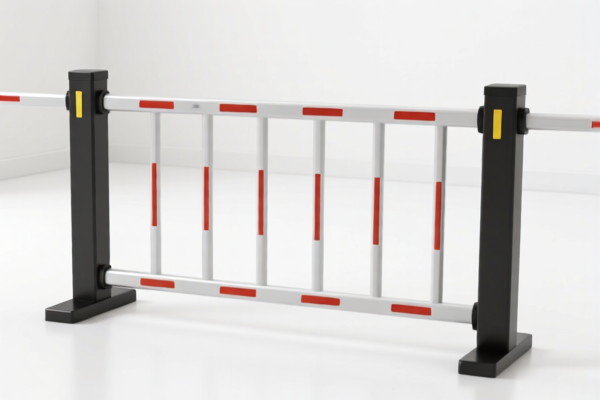
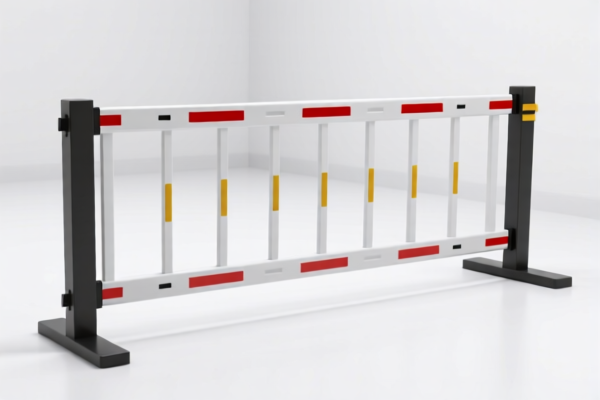
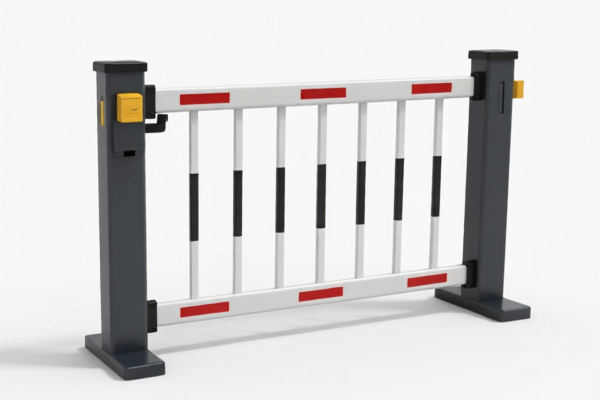
AI Analysis
🛡️ Indoor Safety Barrier Gate (Safety Bed Rails / Guardrails)
🌐 HS Code Reference & Customs Clearance Guide | 2026 Latest Tariff Analysis | Professional Entry Strategy
📌 I. Product Definition & Classification: What is an "Indoor Safety Barrier Gate"?
An Indoor Safety Barrier Gate (commonly referred to in trade as Safety Bed Rails, Toddler Guardrails, or Crib Bed Rails) is a protective accessory installed on beds to prevent children, infants, or patients from falling out. In international trade, these products are primarily classified based on their intended use (baby furniture accessories) versus their material composition (plastic, metal, or wood).
The classification ambiguity arises because they can fall under: 1. Parts of Furniture (if considered integral to the bed structure); 2. Articles of Plastic (if primarily plastic components); 3. General Articles of Plastic (if deemed generic fittings).
⚠️ Critical Distinction:
- If the product is specifically designed as a replacement or attachment for infant/child beds, it strongly leans towards Chapter 94 (Furniture).
- If it is a general-purpose plastic barrier or a generic connection component not specific to furniture, it may fall under Chapter 39 (Plastics).
📦 II. HS Code Classification Details (2026 Latest Tariff Authority Comparison)
| HS Code | Product Description | Application Scenario | Material/Type |
|---|---|---|---|
9403.99.90.10 |
Parts of furniture for infants'/children's beds, cribs, prams | Safety rails for toddler beds, crib guards, specific baby furniture accessories | Generic/Mixed |
9403.91.00.05 |
Parts of wooden furniture | Safety bed rails made primarily of wood or wood-composite | Wood |
3926.30.50.00 |
Other articles of plastic: Fittings, connectors, or attachments | Plastic safety bars classified as "fittings" or "connection members" for furniture | Plastic |
3926.90.99.89 |
Other articles of plastic | Plastic safety barriers not specifically identified elsewhere, falling under "Other" | Plastic |
🔍 Key Reminder:
- Use Defines Destination: The most precise classification for bed safety rails is 9403.99.90.10, as it explicitly covers "parts for infant/children's beds." - Material Triggers Alternative Codes: If the rail is Wood, use 9403.91.00.05. If Plastic, customs may accept either 3926.30.50.00 (as fittings) or 3926.90.99.89 (general plastic goods), but 9403.99.90.10 remains the most functionally accurate if the intent is clearly furniture-related. - Warning: Misclassifying a bed part as a general plastic article can lead to lower tax rates initially but risks penalties for incorrect declaration if the primary function is furniture attachment.
💰 III. 2026 Latest Tariff Rate Breakdown (Including Surtaxes & Policy Add-ons)
✅ Applicable Country: United States (US)
✅ Origin: China (CN)
✅ Effective Date: From November 10, 2025 onwards (and subsequent imports)
🎯 1. 9403.99.90.10 —— Parts of Furniture for Infant/Children's Beds
| Item | Content |
|---|---|
| Base Tariff | 0.0% (Ad Valorem) |
| Section 301 Surtax | +25.0% (USITC Footnote regarding China imports) |
| Section 122 Tariff | +10.0% (Specific statutory additional duty) |
| Steel/Aluminum/Copper Surtax | +50.0% (If the rail contains significant metal components like steel/aluminum frames) |
| Total Tariff | 35.0% (Standard Plastic/Wood) 85.0% (If Metal Components Trigger Steel/Aluminum Surtax) |
| Tax Calculation | CIF Value × 35% (or 85%) |
| De Minimis Eligibility | ❌ Not Eligible (Denied under current trade policies for Chinese origin) |
| Legal Basis Path | IEEPA:9903.01.24 → USITC:9403.99.90.10 → FOOTNOTE:9903.88.01 |
📌 Explanation:
- The 25% Section 301 tax is the primary surcharge for Chinese goods. - The 10% Section 122 tax is an additional statutory levy. - Crucial Alert: If the safety barrier contains steel, aluminum, or copper parts, the 50% surtax applies to those metals, potentially pushing the total rate to 85%. Pure plastic or wooden rails attract the 35% rate.
🎯 2. 9403.91.00.05 —— Parts of Wooden Furniture
| Item | Content |
|---|---|
| Base Tariff | 0.0% |
| Section 301 Surtax | +25.0% |
| Section 122 Tariff | +10.0% |
| Total Tariff | 35.0% |
| Tax Calculation | CIF Value × 35% |
| De Minimis Eligibility | ❌ Not Eligible |
| Legal Basis Path | IEEPA:9903.01.24 → USITC:9403.91.00.05 → FOOTNOTE:9903.88.01 |
📌 Note:
- If your safety bed rail is 100% Wood, it falls here. - The tax burden is identical to the plastic/furniture parts (35%), but the HS code must strictly reflect the material.
🎯 3. 3926.30.50.00 —— Other Articles of Plastic: Fittings/Connectors
| Item | Content |
|---|---|
| Base Tariff | 5.3% |
| Section 301 Surtax | +7.5% |
| Section 122 Tariff | +10.0% |
| Total Tariff | 22.8% |
| Tax Calculation | CIF Value × 22.8% |
| De Minimis Eligibility | ❌ Not Eligible |
| Legal Basis Path | IEEPA:9903.01.24 → USITC:3926.30.50.00 |
📌 Explanation:
- This code classifies the rail as a "fitting" or "connection member" for furniture, rather than a part of the furniture itself. - Lower Rate: The total tax is 22.8%, which is significantly lower than the 35% for furniture parts. - Risk: Customs may challenge this classification if the item is clearly a "part of a bed" rather than a generic connector.
🎯 4. 3926.90.99.89 —— Other Articles of Plastic
| Item | Content |
|---|---|
| Base Tariff | 5.3% |
| Section 301 Surtax | +7.5% |
| Section 122 Tariff | +10.0% |
| Total Tariff | 22.8% |
| Tax Calculation | CIF Value × 22.8% |
| De Minimis Eligibility | ❌ Not Eligible |
| Legal Basis Path | IEEPA:9903.01.24 → USITC:3926.90.99.89 |
📌 Note:
- This is the "catch-all" for plastic articles. - Like3926.30.50.00, it offers a 22.8% rate. - It is less specific than the furniture part codes but often accepted for generic plastic safety rails.
🛠️ IV. Customs Clearance Practical Advice (Battle-Tested Pitfall Avoidance)
✅ 1. Document Checklist (Mandatory)
| Document | Required | Explanation |
|---|---|---|
| ✅ Product Specifications | ✔️ | Must detail dimensions, material (Wood/Plastic/Metal), and weight. |
| ✅ Material Composition Report | ✔️ | Crucial to determine if steel/aluminum parts trigger the 50% surtax (for HS 9403). |
| ✅ Product Photos (with Label) | ✔️ | Show the rail attached to a bed frame to prove "furniture part" usage. |
| ✅ Commercial Invoice | ✔️ | Description must match HS code (e.g., "Plastic Safety Bed Rail for Toddler Bed"). |
| ✅ Packing List | ✔️ | List all components. Do not split shipments to avoid partial taxation. |
| ✅ Certificate of Origin (CO) | ✔️ | To prove China origin (triggers taxes) or other origin (if exempt). |
✅ 2. Declaration Strategy (Key Mnemonics)
🔥 "Material First, Use Second, Metal Trigger Alert!"
| Scenario | Correct Declaration | Wrong Practice |
|---|---|---|
| Wooden Safety Rail | 9403.91.00.05 (35%) |
Declare as Plastic → Customs audit → Penalty |
| Plastic Safety Rail (Generic) | 3926.90.99.89 (22.8%) |
Declare as Furniture Part → 35% tax (Higher cost) |
| Plastic Safety Rail (Fitting) | 3926.30.50.00 (22.8%) |
Declare as Furniture Part → 35% tax |
| Rail with Steel/Aluminum Frame | 9403.99.90.10 (85%) |
Ignore metal content → Severe Penalty & Retroactive Tax |
| Pure Plastic Rail | 9403.99.90.10 (35%) |
Declare as 3926 → Potential Misclassification Risk |
✅ 3. Special Situations Handling
| Situation | Handling Advice |
|---|---|
| Composite Materials (Plastic + Metal) | If metal parts are structural, the 50% steel/aluminum surtax may apply under HS 9403. Calculate carefully! |
| OEM Custom Rails | Provide client design drawings. If the design is unique to a specific bed brand, argue for 9403 (Furniture Part). |
| Generic Plastic Bars (No Bed Connection) | If not designed specifically for beds, declare under 3926.90.99.89 (22.8%) to save tax. |
| Mixed Shipments | Declare Plastic and Wooden parts separately. Do not lump them into one HS code. |
🌍 V. Global Market Comparison (2026 Latest)
| Country/Region | Recommended HS Code | Tariff Rate (CN Origin) | Certification Requirements | Notes |
|---|---|---|---|---|
| 🇺🇸 USA | 9403.99.90.10 (Wood/Plastic) |
35% (Up to 85% if Metal) | CPC (Children's Product Certificate), ASTM F2057 | High tax burden; metal content is critical. |
| 🇺🇸 USA | 3926.30.50.00 / 3926.90.99.89 |
22.8% | ASTM F2057 | Lower tax if classified as "Plastic Article". |
| 🇨🇳 China | 9403.99.90.10 |
5% | CCC (if applicable) | No surtaxes. |
| 🇪🇺 EU | 9403.90.00 |
0% - 4.7% | CE, EN 716 | No Section 301/122 taxes. |
| 🇦🇺 Australia | 9403.90.00 |
5% | SAI Global Certification | Moderate tax. |
📌 Conclusion:
- USA is the most challenging market due to Section 301, Section 122, and Potential Steel Surtaxes. - Classification Choice Matters: Declaring as "Plastic Article" (3926) saves 12.2% compared to "Furniture Part" (9403) if no metal components are present. - Metal Risk: If your safety rail has a metal frame, the 85% rate under9403makes3926unviable (as metal parts cannot be hidden). In this case, the cost is unavoidable.
📌 VI. Common Mistakes & Pitfalls (Lessons Learned)
❌ Mistake 1: Ignoring metal components in plastic rails
👉 Consequence: If the rail has steel screws or an aluminum core, declaring as 3926 might be rejected, and if declared as 9403, you face 85% tax.
Fix: Accurately report material composition.
❌ Mistake 2: Declaring "Safety Bed Rail" as "Toy"
👉 Consequence: Toys have different CPSC requirements. If classified incorrectly, it leads to port detention and recall risks.
Fix: Always specify "Bed Guard" or "Safety Barrier".
❌ Mistake 3: Using "Furniture Part" for Generic Plastic Bars
👉 Consequence: Overpaying tax. If the item is not exclusively for beds, 3926.90.99.89 (22.8%) is cheaper than 9403.99.90.10 (35%).
Fix: Assess if the product is exclusively for furniture.
✅ Correct Action:
"Plastic Safety Bed Rail for Toddler Bed, Model XYZ, ASTM F2057 Certified, 100% Plastic"
🎯 VII. Conclusion: Precise Classification, Lower Costs, Smoother Clearance!
🎯 Remember the Mantra:
🔹 "Wood/Plastic Furniture Part: 35% (Up to 85% if Metal)"
🔹 "Plastic Article Fitting: 22.8%"
🔹 "Metal Content is the Tax Killer!"
📌 Pro Tip:
If your product is 100% Plastic and not strictly defined as a "furniture part" in your design intent, consider declaring under 3926.90.99.89 or 3926.30.50.00 to save 12.2% in tariffs. However, ensure you have ASTM F2057 certification for child safety products to avoid regulatory holds.
📣 Immediate Action:
📞 Contact a licensed customs broker.
📦 Provide Material Safety Data Sheet (MSDS) and ASTM Test Report.
🚀 Secure your Advance Ruling if possible to lock in the HS Code and tax rate.
✨ Professional Clearance Starts with Accurate Classification!
💼 Every percentage point counts in your profit margin!
Customer Reviews
About HS Code Classification
The Harmonized System (HS) is an internationally standardized nomenclature developed by the World Customs Organization (WCO) to classify traded products. Over 200 countries use the HS system as the basis for customs tariffs, trade statistics, and import/export regulations.
Each HS code follows a hierarchical structure:
- Chapter (2 digits) — Broad category of goods (e.g., Chapter 84: Machinery and Mechanical Appliances)
- Heading (4 digits) — More specific grouping within the chapter
- Subheading (6 digits) — Internationally standardized breakdown, used by all WCO member countries
- National subdivisions (8-10 digits) — Country-specific extensions for further classification, such as US HTSUS 10-digit codes
Correct HS code classification is essential for smooth customs clearance, accurate duty payment, and compliance with trade regulations. Misclassification can lead to customs delays, overpayment of duties, or penalties.
When importing from CN to US, the applicable tariff rates may include:
- Most-Favored-Nation (MFN) rate — The standard duty rate applied to WTO members
- General rate — Applied to countries without trade agreements
- Trade remedy duties — Additional tariffs such as Section 301 (anti-dumping), Section 232 (national security), or countervailing duties
The information provided on this page is for reference purposes only. For official classification, please consult with your local customs authority or a licensed customs broker.