Indoor Wallpaper Base Paper
CN → US| HS Code | Tariff Rate | Origin | Destination | Doc |
|---|---|---|---|---|
| 4814200000 | 17.5% | CN | US | Official Doc |
| 4814900200 | 17.5% | CN | US | Official Doc |
| 4811909080 | 35.0% | CN | US | Official Doc |
| 4814900200 | 17.5% | CN | US | Official Doc |
| 5905009000 | 35.0% | CN | US | Official Doc |
Product Images
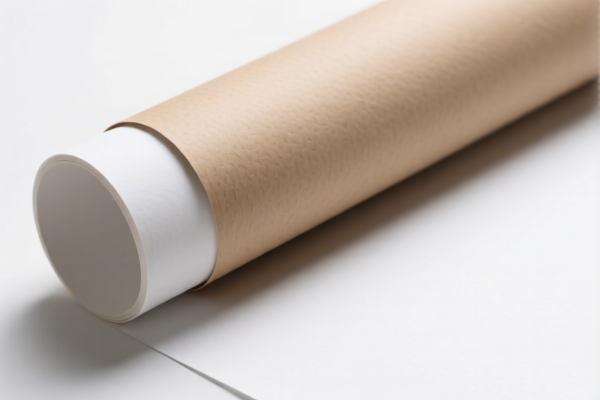
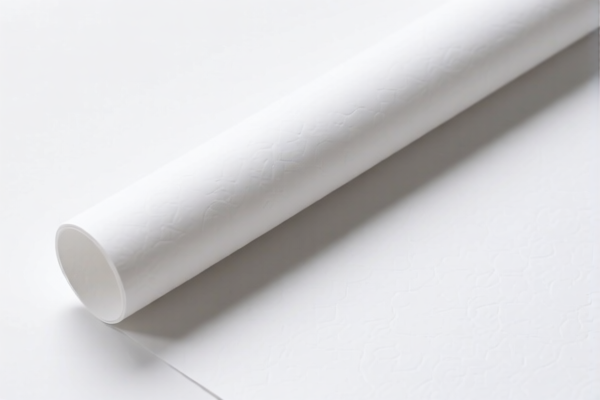
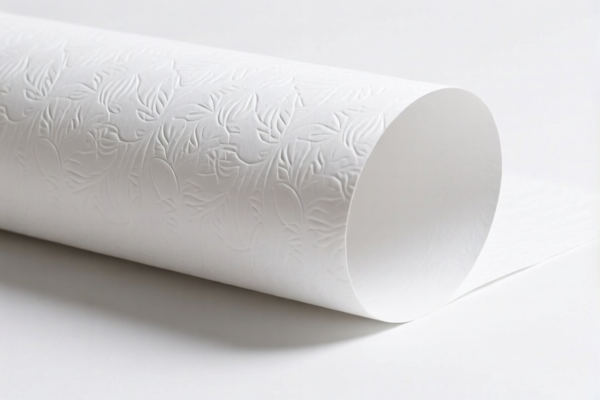
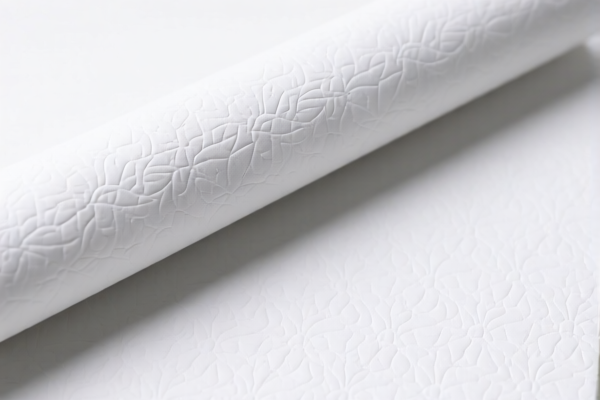
AI Analysis
🧱 Indoor Wallpaper Base Paper
🌐 HS Code Reference & Customs Clearance Guide | 2026 Latest Tariff Analysis | Professional Clearance Strategy
📌 I. Product Definition & Classification: Do You Really Understand "Wallpaper Base Paper"?
Indoor wallpaper base paper, often referred to as "substrate" or "backing paper," is the foundational layer of decorative wall coverings. In international trade, it is primarily classified based on its material (paper-based) and end-use (wall decoration).
The classification hinges on whether the paper is considered a finished decorative item (or ready for immediate decoration) or an unfinished industrial material (coated/plated paper).
⚠️ Key Distinction Point:
- If the paper is intended directly as a wall covering (even if plain) or has specific decorative properties → It falls under Chapter 48 (Paper) or Chapter 59 (Textiles). - If it is a raw material (uncoated/plain) meant for further processing → It may fall under Chapter 48.11 (Coated Paper).
📦 II. HS Code Classification Details (2026 Latest Tariff Authority Comparison)
| HS Code | Product Description | Application Scenario | Material/State |
|---|---|---|---|
4814.20.00.00 |
Wallpaper and similar wall coverings, of paper | Decorative paper wall coverings, suitable for base paper decoration | ✅ Paper-based, Decorative Use |
4814.90.02.00 |
Other wall coverings of paper, with backing | Wall coverings where paper is the primary material, often with a backing layer | ✅ Paper-based, Wall Coverage |
5905.00.90.00 |
Other textile wall coverings | Fallback category; inferred as textile/fabric-based base paper if no specific paper HS fits | ✅ Textile/Fabric Inference |
4811.90.90.80 |
Other coated/plated paper, in rolls > 15cm | Uncoated/plain base paper, treated for decoration, not specifically classified elsewhere | ✅ Paper-based, Industrial Raw Material |
🔍 Critical Reminder:
-4814codes are preferred if the product is explicitly marketed as "wallpaper" or "wall covering," even if it's the base layer. The summary notes that "Wallpaper" matches the use case perfectly. -4811codes apply if the product is a raw paper sheet/film used for making wallpapers, rather than the wallpaper itself. -5905is a "catch-all" fallback if the material is ambiguous (e.g., non-woven fabric base), but for pure paper base,4814or4811are more accurate.
💰 III. 2026 Latest Tariff Rate Details (Including Surcharges & Policy Add-ons)
✅ Applicable Country: United States (US)
✅ Origin: China (CN)
✅ Effective Date: From November 10, 2025 (including subsequent imports)
🎯 1. 4814.20.00.00 & 4814.90.02.00 —— Paper Wallpaper & Wall Coverings
| Item | Content |
|---|---|
| Base Duty Rate | 0.0% (ad valorem) |
| Section 301 Surcharge | +7.5% |
| Section 122 Tariff | +10% |
| Total Effective Rate | 17.5% |
| Tax Calculation | CIF Value × 17.5% |
| De Minimis Eligibility | ❌ Not Available |
| Legal Basis Path | Section 301: 7.5% + Section 122: 10% applied to HS 4814.xxxx |
📌 Explanation:
- These are the most favorable codes for wallpaper base paper if it can be classified as "wall covering." - Section 301 (7.5%): The standard additional tariff for many Chinese imports. - Section 122 (10%): A specific additional tariff applicable to certain goods from China. - Total 17.5% is significantly lower than other categories, making this the optimal classification if documentation supports it.
🎯 2. 5905.00.90.00 & 4811.90.90.80 —— Fallback & Raw Paper Categories
| Item | Content |
|---|---|
| Base Duty Rate | 0.0% |
| Section 301 Surcharge | +25.0% |
| Section 122 Tariff | +10% |
| Total Effective Rate | 35.0% |
| Tax Calculation | CIF Value × 35.0% |
| De Minimis Eligibility | ❌ Not Available |
| Legal Basis Path | Section 301: 25% + Section 122: 10% applied to HS 5905 or 4811 |
📌 Caution:
-5905.00.90.00: Classified as "other textile wall coverings." The summary suggests this is based on "common sense inference" for textile materials. If your base paper is non-woven fabric, this may apply, but the tariff is double that of4814. -4811.90.90.80: Classified as "coated paper" or general paper products. If the base paper is considered an unfinished raw material rather than a wall covering, this code applies. - Total 35.0% is a high-risk/high-cost classification. Avoid this unless the product cannot be classified under4814.
🛠️ IV. Customs Clearance Operational Advice (Practical Pitfall Guide)
✅ 1. Required Documentation Checklist (Non-negotiable)
| Document | Mandatory | Description |
|---|---|---|
| ✅ Product Specification Sheet | ✔️ | Must clearly state "Base Paper for Wallpaper," dimensions, weight, and material composition (e.g., "Virgin Wood Pulp"). |
| ✅ Commercial Invoice | ✔️ | Must use precise description: "Indoor Wallpaper Base Paper (Uncoated/Pre-coated)" — Avoid vague terms like "Decorative Paper." |
| ✅ Product Photos | ✔️ | Show texture, roll end, and any branding. Must distinguish from finished printed wallpaper if claiming 4814. |
| ✅ Bill of Lading (B/L) | ✔️ | Ensure Consignee and Notify Party are correct; check for "Shipped on Board" date. |
| ✅ Certificate of Origin | ✔️ | Required to prove CN origin and apply Section 301/122 tariffs correctly. |
✅ 2. Declaration Strategy (Key Mantras)
🔥 "Material is Paper, Use is Wall, Code 4814 is King!"
| Scenario | Correct Declaration | Incorrect Practice |
|---|---|---|
| Base paper is plain but used for walls | 4814.20.00.00 |
Declare as "Paper Rolls" → Risk 4811 (35%) |
| Non-woven fabric base (textile-like) | 5905.00.90.00 |
Declare as "Paper" → Misclassification |
| Unfinished paper for printing later | 4811.90.90.80 |
Declare as "Wallpaper" → Customs rejection |
| Finished printed wallpaper | 4814.20.00.00 |
Declare as "Base Paper" → Under-declaration risk |
✅ 3. Special Case Handling
| Situation | Handling Advice |
|---|---|
| Is it Paper or Textile? | If the base is non-woven fabric, use 5905. If it is wood pulp paper, use 4814. This is the #1 cause of classification disputes. |
| Coated vs. Uncoated | If the base paper has a clay or polymer coating for better paint adhesion, it may still be 4814 if intended for walls. If it's a generic coated paper for other uses, use 4811. |
| Section 122 Applicability | Verify if your specific supplier/entity is subject to Section 122 tariffs. Some entities may have exclusions. |
🌍 V. Global Market Comparison (2026 Latest)
| Country/Region | Recommended HS Code | Tariff Rate | Certification Requirements | Notes |
|---|---|---|---|---|
| 🇺🇸 USA | 4814.20.00.00 |
17.5% | None (Standard) | Lowest rate. Avoid 4811 (35%). |
| 🇨🇳 China | 4814.20.00.00 |
5% | None | No additional surcharges. |
| 🇪🇺 EU | 4814.20.00.00 |
0% | CE (if applicable) | No additional tariffs for paper. |
| 🇬🇧 UK | 4814.20.00.00 |
0% | UKCA | Post-Brexit standard rates. |
📌 Conclusion:
- The US market has the most complex tariff structure due to Section 301 and Section 122. - Correctly classifying as4814saves you 17.5% in taxes compared to4811or5905. - Accuracy in "Intended Use" (Wall Decoration) is the key to securing the lower rate.
📌 VI. Common Mistakes & Pitfall Guide (Lessons Learned)
❌ Mistake 1: Classifying "Base Paper" as general "Paper Products" (4811)
👉 Consequence: Tariff jumps from 17.5% to 35%.
💡 Fix: Emphasize "Wall Covering" use in documentation.
❌ Mistake 2: Confusing "Non-Woven Base" with "Paper Base"
👉 Consequence: Misclassification under 5905 (35%) or 4814 (17.5%) depending on actual material.
💡 Fix: Provide material composition sheet (e.g., "100% Polyester" vs. "100% Cellulose").
❌ Mistake 3: Vague Description "Decorative Paper"
👉 Consequence: Customs may reclassify based on visual inspection, potentially applying higher duties.
💡 Fix: Use specific terms: "Unprinted Wallpaper Base Paper, Roll Form".
🎯 VII. Conclusion: Precision Classification Saves Money!
🎯 Remember the Mantra:
🔹 "Wallpaper Base? Check Use. If for Walls, Go 4814. If Raw Paper, Go 4811. 17.5% vs 35% is a Big Difference!"
📌 Pro Tip:
If you are importing large volumes, consider applying for an HS Code Advance Ruling from US Customs and Border Protection (CBP). This provides legal certainty and protects against future duty assessments.
📣 Immediate Action:
📞 Consult your customs broker with material specs and intended use statement.
🚀 Ensure your invoice clearly states "Base Paper for Wall Covering" to qualify for the 17.5% rate.
✨ Professional Clearance Starts with Precise Classification!
💼 Every percentage point saved is pure profit!
Customer Reviews
About HS Code Classification
The Harmonized System (HS) is an internationally standardized nomenclature developed by the World Customs Organization (WCO) to classify traded products. Over 200 countries use the HS system as the basis for customs tariffs, trade statistics, and import/export regulations.
Each HS code follows a hierarchical structure:
- Chapter (2 digits) — Broad category of goods (e.g., Chapter 84: Machinery and Mechanical Appliances)
- Heading (4 digits) — More specific grouping within the chapter
- Subheading (6 digits) — Internationally standardized breakdown, used by all WCO member countries
- National subdivisions (8-10 digits) — Country-specific extensions for further classification, such as US HTSUS 10-digit codes
Correct HS code classification is essential for smooth customs clearance, accurate duty payment, and compliance with trade regulations. Misclassification can lead to customs delays, overpayment of duties, or penalties.
When importing from CN to US, the applicable tariff rates may include:
- Most-Favored-Nation (MFN) rate — The standard duty rate applied to WTO members
- General rate — Applied to countries without trade agreements
- Trade remedy duties — Additional tariffs such as Section 301 (anti-dumping), Section 232 (national security), or countervailing duties
The information provided on this page is for reference purposes only. For official classification, please consult with your local customs authority or a licensed customs broker.