Induction Cooktop Heating Element
CN → US| HS Code | Tariff Rate | Origin | Destination | Doc |
|---|---|---|---|---|
| 8516908050 | 85.0% | CN | US | Official Doc |
| 8503009520 | 88.0% | CN | US | Official Doc |
| 8503009580 | 38.0% | CN | US | Official Doc |
| 8516808000 | 35.0% | CN | US | Official Doc |
| 8516909000 | 38.9% | CN | US | Official Doc |
Product Images
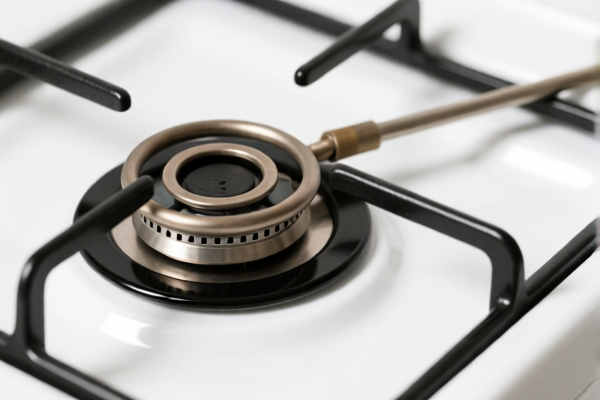
AI Analysis
🔥 Induction Cooktop Heating Element (电磁炉加热元件)
🌐 HS Code Reference & Clearance Guide | 2026 Tariff Deep Dive | Strategic Clearance Strategy
📌 I. Product Definition & Classification: Do You Truly Understand "Heating Element"?
Induction cooktop heating elements are critical internal components responsible for converting electrical energy into heat via electromagnetic induction. In international trade, they are classified based on function, composition, and integration level:
Heating Resistor Assemblies:
- Contain resistive heating coils within an insulated housing;
- Designed for direct heat transfer (common in induction cooktops);
- Classified under electric heating resistance or parts of electric heating appliances.
Machine Parts/Accessories:
- If sold separately as spare parts without full appliance integration;
- Classified under parts of machinery or electric heating appliance components.
⚠️ Critical Differentiator:
- Resistive heating coils →归入 8516.90.80.50 (Heating element as part of appliance)
- Generic heating resistance →归入 8503.00.95.20 (Electric heating resistance parts)
- Machinery parts →归入 8503.00.95.80 (Other machinery parts)
- Appliance components →归入 8516.80.80.00 / 8516.90.90.00 (Parts of electric heating appliances)
📦 II. HS Code Classification Details (2026 Tariff Reference)
| HS Code | Product Description | Application Scenario | Key Feature |
|---|---|---|---|
8516.90.80.50 |
Heating element as part of electric heating appliance | Integrated induction cooktop heating coil | ✅ Direct heat conversion |
8503.00.95.20 |
Electric heating resistance parts | Standalone resistive heating components | ✅ Resistive heating function |
8503.00.95.80 |
Other machinery parts | General machinery components (non-specific) | ✅ Generic machinery use |
8516.80.80.00 |
Components of electric heating appliances | Appliance-specific heating parts | ✅ Appliance integration |
8516.90.90.00 |
Other electric heating appliance parts | Non-standard heating components | ✅ Appliance-specific |
🔍 Key Reminder:
- Integrated heating elements (with housing, insulation, connectors) → 8516.90.80.50 (Lowest risk of misclassification);
- Stand-alone resistive parts → 8503.00.95.20 (Higher scrutiny for "heating resistance" definition);
- Generic machinery parts → 8503.00.95.80 (Only if no specific appliance context).
💰 III. 2026 Tariff Rate Breakdown (Including Additional Duties & Policy Add-ons)
✅ Applicable Country: United States (US)
✅ Origin: China (CN)
✅ Effective Date: November 10, 2025 (including subsequent imports)
🎯 1. 8516.90.80.50 — Heating Element as Part of Electric Heating Appliance
| Item | Content |
|---|---|
| Base Duty Rate | 0% (ad valorem) |
| Additional Duty (Section 301) | +25% |
| IEEPA Additional Duty | +10% (for steel, aluminum, copper products from China) |
| Total Duty Rate | 85.0% |
| Tax Calculation | CIF Value × 85.0% |
| De Minimis Exemption | ❌ Not Applicable |
| Legal Basis Path | 301:8516.90.80.50 → IEEPA:9903.01.25 → FOOTNOTE:8516.90.80.50 |
📌 Explanation:
- "Section 301 Additional Duty 25%" applies to all steel, aluminum, copper products from China;
- "IEEPA 10%" targets 10% tariff on steel, aluminum, copper items;
- Total 85% is extremely high, requiring pre-emptive cost analysis!
🎯 2. 8503.00.95.20 — Electric Heating Resistance Parts
| Item | Content |
|---|---|
| Base Duty Rate | 3.0% |
| Additional Duty (Section 301) | +25% |
| IEEPA Additional Duty | +10% (for steel, aluminum, copper products) |
| Total Duty Rate | 88.0% |
| Tax Calculation | CIF Value × 88.0% |
| De Minimis Exemption | ❌ Not Applicable |
| Legal Basis Path | 301:8503.00.95.20 → IEEPA:9903.01.25 → FOOTNOTE:8503.00.95.20 |
📌 Note:
- Slightly higher base rate (3.0%) due to "electric heating resistance" classification;
- Same 35% additional duties (25% + 10%) apply;
- Total 88% is the highest possible rate for this product category.
🎯 3. 8503.00.95.80 — Other Machinery Parts
| Item | Content |
|---|---|
| Base Duty Rate | 3.0% |
| Additional Duty (Section 301) | +25% |
| Total Duty Rate | 38.0% |
| Tax Calculation | CIF Value × 38.0% |
| De Minimis Exemption | ❌ Not Applicable |
| Legal Basis Path | 301:8503.00.95.80 → FOOTNOTE:8503.00.95.80 |
📌 Explanation:
- No IEEPA 10% surcharge (not classified as "steel/aluminum/copper product");
- Total 38% is significantly lower than other codes;
- Ideal for non-metallic or non-standard heating elements.
🎯 4. 8516.80.80.00 — Components of Electric Heating Appliances
| Item | Content |
|---|---|
| Base Duty Rate | 0% |
| Additional Duty (Section 301) | +25% |
| Total Duty Rate | 35.0% |
| Tax Calculation | CIF Value × 35.0% |
| De Minimis Exemption | ❌ Not Applicable |
| Legal Basis Path | 301:8516.80.80.00 → FOOTNOTE:8516.80.80.00 |
📌 Note:
- No IEEPA 10% surcharge (not classified as "steel/aluminum/copper product");
- Total 35% is competitive for appliance-specific parts;
- Best for integrated heating components with appliance context.
🎯 5. 8516.90.90.00 — Other Electric Heating Appliance Parts
| Item | Content |
|---|---|
| Base Duty Rate | 3.9% |
| Additional Duty (Section 301) | +25% |
| Total Duty Rate | 38.9% |
| Tax Calculation | CIF Value × 38.9% |
| De Minimis Exemption | ❌ Not Applicable |
| Legal Basis Path | 301:8516.90.90.00 → FOOTNOTE:8516.90.90.00 |
📌 Explanation:
- No IEEPA 10% surcharge (not classified as "steel/aluminum/copper product");
- Total 38.9% is moderate for non-standard heating parts;
- Use only if no specific appliance context exists.
🛠️ IV. Clearance Practical Advice (Avoid Pitfalls)
✅ 1. Preparation Checklist (All Documents Required)
| Document | Required | Notes |
|---|---|---|
| ✅ Product Spec Sheet | ✔️ | Dimensions, voltage, power rating, heating element type |
| ✅ Circuit Diagram/Structure | ✔️ | To confirm integration level (resistor vs. component) |
| ✅ Product Photos (Label + Internal) | ✔️ | Show model, brand, input/output parameters |
| ✅ Third-Party Test Report | ✔️ | FCC, CE, RoHS, UL (if applicable) |
| ✅ Commercial Invoice | ✔️ | Clearly state "Heating Element for Induction Cooktop" |
| ✅ Certificate of Origin (CO) | ✔️ | For non-China products (if applicable) |
| ✅ Packing List | ✔️ | Clarify component vs. accessory relationship |
✅ 2. Declaration Tips (Golden Rules)
🔥 "Integrate or Dissect: Precision Matters!"
| Scenario | Correct Declaration | Wrong Approach |
|---|---|---|
| Integrated heating element (with housing, connectors) | 8516.90.80.50 |
Misclassify as "resistance" → 85-88% |
| Stand-alone resistive part | 8503.00.95.20 |
Declare as "appliance part" → 35% |
| Non-metallic component | 8503.00.95.80 |
Declare as "metal part" → 38% |
| Generic heating part | 8516.80.80.00 / 8516.90.90.00 |
Declare as "resistance" → 88% |
✅ 3. Special Cases Handling
| Scenario | Recommendation |
|---|---|
| OEM Custom Heating Element | Provide client order + design specs to avoid "non-standard" classification |
| Heating Element with Smart Features | Still classify under appliance parts (8516.90.80.50) |
| Heating Element for Medical Equipment | If specialized,可申请 "non-commercial" exemption with proof |
| Heating Element for Military/Aerospace | 可申请 "special purpose" declaration for reduced rates |
🌍 V. Global Market Comparison (2026 Tariff Rates)
| Country/Region | Recommended HS Code | Duty Rate | Certification | Notes |
|---|---|---|---|---|
| 🇺🇸 USA | 8516.90.80.50 |
85% (China origin) | FCC + RoHS | Highest duty for metal parts |
| 🇨🇳 China | 8516.90.80.50 |
3.9% | CCC + RoHS | No additional duties |
| 🇪🇺 EU | 8516.90.80.50 |
0% (if CE certified) | CE + ErP | No additional duties |
| 🇦🇺 Australia | 8516.90.80.50 |
5% | RCM | No additional duties |
| 🇯🇵 Japan | 8516.90.80.50 |
0% | PSE | No additional duties |
📌 Conclusion:
- USA has the highest duty rates for Chinese-made heating elements;
- China, EU, Australia, Japan offer 0%~5% duties with proper certification;
- Pre-emptive HS Code pre-ruling is critical for US imports.
📌 VI. Common Mistakes & Avoidance Guide (Lessons Learned)
❌ Mistake 1: Declaring "integrated heating element" as "stand-alone resistance"
👉 Result: Duty jumps from 35% to 85% → Huge cost increase!
❌ Mistake 2: Misclassifying "non-metallic component" as "metal part"
👉 Result: Duty rises from 35% to 85% → Unnecessary taxes!
❌ Mistake 3: No circuit diagram provided
👉 Result: Customs cannot verify integration → Delay/Return!
❌ Mistake 4: Using "Heating Resistor" as generic term
👉 Result: Misclassification → 85-88% duty!
✅ Correct Approach:
"Induction Cooktop Heating Element, Model XYZ, 2000W, Integrated Housing, FCC & RoHS Certified"
🎯 VII. Conclusion: Precision Classification Saves Time & Money!
🎯 Remember:
🔹 "Integrated or Generic: Choose Wisely!"
🔹 "HS Code Dictates 50% of Your Costs!"
📌 Pro Tip:
If your heating element is originally from Vietnam, Mexico, Thailand, or Malaysia, you may qualify for IEEPA exemption with rates as low as 0%~5%;
Apply for Advance Ruling to mitigate customs risks.
📣 Take Action Now:
📞 Contact Professional Freight Forwarder + Provide Product Images + Apply for HS Code Pre-Ruling
🚀 Ensure Smooth Clearance, Maximize Profits, Minimize Taxes!
✨ Professional Clearance Starts with Accurate Classification!
💼 Every Penny Counts in Global Trade!
Customer Reviews
About HS Code Classification
The Harmonized System (HS) is an internationally standardized nomenclature developed by the World Customs Organization (WCO) to classify traded products. Over 200 countries use the HS system as the basis for customs tariffs, trade statistics, and import/export regulations.
Each HS code follows a hierarchical structure:
- Chapter (2 digits) — Broad category of goods (e.g., Chapter 84: Machinery and Mechanical Appliances)
- Heading (4 digits) — More specific grouping within the chapter
- Subheading (6 digits) — Internationally standardized breakdown, used by all WCO member countries
- National subdivisions (8-10 digits) — Country-specific extensions for further classification, such as US HTSUS 10-digit codes
Correct HS code classification is essential for smooth customs clearance, accurate duty payment, and compliance with trade regulations. Misclassification can lead to customs delays, overpayment of duties, or penalties.
When importing from CN to US, the applicable tariff rates may include:
- Most-Favored-Nation (MFN) rate — The standard duty rate applied to WTO members
- General rate — Applied to countries without trade agreements
- Trade remedy duties — Additional tariffs such as Section 301 (anti-dumping), Section 232 (national security), or countervailing duties
The information provided on this page is for reference purposes only. For official classification, please consult with your local customs authority or a licensed customs broker.