Industrial Ceramic Products
CN → US| HS Code | Tariff Rate | Origin | Destination | Doc |
|---|---|---|---|---|
| 6909195095 | 39.0% | CN | US | Official Doc |
| 6909120000 | 39.0% | CN | US | Official Doc |
Product Images
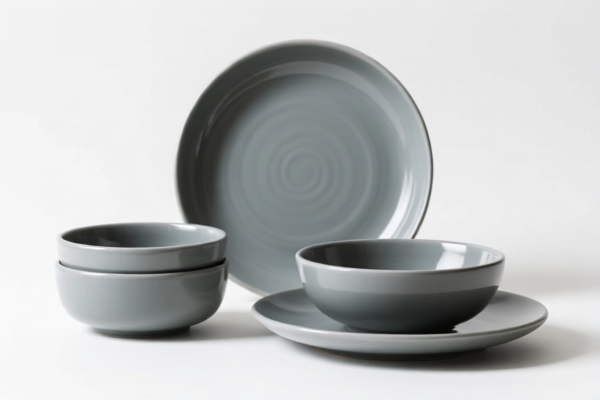
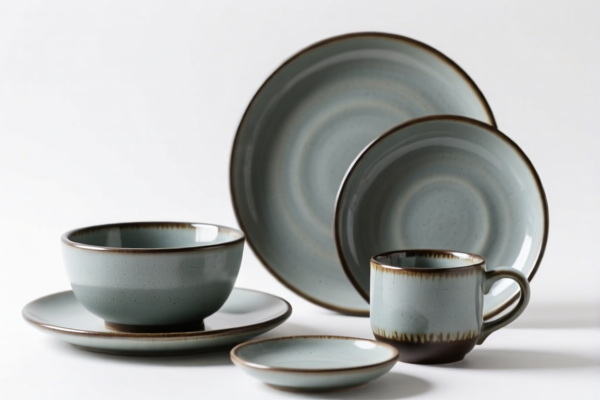
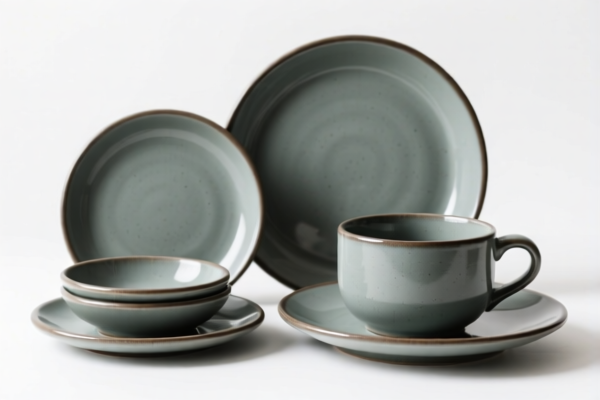
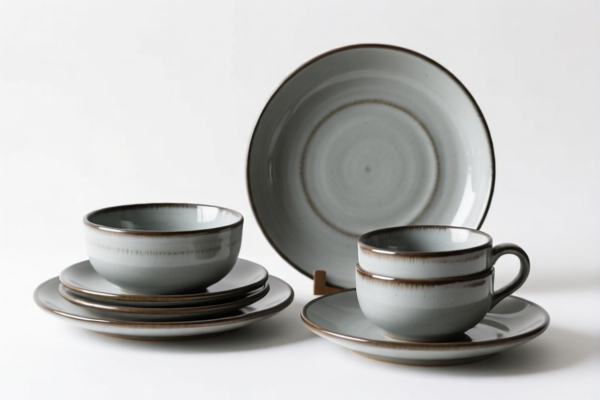
AI Analysis
🏭 Industrial Ceramic Products (Ceramic Wares for Laboratory, Chemical or Other Technical Uses)
🌐 HS Code Reference & Customs Clearance Guide | 2026 Latest Tariff Analysis | Professional Clearance Strategy
📌 Part I: Product Definition & Classification: What Exactly Are "Industrial Ceramics"?
Industrial ceramics, specifically those categorized under Chapter 69 Heading 69.09, are high-performance materials designed for rigorous technical applications. Unlike household pottery, these wares are engineered for chemical resistance, thermal stability, and mechanical hardness.
In international trade, they are broadly divided into two distinct categories based on material hardness and specific application:
- General Technical Ceramics: Standard ceramic vessels used for laboratory, chemical, or general technical processes (e.g., beakers, flasks, reactors not meeting the highest hardness standards).
- Ultra-Hard Ceramics: Specialized wares with a Mohs hardness equivalent to 9 or more, offering superior abrasion resistance and chemical inertness.
⚠️ Key Distinction Point:
- If the ceramic ware has a Mohs hardness of < 9 → It falls under 6909.19 (Other).
- If the ceramic ware has a Mohs hardness of ≥ 9 → It falls under 6909.12 (Articles having hardness equivalent to 9+ on Mohs scale).
📦 Part II: HS Code Classification Details (2026 Latest Tariff Authority)
| HS Code | Product Description | Application Scenario | Hardness Standard |
|---|---|---|---|
6909.19.50.95 |
Other ceramic wares for laboratory, chemical, or other technical uses (Other: Other) | Standard lab glassware alternatives, chemical tanks, agricultural troughs, packing jars | < Mohs 9 |
6909.12.00.00 |
Ceramic wares for laboratory, chemical, or other technical uses: Articles having a hardness equivalent to 9 or more on the Mohs scale | High-wear industrial linings, extreme chemical resistance vessels, precision technical components | ≥ Mohs 9 |
🔍 Critical Reminder:
- Do not confuse with domestic ceramic tableware (Chapter 69.69). These are strictly "Technical Uses".
- The Mohs Hardness Scale is the deciding factor. If your product is "Alumina" or "Zirconia" based, it likely falls under6909.12.00.00.
- Agricultural troughs or packing pots made of ceramic are generally excluded from the "Technical Uses" heading unless specified otherwise, but the provided data focuses on the 6909.1 subheading structure.
💰 Part III: 2026 Latest Tariff Rate Details (Including Surcharges & Policy Add-ons)
✅ Applicable Country: United States (US)
✅ Origin: China (CN)
✅ Effective Time: Current rates apply to imports from China.
🎯 1. 6909.19.50.95 —— General Technical Ceramic Wares (Other)
| Item | Content |
|---|---|
| Base Tariff Rate | 0.0% (Ad valorem) |
| Section 301 Surcharge | 0.0% |
| Total Tax Rate | 0.0% |
| Tax Calculation | CIF Value × 0% = $0 |
| De Minimis Eligibility | ✅ Yes (Generally eligible if value is low, but check specific entry type) |
| Legal Basis Path | HTSUS:6909.19.50.95 |
📌 Explanation:
- This code represents a "Duty-Free" classification for general technical ceramics from China under current Section 301 exemptions or exclusions.
- It is crucial to prove that the item does not meet the "Mohs 9+" criteria. If it does, you will be liable for the higher tariff below.
🎯 2. 6909.12.00.00 —— Ultra-Hard Ceramic Wares (Mohs ≥ 9)
| Item | Content |
|---|---|
| Base Tariff Rate | 4.0% (Ad valorem) |
| Section 301 Surcharge | +25.0% |
| Total Tax Rate | 29.0% |
| Tax Calculation | CIF Value × 29.0% |
| De Minimis Eligibility | ❌ No (High tariff goods often scrutinized; 25% surcharge usually negates small parcel benefits) |
| Legal Basis Path | HTSUS:6909.12.00.00 → USITC Footnote 301:6909.12.00.00 |
📌 Explanation:
- The 4% base rate is the standard Most Favored Nation (MFN) rate.
- The 25% additional duty is imposed under Section 301 of the Trade Act of 1974, targeting Chinese-origin goods listed in List 4A.
- Total Cost Impact: You must budget for nearly 30% of the CIF value in tariffs alone. This significantly affects pricing competitiveness.
🛠️ Part IV: Customs Clearance Practical Advice (Real-World Pitfall Avoidance Guide)
✅ 1. Preparation Checklist (Non-Negotiable)
| Material | Must Provide | Explanation |
|---|---|---|
| ✅ Material Certification | ✔️ | Must explicitly state Mohs Hardness. If < 9, it saves you 25%. |
| ✅ Technical Data Sheet (TDS) | ✔️ | Shows chemical composition, temperature resistance, and intended use (Lab/Chemical). |
| ✅ Product Photos | ✔️ | Clear images showing no decorative/patterned elements (to distinguish from tableware). |
| ✅ Commercial Invoice | ✔️ | Description must include "Ceramic Ware for Laboratory/Technical Use." |
| ✅ Packing List | ✔️ | Weight and dimensions for customs valuation. |
| ✅ Use Declaration | ✔️ | State clearly: "For chemical storage" or "For laboratory heating processes." |
✅ 2. Declaration Tips (Key Mnemonics)
🔥 “Hardness Defines Tax, Use Defines Code!”
| Scenario | Correct Declaration | Error Risk |
|---|---|---|
| Standard Lab Beaker | 6909.19.50.95 |
If misclassified as 6909.12, you pay 29% instead of 0%. |
| Zirconia Liner (Mohs 9+) | 6909.12.00.00 |
If misclassified as 6909.19, it is considered Smuggling/Fraud if intent is to evade duty. |
| Decorative Ceramic Vase | ❌ Do NOT use 69.09 | Goes to Ch 69.13 or 69.14. Using 69.09 causes Rejection. |
| Chemical Storage Tank | 6909.19.50.95 |
Ensure it's not "Agricultural Trough" (which may have different rules). |
✅ 3. Special Handling Cases
| Situation | Handling Advice |
|---|---|
| Mixed Containers | If a container has both soft and hard ceramics, split the declaration. Misdeclaring hard goods as soft goods triggers penalties. |
| OEM Custom Parts | Provide CAD drawings. Custom shapes do not change the hardness-based HS code. |
| New Material (e.g., SiC) | Silicon Carbide often has Mohs 9-9.5. Assume 6909.12.00.00 unless proven otherwise. |
| Re-export from Third Country | Certificate of Origin must show China. If transshipped, ensure no substantial transformation occurred. |
🌍 Part V: Global Market Comparison (2026 Latest)
| Country/Region | Recommended HS Code | Tariff (China Origin) | Certification Requirements | Remarks |
|---|---|---|---|---|
| 🇺🇸 USA | 6909.19.50.95 |
0.0% | None specific | Best for cost-saving. Ensure Mohs < 9. |
| 🇺🇸 USA | 6909.12.00.00 |
29.0% | None specific | High cost for hard ceramics. |
| 🇪🇺 EU | 6909.19 |
4.0% | REACH, LFGB (if food contact) | No Section 301 equivalent, but anti-dumping checks. |
| 🇬🇧 UK | 6909.19 |
4.0% | UKCA Marking | Post-Brexit rules apply. |
| 🇨🇳 China | 6909.19 |
0-10% (Varies) | CCC (if applicable) | Export duty may apply. |
📌 Conclusion:
- The USA offers a 0% tariff window for general technical ceramics (6909.19.50.95).
- Strategic Advice: If your product can be engineered or certified to have a Mohs hardness < 9, you can legally save 29% in duties.
- Warning: Never falsify hardness reports. Customs labs test hardness regularly.
📌 Part VI: Common Mistakes & Pitfall Guide (Lessons Learned)
❌ Mistake 1: Claiming 6909.12.00.00 when the product is actually Mohs 8.5.
👉 Consequence: You pay 29% when you could have paid 0%. Overpayment.
❌ Mistake 2: Claiming 6909.19.50.95 for Mohs 9.5 Alumina.
👉 Consequence: Customs audit finds Mohs 9.5. 25% Surcharge + Penalties + Seizure.
❌ Mistake 3: Using "Ceramic Pot" as a generic description.
👉 Consequence: Customs may classify as Tableware (Ch 69.13/14), leading to delays and questions about "Technical Use."
❌ Mistake 4: Ignoring the "Agricultural" exclusion.
👉 Consequence: Ceramic troughs for farming are NOT "Laboratory/Chemical." Misclassification leads to incorrect HS codes.
✅ Correct Practice:
"Laboratory Ceramic Crucible, Alumina-based, Mohs Hardness 8.8, Chemical Resistant, Model XYZ, for High-Temp Heating Applications"
🎯 Part VII: Conclusion: Precision Classification Saves Money!
🎯 Remember the Rule:
🔹 “Hardness < 9? Go 6909.19 (0% Tariff).”
🔹 “Hardness ≥ 9? Go 6909.12 (29% Tariff).”
🔹 “Technical Use Only! No Decorative Items!”
📌 Pro Tip:
If you are exporting high-hardness ceramics to the US, consider:
1. Material Adjustment: Can the formulation reduce hardness to < 9 without sacrificing performance?
2. Pre-Ruling: Apply for an Import Control Number (ICN) or Advance Ruling from CBP to secure the 0% rate if borderline.
3. Supply Chain: Evaluate if production can shift to a non-China origin to avoid Section 301 surcharges entirely.
📣 Immediate Action:
📞 Contact your supplier for Mohs Hardness Test Reports.
📄 Verify HS Code6909.19.50.95vs6909.12.00.00based on that test.
🚀 Optimize your cost structure before shipment!
✨ Professional clearance starts with accurate classification!
💼 Every percentage point counts in global trade!
Customer Reviews
About HS Code Classification
The Harmonized System (HS) is an internationally standardized nomenclature developed by the World Customs Organization (WCO) to classify traded products. Over 200 countries use the HS system as the basis for customs tariffs, trade statistics, and import/export regulations.
Each HS code follows a hierarchical structure:
- Chapter (2 digits) — Broad category of goods (e.g., Chapter 84: Machinery and Mechanical Appliances)
- Heading (4 digits) — More specific grouping within the chapter
- Subheading (6 digits) — Internationally standardized breakdown, used by all WCO member countries
- National subdivisions (8-10 digits) — Country-specific extensions for further classification, such as US HTSUS 10-digit codes
Correct HS code classification is essential for smooth customs clearance, accurate duty payment, and compliance with trade regulations. Misclassification can lead to customs delays, overpayment of duties, or penalties.
When importing from CN to US, the applicable tariff rates may include:
- Most-Favored-Nation (MFN) rate — The standard duty rate applied to WTO members
- General rate — Applied to countries without trade agreements
- Trade remedy duties — Additional tariffs such as Section 301 (anti-dumping), Section 232 (national security), or countervailing duties
The information provided on this page is for reference purposes only. For official classification, please consult with your local customs authority or a licensed customs broker.