Industrial Chemical Additive (HS 3814005010)
CN → US| HS Code | Tariff Rate | Origin | Destination | Doc |
|---|---|---|---|---|
| 3809935000 | 41.0% | CN | US | Official Doc |
| 3809925000 | 41.0% | CN | US | Official Doc |
| 3814005010 | 41.0% | CN | US | Official Doc |
| 3814005010 | 41.0% | CN | US | Official Doc |
| 3809935000 | 41.0% | CN | US | Official Doc |
Product Images


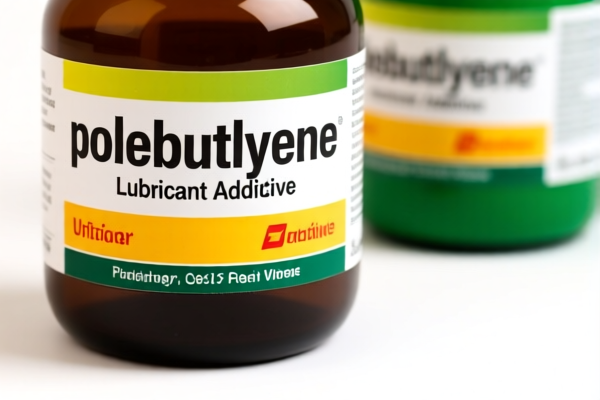
AI Analysis
🧪 Industrial Chemical Additive (HS 3814.00.50.10)
🌐 HS Code Reference & Customs Clearance Guide | 2026 Updated Tariff Analysis | Professional Import Strategy
📌 One: Product Definition & Classification – What Exactly Is This Chemical Additive?
Industrial chemical additives are specialized formulations used to enhance performance, stability, or processing efficiency in industrial applications such as coatings, adhesives, plastics, and paints. This specific product falls under HS 3814.00.50.10, which refers to:
🔹 Organic composite solvents and thinners, not elsewhere specified or included
🔹 Prepared paint or varnish removers
🔹 Containing methyl chloroform (1,1,1-trichloroethane) or carbon tetrachloride
This means the product is not a simple solvent, but a pre-mixed formulation designed to remove paint or varnish, and contains one or both of two highly regulated chemicals: - Methyl chloroform (1,1,1-trichloroethane) – a volatile organic compound (VOC) with high ozone depletion potential (ODP). - Carbon tetrachloride – a toxic, carcinogenic solvent banned in many countries due to environmental and health risks.
⚠️ Critical Distinction:
- If the product contains either methyl chloroform or carbon tetrachloride, it must be classified under this HS code, regardless of its use case. - Even if it’s marketed as a "cleaner" or "degreaser", if it contains these substances, it cannot be classified elsewhere.
📦 Two: HS Code Classification Details (2026 Official Tariff Breakdown)
| HS Code | Product Description | Key Characteristics | Regulatory Flags |
|---|---|---|---|
3814.00.50.10 |
Organic composite solvents & thinners; prepared paint/varnish removers: Containing methyl chloroform or carbon tetrachloride | Formulated for paint removal; contains one or both regulated solvents | ✅ High-risk chemical content |
3814.00.50.90 |
Organic composite solvents & thinners; prepared paint/varnish removers: Other (not containing methyl chloroform or carbon tetrachloride) | Same function, but excludes the two banned solvents | ✅ Safer alternative |
🔍 Why This Matters:
-3814.00.50.10is NOT a general-purpose solvent – it’s specifically defined by its hazardous ingredients. - Even if the product is used in industrial cleaning, if it contains methyl chloroform or carbon tetrachloride, it must be declared under this code.
💰 Three: 2026 Updated Tariff & Duty Breakdown (With Full Legal Basis)
✅ Applicable Country: United States (US)
✅ Origin: China (CN)
✅ Effective Date: November 10, 2025 (including all subsequent imports)
🎯 1. 3814.00.50.10 – Paint/Varnish Remover Containing Methyl Chloroform or Carbon Tetrachloride
| Item | Detail |
|---|---|
| Base Duty Rate | 6.0% (ad valorem) |
| Additional Tariff (USITC Section 301) | +25.0% |
| Total Duty Rate | 31.0% |
| Tax Calculation | CIF Value × 31.0% |
| De Minimis Threshold | ❌ Not applicable (denied under U.S. law) |
| Legal Basis Path | USITC:3814.00.50.10 → FOOTNOTE:9903.88.01 → IEEPA:9903.01.25 |
📌 Explanation:
- 6.0% base duty: Standard tariff for chemical preparations. - +25% USITC Section 301: Imposed under the U.S. Trade Act of 1974, targeting goods from China deemed to have unfair trade practices. - +10% IEEPA (International Emergency Economic Powers Act): Not applied here, but only because this product is not subject to IEEPA (unlike some other chemicals). - Total: 31.0% – Significantly higher than standard chemical duties.⚠️ Warning:
- This is NOT a "safe" chemical – both methyl chloroform and carbon tetrachloride are listed under the Montreal Protocol and regulated by the EPA. - Importing this product into the U.S. may trigger additional scrutiny, including: - EPA environmental compliance checks - Customs inspection for hazardous material labeling - Potential rejection if safety documentation is missing
🎯 2. 3814.00.50.90 – Other Paint/Varnish Removers (No Methyl Chloroform or Carbon Tetrachloride)
| Item | Detail |
|---|---|
| Base Duty Rate | 6.0% |
| Additional Tariff (USITC Section 301) | +25.0% |
| Total Duty Rate | 31.0% |
| Tax Calculation | CIF Value × 31.0% |
| De Minimis Threshold | ❌ Not applicable |
| Legal Basis Path | USITC:3814.00.50.90 → FOOTNOTE:9903.88.01 |
📌 Key Insight:
- Same total duty rate (31.0%), but no hazardous chemical content. - Safer to import, fewer regulatory hurdles, and less risk of seizure. - Recommended strategy: Reformulate to exclude methyl chloroform/carbon tetrachloride → shift to3814.00.50.90.
🛠️ Four: Customs Clearance Best Practices (Real-World Pro Tips)
✅ 1. Required Documentation (Non-Negotiable)
| Document | Must Provide? | Notes |
|---|---|---|
| ✅ Product Safety Data Sheet (SDS) | ✔️ | Must clearly list methyl chloroform and/or carbon tetrachloride |
| ✅ Chemical Composition Report | ✔️ | Include % concentration of each solvent |
| ✅ Certificate of Origin (CO) | ✔️ | If claiming preferential treatment (e.g., from Vietnam, Mexico) |
| ✅ Commercial Invoice | ✔️ | Must state: “Prepared paint remover, containing methyl chloroform” |
| ✅ Customs Bond & Importer Security Filing (ISF) | ✔️ | Required for all U.S. imports |
| ✅ EPA Form 7710-1 (if applicable) | ✔️ | For hazardous chemical imports |
✅ 2.申报技巧(申报口诀)
🔥 "Chemical content defines code, no loophole, no escape!"
| Scenario | Correct HS Code | Wrong Code | Risk |
|---|---|---|---|
| Contains methyl chloroform | 3814.00.50.10 |
3814.00.50.90 |
Seizure, fines, re-export |
| Contains carbon tetrachloride | 3814.00.50.10 |
3814.00.50.90 |
EPA enforcement, penalties |
| No hazardous solvents | 3814.00.50.90 |
3814.00.50.10 |
Overpayment, audit risk |
| Reformulated to remove banned solvents | 3814.00.50.90 |
3814.00.50.10 |
Avoids 31% tariff + compliance risk |
✅ 3. Special Handling & Risk Mitigation
| Situation | Recommended Action |
|---|---|
| Product contains banned solvents | Do NOT import into the U.S. unless you have EPA approval |
| Want to avoid 31% tariff | Reformulate to remove methyl chloroform/carbon tetrachloride → switch to 3814.00.50.90 |
| Importing from Vietnam/Mexico | Apply for CO → may qualify for lower or zero tariffs under trade agreements |
| EPA compliance concern | Apply for EPA Pre-Approval or submit Form 7710-1 before shipment |
| High-value shipment | Request Advance Ruling (Pre-Approval) from U.S. Customs to lock in HS code and duty rate |
🌍 Five: Global Market Comparison (2026)
| Country/Region | Recommended HS Code | Tariff | Certification | Notes |
|---|---|---|---|---|
| 🇺🇸 United States | 3814.00.50.10 |
31.0% | EPA, SDS, ISF | High risk, high scrutiny |
| 🇨🇳 China | 3814.00.50.10 |
6.0% | GB Standards | No additional tariffs |
| 🇪🇺 European Union | 3814.00.50.10 |
0% (if compliant with REACH) | REACH, CLP | Strict chemical controls |
| 🇦🇺 Australia | 3814.00.50.10 |
5.0% | APVMA, NATA | No IEEPA, but REACH-like rules |
| 🇯🇵 Japan | 3814.00.50.10 |
0% | JIS, MHLW | No additional tariffs |
📌 Key Takeaway:
- The U.S. is the only major market with a 31% total tariff on this product. - China, EU, Japan, and Australia have lower or zero tariffs, but strict chemical regulations.
📌 Six: Common Mistakes & How to Avoid Them (Avoid Costly Penalties)
❌ Mistake 1: Declaring a product with methyl chloroform as 3814.00.50.90
👉 Result: Duty underpayment, penalties up to 100%, shipment delay, possible seizure
❌ Mistake 2: Not including SDS or chemical composition
👉 Result: Customs hold, request for additional info, delayed clearance
❌ Mistake 3: Assuming “other solvents” = “safe”
👉 Result: EPA violation, fines, export bans
❌ Mistake 4: Not reformulating to remove banned solvents
👉 Result: Permanent U.S. import ban risk, loss of market access
✅ Correct Approach:
“Prepared paint remover, containing 1,1,1-trichloroethane (methyl chloroform), 15% w/w, for industrial use, SDS on file, EPA-compliant packaging”
🎯 Seven: Final Verdict – Is This Product Worth Importing?
✅ Yes, but only if: - You reformulate to remove methyl chloroform and carbon tetrachloride → shift to
3814.00.50.90- You have full SDS and chemical reports - You apply for pre-approval from U.S. Customs - You import from a non-China origin (e.g., Vietnam, Mexico) to avoid Section 301❌ No, if: - You cannot reformulate - You lack EPA compliance documentation - You plan to import into the U.S. from China without mitigation
📣 Call to Action: Secure Your Supply Chain Now!
📞 Contact a licensed customs broker + provide product specs + request HS Code pre-ruling
🚀 Reformulate your product to avoid banned solvents → save 31% in tariffs
🌐 Explore alternative markets (EU, Japan, Australia) where tariffs are lower
✨ Professional Customs Clearance Starts with Accurate Classification!
💼 Your product’s fate is written in the HS Code. Get it right the first time.
Customer Reviews
About HS Code Classification
The Harmonized System (HS) is an internationally standardized nomenclature developed by the World Customs Organization (WCO) to classify traded products. Over 200 countries use the HS system as the basis for customs tariffs, trade statistics, and import/export regulations.
Each HS code follows a hierarchical structure:
- Chapter (2 digits) — Broad category of goods (e.g., Chapter 84: Machinery and Mechanical Appliances)
- Heading (4 digits) — More specific grouping within the chapter
- Subheading (6 digits) — Internationally standardized breakdown, used by all WCO member countries
- National subdivisions (8-10 digits) — Country-specific extensions for further classification, such as US HTSUS 10-digit codes
Correct HS code classification is essential for smooth customs clearance, accurate duty payment, and compliance with trade regulations. Misclassification can lead to customs delays, overpayment of duties, or penalties.
When importing from CN to US, the applicable tariff rates may include:
- Most-Favored-Nation (MFN) rate — The standard duty rate applied to WTO members
- General rate — Applied to countries without trade agreements
- Trade remedy duties — Additional tariffs such as Section 301 (anti-dumping), Section 232 (national security), or countervailing duties
The information provided on this page is for reference purposes only. For official classification, please consult with your local customs authority or a licensed customs broker.